
AC Repair in North Carolina
Homes in North Carolina run cooling for more months of the year than in 34 of the other 49 states.
Tell us about the job
Takes about a minute. No obligation.
- 87°Fsummer afternoon high where people live
- 5 monthsof cooling, May through September
- 14.13¢ per kWhwhat homes paid for power in 2024 (kWh means kilowatt hours, the unit on an electric bill)
- 1,484hail events from 2015 to 2024
Summer here runs hot and long. Your AC works through all of it.
- Hottest summers in Anson County, mildest in Avery County
- Summer afternoons average 87°F where people live
- Cooling runs May through September
- 1,484 hail events from 2015 to 2024
- 6,952 damaging wind events from 2015 to 2024
- 25% of homes lost power a day or more in 2024


Your house is probably newer than you think
Half the homes in North Carolina were built in 1991 or later. That's newer than in 42 other states. Most of the state is single-family houses, not condos or multi-unit buildings. If your AC came with a newer house, the duct system and electrical setup were built to spec for that unit, not pieced together over decades of changes. A repair on a system like that is usually worth doing. The parts fail on their own schedule, not because the house around them is old.
Check these first
Before you call anyone, check the thermostat batteries and make sure it's set to cool, below room temperature. Then go look at the filter. If you can't see light through it, that's likely choking the airflow, and swapping it might solve the whole problem. Check the outdoor unit next. It needs clear space around it, so pull back any grass clippings, leaves or mulch piled against the cabinet. While you're out there, see if the fan is spinning. If the outdoor unit is silent and the indoor fan is blowing warm air, check your breaker panel for a tripped breaker before assuming the worst. Inside, look at the vents and make sure none are closed or blocked by furniture. Last, check for ice on the indoor coil or the refrigerant lines. If you see ice, shut the system off at the thermostat and let it thaw before anyone works on it. Running it with ice built up can damage the compressor.

The unit outside your house takes the weather straight on
Hail and wind here are hard on a condenser, even one that still runs
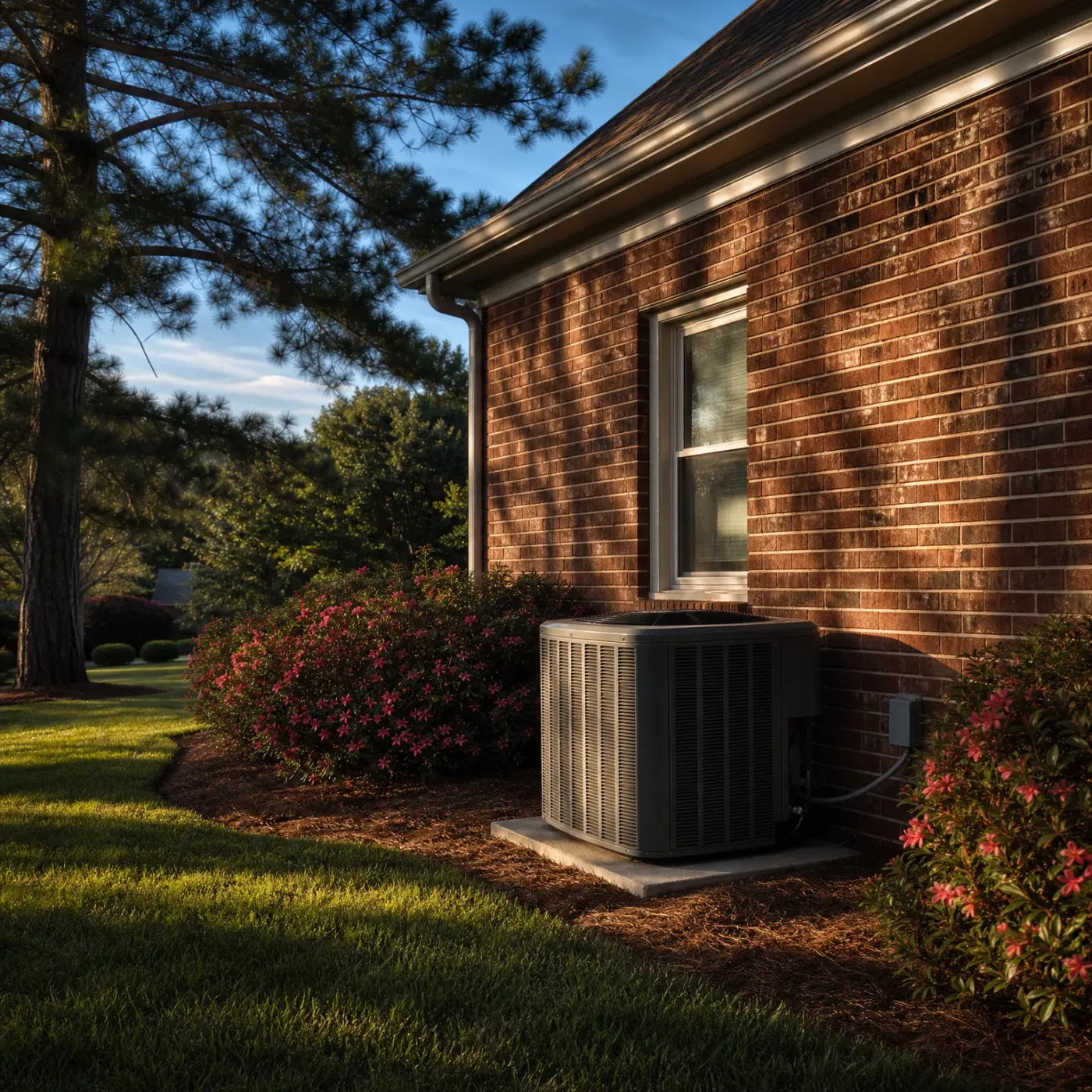
North Carolina sees more damaging wind than most other states, and hail hits here more than in most places too, with stones as big as 4.5 inches across on record. That falls on the coil and cabinet of your outdoor unit, sitting out there through every storm. A condenser can take a hit and keep cooling for weeks before the damage shows up, usually as a refrigerant leak or a fan that starts to struggle. If a storm has come through recently, it's worth having the outdoor unit checked even if the house is still cooling fine. Power is part of this too. A lot of North Carolina households lost power for a day or more last year, more than in most of the country, and a hard shutdown and restart puts a strain on a system that a steady one doesn't.
Anson County sees the hottest summer afternoons in the state, averaging 90°F through June, July and August. Avery County averages 75°F. A unit in Anson is working through more heat on an ordinary afternoon than the same unit in Avery, and that shows up in how soon parts wear out.
Mecklenburg County runs its AC about five months a year, the longest stretch in the state. Haywood County runs it about one month. A system in Mecklenburg is cycling on and off for most of the year, where a system in Haywood sits idle more than it runs. More run time means more hours on the compressor and the fan motor, so that's the first place to look when something in a Mecklenburg County home starts acting up.
Homes across the eastern counties need about 26% more cooling over a year than homes across the western counties. If your AC is on the eastern side of the state, it's carrying a heavier load year over year than a similar system out west, and that difference adds up across the parts that run every cycle, the compressor, the fan motor, the capacitor.
Statewide, homes run cooling about five months a year, from May through September, longer than in most of the country. That holds whether or not you're in one of the counties named above.
None of this says why one county runs hotter or longer than another, just that it does. Where your house falls on that map is worth knowing before a repair, because a capacitor or a compressor that's been cycling five months a year in Mecklenburg County has earned a different diagnosis than one that's barely run in Haywood.
What does an AC in North Carolina face?
How hot do summer afternoons get?
87°Faverage afternoon high where people live
Alaska66°F
Arizona101°F
How many months does the cooling run?
5 monthsof cooling a year
Alaska0 months
Hawaii12 months
What does electricity cost?
14.13¢per kWh, what homes paid in 2024
North Dakota11.51¢
Hawaii42.86¢
How often do storms hit?
168severe weather events per county from 2015 to 2024
Alaska5
Wyoming1,057
How many homes lost power for a day or more?
25%of homes in 2024
Arizona7%
Maine54%
What a struggling unit costs you before it quits
Electricity here runs 14.13 cents a kilowatt-hour, cheaper than in most of the country. That doesn't mean your AC runs cheap. Homes that use air conditioning in this state burned through 8.4 million Btu (British thermal units, a measure of heat) of electricity on it in a single year, and that cost shows up on the bill whether the unit is running clean or struggling with a weak capacitor or a dirty coil. A system that has to work harder to do the same job pulls more power the whole time it's doing it, and nobody notices until the bill does.
Running it while it's struggling rarely buys you time
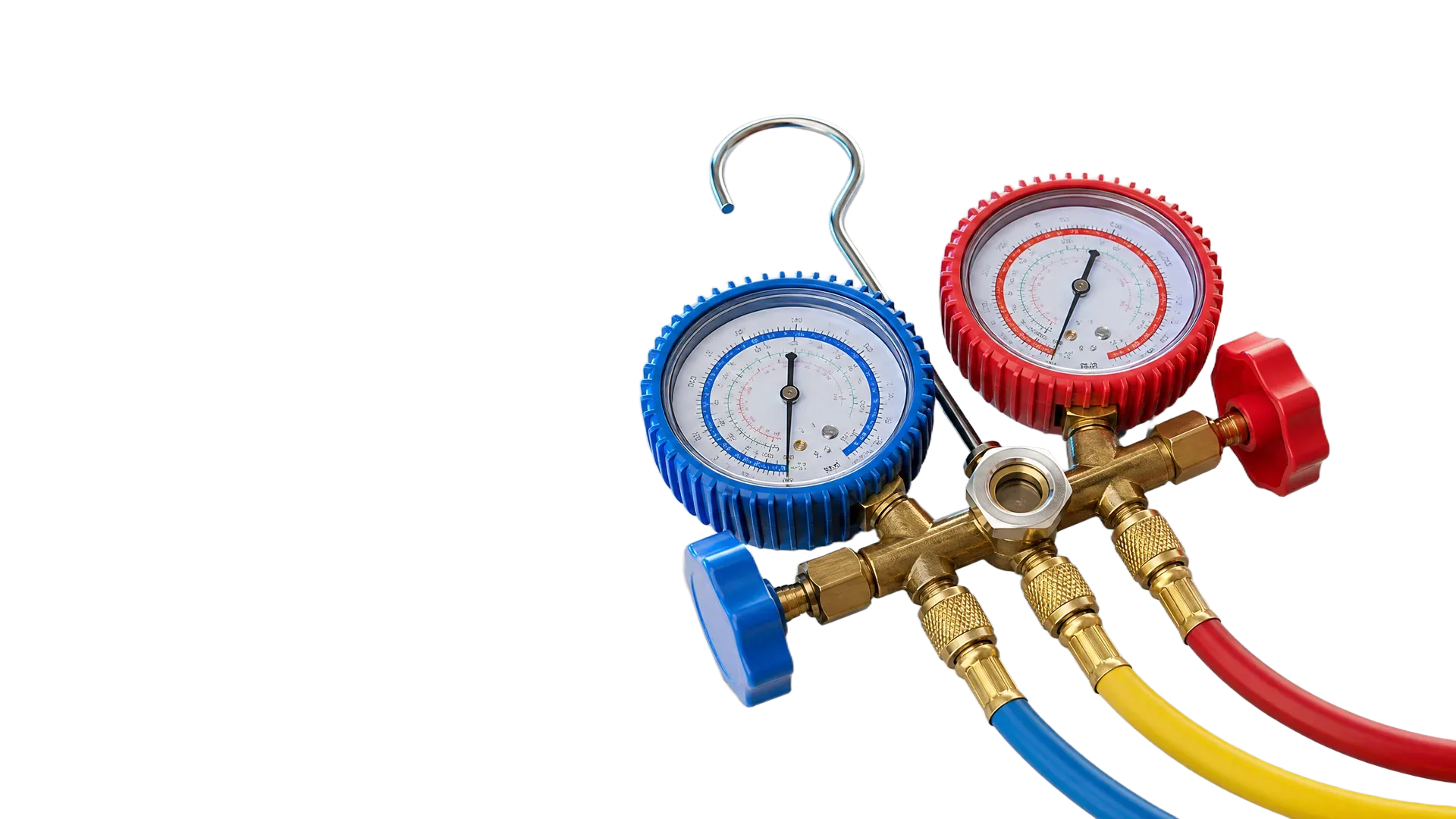
A warm house doesn't always mean something's broken. Sometimes the system is just behind, and it catches up once the real problem is found. Other times, letting it keep running is what turns a small fix into a bigger one. Ice on the coil is the clearest case. Once ice forms, airflow gets worse, so more moisture freezes, so airflow gets worse still. Left alone, that cycle ends with liquid refrigerant reaching the compressor, and a compressor is rarely worth repairing on its own. A refrigerant leak works the same way in slow motion. A system low on charge has to run longer to satisfy the thermostat, and it runs hot while it does, which strains the compressor even before the charge gets low enough to stop cooling altogether. A failing capacitor is different again. It can still start the compressor and the fan motor for a while, just with more strain each time, until one day it can't push either into motion. A strange noise, warm air, ice on the line, or a system cycling on and off fast is telling you something specific. The longer it runs like that, the more of the system ends up involved.

Summers here run long enough that an AC earns its keep. May through September, five months of cooling, in weather that hits 87°F on an average afternoon across June, July and August. That's more months of run time than 34 other states get. The compressor and fan motor don't get much downtime in a stretch like that.
More hours running means parts wear sooner, and a small problem gets found later than it should. A capacitor that's been cycling five months a year shows strain earlier than one that barely runs. Storms and hurricanes have hit the state hundreds of times over the past decade, so the outdoor unit is taking on more than just heat. Get the actual cause checked instead of guessing, so the fix holds past the next heat wave.
Five months of North Carolina summer puts real hours on a compressor, so a repair now is worth doing right.
Tell us about the job
Takes about a minute. No obligation.
Fill out the form once and a licensed contractor near you takes it from there.