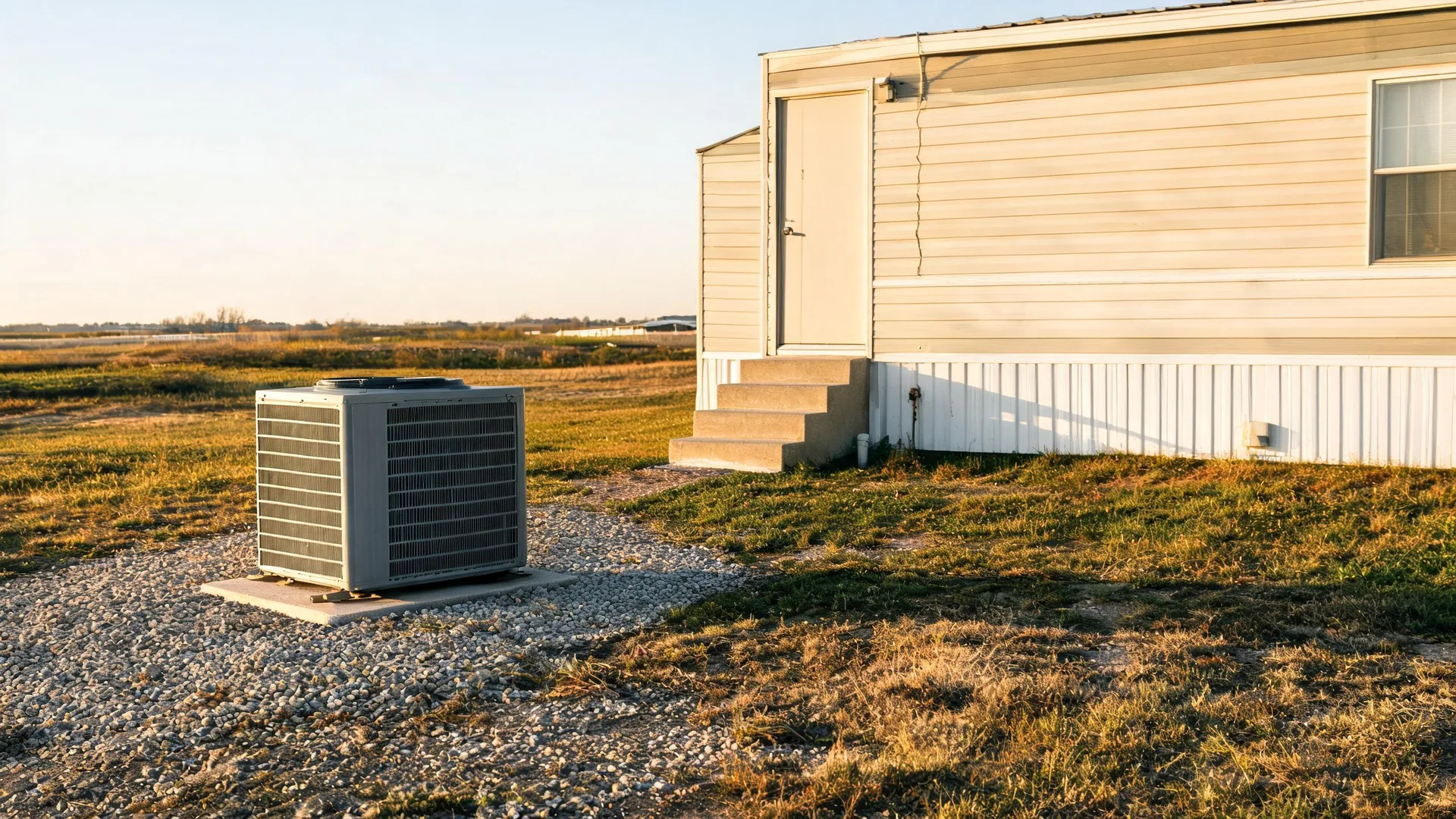
Storms come through often here
Randolph County recorded 232 severe weather events between 2015 and 2024. That included 202 damaging wind events, 19 hail events, a tornado and two tropical storms. An outdoor AC unit sits outside through all of it.
Takes about a minute. No obligation.
Randolph County recorded 232 severe weather events between 2015 and 2024. That included 202 damaging wind events, 19 hail events, a tornado and two tropical storms. An outdoor AC unit sits outside through all of it.
Hail dents a cabinet and bends fins without stopping the fan. Wind-blown debris can nick a coil or wear at a line. If your outdoor unit came through wind or hail, a tech can check what the storm did before it turns into a bigger repair.

NOAA nClimDiv, 1991–2020 normals
Warm air from the vents while the thermostat is set low means the system is running but not cooling.
That points to a refrigerant leak or a failing compressor, and it gets worse the longer it runs.




A repair call after a summer like this is about finding what actually gave out. A tech can check the capacitor and contactor, the parts that take the brunt of long runtimes, before guessing at anything bigger. Worth having the coil and fins looked at too, in case a past storm left damage that's gone unnoticed. A unit that's been running hard all season and took a hit at some point needs both questions answered, not just one. Getting the real cause on the table now is what keeps the fix from being temporary.
If your unit took a hit this season and kept running, that's not the same as running fine. Have it checked now, before the next storm finds the weak spot.
Find a contractor
A refrigerant leak doesn't hold still. The system needs a set amount of refrigerant to carry heat out of the house, and once it starts leaking, every hour of runtime pushes more out through the same crack. A compressor low on refrigerant starts running hotter than it should, and heat is what kills a compressor. The same goes for a failing capacitor. It's what gives the compressor and fan motor the jolt they need to start. A weak one makes the motor strain on every single start, and a motor that strains gets hot windings, and hot windings is how a motor burns out for good. A dirty coil causes the same chain of events. Airflow drops, the system has to run longer to do the same job, and that extra runtime wears on everything downstream of the problem, not just the part that started it. None of these get better by waiting. The unit that keeps running on a bad part isn't getting the rest it needs, it's taking the damage further.
Set the thermostat below room temperature and listen for the outdoor unit to kick on. If nothing happens, check the breaker box for a tripped breaker before assuming the worst. Some thermostats also take batteries, and a dead set will leave the display blank or unresponsive.
Pull the air filter and hold it up to light. If you can't see through it, it's restricting airflow and needs changing. Then walk outside and check that the condenser fan is spinning and the area around the unit is clear of leaves, grass clippings or anything blocking the fins. A unit starved for airflow on either end will struggle no matter what else is wrong.
Estimates for a typical Randolph County home, compared with an older unit built to the previous federal minimum, from EIA household energy data, North Carolina fuel prices and NOAA climate normals. Your home will differ.
Repair makes sense when a part like a capacitor or contactor has failed.
Replacement makes sense when the compressor has failed or the system uses R-22 refrigerant, which is no longer made.
A diagnostic visit starts with the complaint, not the unit. The tech wants to know what it's doing: running nonstop, short cycling, blowing warm, tripping a breaker. Then comes checking the obvious before the complicated. Thermostat settings, airflow, the breaker panel, the condition of the filter. From there it's gauges on the refrigerant lines to see what pressures are doing, and a look at the electrical side: capacitor, contactor, the wiring at the disconnect. A failing part usually shows itself in a reading that's off from what it should be, not just a guess. Once the tech finds the part that's actually failed, they can tell you what it'll take to fix it and whether anything else is close behind it.