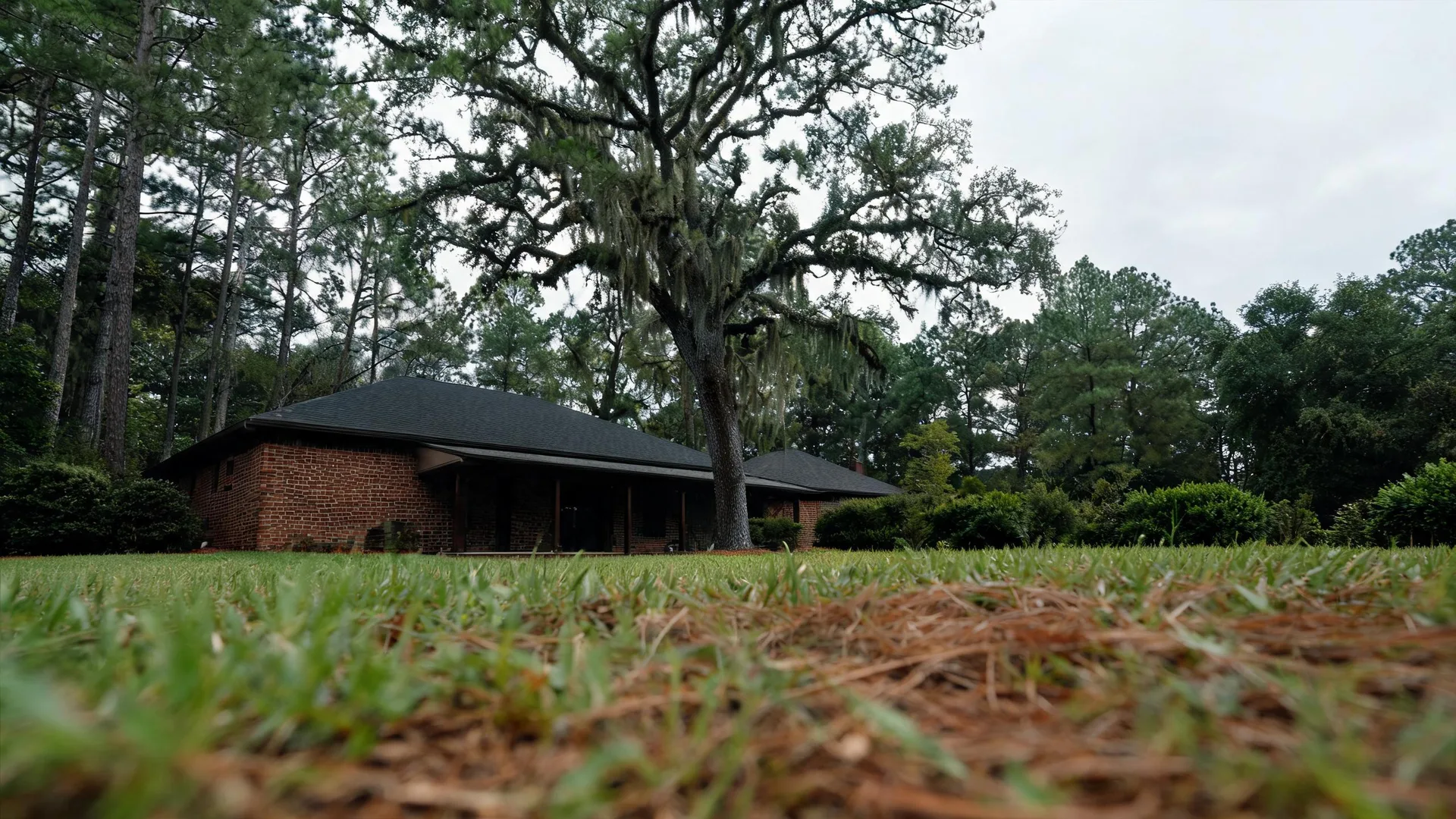





Low ground-level view across a lawn toward a single-story brick house with a dark shingled roof, framed by a large moss-draped oak and tall pine trees under an overcast sky.

AC Repair in Greenville, NC

Tell us about the job

Takes about a minute. No obligation.

RepairCentral ACPitt County, NC
Step 1 of 2

What ZIP code is the job in?

A tech starts outside at the condenser, checking the capacitor and the compressor before anything else. Those parts fail often enough that ruling them out first saves time. Next comes the refrigerant charge, checked with gauges rather than guessed at, because a system low on charge will freeze the coil if it runs long enough. Inside, the evaporator coil and the blower get a look, since a dirty coil or a weak blower motor can mimic a refrigerant problem and send someone chasing the wrong fix. The thermostat and the electrical connections get checked last, because a loose wire or a bad relay can look exactly like a dead unit. By the end you should have a straight answer on what failed and why, not just a part swapped and a guess attached to it.

5 months
May through September, your air conditioner is on duty
88°F
the average summer afternoon it cools against
25 hail events
in ten years, and hail bends the fins on outdoor coils
67 wind events
in ten years, and wind drives debris into outdoor units
Isometric line illustration of a cutaway single-story house showing interior rooms, ducted air handler, ceiling ductwork, and an outdoor condenser unit connected by refrigerant lines.
Your air conditioner works hardest from June through September.

NOAA nClimDiv, 1991–2020 normals

Half the houses in Pitt County were built in 1994 or later.

A system that came with a newer house still has working life in it, and that makes repair the right first call.

Five months of 88 degree afternoons wear a system down

Cooling runs May through September
Summer afternoons average 88°F
Power here costs 13.03 cents per kilowatt-hour

Cooling starts in May here and runs through September, and April is worth a call if the system struggled last year. A part that limped through last September doesn't rest over the winter and come back stronger. It sits unused all through the cold months, then gets asked to start a compressor the first warm week of spring, and that's when it gives out. Getting it looked at before that first real heat hits means a small problem gets caught on a technician's schedule, not on the day everyone else is calling too.

Repair it

If your system came with a newer house, it likely has plenty of life left. Repair is usually the right call.

Find a contractor
An outdoor residential air conditioning condenser unit mounted on a concrete pad, surrounded by gravel with a blue sky in the background.

Five months a year, every year

Five months of cooling a year is what the system is built for, but it still adds up. A proper diagnosis can tell the difference between normal wear for a system that's run this long and something that needs attention now. That's worth knowing before anyone swaps a part and hopes.

A struggling compressor keeps pulling hard amperage

A compressor low on charge or short on start capacitance still tries to do its job. It draws more current than it should, and that heat has nowhere to go. Run it long enough in that state and the windings break down for good, turning a repair into a full replacement.

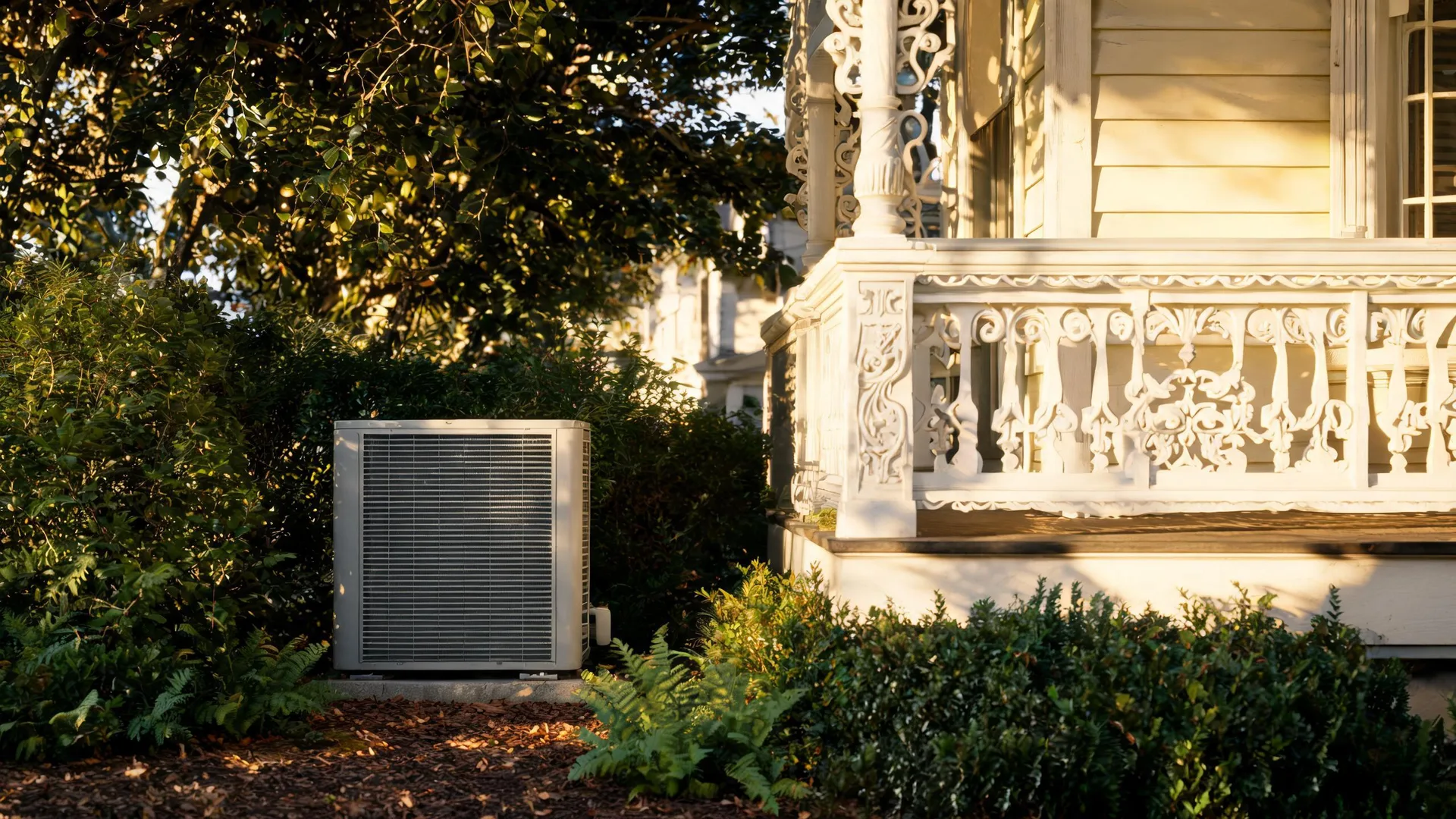
A frozen coil needs a real shutdown, not a push through

Once ice builds up on the evaporator coil, the system is moving less air, not more. Letting it keep running melts nothing. It just starves the compressor of the cool suction gas it needs to survive, and that's a harder failure than the one you started with.

Aerial view of a gray outdoor air conditioning condenser unit mounted on a concrete pad next to a house with vinyl siding.

A new air conditioner would cut about $50 a year off cooling for a typical Pitt County home.

  • A new one at the federal minimum, 14.3 SEER2$350 a year
  • An older air conditioner$400 a year

Estimates for a typical Pitt County home, compared with an older unit built to the previous federal minimum, from EIA household energy data, North Carolina fuel prices and NOAA climate normals. Your home will differ.

Repair makes sense when a part like a capacitor or contactor has failed.

Replacement makes sense when the compressor has failed or the system uses R-22 refrigerant, which is no longer made.

A good rule: if the compressor and coil are sound, most other repairs are worth making. Capacitors, contactors, fan motors and control boards all get replaced on their own without touching the two parts that cost the most. What changes the math is age combined with a failed compressor or a coil that's leaking refrigerant instead of just dirty. Those two are expensive enough on their own that paying for them on a system already worn down in other ways often costs more than starting fresh. A technician checking for this should look at the whole unit, not just the part that quit, before telling you which side of that line you're on.