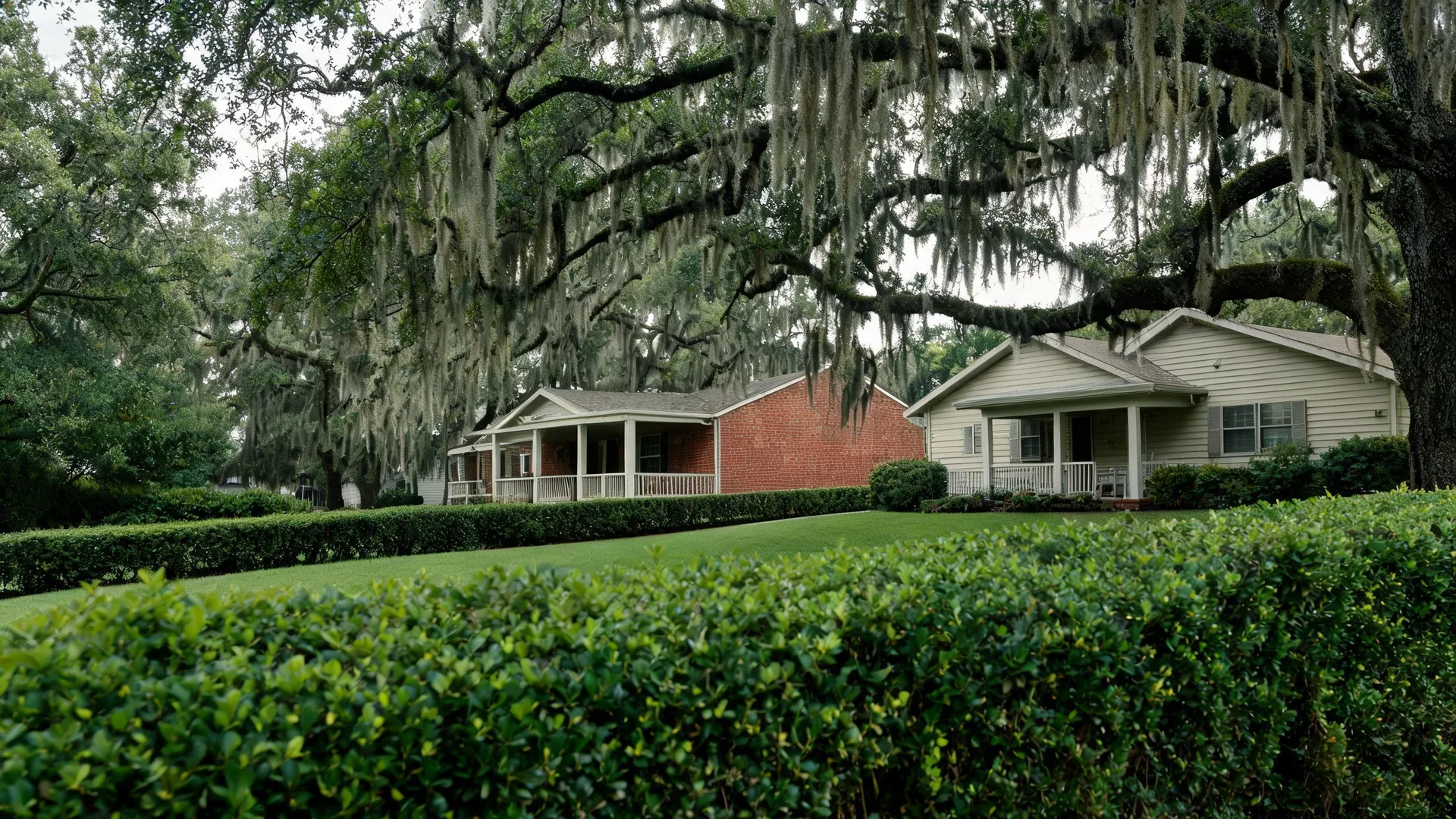






Two single-story houses, one with red brick and one with light siding, behind a trimmed hedge and lawn under large oak trees draped with Spanish moss.

AC Repair in Louisburg, NC

Tell us about the job

Takes about a minute. No obligation.

RepairCentral ACFranklin County, NC
Step 1 of 2

What ZIP code is the job in?

Franklin County saw 115 severe weather events between 2015 and 2024. Most of that was wind, 85 events, with 13 hail events and 3 tornadoes mixed in. Hail dents coil fins and bends them shut. Flying debris in a windstorm can crack the fan blade or knock the unit out of alignment on its pad. None of that always stops the system from running, so a unit that still turns on after a storm can be working harder than it should or heading toward a bigger failure. Statewide, a quarter of households lost power for a day or more in 2024, which is its own strain on a system that has to catch up once the power is back. If your outdoor unit has been through hail or a bad windstorm, it is worth having someone look at it even if you have not noticed a problem yet.

5 months
May through September, your air conditioner is on duty
88°F
the average summer afternoon it cools against
13 hail events
in ten years, and hail bends the fins on outdoor coils
85 wind events
in ten years, and wind drives debris into outdoor units
Isometric grey illustration of a cutaway single-story house showing interior rooms, ceiling ductwork connected to an indoor air handler, and an outdoor condenser unit linked by lines outside the wall.
Your air conditioner works hardest from June through August.

NOAA nClimDiv, 1991–2020 normals

Electricity here runs 14.83 cents per kilowatt-hour.

An AC that's struggling pulls more power every time it cycles on, and you pay that rate for every minute it runs.

Half the homes here were built in 1997 or later, so repair usually makes sense

Half the homes here were built by 1997
Cooling runs May through September
Summer afternoons average 88°F

Cooling runs about five months here, May through September, with afternoon highs averaging 88°F in June, July and August. The dew point averages 67°F across those same months, higher than most of the country sees, and that heavy air makes the system work harder than the temperature alone would suggest. It has to pull more moisture out of the air on top of cooling it, cycle after cycle, for five straight months. A unit under that kind of load wears in ways a quick look will not always catch. Getting it checked properly, not just restarted or topped off, is what makes a repair hold up through the rest of the summer.

After a storm, have the unit checked before it tells you something's wrong

If your outdoor unit has been through hail or a hard windstorm this year, get it looked at even if it still turns on and still cools the house. A bent coil fin or a fan blade nicked by debris will not always show up as a problem right away. Checking it now is how you find out before it fails on you.

Find a contractor
A man in a dark shirt and tan work pants carries a waxed canvas bag up wooden porch steps toward an orange front door, with a potted shrub to the right.
An outdoor air conditioning condenser unit mounted on a concrete pad surrounded by gravel, photographed against a partly cloudy blue sky.

The first hot week finds what winter didn't fix

Cooling starts up here in May. If your system sat idle since September, the first hot stretch is when a weak part shows itself. A capacitor or contactor that was already marginal in the fall can fail the first time it has to carry a full afternoon load. April is worth a check before that happens, while the unit is still idle and nothing depends on it yet.

What you can check yourself

Look at the thermostat first. Make sure it's set to cool and set below room temperature, and check the batteries if it has a screen that looks dim. Go to the breaker panel and see if the breaker for the outdoor unit has tripped. Outside, look at the compressor unit and clear away any leaves, grass clippings or debris blocking the sides. Inside, find the air filter and hold it up to light. If you can't see light through it, swap it for a new one. Check that every supply vent in the house is open and not blocked by furniture or rugs.

What tells you to stop and call

If the breaker trips again right after you reset it, leave it off and get someone out, that's a sign of a short or a failing component, not something to keep testing. Ice on the indoor coil or the refrigerant line means the system needs to run with the fan only, no cooling, until it's looked at. Water pooling near the indoor unit points to a clogged drain line or a cracked drain pan. Any burning smell or a breaker that feels hot to the touch means shut the system off at the breaker and don't turn it back on.

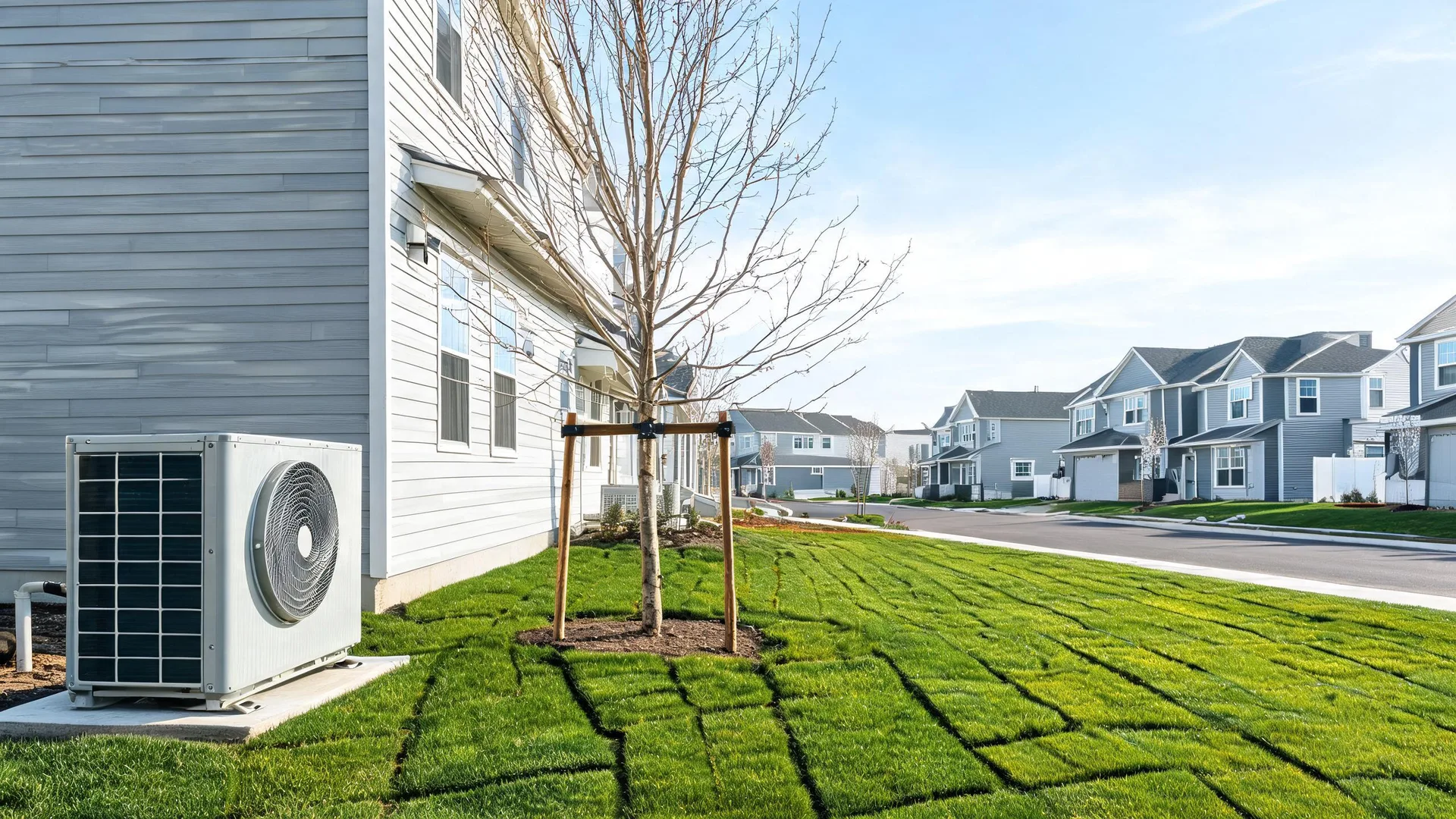
Aerial view of a gray central air conditioning condenser unit on a concrete pad next to a house with vinyl siding.

A new air conditioner would cut about $50 a year off cooling for a typical Franklin County home.

  • A new one at the federal minimum, 14.3 SEER2$300 a year
  • An older air conditioner$350 a year

Estimates for a typical Franklin County home, compared with an older unit built to the previous federal minimum, from EIA household energy data, North Carolina fuel prices and NOAA climate normals. Your home will differ.

Repair makes sense when a part like a capacitor or contactor has failed.

Replacement makes sense when the compressor has failed or the system uses R-22 refrigerant, which is no longer made.

A diagnostic visit starts outside at the compressor unit, checking that the fan spins freely and the coil is clear, then moves to the electrical side: contactor, capacitor, wiring. A gauge set goes on the refrigerant lines to check pressures, because low pressure usually means a leak somewhere in the system, not just a low charge that needs topping off. Inside, the tech checks the indoor coil for ice or dirt and looks at the blower to see it's moving air the way it should. Airflow gets checked at the vents too, since a system can be working fine at the unit and still cool poorly because of what's happening in the ducts. The point of walking through all of it in order is that two problems can look the same from the thermostat. A system that's low on refrigerant and one with a failing capacitor can both end up blowing warm air, and the fix for one will not touch the other.