






Overhead view of an air conditioning condenser unit on a concrete pad next to a house with asphalt shingle roofing and vinyl siding.

AC Repair in Wilmington, NC

Tell us about the job

Takes about a minute. No obligation.

RepairCentral ACNew Hanover County, NC
Step 1 of 2

What ZIP code is the job in?

A compressor that's struggling doesn't fix itself by staying on. If the charge is low, the compressor keeps pumping refrigerant that isn't there, and it runs hotter than it should. Keep it running and you're looking at a burned-out compressor instead of a simple recharge. The same goes for a failing capacitor. It can still kick the system on and limp through a cycle, but every start without enough power strains the compressor and the fan motor both. A dirty coil is another one. The system will keep running with ice building on it, but ice blocks airflow, and a compressor that keeps compressing without the right airflow across the coil can flood with liquid refrigerant it was never built to handle. None of these fail the system outright on day one. They just make the next part work harder until that part fails too.

5 months
May through September, your air conditioner is on duty
88°F
the average summer afternoon it cools against
12 hail events
in ten years, and hail bends the fins on outdoor coils
59 wind events
in ten years, and wind drives debris into outdoor units
Isometric line illustration of a cutaway single-story house showing interior rooms, ductwork, an indoor air handler or furnace, and a refrigerant line running to an outdoor condenser unit on a pad.
Your air conditioner works hardest from June through September.

NOAA nClimDiv, 1991–2020 normals

Half the homes in New Hanover County were built in 1993 or later.

A system that came with a newer Wilmington home has likely got plenty of working life left, and that makes repair the right call.

Five months of summer heat keeps this system working

Cooling runs May through September
Summer afternoons average 88°F
11 tropical storms and hurricanes from 2015 to 2024
Ready by MayCooling runs May through September here, and most failures show up in those first weeks of heat.

Five months of 88 degree afternoons is a long stretch for any compressor to run on, and it's worth having someone look at what's actually driving a problem instead of guessing. A low charge or a weak capacitor won't always stop the system outright, so it can be tempting to just top it off or reset it and move on. That usually buys a little time and not much else. A tech who checks the charge, the capacitor and the coil together can tell you which one is causing the trouble and whether it's a quick fix or something that's been building all summer.

Repair it

If your system came with a newer house, it likely has plenty of life left. Repair is usually the right call.

Find a contractor
A gray cylindrical air conditioning condenser unit mounted on a concrete pad next to a light-colored vinyl-sided house exterior.

A newer system is worth fixing

If your AC came with the house and the house was built recently, call a repair tech before you call anyone about replacement. A compressor or capacitor problem on a newer system is almost always a part failing on its own, not the system wearing out. Get the part fixed and the unit should run the rest of its working life without issue.

What you'll notice first

The system runs longer to reach the temperature you set, or stops reaching it at all. Air comes out of the vents but it is not as cold as it used to be. Some rooms cool fine and others barely get any air. The outside unit cycles on and off more than it used to, or it runs nonstop and never shuts off. Any of these is worth a call before the next hot stretch pushes it further.

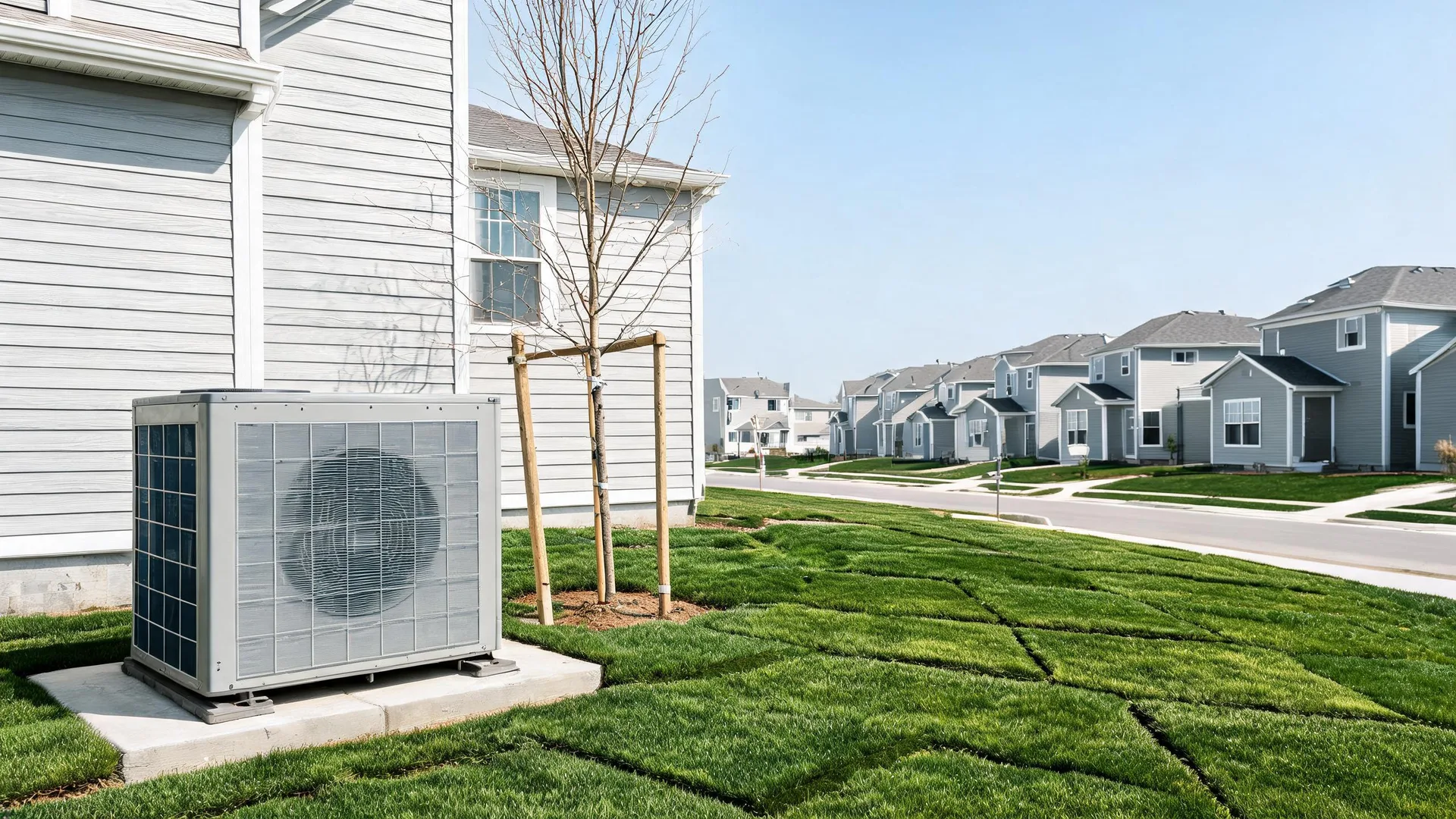
What you'll hear and see

A hissing or bubbling sound near the lines usually means refrigerant escaping from a leak. A hard clunk or rattle when the system starts points to the fan motor or a loose part inside the cabinet. Water pooling near the indoor unit means a clogged condensate drain, and left alone it backs up and damages the floor or ceiling underneath. Ice on the outdoor lines or the coil means airflow is blocked somewhere, and running it that way only makes the freeze worse.

An outdoor central air conditioning unit mounted on a concrete pad beside a blue-sided house at sunset.

A new air conditioner would cut about $50 a year off cooling for a typical New Hanover County home.

  • A new one at the federal minimum, 14.3 SEER2$400 a year
  • An older air conditioner$450 a year

Estimates for a typical New Hanover County home, compared with an older unit built to the previous federal minimum, from EIA household energy data, North Carolina fuel prices and NOAA climate normals. Your home will differ.

Repair makes sense when a part like a capacitor or contactor has failed.

Replacement makes sense when the compressor has failed or the system uses R-22 refrigerant, which is no longer made.

A diagnostic starts outside at the compressor, checking the charge and the pressures on both sides of the system. From there the tech checks the capacitor, since a weak one shows up fast under a meter even when the system still starts. The coil gets checked too, both for ice and for the grime that keeps it from pulling heat out of the air the way it should. Airflow gets checked at the vents, because a problem that looks like low refrigerant is sometimes just a blocked filter or a failing blower motor instead. The point of going through all of it is finding which part is actually driving the problem, not guessing and swapping parts until something works.