







A white Southern-style house with a wraparound porch photographed at night, surrounded by Spanish moss-draped oak trees lit by landscape lights.

AC Repair in Durham, NC

Tell us about the job

Takes about a minute. No obligation.

RepairCentral ACDurham County, NC
Step 1 of 2

What ZIP code is the job in?

Durham County logged 143 severe weather events between 2015 and 2024. Most of that was wind, 104 events strong enough to count as damaging, along with 22 hail events and a handful of tornadoes. An outdoor AC unit sits outside through all of it, with nothing shielding the coil or the fan from branches, hail or flying debris. A unit can take a hit and keep running for weeks before the damage shows up as a refrigerant leak or a bent coil that's lost its efficiency. Statewide, a quarter of households went at least a full day without power in 2024, and an outage like that matters more once the unit is already stressed. If your system has been through a storm, that's reason enough to have it looked at.

5 months
May through September, your air conditioner is on duty
88°F
the average summer afternoon it cools against
22 hail events
in ten years, and hail bends the fins on outdoor coils
104 wind events
in ten years, and wind drives debris into outdoor units
Isometric cutaway illustration of a house showing attic ductwork, an indoor air handler, refrigerant lines running outside, and an outdoor condenser unit on a pad.
Your air conditioner works hardest from June through August.

NOAA nClimDiv, 1991–2020 normals

Half the homes in Durham County were built in 1993 or later.

A system that came with a newer house still has years of working life, so a repair is usually the right call.

Durham's AC starts working in May, right after the weakest parts had all winter to sit idle

Cooling runs May through September
Climate zone 3A
Power here costs 13.87 cents per kilowatt-hour
Built for weather that doesn't let up104 damaging wind events hit Durham County between 2015 and 2024, and the unit outside takes every one of them

If the AC in your house hasn't been touched since the place was built, get the repair done rather than planning around a replacement. A system that came with a newer house still has working life in it, and a single breakdown doesn't change that math. What matters more is whether this is the first time it's acted up or the third. A unit that needed one repair after a storm is still a sound unit. One that keeps coming back is telling you something different, and that's worth mentioning to whoever comes out to look at it.

Had the system checked since the last storm came through

If your unit sat through a storm this year, a check now will catch a bent coil or a slow leak before it ends in a breakdown. That holds whether it's running fine or already acting up.

Find a contractor
A man in a cap, dark long-sleeved shirt and tan work pants carries a worn duffel bag as he climbs concrete steps toward an orange front door, with a potted shrub beside the entry.
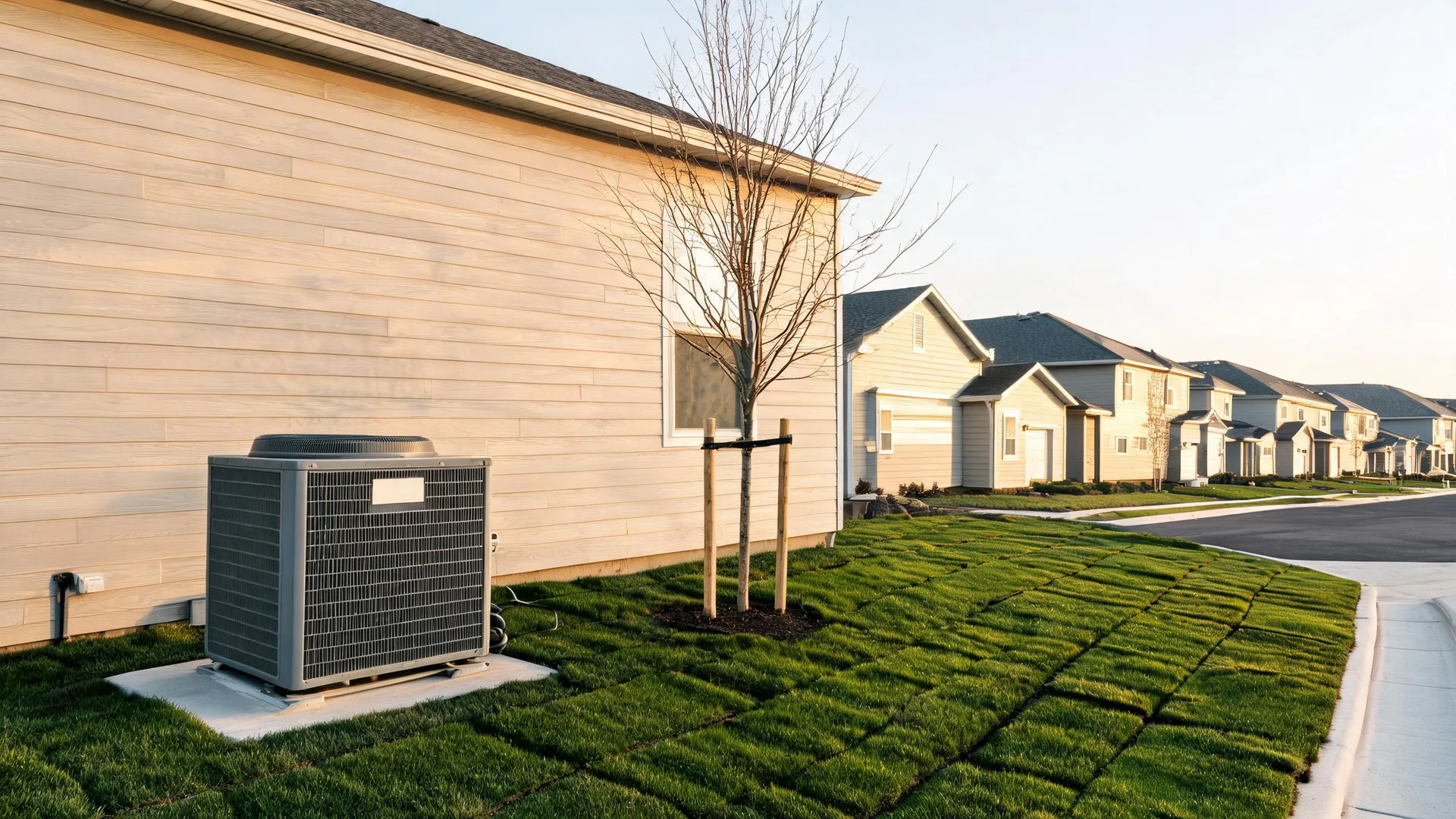
A gray cylindrical air conditioning condenser unit mounted on a concrete pad next to a light-colored vinyl-sided house exterior.

It's been running since May

Five months of running from May to September doesn't leave much time to recover. Whatever's acting up now has likely been building since June. Have it diagnosed rather than just topped off or reset, so whoever looks at it finds the actual part that's worn, not just the symptom showing today.

A refrigerant leak gets bigger, not smaller

A small leak starts as weaker cooling and longer run times. Keep running the system low on charge and the compressor starts pulling liquid refrigerant back into itself instead of just vapor, and that can wear down the valves inside it. By the time the compressor fails outright, you're not looking at a simple recharge anymore.

A failing part pulls other parts down with it

A capacitor that's weakening makes the compressor and fan motor work harder to start and run. Those motors draw more current than they should, build up more heat, and wear out faster than they would otherwise. What started as one weak part can end up taking a motor with it if nobody catches it first.

An outdoor air conditioning condenser unit on a concrete pad next to the gray vinyl siding of a residential home.

A new air conditioner would cut about $50 a year off cooling for a typical Durham County home.

  • A new one at the federal minimum, 14.3 SEER2$300 a year
  • An older air conditioner$350 a year

Estimates for a typical Durham County home, compared with an older unit built to the previous federal minimum, from EIA household energy data, North Carolina fuel prices and NOAA climate normals. Your home will differ.

Repair makes sense when a part like a capacitor or contactor has failed.

Replacement makes sense when the compressor has failed or the system uses R-22 refrigerant, which is no longer made.

Age isn't the only thing to weigh. Look at what's actually wrong and what it would take to put right. A bad capacitor or a failed fan motor is a straightforward swap, and the rest of the system keeps going like nothing happened. A cracked heat exchanger or a compressor that's seized is a different conversation, because at that point you're replacing the part that makes the unit work at all, and that part is usually priced close to the whole system. The count matters too. One repair in a few years is just a part wearing out on schedule. Three repairs in two years means something upstream is causing the failures, and fixing the next part that breaks won't stop the one after it. A tech who's looked at the unit can tell you which kind of problem you've got.