







An outdoor air conditioning condenser unit positioned on a concrete pad next to a blue-sided house, surrounded by green shrubs and flowering hydrangeas at sunset.

AC Repair in Fayetteville, NC

Tell us about the job

Takes about a minute. No obligation.

RepairCentral ACCumberland County, NC
Step 1 of 2

What ZIP code is the job in?

Cumberland County saw 132 severe weather events between 2015 and 2024, and most of those were damaging wind. Wind throws branches and debris into an outdoor AC unit. Hail hits here too, often enough to matter. A unit can take a hit like that and keep running for weeks before the problem shows up. If your outdoor unit sat through a storm, have it looked at even if the air coming out still feels cold.

5 months
May through September, your air conditioner is on duty
89°F
the average summer afternoon it cools against
18 hail events
in ten years, and hail bends the fins on outdoor coils
103 wind events
in ten years, and wind drives debris into outdoor units
Isometric 3D cutaway render of a house with dark siding showing interior rooms, ductwork and an air handler, connected by lines to an outdoor condenser unit on a white background.
Your air conditioner works hardest from June through September.

NOAA nClimDiv, 1991–2020 normals

A compressor running low on refrigerant starts pulling in more current to do the same job.

Keep it running that way and the compressor is what fails, not the leak that caused it.

Five months of 89 degree afternoons wears a system down before a storm ever touches it

Cooling runs May through September
Summer afternoons average 89°F
103 damaging wind events from 2015 to 2024
Cooling starts in May hereHave it checked in April, before the first hot week puts a weak part to the test.

Half the houses in Cumberland County were built in 1988 or later. If yours is one of them, the AC that came with it hasn't had to survive as many summers as the one in an older house down the road. That matters when a technician finds a problem. A compressor or a coil with years of life left is worth repairing, not replacing. Ask when your system went in, or check the sticker on the outdoor unit, before anyone tells you it's time for something new.

Had a storm come through lately? Have the outdoor unit checked

If your outdoor unit rode out a storm this year, get it checked before you call it fine. A hit from hail or flying debris does not always show up as a problem right away.

Find a contractor
A man in a cap, gray t-shirt and brown work pants climbs porch steps toward an orange front door, carrying a canvas and leather tool bag.
An outdoor air conditioning condenser unit mounted on a concrete pad surrounded by gravel, photographed against a partly cloudy blue sky.

How many summers has your system already put in

A system running since 1988 has put in a lot more summers than one installed in the last few years. If yours is newer, a repair now is worth it. The time to find out is when a tech is already standing at the unit, not after they've quoted you a full replacement.

Check the thermostat first

Set it below room temperature and listen for the outdoor unit to kick on. If the fan inside runs but the outdoor unit stays quiet, the problem is likely out there, not in the thermostat itself. A dead display usually means the batteries, and that's worth ruling out before anything else.

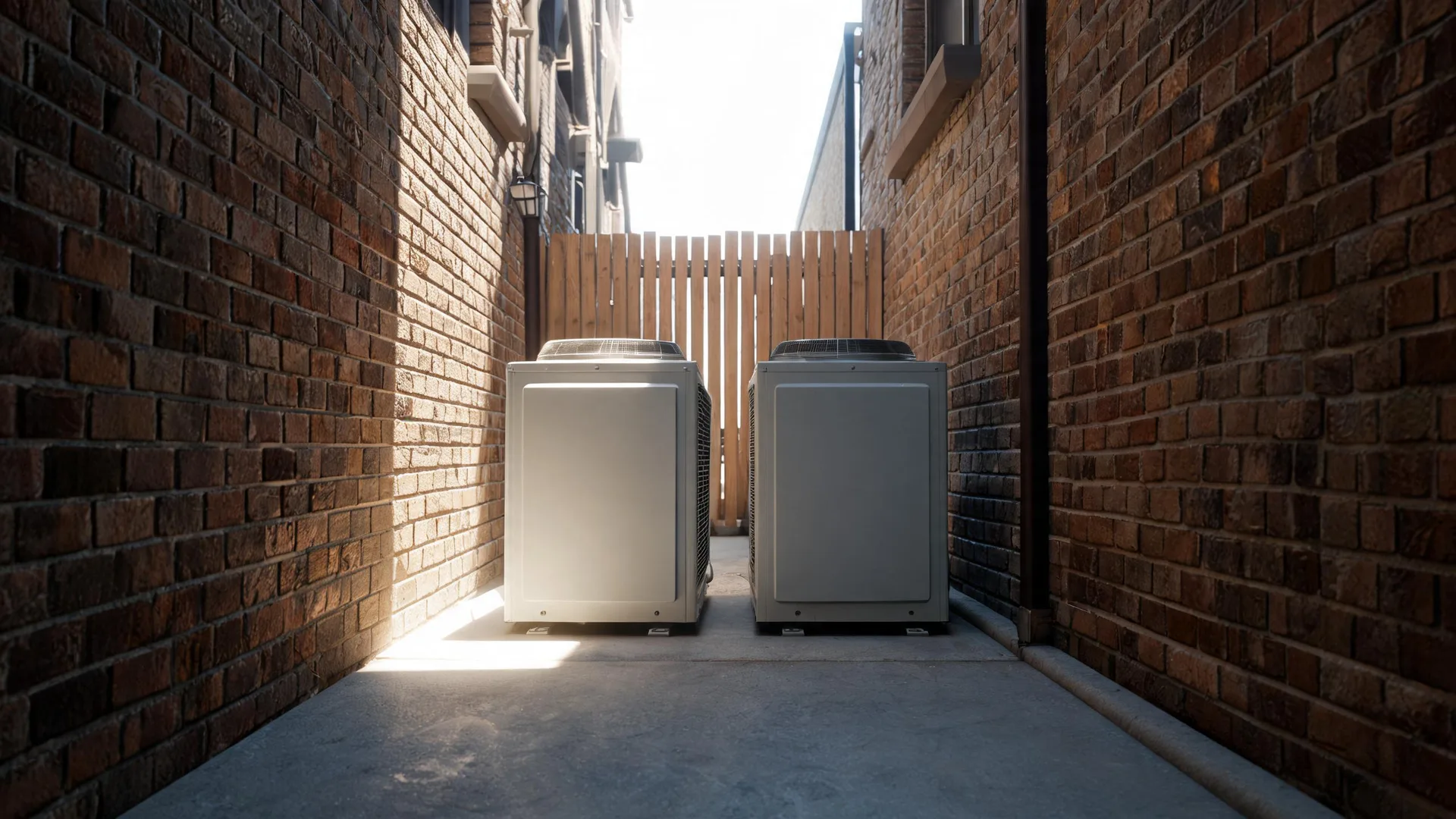
Look at the filter and the outdoor unit

A filter clogged with dust chokes airflow and can ice up the coil, so pull it out and hold it to the light. Then walk outside and check that nothing is pressed against the unit or sitting on top of it. Clearing debris or swapping a filter is something you can do yourself, and sometimes it's the whole problem.

Aerial view of a square outdoor air conditioning condenser unit on a concrete pad beside a house wall with a sliding glass door.

A new air conditioner would cut about $50 a year off cooling for a typical Cumberland County home.

  • A new one at the federal minimum, 14.3 SEER2$380 a year
  • An older air conditioner$430 a year

Estimates for a typical Cumberland County home, compared with an older unit built to the previous federal minimum, from EIA household energy data, North Carolina fuel prices and NOAA climate normals. Your home will differ.

Repair makes sense when a part like a capacitor or contactor has failed.

Replacement makes sense when the compressor has failed or the system uses R-22 refrigerant, which is no longer made.

A diagnostic starts outside at the unit, not inside with the thermostat. The technician checks the refrigerant pressure, looks at the capacitor and contactor, and watches whether the compressor and fan are pulling the right amount of current. Gauges on the lines tell them whether the charge is low and whether that points to a leak. Inside, they check the coil for ice and the airflow across it, since a restricted system out front often shows up as a frozen coil in the house. They'll run the system through a full cycle rather than just glance at it, because some failures only show up once the compressor has been working for a few minutes. By the end you should hear plainly what failed, not just that something did.