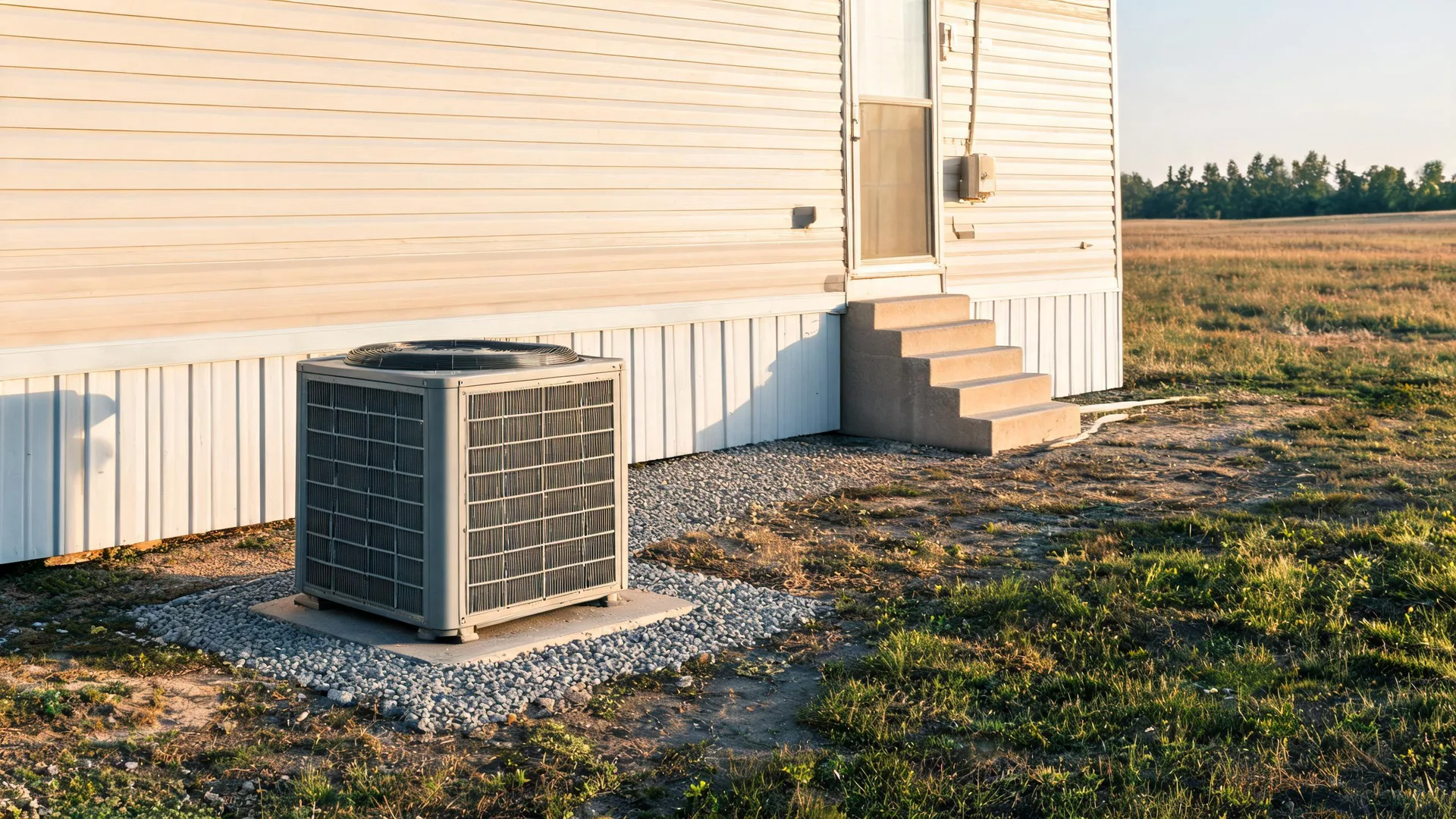
Alamance County sees real storm damage
Alamance County logged 131 severe weather events between 2015 and 2024, including 105 damaging wind events, 12 hail events and 4 tornadoes. That is a lot of chances for an outdoor condenser to take a hit.
Takes about a minute. No obligation.
Alamance County logged 131 severe weather events between 2015 and 2024, including 105 damaging wind events, 12 hail events and 4 tornadoes. That is a lot of chances for an outdoor condenser to take a hit.
A condenser sitting outside through wind and hail can get a bent fin or a dented cabinet and still start up fine. Damage like that doesn't always show up as a problem right away. It shows up later, as a refrigerant leak or a coil that can't move heat the way it should.

NOAA nClimDiv, 1991–2020 normals
May starts the cooling season here.
A unit that sat idle since September will show its weak points fast once it has to run hard again.



If the house was built in 1988 or later, the outdoor unit is probably not the original. Most AC systems get replaced at least once over that kind of span. That means the one at your house now could be a more recent install, with plenty of working life left in it, which makes a repair call worth making before you think about replacing the whole system. A bent fin, a failed capacitor, a refrigerant leak, none of that is a reason to give up on a unit that still has years in it. Get the actual problem diagnosed first.
If the outdoor unit has been sitting through wind and hail since it went in, a bent fin or dented cabinet might not be the only thing it picked up. A dent that looked harmless can turn into a refrigerant leak or a coil that won't cool right. Getting it looked at now means you find out before it quits on a hot afternoon.
Find a contractorA struggling AC rarely fails clean. It fails slow, and running it through that slow failure is what turns a cheap fix into an expensive one. Take a refrigerant leak. At first the system just works harder to hit the same temperature, cycling longer, pulling more than it should. Keep running it low on charge and the compressor starts pumping refrigerant that isn't carrying enough oil with it, and that's what actually kills a compressor. Replace a capacitor and you're done in a visit. Replace a compressor and you're often looking at the whole outdoor unit. A dirty coil does something similar. Airflow drops, the coil gets colder than it should, and ice starts forming on it. Keep the system running and that ice just builds, blocking even more airflow, so the system runs longer for less cooling and the ice gets worse. It's a loop that doesn't fix itself by waiting. A failing motor follows the same pattern. A blower or fan motor that's starting to go draws more current trying to do its job. Run it that way long enough and it overheats, and a motor that overheats repeatedly loses windings until it quits for good, usually at the worst time. None of this means every noise or warm afternoon means a dead system. It means the gap between 'something's off' and 'something's broken' is where a repair is still just a repair.
Warm air from the vents, short cycles that stop before the house cools, or a unit that runs long without catching up all point to the same thing: the system can't move heat the way it used to. A hissing sound near the lines, ice on the copper, or water pooling near the indoor unit are signs worth calling in before the system stops altogether.
A breaker that trips more than once, a burning smell, or a compressor that hums but won't start are reasons to shut the system off and wait for a technician rather than keep cycling it. Running a unit through that kind of fault usually turns a part replacement into a bigger repair.
Estimates for a typical Alamance County home, compared with an older unit built to the previous federal minimum, from EIA household energy data, North Carolina fuel prices and NOAA climate normals. Your home will differ.
Repair makes sense when a part like a capacitor or contactor has failed.
Replacement makes sense when the compressor has failed or the system uses R-22 refrigerant, which is no longer made.
Repair versus replacement comes down to what's actually wrong and what it would take to put right. A capacitor, a contactor, a fan motor, even a coil, these are parts a technician replaces without touching the rest of the system. The compressor is different. It sits inside a sealed system, and swapping it usually means the whole outdoor unit rather than just a part. So the real question after a diagnosis isn't the age of the system by itself. It's whether the failure is contained to one part or whether it's hit the compressor. A unit that's needed two or three unrelated repairs over its life isn't necessarily on its way out. A unit where the compressor is failing usually is.