






A red brick single-story house with a covered porch and a nearby cream-colored house with a wraparound porch, seen across a lawn behind a trimmed hedge, framed by large moss-draped oak branches.

AC Repair in Gastonia, NC

Tell us about the job

Takes about a minute. No obligation.

RepairCentral ACGaston County, NC
Step 1 of 2

What ZIP code is the job in?

Gaston County logged 102 severe weather events between 2015 and 2024. Damaging wind caused 67 of those, hail another 20, and six tornadoes touched down in that same stretch. Any of that can reach an outdoor AC unit sitting outside the house with nothing around it for cover. A bent fin or a cracked fan blade does not always stop the unit from running, so it can keep working for weeks after a storm while something inside is already damaged. Statewide, a quarter of households went at least 24 hours without power in 2024, and an outage like that falls hardest on a system already weakened by a storm it took earlier.

5 months
May through September, your air conditioner is on duty
88°F
the average summer afternoon it cools against
20 hail events
in ten years, and hail bends the fins on outdoor coils
67 wind events
in ten years, and wind drives debris into outdoor units
Isometric line illustration of a cutaway house showing interior rooms with ductwork, an air handler and furnace, connected by lines to an outdoor condenser unit on the ground outside.
Your air conditioner works hardest from June through August.

NOAA nClimDiv, 1991–2020 normals

A capacitor that's already weak won't always show it until the compressor tries to start under stress.

That's when a system with hidden storm damage gives out instead of just struggling through.

Half the homes here were built since 1982, so most AC units are still worth fixing

Half the homes here were built by 1982
Climate zone 3A
Power here costs 12.87 cents per kilowatt-hour
Cooling starts in May. Trouble shows up early.Homes here run AC from May through September, and a weak unit tends to fail in the first weeks of the load.

That storm damage or outage strain is worth fixing, not a reason to start over. Half the homes in Gaston County were built in 1982 or later, and a unit that came with a newer house still has working years ahead of it. A bent fan blade, a weak capacitor, a fried control board, each of those can be replaced on its own without touching the rest of the system. A contractor can check the parts a storm or a power surge would have hit and repair what failed. For a system that still has years left in it, that's the call that makes sense.

If a storm reached your AC unit, get it checked before it fails

If your outdoor unit sat through a storm this year or last, have it looked at even though it's still running. Hail and wind don't always stop a system right away. They weaken a fan blade or a capacitor and leave it to fail later, often when the compressor is working hardest to start back up.

Find a contractor
A man in a dark shirt and tan work pants, seen from behind, carries a canvas tool bag up concrete steps toward an orange front door flanked by gray siding and a potted shrub.
A gray metal air conditioning condenser unit mounted on a concrete pad in a flat grassy field under a partly cloudy sky.

What to check before you call anyone

Before anyone comes out, walk outside and look at the outdoor unit. Check that the fan on top spins freely and isn't hitting the housing on its way around. Look at the coil around the sides for bent or crushed fins, or for debris packed into them from leaves, grass clippings or mulch. Clear anything blocking airflow within a couple feet of the unit so air can move through it. Inside, check the thermostat is set to cool and the temperature is actually below room temperature, and swap the batteries if it uses them. Check the air filter and replace it if it's gray or caked, since a clogged filter chokes airflow enough to make the whole system struggle. Look at the breaker box and reset any tripped breaker for the AC, but if it trips again right away, leave it off and call someone rather than resetting it twice. If the outdoor unit isn't running at all, make sure the disconnect box next to it has its pull block seated in all the way. None of this fixes a bad capacitor or a failing compressor, but it rules out the simple stuff first.

A struggling compressor draws more than it should

A compressor low on charge or working against a dirty coil pulls harder on its windings than it was built to. Run it like that for days and the windings heat up past what the insulation can take. Eventually they short. A problem that started as low refrigerant or a dirty coil ends as a compressor that needs replacing, and that's the most expensive part in the system.

A part that's failing can take others with it

A capacitor losing its charge makes the compressor and fan motor strain every time they start. A motor running on a bad bearing pulls more current than it should while it's still turning. Neither failure stays contained. The longer the system runs on a bad part, the more likely it drags another part down with it, and a one part repair turns into two or three.

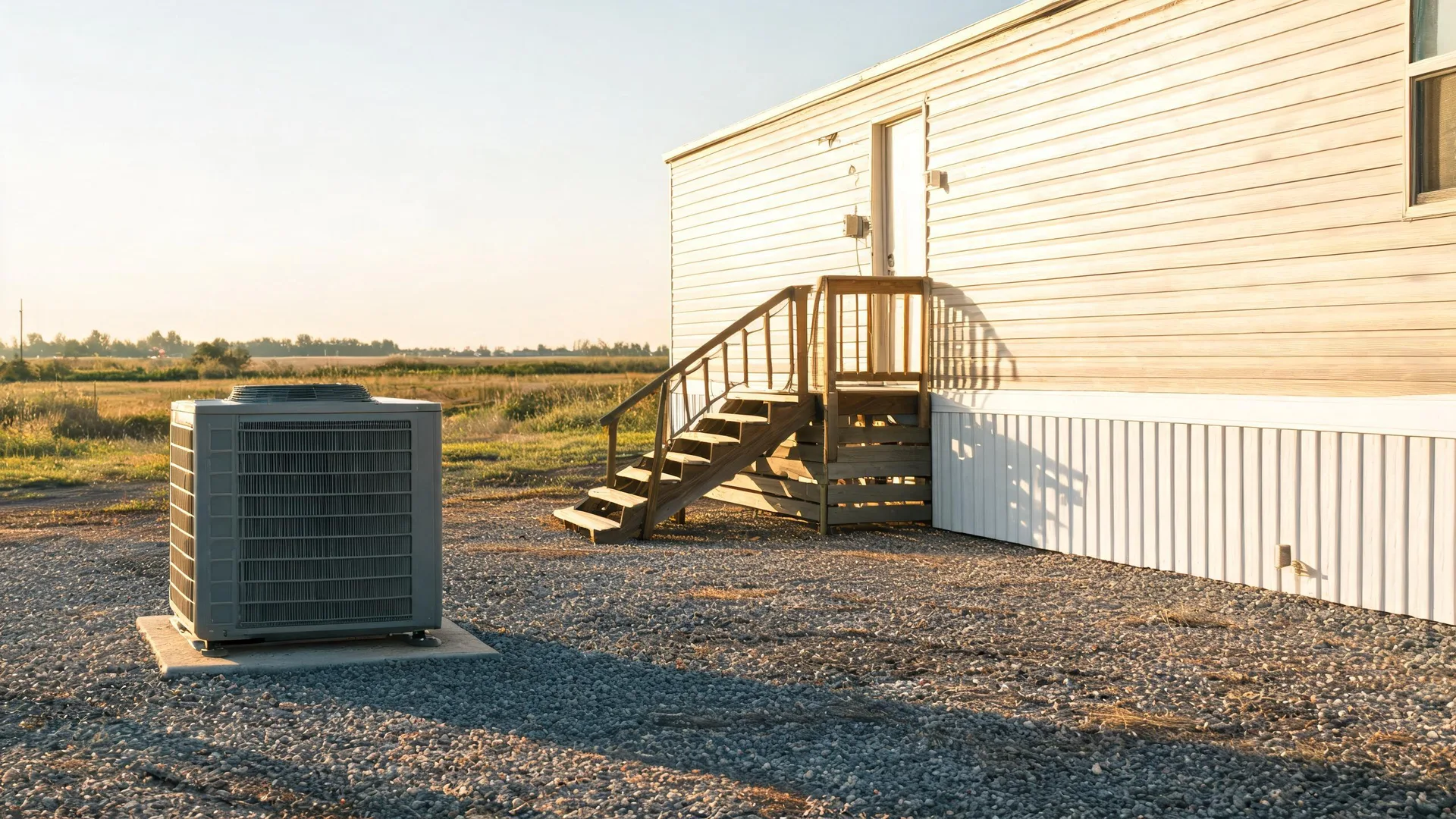
An outdoor air conditioning condenser unit installed beside the exterior wall of a blue vinyl-sided house at sunset.

A new air conditioner would cut about $50 a year off cooling for a typical Gaston County home.

  • A new one at the federal minimum, 14.3 SEER2$310 a year
  • An older air conditioner$360 a year

Estimates for a typical Gaston County home, compared with an older unit built to the previous federal minimum, from EIA household energy data, North Carolina fuel prices and NOAA climate normals. Your home will differ.

Repair makes sense when a part like a capacitor or contactor has failed.

Replacement makes sense when the compressor has failed or the system uses R-22 refrigerant, which is no longer made.

A diagnostic starts outside at the unit itself. A tech checks the capacitor, since that part fails more than almost anything else in the system and shows up as a compressor that hums but won't start. From there it's refrigerant pressure, checked at the service valves, and amp draw on the compressor and fan motor to see if either is pulling harder than it should. Inside, the tech checks the air handler or furnace coil for ice, which points back to airflow or a refrigerant problem outside. They'll pull the filter, check the blower, and look at the condensate line for a clog, since a backed up drain line will shut the whole system down on its own safety switch. Whatever they find, they should be able to show you the part and explain what it was doing to the rest of the system before it failed.