A tall red brick wall with a row of shrubs runs along the left side of a mown lawn, with a single-story light-colored house and tall pine trees in the background under an overcast sky.

AC Repair in Charlotte, NC

Tell us about the job

Takes about a minute. No obligation.

RepairCentral ACMecklenburg County, NC
Step 1 of 2

What ZIP code is the job in?

This county gets hit

Mecklenburg County logged 178 severe weather events between 2015 and 2024, 122 of them damaging wind and 38 hail. Five tornadoes touched down in that stretch too. An outdoor AC unit sits outside through all of it, with nothing shielding the coil or the fan.


The power doesn't always hold either

A quarter of North Carolina households went at least a full day without power in 2024. When the power drops, the air conditioner stops, and so does anything else running on electric heat or an electric water heater in this county.

5 months
May through September, your air conditioner is on duty
88°F
the average summer afternoon it cools against
38 hail events
in ten years, and hail bends the fins on outdoor coils
122 wind events
in ten years, and wind drives debris into outdoor units
Isometric line illustration of a cutaway house showing interior rooms with furniture, ceiling ductwork, an indoor air handler, and an outdoor condenser unit connected by lines.
Your air conditioner works hardest from June through August.

NOAA nClimDiv, 1991–2020 normals

AC here starts running in May.

April is the month to find the part that won't survive the first hot week.

Half the homes here were built by 1997, with plenty of life left in the system

Half the homes here were built by 1997
Cooling runs May through September
Summer afternoons average 88°F

A system that runs May through September doesn't get much downtime to reveal a problem before it matters. That's the case for having it diagnosed at the first sign of trouble rather than waiting to see if it gets worse. A capacitor on its way out or a coil losing airflow usually still cools some, which makes it easy to put off. But the readings that would catch it, pressure, amp draw, airflow, don't change whether the unit is run for one more week or five more months. Catching it early just means catching it before the next stretch of 88 degree afternoons asks more of it.

If the last storm reached your unit, get it checked before the next one does

Hail and wind come through this county often enough that an outdoor unit takes a hit sooner or later. A coil or fan blade can look fine and still be bent out of true. If the unit has been through a storm, have it looked at even if it is still running.

Find a contractor
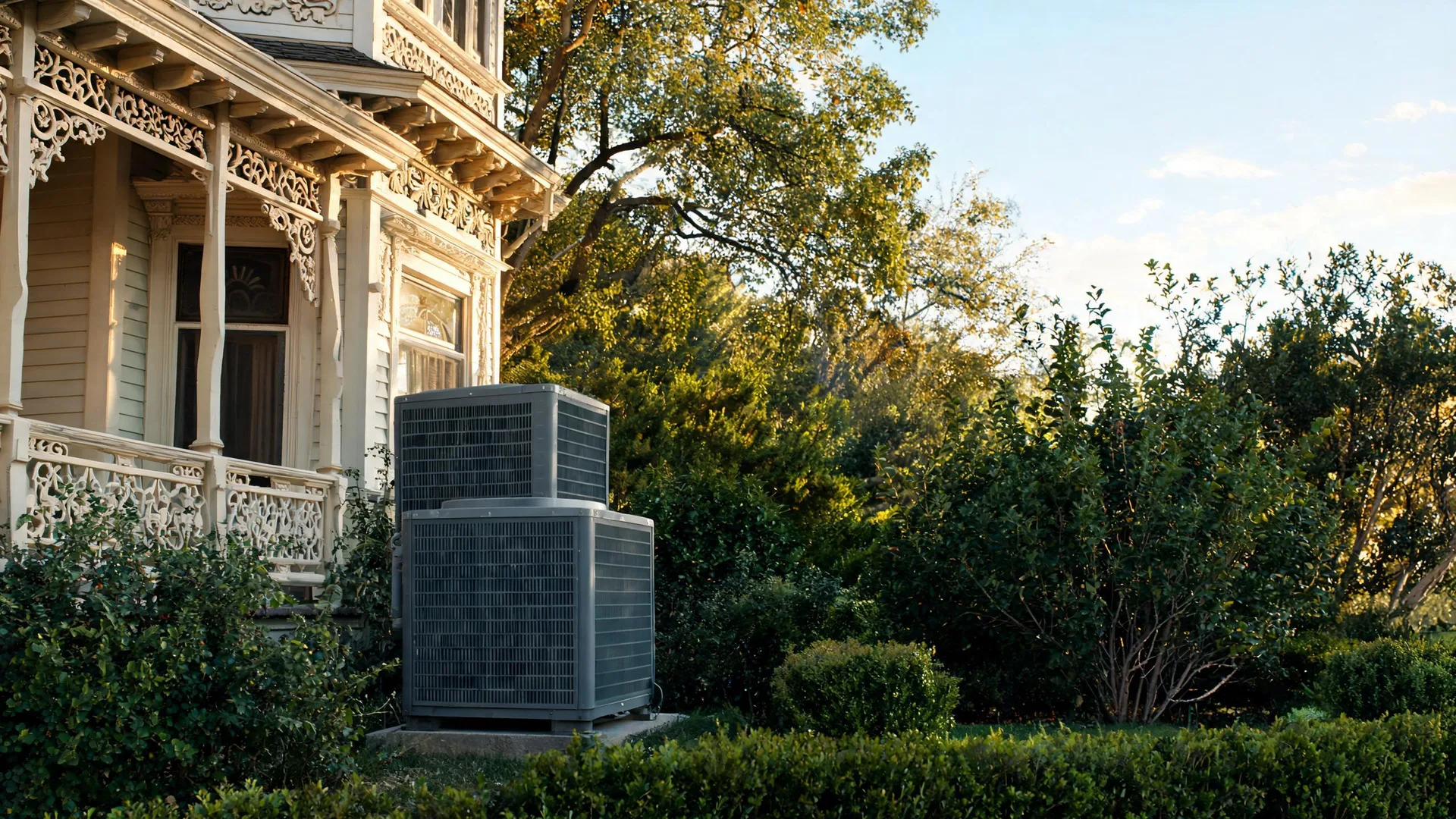
An outdoor air conditioning condenser unit mounted on a concrete pad beside a house, with electrical conduit running to a wall-mounted disconnect box.

Five months in, wear doesn't announce itself

Five months of hard running shows up as wear before it shows up as a breakdown. A coil that has been pulling moisture out of thick summer air since May is not the same coil it was in spring, even if the unit is still blowing cold. If yours is struggling, short-cycling, or just not keeping up the way it did in June, that is wear talking, and guessing at the part wastes the trip. Have it diagnosed so whoever fixes it is fixing the actual weak point, not just the symptom you noticed first.

A struggling compressor doesn't fix itself by working harder

A compressor low on charge or fighting a failing capacitor draws more current than it should. Run it in that state and the extra heat builds in the windings until they break down for good. What starts as weak cooling can end as a compressor that needs replacing instead of a simple recharge.

Ice on the coil means shut it off, not let it ride

A coil icing over is usually restricted airflow or a refrigerant leak, and running the system longer doesn't melt it, it adds to it. Ice insulates the coil so it stops absorbing heat right, and liquid refrigerant can end up heading back toward the compressor instead of boiling off like it should. That's the kind of damage that doesn't reverse once it happens.

Overhead view of a gray residential air conditioning condenser unit mounted on a concrete pad beside a house with asphalt shingle roofing.

A new air conditioner would cut about $50 a year off cooling for a typical Mecklenburg County home.

  • A new one at the federal minimum, 14.3 SEER2$330 a year
  • An older air conditioner$380 a year

Estimates for a typical Mecklenburg County home, compared with an older unit built to the previous federal minimum, from EIA household energy data, North Carolina fuel prices and NOAA climate normals. Your home will differ.

Repair makes sense when a part like a capacitor or contactor has failed.

Replacement makes sense when the compressor has failed or the system uses R-22 refrigerant, which is no longer made.

A diagnostic visit starts outside, at the unit itself. The tech checks refrigerant pressure, amp draw on the compressor, and the capacitor's output, because those three readings point to most of what goes wrong. Low pressure means a leak somewhere in the line, not a system that just needs a recharge and nothing else. High amp draw on a compressor that's still running tells you it's struggling, even before it quits outright. Inside, the tech checks the coil for ice or buildup and the blower for the airflow it's actually supposed to be moving, since restricted airflow at the coil shows up as symptoms that look electrical but aren't. The tech also checks the contactor and wiring for burn marks, a sign of a connection that's been arcing. None of this is guesswork. Each reading rules something in or out, so the part that gets replaced is the part that actually failed.