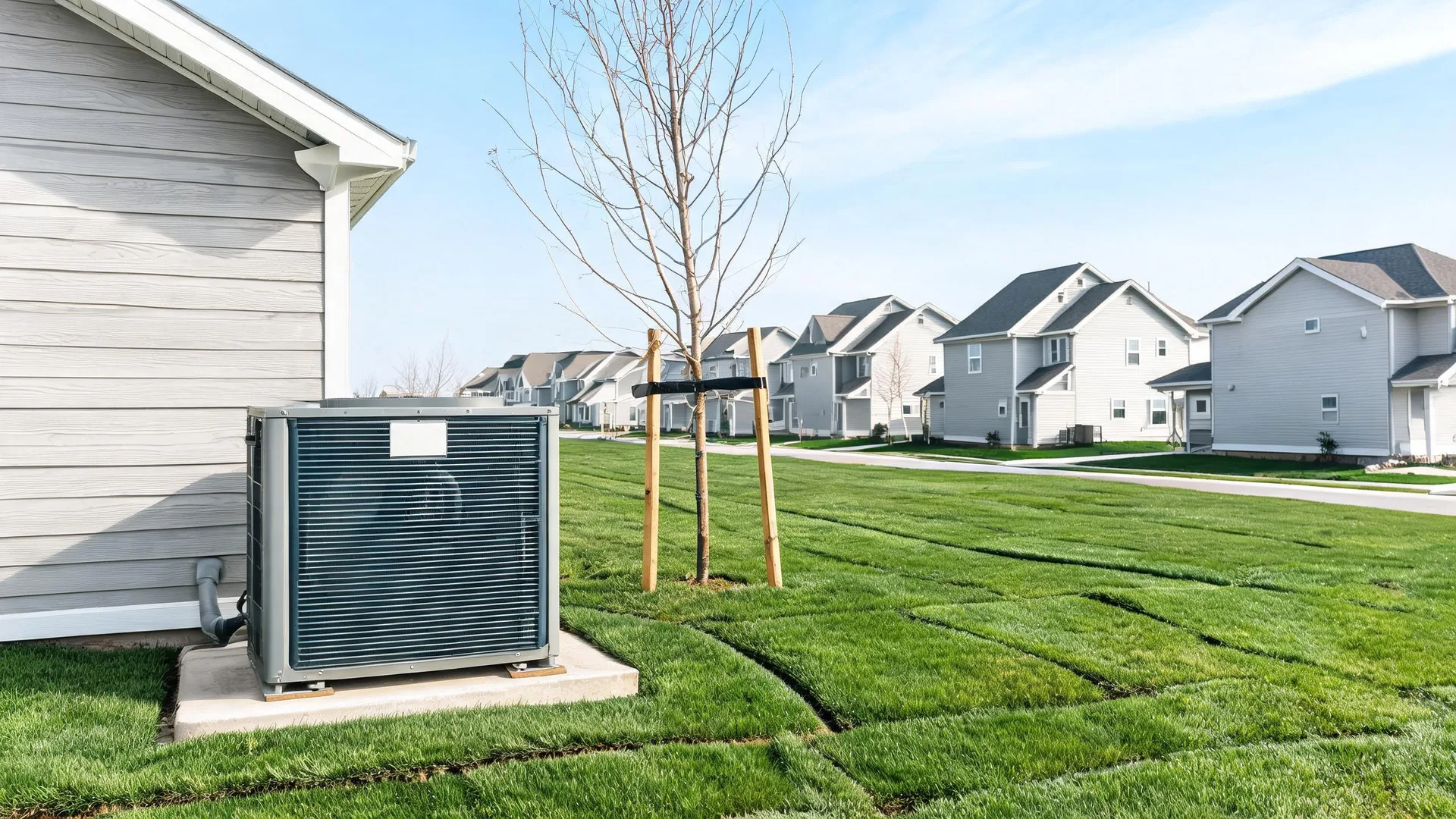
This county gets hit a lot
Brunswick County saw 90 severe weather events between 2015 and 2024, including damaging wind, hail and tornadoes. A quarter of North Carolina households went at least a day without power last year.
Takes about a minute. No obligation.
Brunswick County saw 90 severe weather events between 2015 and 2024, including damaging wind, hail and tornadoes. A quarter of North Carolina households went at least a day without power last year.
The condenser sits outside with nowhere to hide from wind-blown debris or hail. A unit that still runs after a storm can have a bent coil or a damaged fan blade working against it.

NOAA nClimDiv, 1991–2020 normals
May is when cooling starts in Brunswick County.
A unit that limped through last September usually fails in the first hot week, not months into the season.




Warm air coming out of the vents is the one most people notice first, and it usually means the system has lost refrigerant or the compressor is struggling. A hissing or bubbling sound near the refrigerant lines points to a leak. Short cycling, where the unit shuts off a few minutes after starting, puts extra wear on the compressor every time it happens. Ice on the copper line usually means airflow is restricted, often by a dirty filter or a blower that isn't moving enough air across the coil. If the outdoor fan isn't spinning but the unit is drawing power, the capacitor or the motor itself has likely failed. None of these get better by running the system less. They get worse.
A condenser that still runs after wind or hail can have a bent coil or a damaged fan blade behind it. Worth having someone check before the next stretch of hot days finds the weak spot.
Find a contractorFive months of afternoons near 88 degrees means long runtimes, start to stop, all season. A system that's been doing that since May shows its weak points by now, a capacitor near the end of its life or a coil that can't shed heat like it used to. If something's already acting up, it's worth having someone trace it back to the actual part rather than just topping off refrigerant or resetting it. A fix that addresses what's actually worn holds up through the rest of the season. One that doesn't will put you back where you started on the next hot day.
Once a capacitor starts losing its charge, the compressor and fan motor draw harder to start each cycle. That extra strain wears the motor windings faster. A part that could have been swapped on its own can end up taking the compressor down with it.
Refrigerant doesn't get used up. If the charge is low, there's a leak somewhere in the lines or coil, and it only gets worse with time. Running the system low on charge makes the compressor work harder to move heat, and that heat has nowhere to go but back into the compressor itself.
Estimates for a typical Brunswick County home, compared with an older unit built to the previous federal minimum, from EIA household energy data, North Carolina fuel prices and NOAA climate normals. Your home will differ.
Repair makes sense when a part like a capacitor or contactor has failed.
Replacement makes sense when the compressor has failed or the system uses R-22 refrigerant, which is no longer made.
A repair makes sense when the part that failed is one part and the rest of the system is still sound. A capacitor, a contactor, a fan motor, these are swapped on their own and the system runs like it did before. Replacement starts to make more sense when the compressor itself is the problem. The compressor is the most expensive part in the system, and when it's failing, nothing else about the unit matters much. Age works against a repair too, not because an old system is doomed but because the parts around a failing one tend to be worn in the same way, and fixing one just moves the next failure closer. A tech who opens the unit up can tell you which situation you're actually in.