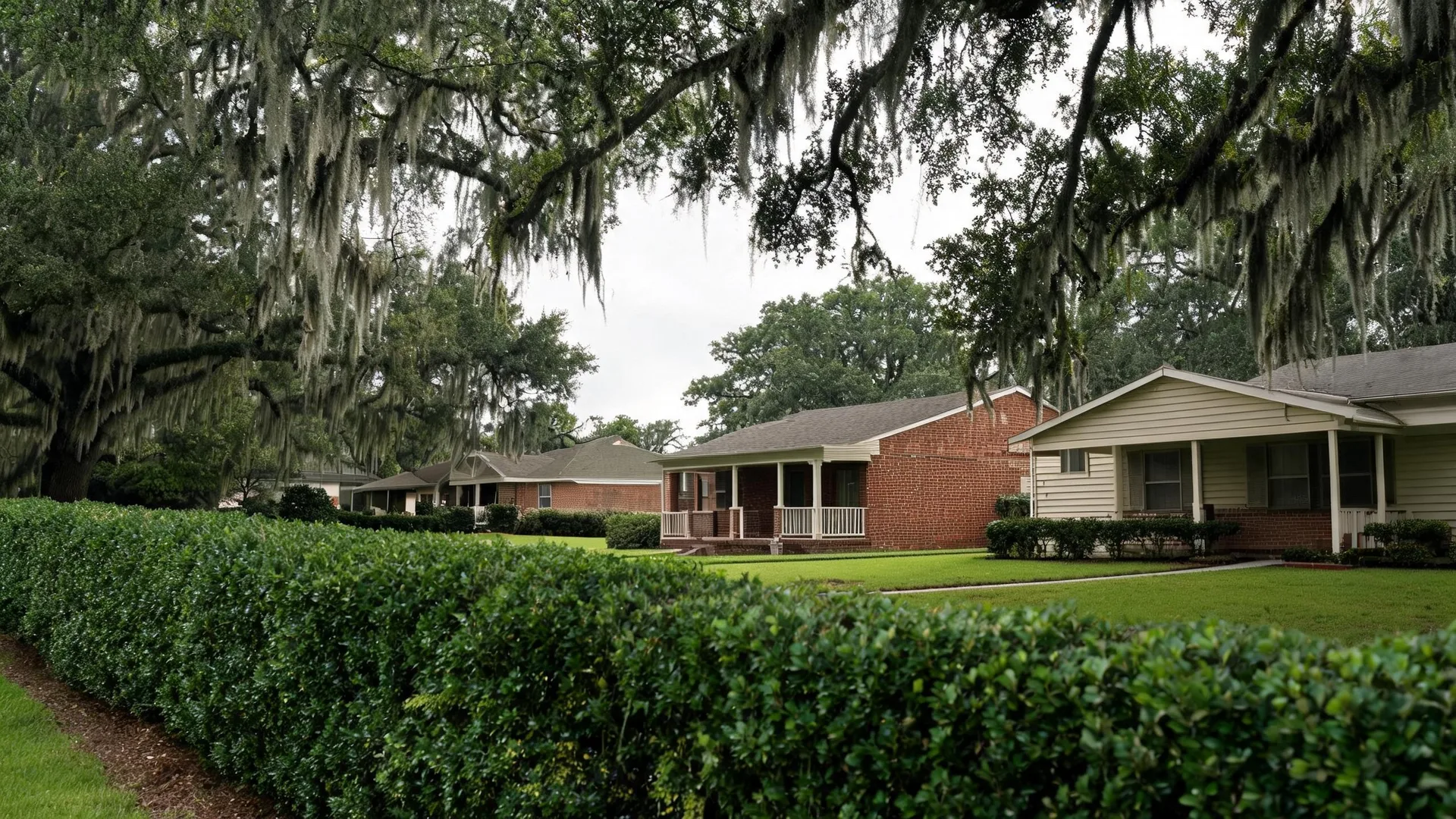





Single-story brick and siding houses with lawns behind a long trimmed hedge, framed by large oak branches draped with Spanish moss under an overcast sky.

AC Repair in Lenoir, NC

Tell us about the job

Takes about a minute. No obligation.

RepairCentral ACCaldwell County, NC
Step 1 of 2

What ZIP code is the job in?

Caldwell County saw 104 severe weather events between 2015 and 2024. Damaging wind came through 43 times in that stretch, and hail hit 31 times. Three tornadoes touched down, and tropical storms or hurricanes reached the county twice. An outdoor AC unit sits outside through all of it, exposed to wind-thrown branches and hail on the coil and fan. A unit can take a hit and keep running for a while before the damage shows up as a refrigerant leak or a bent fan blade dragging on the housing. If your outdoor unit has been through a storm, it's worth having someone look at it even if the air coming out still feels cold.

4 months
June through September, your air conditioner is on duty
86°F
the average summer afternoon it cools against
31 hail events
in ten years, and hail bends the fins on outdoor coils
43 wind events
in ten years, and wind drives debris into outdoor units
Isometric line illustration of a cutaway single-story house showing interior rooms, ductwork, an indoor air handler or furnace, and a refrigerant line running to an outdoor condenser unit on a pad.
Your air conditioner works hardest from June through August.

NOAA nClimDiv, 1991–2020 normals

An aging compressor can fail the same week as a weak capacitor, and from the outside both look like the unit just quit.

A tech who checks the whole system before quoting anything can tell you if one part needs replacing or if the AC has reached the point where fixing it just buys a few more breakdowns.

Four months of cooling, and the first hot week is when a weak part gives out

Cooling runs June through September
Summer afternoons average 86°F
31 hail events from 2015 to 2024

A tech starts outside at the condenser, because that's where most repair calls trace back to. They'll check the capacitor, since a weak one is one of the most common reasons a unit won't start or trips off a few minutes in. From there they check refrigerant pressure with gauges, not by guessing from how the air feels, because a unit can still blow cold air while it's low. If the coil is dirty or the fan blade is bent or dragging, that shows up fast once the panel is off. Inside, they'll check the evaporator coil and the condensate drain, since a clogged drain is what causes water to back up and shut the system down on its own. By the time they're done, they can usually tell you if you're looking at a single part or a system that's wearing out across the board.

Had a storm come through? Get the outdoor unit checked before it fails on you

If your outdoor unit has been sitting through storms for years, a checkup now can catch hail damage or a slow refrigerant leak before the next hot week finds it for you.

Find a contractor
A gray metal air conditioning condenser unit mounted on a concrete pad in a flat grassy field under a partly cloudy sky.

What to check yourself before the service call

Before calling anyone, look at the thermostat first. Make sure it's set to cool and set below room temperature, and check if the display is blank, since dead batteries alone can stop a system cold. Next, go to the breaker panel and look for a tripped breaker on the AC circuit. If it's tripped, reset it once. If it trips again, stop and leave it off, because that's a sign of a short or a failing part, not something to force. Outside, check that the condenser unit has clearance all around it. Leaves, grass clippings or anything blocking the fan can make it run hot and shut itself off. Look at the fan blade through the top grate. If it's bent or not spinning freely, don't reach in or try to turn it by hand. Inside, check the air filter. A filter packed with dust chokes airflow across the coil, and that alone can cause the system to ice up or blow warm air. Last, find the condensate drain line, usually a PVC pipe near the indoor unit, and see if water is backed up or dripping where it shouldn't. Some systems have a safety switch that shuts the whole unit down when that line clogs. None of this means opening the unit's electrical panel or touching refrigerant lines. That part is for someone trained to do it safely.

A low refrigerant charge turns into a dead compressor

A unit low on refrigerant still tries to run a full cycle. The compressor keeps pumping with less gas to carry the heat, runs hotter than it should, and that heat is what wears through its windings. Shut it down at the first sign of trouble and the compressor is still fine. Keep running it and you can turn a slow leak into a compressor replacement.

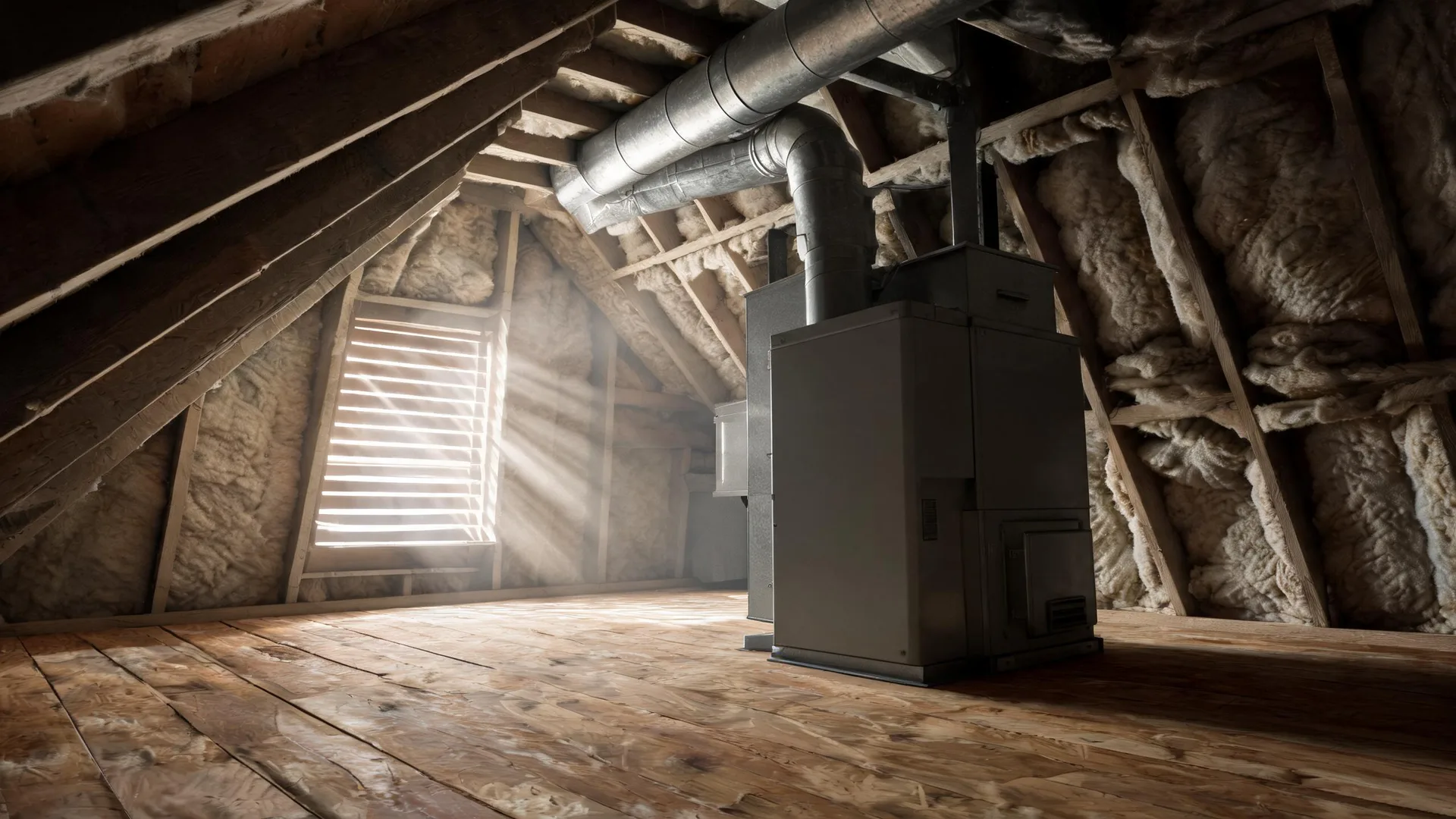
A dragging fan blade burns out the motor pushing it

If a fan blade is bent or catching on the housing, the motor behind it is working harder every second to turn it anyway. That strain shows up in the motor windings long before the blade itself breaks off. A motor replacement costs more than straightening a blade, and the one leads to the other if it keeps spinning bent.

An overhead view of a residential air conditioning condenser unit mounted on a concrete pad next to a house with vinyl siding.

A new air conditioner would cut about $30 a year off cooling for a typical Caldwell County home.

  • A new one at the federal minimum, 14.3 SEER2$230 a year
  • An older air conditioner$260 a year

Estimates for a typical Caldwell County home, compared with an older unit built to the previous federal minimum, from EIA household energy data, North Carolina fuel prices and NOAA climate normals. Your home will differ.

Repair makes sense when a part like a capacitor or contactor has failed.

Replacement makes sense when the compressor has failed or the system uses R-22 refrigerant, which is no longer made.

Most AC failures trace back to a handful of parts, and age is what connects them. A capacitor holds a charge that weakens over years of heat cycling until it can no longer kick the compressor or fan motor into motion. A contactor's electrical contacts pit and burn from years of making and breaking the circuit until they stop closing reliably. Refrigerant doesn't get used up, so a low charge almost always means a leak somewhere in the coil or line set, slow enough that cooling fades gradually instead of stopping all at once. Dirt is the other half of it. A coil caked with debris can't shed heat the way it should, so the system runs longer and harder to do the same job, and that extra strain is what pushes a weak part the rest of the way to failure.