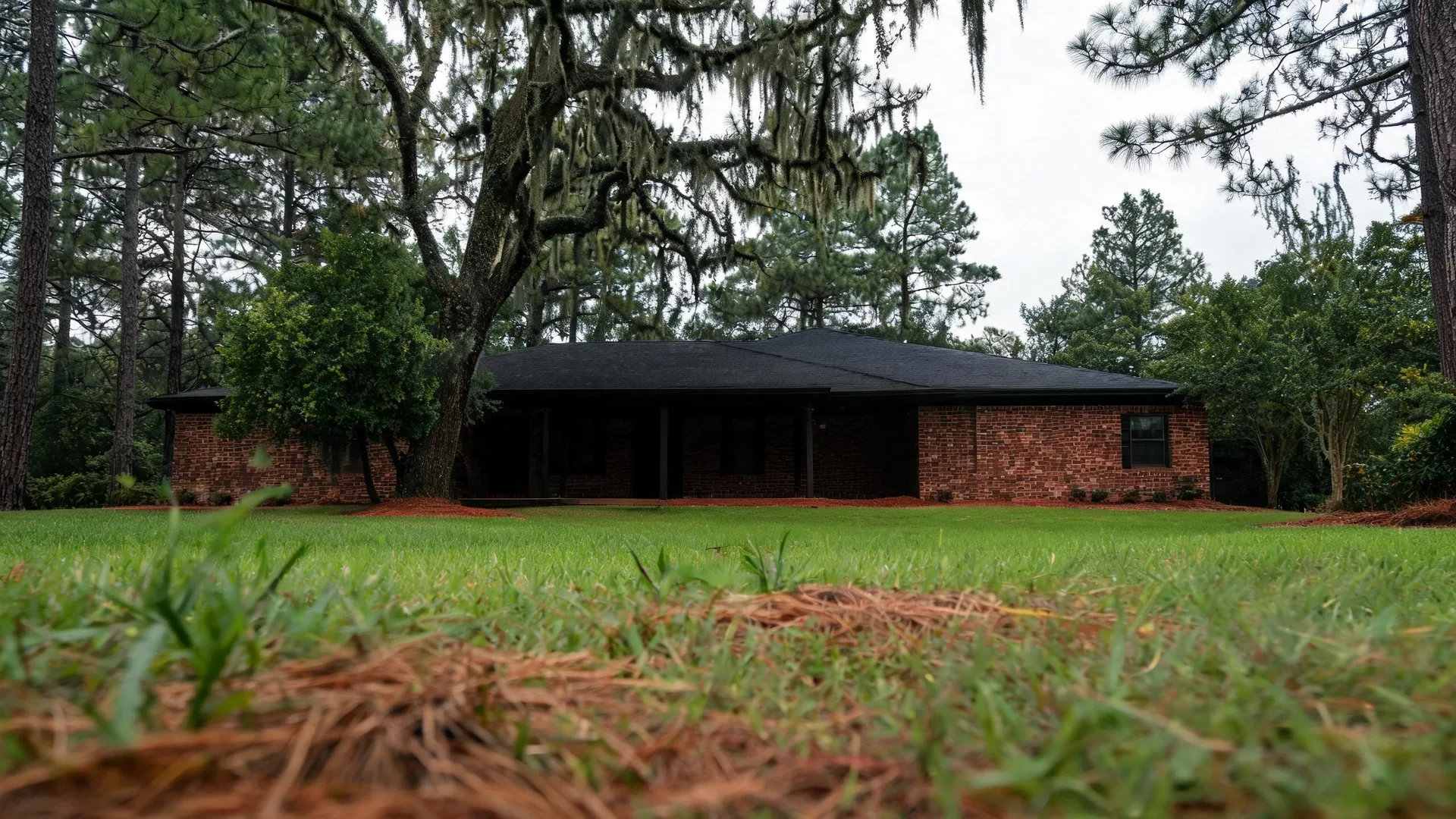



Single-story brick house with a dark shingled roof set behind a lawn and tall pine and moss-draped trees, photographed low to the ground with pine straw in the foreground.

AC Repair in Waynesville, NC

Tell us about the job

Takes about a minute. No obligation.

RepairCentral ACHaywood County, NC
Step 1 of 2

What ZIP code is the job in?

Waynesville only really needs air conditioning in July, and even then the afternoon high averages just 76°F across June, July and August. That's a light load compared to what the same unit would carry further south. An AC acting up after a summer that mild is usually dealing with a worn part or a wiring issue, not a system that's been run into the ground. That makes most repairs worth doing. If your unit is original to the house, age and upkeep explain more about its condition than the weather ever will.

1 months
July through July, your air conditioner is on duty
76°F
the average summer afternoon it cools against
7 hail events
in ten years, and hail bends the fins on outdoor coils
18 wind events
in ten years, and wind drives debris into outdoor units
Isometric line illustration of a cutaway house showing interior rooms with ductwork, an indoor air handler, and an outdoor condenser unit connected by lines, on a white background.
Your air conditioner works hardest from July through July.

NOAA nClimDiv, 1991–2020 normals

July is the only month AC runs in Waynesville.

If something was already weak, July is when it shows up.

Before anyone comes out, check the thermostat batteries and make sure it's set to cool, below room temperature. Go outside and look at the condenser fan. If it's not spinning at all, flip the breaker off and back on once, since a tripped breaker is common and easy to rule out. While you're there, look at the filter. A filter clogged with dust and pet hair chokes off airflow and can make the whole system act like it's failing when it's just starving for air. Walk around inside and feel each vent. If some rooms blow cold and others don't, that points to the ducts or a balancing issue rather than the unit itself. If the outdoor unit is running but the air inside is warm or barely cool, turn it off at the thermostat and don't keep running it. A frozen coil or a refrigerant problem gets worse the longer the system keeps trying to work against it.

It's usually worth repairing

It has an easier job here than in most places, so your air conditioner is often in decent shape. Repair is usually worth it.

Find a contractor
A man in a cap, worn gray shirt and brown work pants, seen from behind, carries a leather tool bag up steps toward an orange front door beside a potted shrub.
A gray residential air conditioner condenser unit mounted on a concrete pad in an open grass field.

Why some AC problems don't wait

A coil that's icing over doesn't fix itself by staying on. As ice builds, it blocks what little airflow is left. The coil gets colder, picks up more ice, and the compressor keeps working against a system that can't move air anymore. Left running, that can push liquid refrigerant back into the compressor, which isn't built to handle it. A weakening capacitor follows the same pattern. It gives the compressor and fan motor the extra push to start turning. Once it drifts out of range, those motors draw more current trying to start anyway, and that extra heat is what finally kills them. A low-charge system acts the same way under load. The compressor runs hotter and longer to make up for it, so a problem that started as a slow leak ends up as a burned-out compressor. None of this means every noise or short cycle is an emergency. But warm air from the vents, ice on the lines, or a unit that won't stop running are signs the system is struggling against something, not just working a little harder than usual.

What you'll likely notice first

Most AC trouble shows up as sound or smell before it shows up as warm air. A hard clunk when the compressor kicks on, a squeal from the fan motor, a musty smell from the vents. Those are worth paying attention to because they usually show up before the system actually fails, not after.

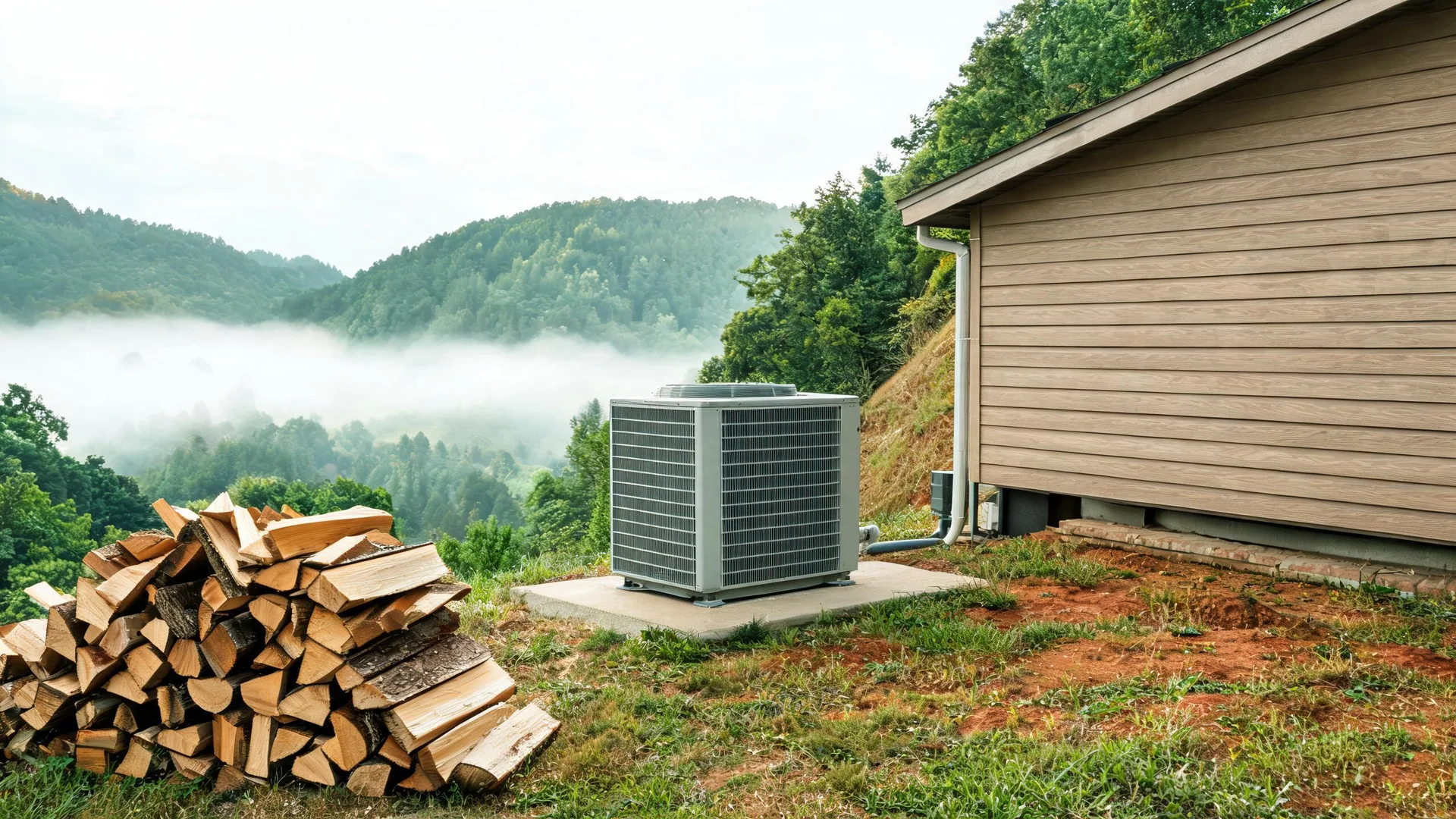
Why the details matter

Grinding points at a motor bearing wearing out. A hissing sound near the lines points at a refrigerant leak. A system that shuts off and restarts over and over points at the capacitor or the thermostat. Telling the tech exactly what you heard, what you smelled, and when it started gets you a faster diagnosis.

An outdoor air conditioning condenser unit positioned on a concrete pad next to a blue-sided house, surrounded by green shrubs and flowering hydrangeas at sunset.

A new air conditioner would save little on running costs in Haywood County, so the repair decision comes down to the unit's condition.

  • A new one at the federal minimum, 14.3 SEER2$60 a year
  • An older air conditioner$70 a year

Estimates for a typical Haywood County home, compared with an older unit built to the previous federal minimum, from EIA household energy data, North Carolina fuel prices and NOAA climate normals. Your home will differ.

Repair makes sense when a part like a capacitor or contactor has failed.

Replacement makes sense when the compressor has failed or the system uses R-22 refrigerant, which is no longer made.

A diagnostic visit starts outside at the condenser, checking that the fan spins freely and the compressor isn't drawing more current than it should. From there it's gauges on the lines to read the refrigerant charge, since too little or too much both point to a leak or a bad charge from the start. Inside, the tech checks the coil for ice or dirt and tests the capacitor under load rather than just looking at it, since a capacitor can look fine and still be weak. Electrical connections get checked too. Loose wiring or a corroded contactor causes the same short cycling a bad capacitor does, and the only way to tell them apart is to test each one. The goal is finding the part that's actually failing, not just the one that's easiest to blame.