Five months of real load
Air conditioners in Onslow County run from May through September. That's five straight months with the compressor cycling on nearly every day, not just a few hot stretches here and there.
Takes about a minute. No obligation.
Air conditioners in Onslow County run from May through September. That's five straight months with the compressor cycling on nearly every day, not just a few hot stretches here and there.
Afternoon highs average 88°F in June, July and August, and the dew point averages 72°F, heavier than most of the country sees. Your system is pulling moisture out of thick air on top of cooling it, and that extra work adds up on parts like the compressor and capacitor.

NOAA nClimDiv, 1991–2020 normals
May is when cooling starts here, and when a weak part gets found.
A capacitor or contactor that limped through last September often won't make it through this May.



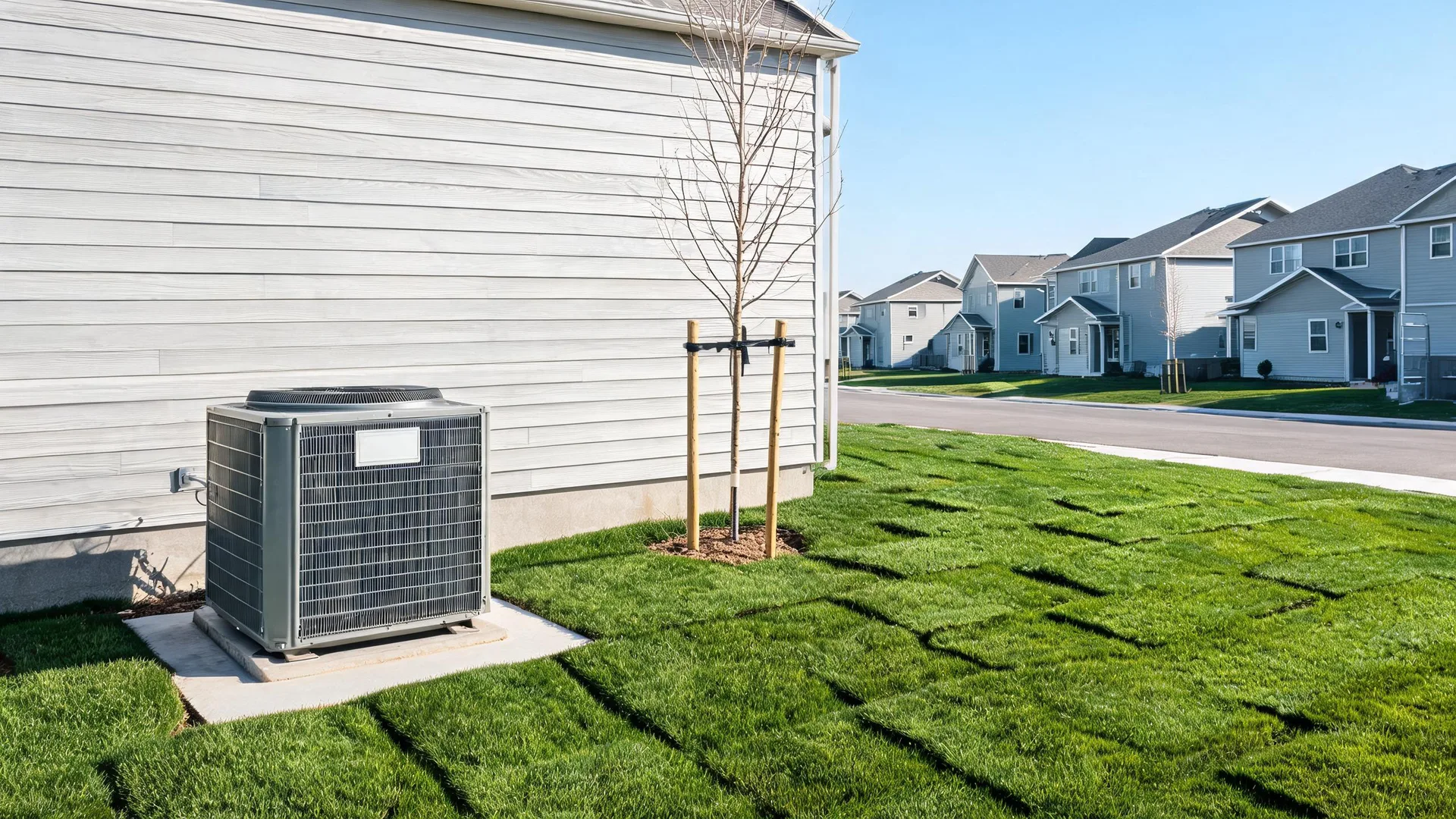
Half the homes in Onslow County were built in 1998 or later, so a lot of the systems behind this call are still within their working life. If yours came with a newer house, that's worth knowing before you decide whether a repair makes sense. A compressor or coil that's a few years old usually just needs the broken part replaced, not a replacement system. Age is one of the first things a technician checks, right alongside what's actually failing.
Whatever's going wrong with your AC right now has had a long stretch of hard running to show itself. A technician can tell you whether it's one worn part or something bigger, and get it fixed right instead of patched for the rest of the summer.
Find a contractor
A system that's a few years old doesn't need to run perfect to be worth fixing. It needs the one part that failed replaced. The time-lapse above is what a normal day asks of it, running from morning into night without a break. If the system behind it came with a newer build, it was built to handle that kind of day, and a repair gets it back to doing just that.
Make sure the thermostat is set to cool and set below room temperature, and check the batteries if it has a blank or dim display. Then look at the air filter. A filter clogged with dust chokes off airflow across the indoor coil, and that alone can make a system blow warm or freeze up. If it's gray and packed with lint, swap it before you assume something's broken.
Walk outside and check that the condenser fan is spinning and that nothing like leaves, grass clippings or a fallen branch is blocking the sides of the unit. Inside, check the breaker panel for a tripped breaker tied to the AC. If it's tripped, you can reset it once, but if it trips again, leave it off and call someone rather than resetting it repeatedly.
Estimates for a typical Onslow County home, compared with an older unit built to the previous federal minimum, from EIA household energy data, North Carolina fuel prices and NOAA climate normals. Your home will differ.
Repair makes sense when a part like a capacitor or contactor has failed.
Replacement makes sense when the compressor has failed or the system uses R-22 refrigerant, which is no longer made.
A diagnostic visit starts before anyone touches a tool. The technician asks what the system is doing, when it started, and whether it's constant or just happens at certain times of day. Then they check static readings at the vents, the temperature split between the return air and the supply air, and the pressures in the refrigerant lines. Those numbers point to whether the problem is airflow, charge, or an electrical part failing to do its job. From there it's a process of elimination: testing the capacitor's output against its rating, checking the contactor for pitting, watching how the compressor draws current when it starts. Most of the time the failing part shows itself clearly once the right test is run, and the technician can tell you exactly what it is and what replacing it involves before any work begins.