An outdoor air conditioning condenser unit positioned beside a blue-sided house at sunset.

AC Repair in Pinehurst, NC

Tell us about the job

Takes about a minute. No obligation.

RepairCentral ACMoore County, NC
Step 1 of 2

What ZIP code is the job in?

Moore County sees real storm damage

Moore County recorded 167 severe weather events between 2015 and 2024, including 136 instances of damaging wind and 15 hail events. A tornado touched down once in that span, and hurricanes or tropical storms came through 4 times. That's a lot of chances for something to hit the outdoor unit sitting outside your house.


A unit that still runs can still be hurt

Hail dents fins and bends the cabinet. Flying debris can nick the coil or jam the fan. None of that always stops the unit from running right away, but it can mean it's working harder than it should, or failing sooner than it would have. If your system has been through a bad storm, it's worth having someone look at the outdoor unit, not just listen for whether it starts.

5 months
May through September, your air conditioner is on duty
89°F
the average summer afternoon it cools against
15 hail events
in ten years, and hail bends the fins on outdoor coils
136 wind events
in ten years, and wind drives debris into outdoor units
Isometric cutaway illustration of a small house showing interior rooms with furniture, ceiling ductwork and an air handler, plus an outdoor condenser unit connected by refrigerant lines beside the building.
Your air conditioner works hardest from June through August.

NOAA nClimDiv, 1991–2020 normals

Electricity in Moore County ran 15.23 cents per kilowatt-hour in 2025.

A failing AC pulls more power to do less cooling, and that shows up on every bill until it's fixed.

Five months of 89 degree afternoons is what this unit is up against

Cooling runs May through September
Summer afternoons average 89°F
136 damaging wind events from 2015 to 2024
This is a younger county, system-wiseHalf the homes in Moore County were built in 1994 or later.

April is worth a check, before May turns the cooling on for good. A system that sat idle since September can have a weak part that never showed itself until the first real load hits it. That tends to happen in the opening weeks of the season, not the middle of it. Cooling here runs May through September, five months straight, and a unit that struggles in week one is going to struggle for the rest of them. Catching it in April means a repair now instead of a breakdown on the first hot afternoon.

If a storm hit your unit, don't wait to find out how bad

If your outdoor unit has been through hail or wind this year, don't judge it by whether it turns on. Bent fins and a nicked coil can run for weeks before they cause a real failure. Have it checked now, while it's still just a question and not a breakdown.

Find a contractor
A man in a cap, dark shirt and worn brown work pants walks up concrete steps toward an orange front door, carrying a canvas tool bag in his right hand, with a potted shrub beside the entry.
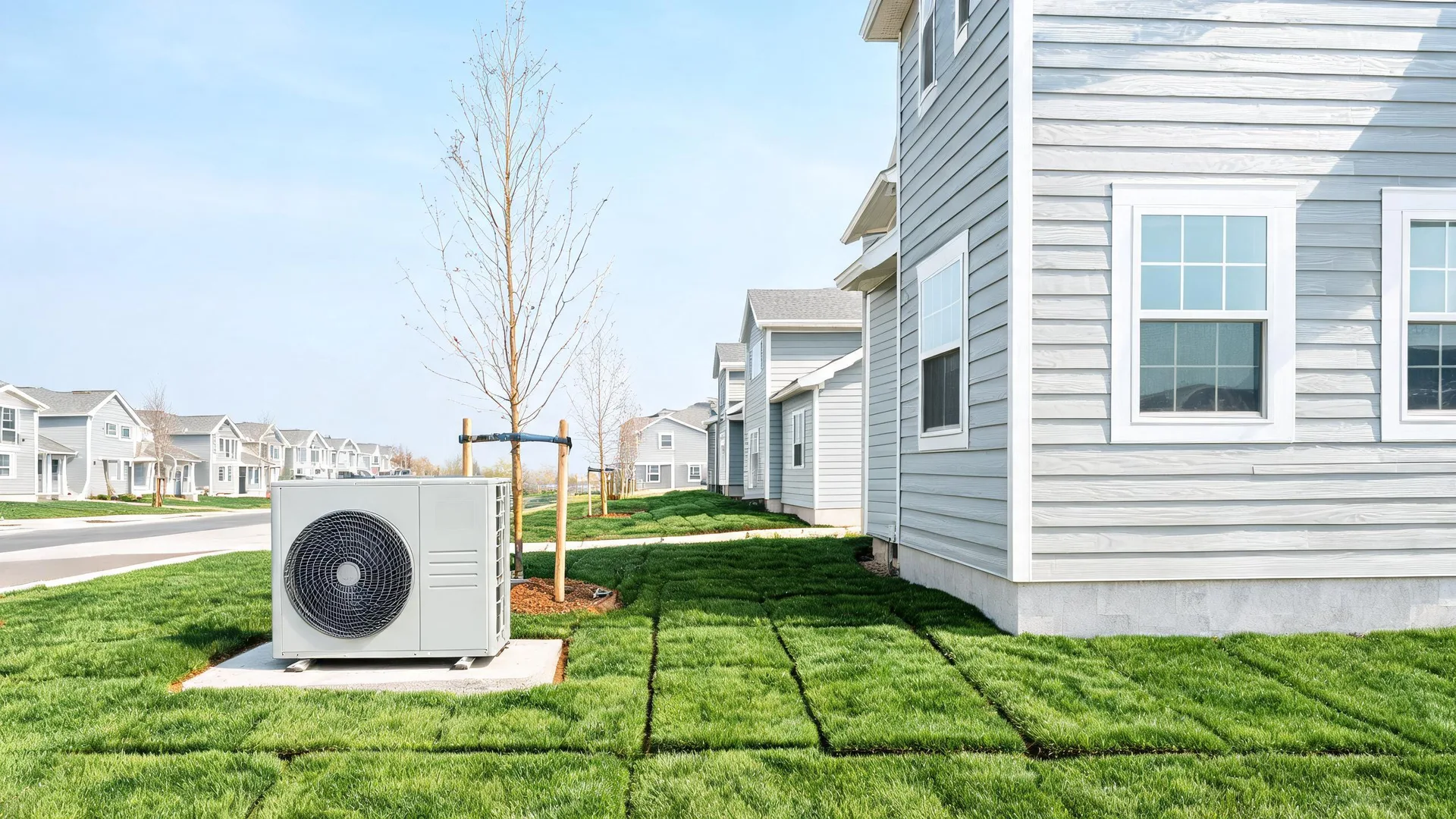
A gray residential air conditioning condenser unit mounted on a concrete pad outdoors, surrounded by green grass under a partly cloudy blue sky.

A newer system is worth fixing, not replacing

If your system came with the house, and the house was built in 1994 or later, there's a good chance it still has working life ahead of it. A broken part on a newer system is usually just a broken part, not a sign the whole unit is done. Worth getting it checked and fixed before anyone brings up replacing it.

A struggling compressor doesn't get better with time

A compressor low on charge or straining against a bad capacitor runs hotter than it should. Keep calling on it and the windings take the damage, and a repair turns into a full replacement. Some sounds and symptoms mean shut it off and get it looked at, not run it until the weekend.

A small electrical fault can take out bigger parts

A failing capacitor or a loose connection makes the compressor pull harder to start and run. Let that continue and the compressor itself can fail. The part that was cheap to replace gets replaced anyway, along with the part it was protecting.

Aerial view of a gray outdoor air conditioning condenser unit mounted on a concrete pad next to a house with vinyl siding.

A new air conditioner would cut about $50 a year off cooling for a typical Moore County home.

  • A new one at the federal minimum, 14.3 SEER2$340 a year
  • An older air conditioner$390 a year

Estimates for a typical Moore County home, compared with an older unit built to the previous federal minimum, from EIA household energy data, North Carolina fuel prices and NOAA climate normals. Your home will differ.

Repair makes sense when a part like a capacitor or contactor has failed.

Replacement makes sense when the compressor has failed or the system uses R-22 refrigerant, which is no longer made.

A diagnostic visit starts outside, at the unit itself. The tech checks the refrigerant charge, because too little or too much makes the whole system work against itself. They'll test the capacitor and the contactor, since those parts start the compressor and fan and tend to wear out before anything else does. Electrical connections get checked for corrosion or looseness, especially after any kind of power surge. Airflow gets checked too, both at the outdoor unit and back at the indoor coil, because a system can have a sound compressor and still cool poorly if air isn't moving through it right. Most of this takes measurements, not guesses. A tech can tell you the charge is low or the capacitor is weak because the numbers say so, not because the unit sounds a certain way.