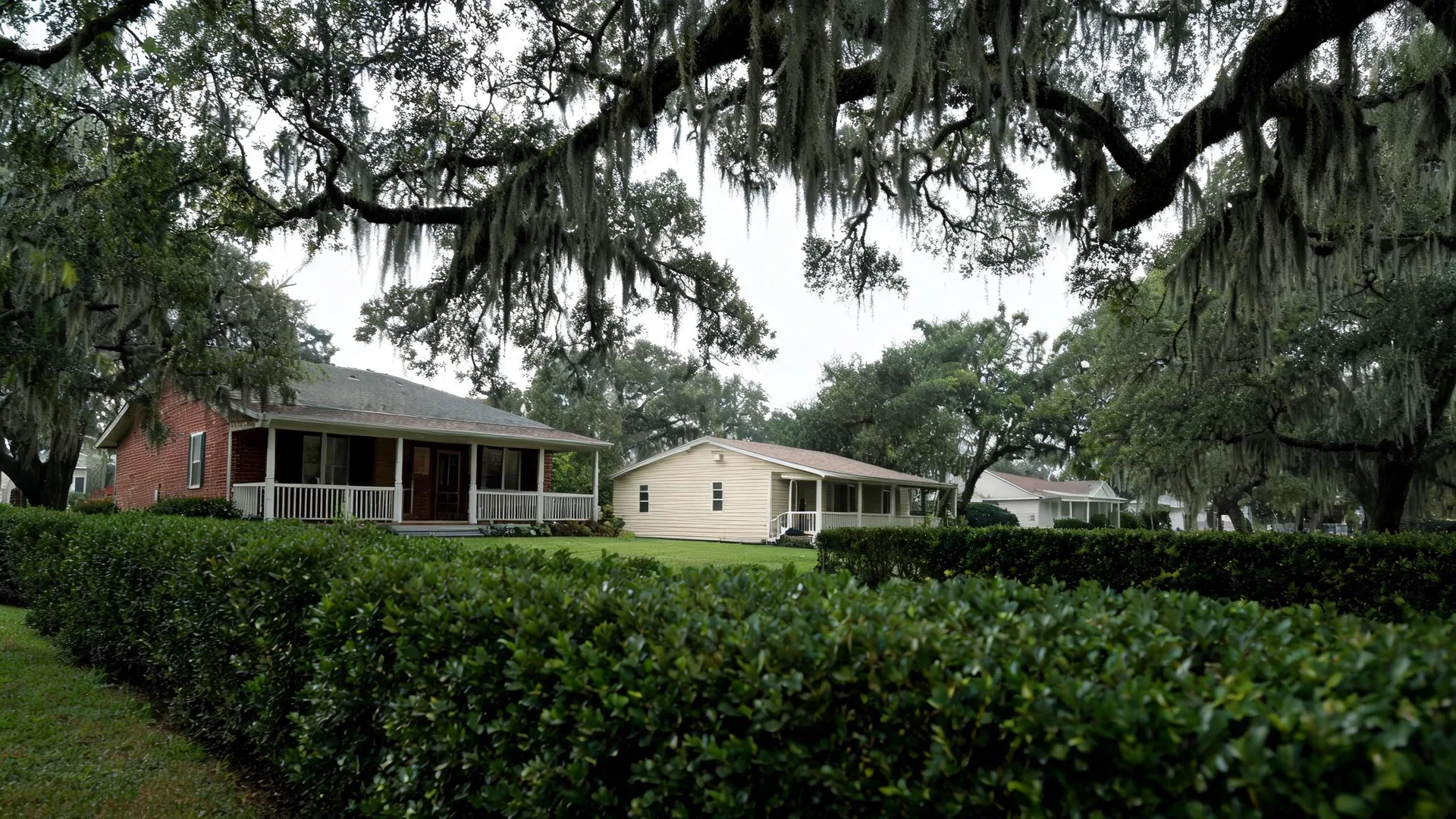
A brick house with a white porch and a light-colored single-story house behind a trimmed hedge, framed by large oak branches draped with Spanish moss.

AC Repair in Wilson, NC

Tell us about the job

Takes about a minute. No obligation.

RepairCentral ACWilson County, NC
Step 1 of 2

What ZIP code is the job in?

Weather here takes a toll on outdoor units

Wilson County logged 109 severe weather events between 2015 and 2024, including 76 with damaging wind and 16 with hail. An outdoor AC unit sits outside through all of it, exposed to whatever wind throws at it and whatever hail comes down.


A unit that still runs may still be hurt

Hail can dent the fins around the coil and bend them enough to block airflow. Wind-blown debris can do the same. A compressor can keep running with damaged fins, just not the way it did before the storm hit.

5 months
May through September, your air conditioner is on duty
88°F
the average summer afternoon it cools against
16 hail events
in ten years, and hail bends the fins on outdoor coils
76 wind events
in ten years, and wind drives debris into outdoor units
Isometric line illustration of a cutaway house showing interior rooms, ceiling ductwork, an indoor air handler unit, and an outdoor condenser connected by lines along the exterior wall.
Your air conditioner works hardest from June through August.

NOAA nClimDiv, 1991–2020 normals

AC starts running in May here, and April is when a weak part finally gets tested.

Get it looked at before May if something seemed off last summer.

Half the homes here were built in 1986 or later, and the system in yours may be too

Half the homes here were built by 1986
Climate zone 3A
Power here costs 13.72 cents per kilowatt-hour

Your AC here is working against 88 degree afternoons and air so heavy with moisture the dew point sits higher than most of the country sees. That combination makes the compressor run longer just to pull the same heat and moisture out of the house. Five months of that, May through September, adds up fast. A part that's starting to go usually shows it under that kind of load, not when the unit is idle. If something's acting up now, in the middle of the season, it's worth having someone trace the actual cause rather than guess at it, because the fix that lasts is the one matched to what's really worn.

If a storm hit your unit, check it even if it's cooling fine

A compressor can run with bent fins or storm debris packed in the coil, just not the way it used to. If your unit took hail or wind in the last storm, have it looked at now rather than waiting for it to fail outright.

Find a contractor
A man in a dark cap, dark shirt and brown pants, seen from behind, walks up porch steps toward an orange front door while carrying a brown canvas tool bag.
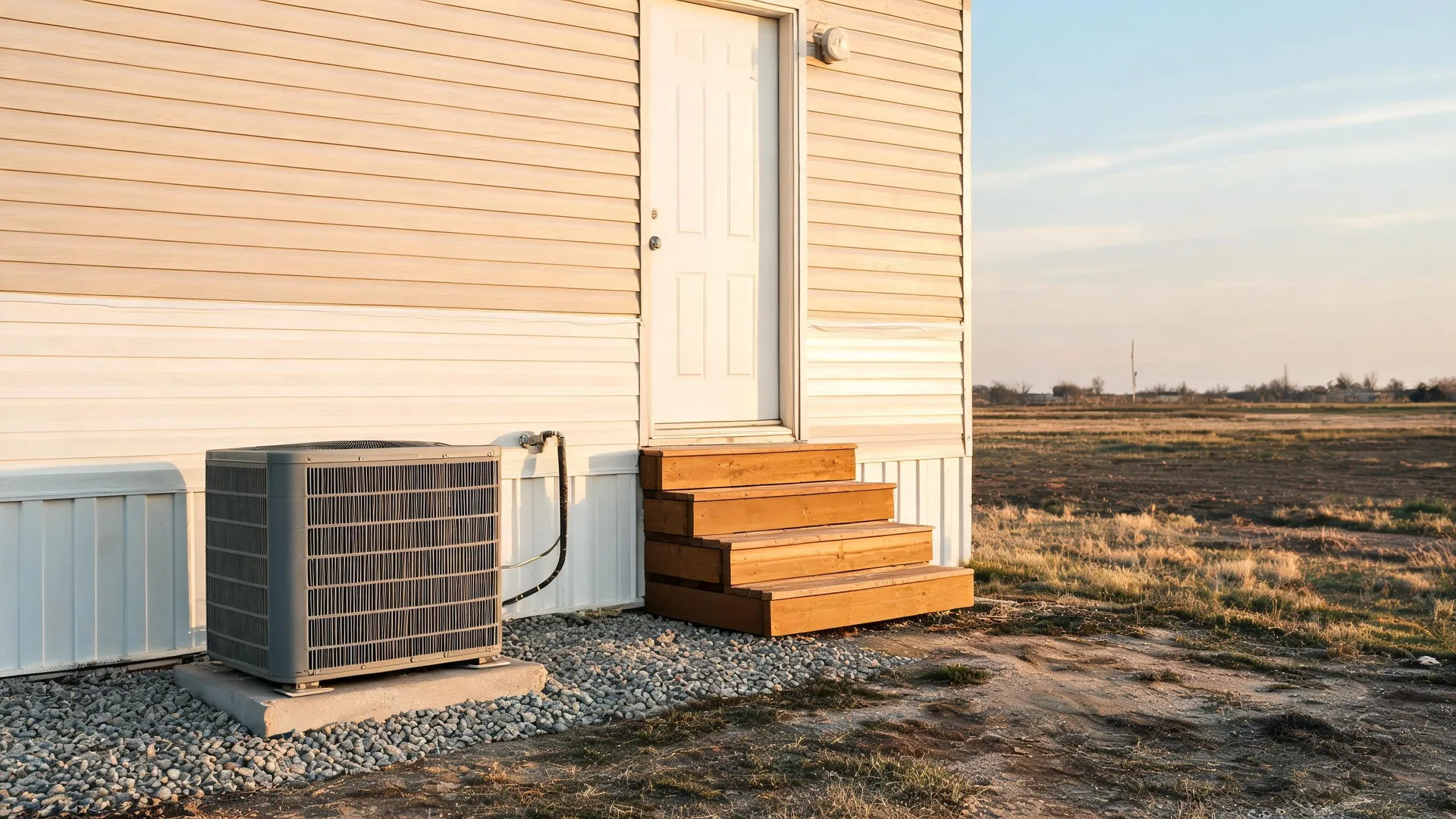
An outdoor air conditioning condenser unit mounted on a concrete pad beside a house, with electrical conduit running to a wall-mounted disconnect box.

How many summers has this unit already put in

If your AC came with the house and the house went up in the last few decades, replacing a part is usually worth it. A compressor or a control board still has years ahead of it in a system that age. That's different from a unit that's already outlasted what it should have, where the same repair might just be a stop on the way to something bigger. Worth knowing either way before you decide what to spend on it.

Check the thermostat before anything else

Make sure it's set to cool and set below room temperature, and check the batteries if it has a screen that looks dim or blank. Then go to the breaker panel and look for a tripped breaker, there are usually two for a central system, one for the outdoor unit and one for the air handler. A breaker that trips once might have been a fluke. One that trips again after you reset it means something's actually wrong, and that one needs a tech, not another reset.

Look at the outdoor unit and the filter

Walk outside and see if the outdoor unit is running, if the fan on top is spinning, and if anything like leaves or grass clippings is packed against the sides blocking airflow. Clearing debris away from the unit is safe to do yourself. Inside, pull the air filter and hold it up to a light. If you can't see light through it, it's choked, and a choked filter can ice the coil and stop the system from cooling even though it's running. Swapping the filter is something any homeowner can do. If the coil already has ice on it, shut the system off and let it thaw completely before running it again, otherwise you risk the compressor.

Aerial view of a residential air conditioning condenser unit mounted on a concrete pad next to a house with vinyl siding and a sliding glass door.

A new air conditioner would cut about $50 a year off cooling for a typical Wilson County home.

  • A new one at the federal minimum, 14.3 SEER2$340 a year
  • An older air conditioner$390 a year

Estimates for a typical Wilson County home, compared with an older unit built to the previous federal minimum, from EIA household energy data, North Carolina fuel prices and NOAA climate normals. Your home will differ.

Repair makes sense when a part like a capacitor or contactor has failed.

Replacement makes sense when the compressor has failed or the system uses R-22 refrigerant, which is no longer made.

At some point a repair stops being the right call even though it's possible. Age isn't really the deciding factor, wear is, and the two don't always match. A compressor that's original to the unit has been running every cooling cycle since day one, while a control board swapped in a few years back hasn't. When something fails, ask what else nearby is likely to go next. A refrigerant leak in an old coil often means the coil is done even if this particular leak gets patched, because the metal around it is thinning the same way everywhere. A failed capacitor, on the other hand, usually doesn't say anything about the rest of the system. It just wore out on its own schedule. The honest question isn't whether it can be fixed. It's whether fixing this one part buys real years or just gets you to the next breakdown.