





Low-angle view along a red brick wall with flowering pink shrubs at its base, a mown lawn extending to a distant single-story house and tall pine trees under an overcast sky.

AC Repair in Asheville, NC

Tell us about the job

Takes about a minute. No obligation.

RepairCentral ACBuncombe County, NC
Step 1 of 2

What ZIP code is the job in?

A repair call usually comes down to one question. Is this a part failing on its own, or is the compressor telling you the system is done. A bad capacitor, a worn contactor, a blown fan motor, these are normal wear items, and fixing them brings the system back to full health. A failing compressor is different. It's the most expensive part in the unit, and once it's going bad, replacing the whole outdoor unit is often the more sensible path rather than just swapping that part. The age of the system matters too. An older unit with a failed capacitor is almost always worth repairing. An older unit with a failed compressor often isn't, especially if it's also low on refrigerant or was never quite cooling right to begin with. A good tech will tell you which kind of problem you have before they tell you what it costs to fix it.

3 months
June through August, your air conditioner is on duty
80°F
the average summer afternoon it cools against
22 hail events
in ten years, and hail bends the fins on outdoor coils
55 wind events
in ten years, and wind drives debris into outdoor units
Isometric cutaway illustration of a house with a dark shingled roof, showing interior ductwork connected to an indoor air handler and an outdoor condenser unit beside the building.
Your air conditioner works hardest from June through August.

NOAA nClimDiv, 1991–2020 normals

Summers in Asheville only run June through August, with afternoon highs around 80.

Three mild months of work a year is a light load, so a repair usually brings back a system with plenty of life left.

June is when a weak part gives out

Cooling runs June through August
Summer afternoons average 80°F
55 damaging wind events from 2015 to 2024

A light summer ahead is a good reason to fix it now

Get the repair done and the system has three mild months a year ahead of it, not year-round strain. That's the kind of load a repaired part handles fine for seasons to come.

Find a contractor
A man in a cap, dark shirt and worn brown work pants walks up concrete steps toward an orange front door, carrying a canvas tool bag in his right hand, with a potted shrub beside the entry.
An outdoor air conditioning condenser unit mounted on a concrete pad beside a house, with electrical conduit running to a wall-mounted disconnect box.

The signs are rarely subtle once you know what you're looking at

Most people don't notice their AC is struggling until it stops doing the one thing it's supposed to do. The room doesn't get cold anymore, or it takes a lot longer than it used to. Sometimes the unit outside is running but you feel warm air coming from the vents, which usually points to the compressor or the refrigerant charge rather than anything electrical. A short cycle, where the system kicks on and off every few minutes instead of running a full cooling cycle, is hard on every part inside it and often means a sensor or a control board is giving bad signals. Warm spots in one part of the house while another stays cool points at airflow, not the unit itself. Any grinding or screeching from outside means a motor bearing is on its way out. A hissing sound near the lines or ice forming on the copper line is refrigerant telling you it's leaking out, and that won't fix itself by running the system more or less.

What you can check first

Look at the outdoor unit and see if the fan is spinning. If it's dead still, check the breaker before anything else, a tripped one is an easy fix. Check the thermostat is set to cool and the set temperature is actually below room temperature. Pull the air filter and look at it, a clogged one can choke airflow enough to make the system seem broken when it isn't. If there's a shutoff switch near the indoor unit or in the attic, make sure it wasn't bumped off.

What to leave alone

Don't pull the cover off the outdoor unit or touch anything inside it. Don't try to add refrigerant yourself, a low charge almost always means a leak, and adding more without finding it just hides the problem. If you smell burning, hear grinding, or see ice on the lines, turn the system off at the thermostat and leave it off until a tech looks at it. Running it in that state only makes the damage worse.

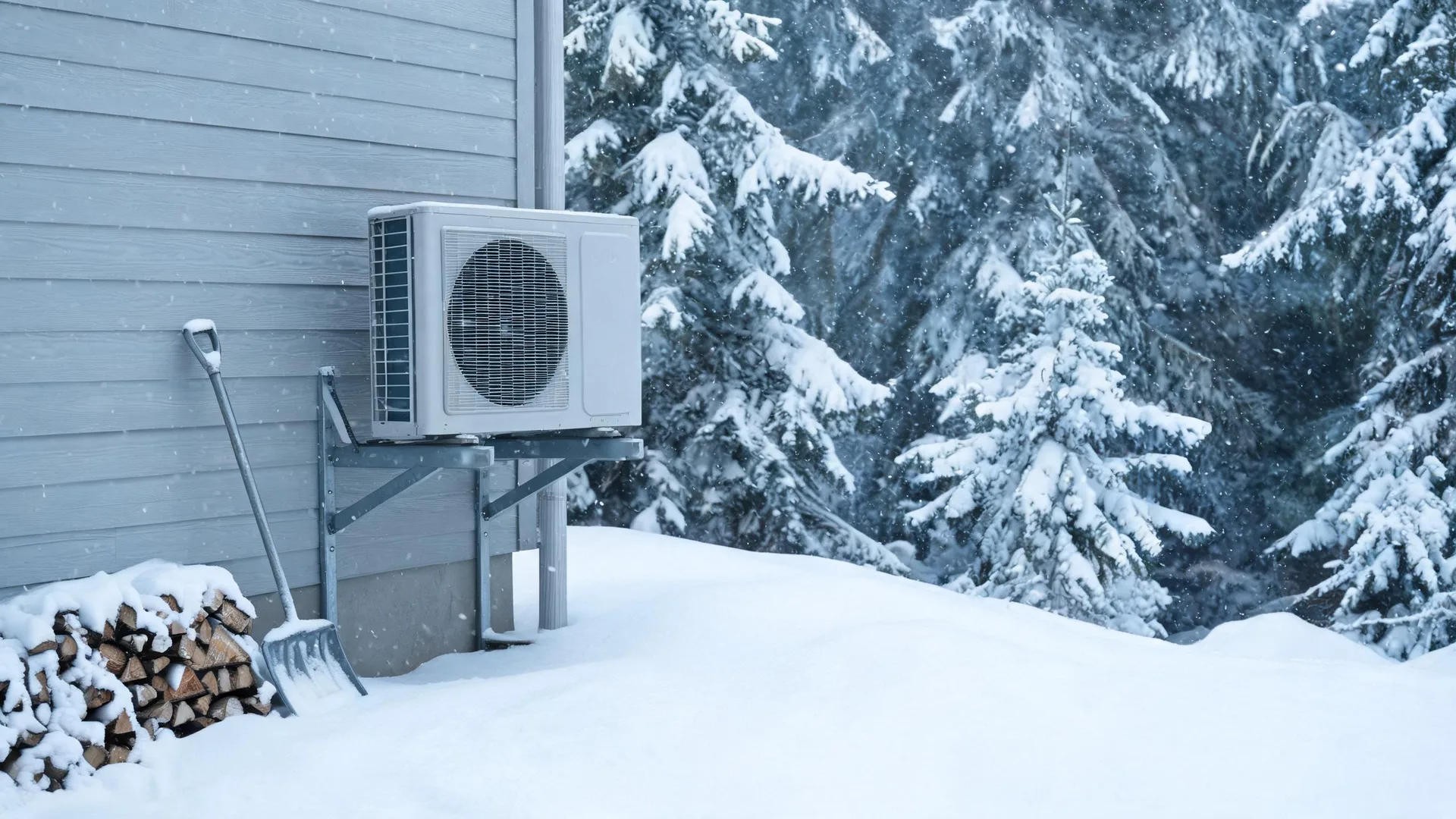
An outdoor air conditioning condenser unit installed beside the exterior wall of a blue vinyl-sided house at sunset.

A new air conditioner would save little on running costs in Buncombe County, so the repair decision comes down to the unit's condition.

  • A new one at the federal minimum, 14.3 SEER2$130 a year
  • An older air conditioner$150 a year

Estimates for a typical Buncombe County home, compared with an older unit built to the previous federal minimum, from EIA household energy data, North Carolina fuel prices and NOAA climate normals. Your home will differ.

Repair makes sense when a part like a capacitor or contactor has failed.

Replacement makes sense when the compressor has failed or the system uses R-22 refrigerant, which is no longer made.

A diagnostic call starts outside at the condenser, since that's where most repair calls trace back to. The tech checks for power at the unit, checks that the capacitor is holding its charge, and checks that the contactor is actually pulling in when the thermostat calls for cooling. From there it's gauges on the refrigerant lines, reading the pressures to see if the charge is right or if something's leaking out. Airflow gets checked too, both at the return and at the vents, because a system can test fine on paper and still cool poorly if air isn't moving through it. If the compressor itself is suspect, the tech checks its amp draw and listens to how it sounds on startup, since a struggling compressor usually gives itself away before it quits for good. By the end of that walk-through, a tech should be able to point to the one part causing the problem rather than guessing at a few.