





White plantation-style houses with wraparound porches lit at night, surrounded by Spanish moss-draped live oak trees.

AC Repair in North Wilkesboro, NC

Tell us about the job

Takes about a minute. No obligation.

RepairCentral ACWilkes County, NC
Step 1 of 2

What ZIP code is the job in?

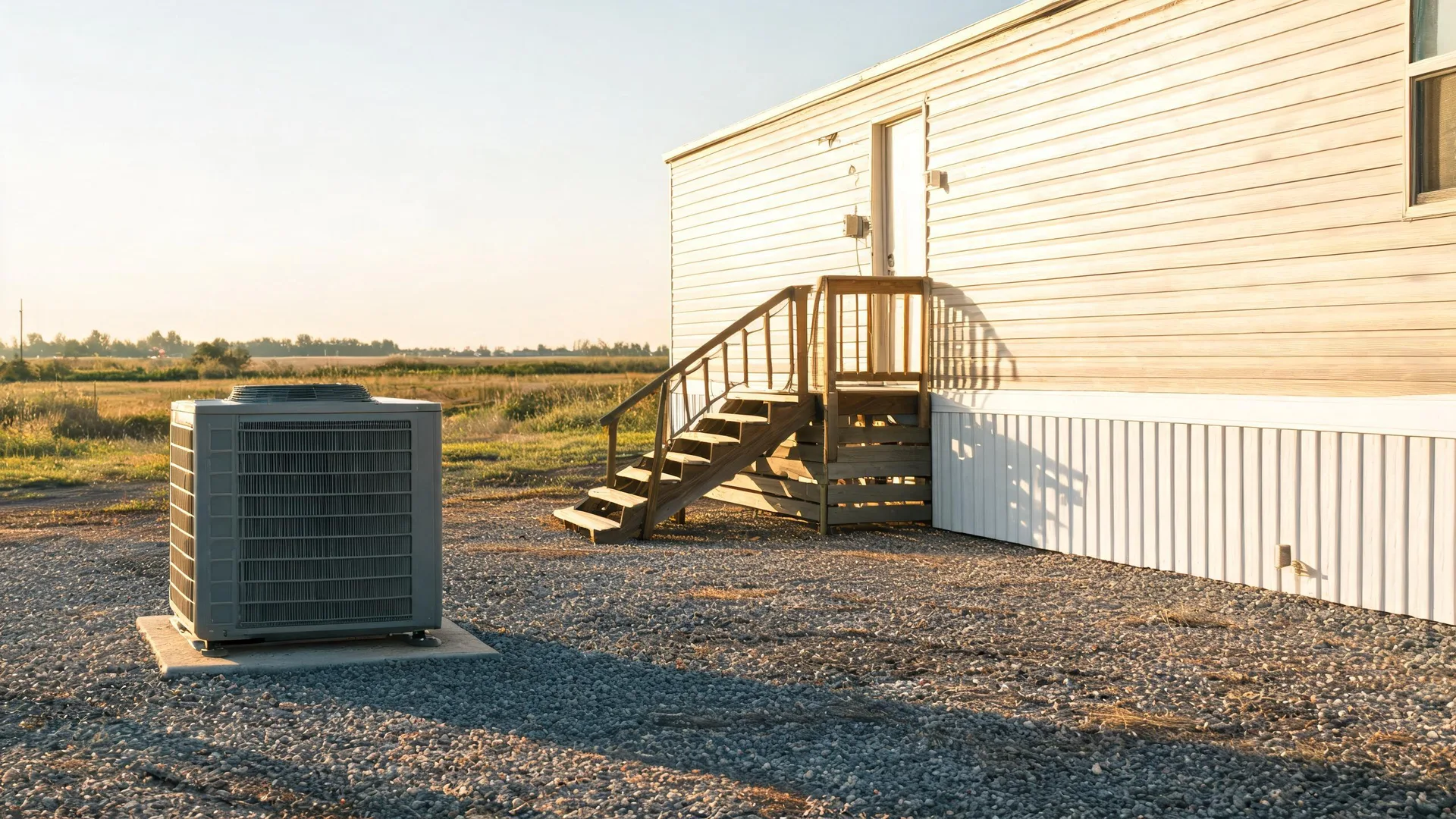
Wilkes County saw 147 damaging wind events and 22 hail events between 2015 and 2024, on top of six tornadoes. That outdoor unit sits outside through all of it. Hail dents the fins on the condenser coil, and wind throws branches and grit into the cabinet. None of that always stops the unit from running. A system can keep blowing cold air while the coil is bent up or the fan is knocked slightly out of balance, and the strain just shows up later as a bigger repair. If a storm has come through recently, it's worth having the outdoor unit looked at even if nothing seems wrong yet.

4 months
June through September, your air conditioner is on duty
85°F
the average summer afternoon it cools against
22 hail events
in ten years, and hail bends the fins on outdoor coils
147 wind events
in ten years, and wind drives debris into outdoor units
Isometric line illustration of a cutaway house showing interior rooms with ductwork, an air handler and furnace, connected by lines to an outdoor condenser unit on the ground outside.
Your air conditioner works hardest from June through August.

NOAA nClimDiv, 1991–2020 normals

Check the breaker before you check anything else, since a tripped one will shut the whole system down with no other signs.

If the breaker holds and the unit still won't run, the problem is inside the cabinet and it's time to call someone.

June is when a weak AC shows what it couldn't handle over winter

Cooling runs June through September
Summer afternoons average 85°F
147 damaging wind events from 2015 to 2024

A compressor failing and a capacitor failing can look the same from the kitchen: the unit hums, trips, or won't start. The difference matters. A capacitor is a small, cheap part that's simple to replace. A compressor is the heart of the system, sealed inside the outdoor unit, and when it goes, replacing just that part often costs close to a new system anyway. That's the real question in any repair decision: is the broken part one piece doing its own job, or is it the part everything else depends on. Age factors in too, but less than people think. A unit that's been maintained each year and loses a fan motor is usually worth fixing. A unit that's been neglected and starts having one failure after another is telling you something different. The pattern matters as much as any single repair.

After a storm, have the outdoor unit checked before it fails

If the outdoor unit has been through a recent storm, get it looked at before you decide it's fine. A bent coil or an unbalanced fan won't always stop it from cooling, but it will keep straining until something bigger gives out.

Find a contractor
A gray metal air conditioning condenser unit mounted on a concrete pad in a flat grassy field under a partly cloudy sky.

A small problem left running becomes a bigger one

A refrigerant leak is the clearest case. Low charge makes the compressor work harder to move the same amount of heat, and it runs hotter doing it. Keep running it low and the compressor can overheat and fail for good, turning a leak repair into a full replacement. A struggling capacitor works the same way. It gives the compressor and fan motor the extra push they need to start. A weak one still lets them start, just rough, with more draw on the windings each time. That strain adds up. Even something as simple as a dirty coil follows the pattern. Restricted airflow means less heat gets carried off, so the system runs longer to do the same job, and every part in it runs hotter for longer than it was built for. None of these show up as the unit shutting off. They show up as the unit working fine, right up until it doesn't.

Most failures start with dirt or age, not a storm

A condenser coil caked with dirt and grass clippings can't shed heat the way it should, and that alone will push a system into overworking itself. Fan motors and compressors wear out from running, the same way any motor does, and a system that's logged years of summers is simply closer to the end of its bearings and windings than a newer one. A clogged filter does similar damage from the inside, starving the system of airflow until something downstream pays for it.

The electrical parts fail the most often, and the cheapest

Capacitors and contactors see more on and off cycles than anything else in the system, and they're usually the first thing to wear out. A capacitor loses its charge over time and starts letting the compressor and fan motor struggle to start instead of kicking on clean. A contactor's contacts pit and burn from repeated arcing until they stop closing reliably. Both are small parts doing one job, and both are worth ruling out before assuming the worse failure underneath them.

An outdoor air conditioning condenser unit installed beside the exterior wall of a blue vinyl-sided house at sunset.

A new air conditioner would cut about $40 a year off cooling for a typical Wilkes County home.

  • A new one at the federal minimum, 14.3 SEER2$210 a year
  • An older air conditioner$250 a year

Estimates for a typical Wilkes County home, compared with an older unit built to the previous federal minimum, from EIA household energy data, North Carolina fuel prices and NOAA climate normals. Your home will differ.

Repair makes sense when a part like a capacitor or contactor has failed.

Replacement makes sense when the compressor has failed or the system uses R-22 refrigerant, which is no longer made.

A diagnostic starts outside at the condenser, checking the capacitor's charge, the contactor's contacts, and the readings off the compressor before anything gets taken apart. Refrigerant pressure gets checked at this point too, since a low charge points straight at a leak somewhere in the lines or coil. Inside, the filter and evaporator coil get a look, because restricted airflow on either side will mimic the symptoms of a failing part that's actually fine. Electrical readings tell most of the story. A motor drawing more current than it should is winding down even if it still spins. The goal is to find the part actually causing the symptom, not just the part that happens to be worn, since a system can have more than one issue at once and only one of them is what brought it down today.