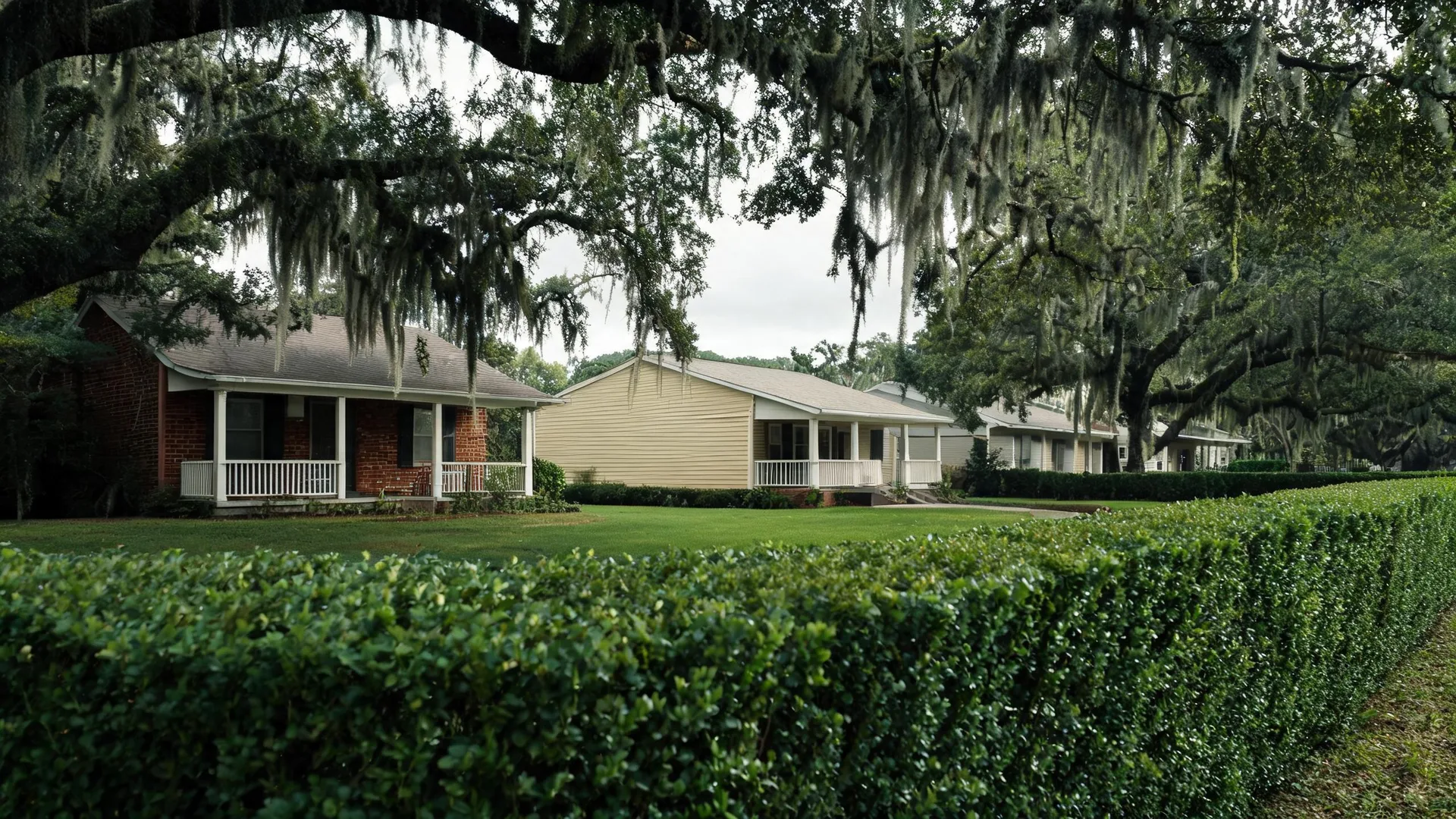






A row of single-story houses, one brick and others with pale siding and covered porches, behind a trimmed hedge and lawn, under large oak trees draped with Spanish moss.

AC Repair in Siler City, NC

Tell us about the job

Takes about a minute. No obligation.

RepairCentral ACChatham County, NC
Step 1 of 2

What ZIP code is the job in?

A lot of AC trouble traces back to airflow. A dirty filter or a coil caked with dust makes the system work harder to move the same amount of air, and that strain adds up over time. A refrigerant leak causes a different kind of damage. The charge drops low, the coil ices over, and the compressor ends up working against pressures it wasn't built to handle. The compressor is the part nobody wants to lose. It's usually the last thing to fail, not the first, and when it does go it's often because something upstream, a weak capacitor or a failing contactor, got ignored long enough to take it down too. Catching those smaller problems early is what keeps the compressor running.

5 months
May through September, your air conditioner is on duty
88°F
the average summer afternoon it cools against
12 hail events
in ten years, and hail bends the fins on outdoor coils
125 wind events
in ten years, and wind drives debris into outdoor units
Isometric grey illustration of a cutaway single-story house showing interior rooms, ceiling ductwork connected to an indoor air handler, and an outdoor condenser unit linked by lines outside the wall.
Your air conditioner works hardest from June through August.

NOAA nClimDiv, 1991–2020 normals

Warm air from the vents when the thermostat is set cold usually means the compressor outside has stopped doing its job.

A problem like that won't fix itself, and it needs a tech out before the compressor takes more damage.

Five months of 88 degree afternoons, and this is what your AC answers to

Cooling runs May through September
Summer afternoons average 88°F
125 damaging wind events from 2015 to 2024

Half the houses in Chatham County were built in 1998 or later. If yours is one of them, the AC is probably not old enough to be the real problem on its own. A system installed with a newer build still has years of working life left in it, and most repairs on it are worth doing. That changes if the unit was swapped out at some point and nobody kept track of its age, so it's worth checking the install date on the condenser if you have it. Either way, age alone isn't a reason to assume the worst about what's wrong.

May is when a weak AC shows itself

Cooling starts in May here and runs through September. The first hot stretch is what finds the part that was already on its way out, a capacitor that was close to done or a contactor that was starting to stick. Getting it looked at now means it's handled before the season puts real load on it, not after.

Find a contractor
A man in a dark long-sleeved shirt and brown work pants, seen from behind, carries a waxed canvas tool bag up porch steps toward an orange front door, with a potted shrub in a terracotta pot beside him.
An outdoor air conditioning condenser unit mounted on a concrete pad beside a house, with electrical conduit running to a wall-mounted disconnect box.

Five months of this, every year

Five months of those 88 degree afternoons is a long stretch to ask a compressor to keep up. If yours has been struggling, don't just let it run and hope the trouble passes. Have a tech check it out, find what's actually failing, and fix that part before it takes anything else down with it.

What you can check yourself

Pull the filter and hold it up to a light. If you can't see through it, that's enough to choke airflow on its own and it's worth replacing before anything else. Walk outside and look at the condenser. Leaves, grass clippings or a cover left on it block the airflow it needs to dump heat, so clear that space if it's crowded. Check that the outdoor fan is actually spinning when the system is running. If the unit is humming but the fan isn't turning, that's something for a tech, not something to force by hand.

What to leave alone

Don't pull panels off the condenser or touch anything inside it. The capacitor in there holds a charge even with the power off and it can still give you a jolt. If the coil is iced over, turn the system off and let it thaw instead of chipping at the ice, since scraping it can puncture the coil. Anything involving refrigerant or the electrical components needs a tech with the right gauges and training, not a guess.

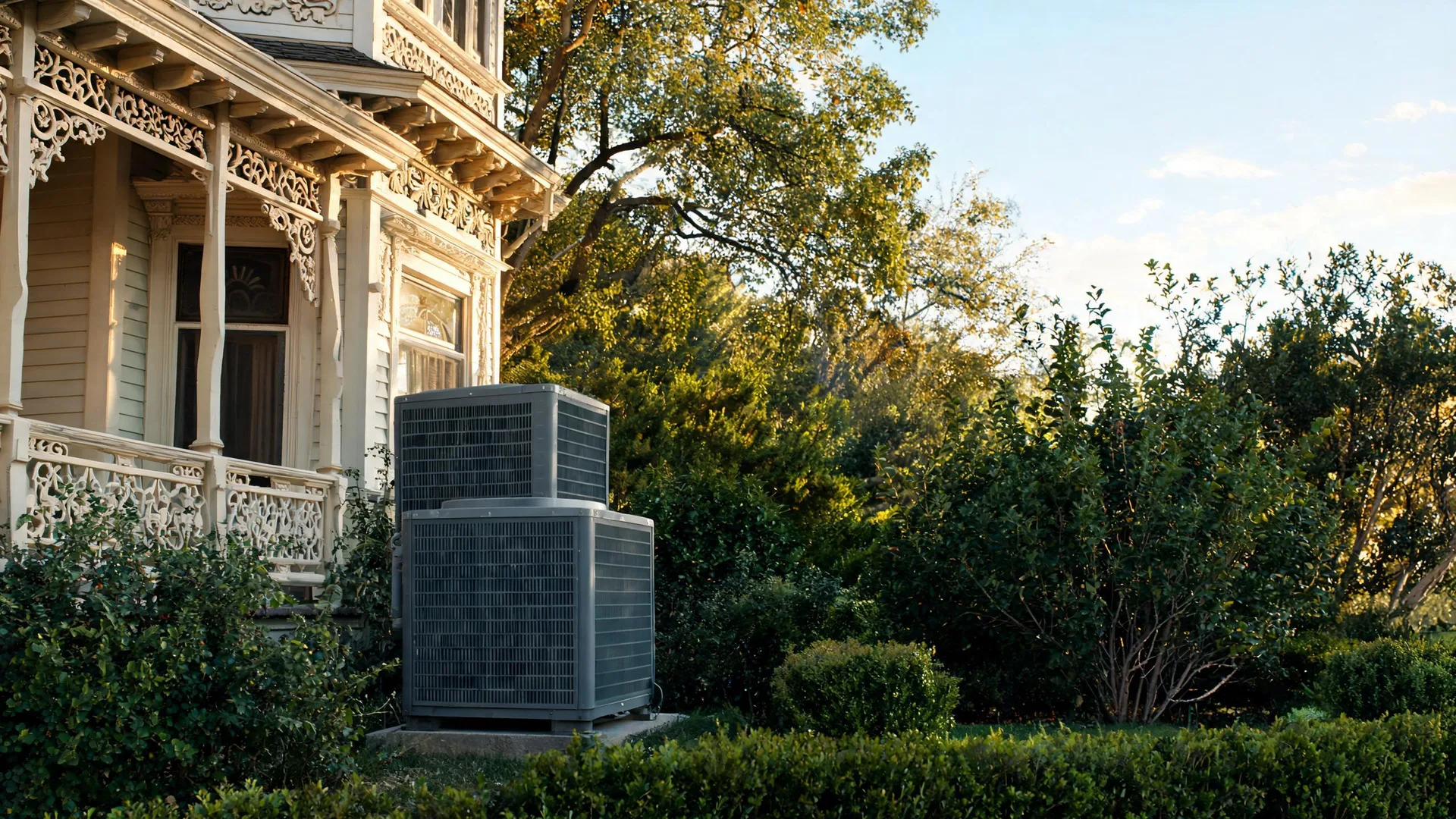
Overhead view of a gray residential air conditioning condenser unit mounted on a concrete pad beside a house with asphalt shingle roofing.

A new air conditioner would cut about $50 a year off cooling for a typical Chatham County home.

  • A new one at the federal minimum, 14.3 SEER2$320 a year
  • An older air conditioner$370 a year

Estimates for a typical Chatham County home, compared with an older unit built to the previous federal minimum, from EIA household energy data, North Carolina fuel prices and NOAA climate normals. Your home will differ.

Repair makes sense when a part like a capacitor or contactor has failed.

Replacement makes sense when the compressor has failed or the system uses R-22 refrigerant, which is no longer made.

A diagnostic visit usually starts outside at the condenser. The tech checks that the fan spins freely and the compressor actually kicks on when it's supposed to. Gauges go on next to check refrigerant pressure, because that number shows whether the charge is right or whether it's leaking out somewhere in the line. Inside, the coil and blower get checked too, since a coil caked with dust or a blower not moving enough air can look like a different problem than it is. The capacitor gets tested under load rather than just looked at. A weak one can look fine sitting still and still fail the moment the system asks something of it. If something is wearing out but hasn't failed yet, that gets pointed out as well, so it doesn't turn into a bigger repair down the line.