



Side profile of a bearded man wearing a dark gray baseball cap and a gray T-shirt against a plain off-white background.

Why your AC won't turn on in North Carolina

RepairCentral ACNorth Carolina
Step 1 of 2

What ZIP code is the job in?

A few things usually explain it. The thermostat is set wrong or needs batteries. A tripped breaker or a blown fuse at the outdoor unit has cut power to the system. A safety switch has shut the unit off because a condensate drain line is clogged and the pan underneath it is full. Or the capacitor that starts the outdoor fan and compressor has gone bad, which is one of the most common reasons an AC gets power but never starts. In North Carolina, summer humidity puts a lot of extra run time on that outdoor unit, and that strain wears on parts like the capacitor faster than cooler, drier weather would. None of these are things to guess at by swapping parts. A contractor can check the breaker, the thermostat wiring, the drain line, and the capacitor in one visit and tell you which one it actually is.

A woman with dark hair in a bun sits on a beige sofa under a knit blanket with her eyes closed and an open book in front of her, with a lit lamp and houseplant in the background.
A smiling bearded man in a dark sweater sits at a dinner table with lit candles, a glass of red wine, and bowls of food, in a dimly lit room with a lamp and houseplant behind him.

Your system has two halves, the outdoor unit and the indoor air handler, and each one draws power through its own breaker. One can trip without touching the other, which is why the indoor blower might hum to life while the compressor outside sits dead. A clogged condensate line backs water into the pan under the coil, and the float switch sitting in that pan cuts power to the whole system the moment the water reaches it. That switch doesn't care if the rest of the unit is fine. Low voltage reaching the compressor can make the outdoor fan stall while you still hear a hum, which is the motor trying and failing to start. Somewhere on the outdoor unit or inside the air handler there may be a reset button that needs a real press to take. And near the attic or basement unit, there's often a switch that looks just like a wall light switch. It controls power to the whole system, and it gets switched off by accident more often than you'd think.

How the shutdown actually happens

  • The outdoor unit and the indoor air handler run on separate breakers, so one can trip while the other still has power.
  • Most condensate switches shut off the whole system the moment the pan gets even an inch of water in it.
  • A thermostat calling for cooling but showing no signal usually means dead batteries or a loose wire at the backplate, not a broken compressor.
  • If the outdoor fan isn't spinning but you hear a hum, the compressor may be trying to start without enough power reaching it.
  • Some systems have a reset button on the outdoor unit or inside the air handler that needs a firm press, not just a quick tap.
  • A furnace switch that looks like a light switch, usually near the attic or basement unit, doubles as the AC's power cutoff and gets bumped off by accident.
An outdoor air conditioner condenser unit sits on a concrete pad beside a stucco wall, with refrigerant lines and conduit running to the wall and a shrub to the left.
Before you get your air conditioner repair
A gray outdoor air conditioner condenser unit on a concrete pad beside a house with dark horizontal siding and a stone base, surrounded by gravel, with a flowering shrub at left and a concrete walkway in front.
After you get your air conditioner repair

When a breaker trips for good reason

A breaker that trips once might be a fluke. A breaker that trips again as soon as you reset it is telling you something is wrong with the compressor or the wiring feeding it. Pushing it back on and leaving it is how a bad capacitor turns into a burned-out compressor. If the outdoor unit hums, clicks, or trips the breaker again within a few minutes, that is a sign for a contractor to check it, not a switch to keep flipping until it holds.


Why the drain line matters so much

That condensate line is just a pipe draining water from the indoor coil, usually PVC, running out near the unit or into a floor drain. Algae and dust build up inside it over time and narrow it until water backs up into the pan. The float switch sitting in that pan does its job exactly as built: it cuts power rather than let the pan overflow into the ceiling or closet below it. Clearing the line is often what gets the system running again.

A smiling bearded man in a dark green henley shirt sits on a blue-gray couch in a living room, with a bowl of popcorn in the foreground and a houseplant and window behind him.
A smiling man in a dark sweatshirt reclines on a gray sofa in a living room, with a wooden bowl of popcorn on a table in the foreground and a dining area, shelving, and pendant lamp behind him.
A smiling man in a navy long-sleeve shirt reclines on a sofa in a living room, with a bowl of popcorn on a wooden coffee table and framed pictures on the wall behind him.
A smiling man in a dark green long-sleeved shirt sits on a gray sofa in a living room, with a bowl of popcorn in the foreground and windows and a potted plant behind him.

No cooling in a sticky North Carolina summer

Rooms heat up fast once the system stops. Humidity climbs with it, and anything running on the same circuit stays at risk until the cause is found.

Skip the search

One call instead of a list of them

No searching for a contractor, no phone tag, no explaining the same problem twice. Send the form and someone qualified takes it from here.

Skip the search

Why does my AC blow warm air instead of cold?

Warm air from the vents feels like the system is working, since the blower still runs. That's what throws people off. It's not the same problem as the unit not turning on at all, and it points to a different part of the system.

The outdoor unit has stopped cooling the air even though the fan inside is still moving it

Warm air usually means the indoor blower is running but the outdoor unit isn't doing its job. That unit holds the compressor, and if it's not running, nothing is pulling heat out of the air before it blows through your vents. A dirty outdoor coil can cause this, since it keeps the system from shedding heat the way it needs to. A low refrigerant charge does the same thing, often from a slow leak that's been there a while. Either way, the system keeps running and keeps using power without actually cooling your house, which in a North Carolina summer means rooms climb in temperature fast while the electric bill climbs with them.

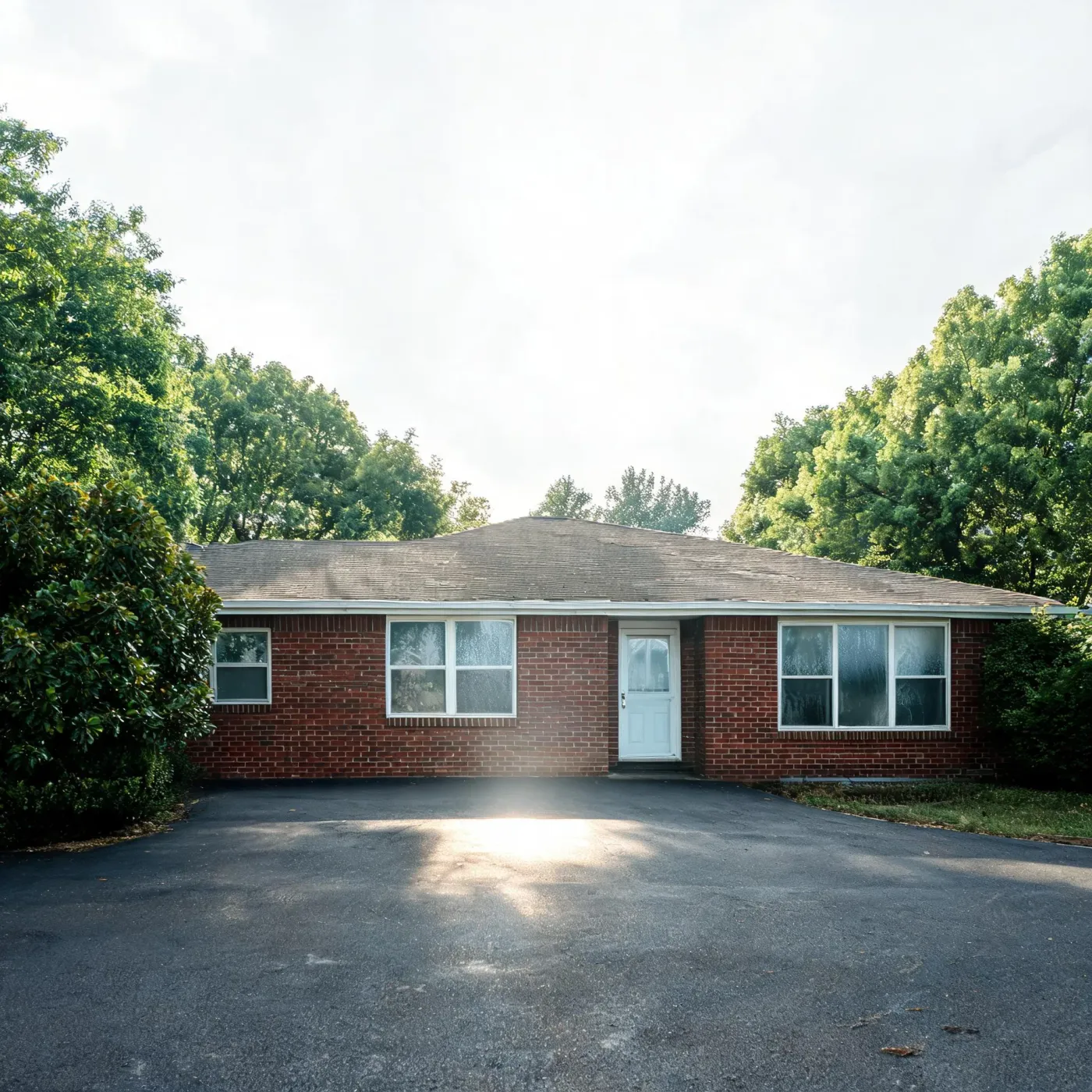
A single-story red brick house with a hipped shingle roof, white-framed windows and a pale blue front door, fronted by a wide asphalt driveway and flanked by green trees and shrubs under a bright hazy sky.

Summer air in North Carolina carries a dew point around 67°F, averaged across June, July and August, according to NOAA climate records. That's heavy air, the kind that sits on your skin and never quite lifts. Your air conditioner has to pull that moisture out before the house feels right, which means it runs longer and harder than it would in a drier climate to hit the same temperature on the thermostat. When it won't turn on at all, that moisture has nowhere to go, and a house can feel damp within the hour even with the windows shut. That's the kind of day you don't want to spend on hold. Send the form and the search for someone qualified is off your plate.

NASA POWER T2MDEW county cells weighted by homes

Done looking for an air conditioner pro

Describe what your air conditioner is doing once, in one form.

You only hire the pro if you want to.

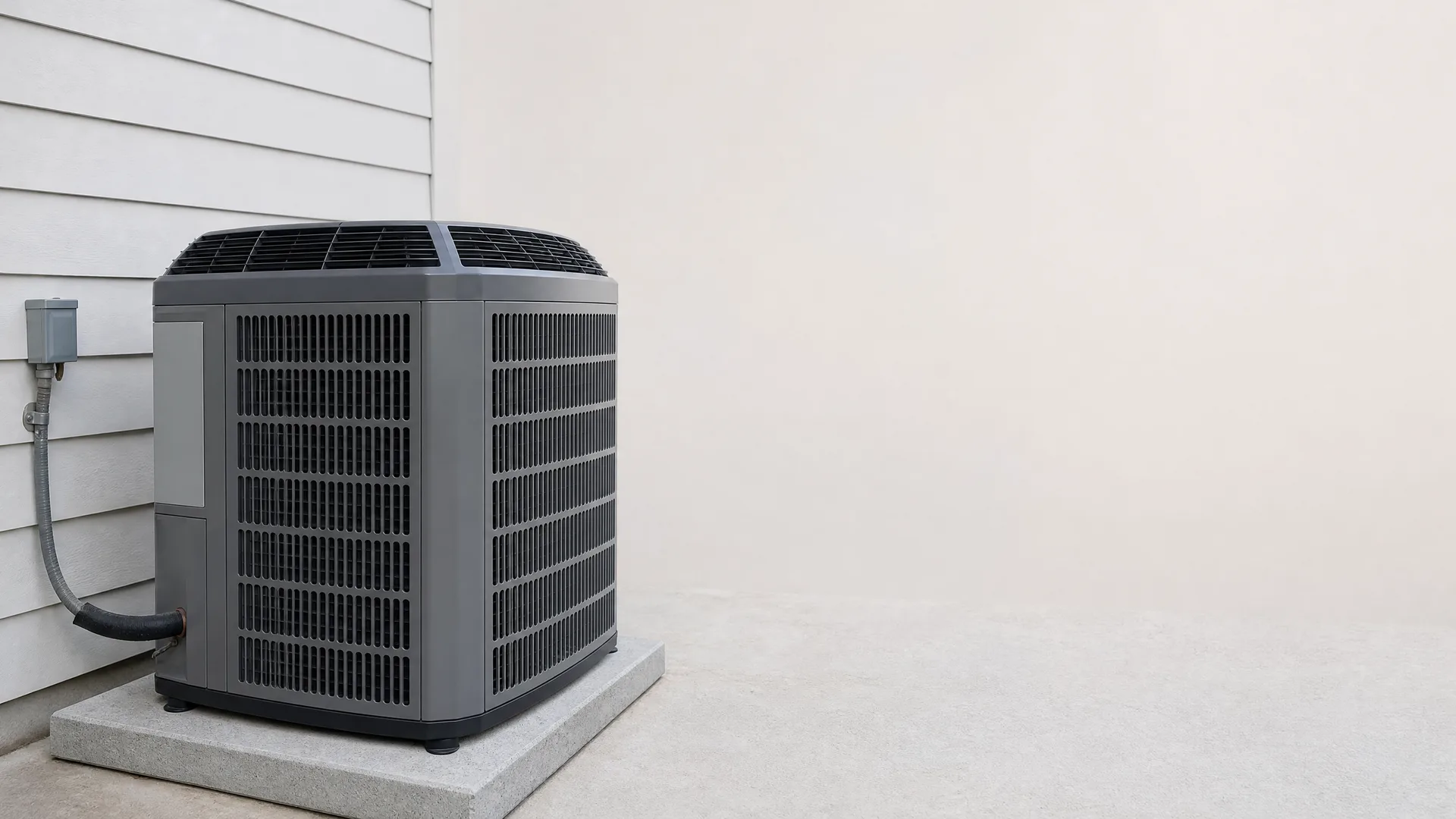
A gray outdoor air conditioner condenser unit on a concrete pad beside a house with horizontal siding, with an electrical disconnect box and conduit on the wall behind it.

Checking it yourself first

Look at the thermostat screen. If it's blank, try new batteries before anything else. Go out to the breaker panel and look for one that sits in the middle instead of fully on or off. Check the outdoor unit for a reset button, usually near the disconnect. If the system has a condensate pan under the indoor unit, look for standing water. None of this takes tools, and it rules out the simplest causes before anyone comes out.

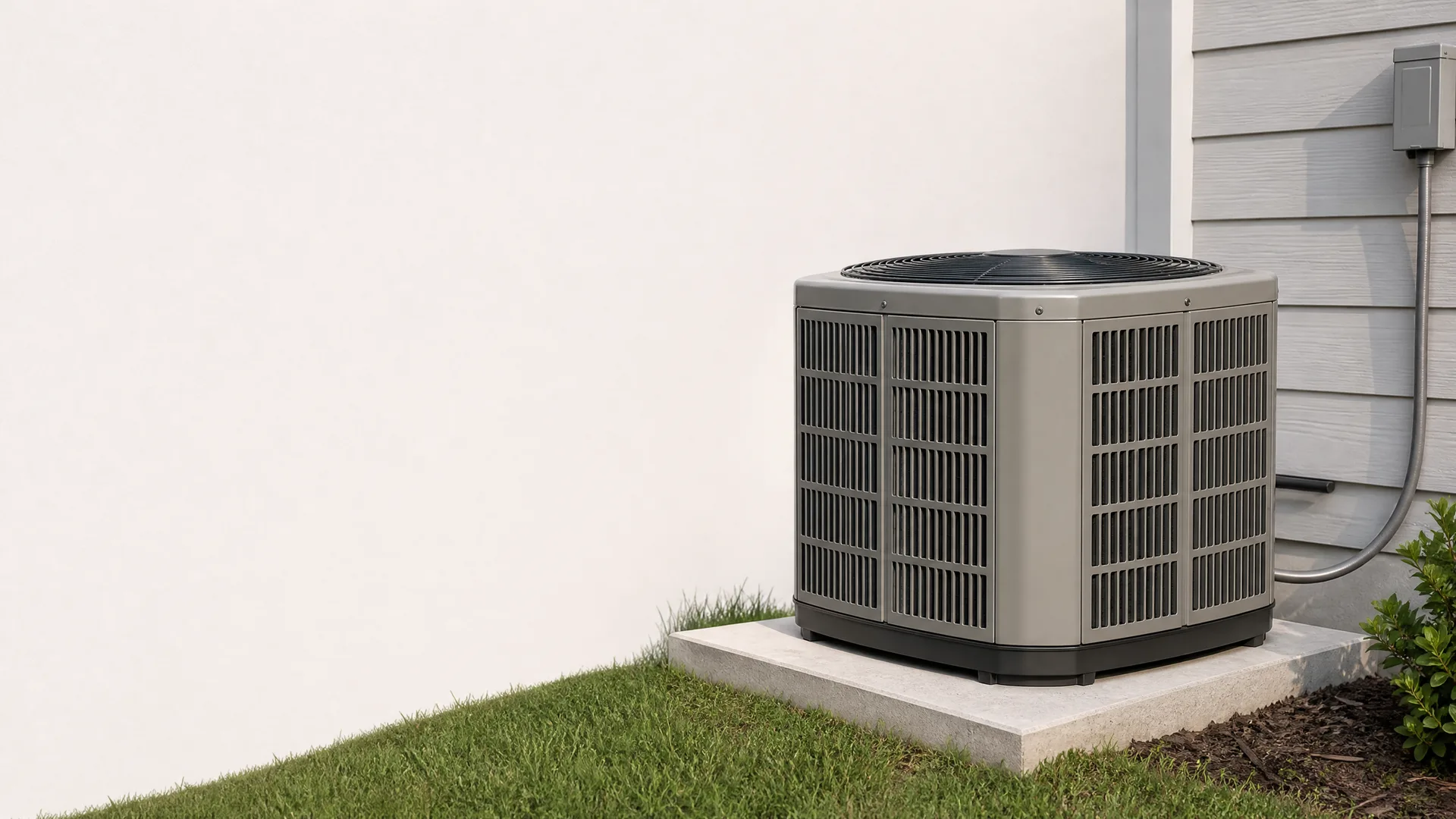
An outdoor air conditioner condenser unit on a concrete pad beside a house with horizontal lap siding, with a gray electrical disconnect box and conduit on the wall, grass in the foreground and a plain light wall at left.

When it needs a contractor

If the breaker trips again right after you reset it, stop resetting it. That's the compressor or the wiring telling you something, not a fluke. A capacitor that's failed, a contactor that's stuck, or a control board that's fried won't fix itself no matter how many times you flip the switch. At that point you're not troubleshooting anymore, you're waiting on someone licensed to open the unit and test it with a meter.

What are you noticing right now in your house

The air feels heavier than it should, and it's climbing. Vents that used to push cold air are either silent or blowing room-temperature air. The outdoor unit isn't humming, or you hear it click and stop. Maybe the thermostat screen is dark. Maybe it's lit but nothing changes no matter what you set it to. Doors and windows are still shut, but the house doesn't feel like it's cooling down anymore, and the humidity is starting to show on glass and in how the air sits on your skin. The longer it runs like this, or doesn't run at all, the more that moisture works into the house, and the warmer the upstairs gets if you have one.

A gray outdoor air conditioner condenser unit on a concrete pad beside a house with horizontal lap siding, with a wall-mounted disconnect box and conduit, mulch bed, shrub, and lawn nearby.
The system cycles on its own schedule, and the house holds steady even as the afternoon dew point climbs.
An outdoor air conditioner condenser unit sits on a gray pad beside a light vinyl-sided wall, on a concrete slab next to a gravel bed.
Power reaches the pad but the unit sits silent, so conduit and lines run to a compressor doing nothing.

Call Now or Wait It Out

Call now

  • A tripped breaker that trips again, or a compressor that hums without starting, tends to get worse the longer the system runs like that.
  • A clogged condensate line that's shut the system off as a safety measure will keep doing that until the line is cleared.
  • Letting a licensed contractor look at it now means one visit instead of guessing with new parts or settings over several days.
  • If the breaker is tripping because of a wiring or compressor fault, waiting raises the chance of damage to the compressor itself.
  • A no-cool call in July doesn't get easier to live with by putting it off a week.

Wait and watch

  • If the thermostat screen is blank, new batteries might solve it on their own, with nothing else to check.
  • A breaker that tripped once and holds after you reset it may have been a one-time overload, not a sign of a bigger problem.
  • Watching the outdoor unit for a day to see if it starts on its own schedule costs you nothing but time.
  • If the unit is cycling fine but one room feels warm, that's a different problem than the system not turning on at all.
  • Waiting means living with the heat and humidity in the meantime, and that gets harder the longer a North Carolina summer runs.
  1. The thermostat calls for cooling and sends power to the contactor.

  2. The contactor closes and sends power to the compressor and fan.

  3. The compressor starts, and the outdoor fan spins with it.

  4. A safety switch checks the condensate pan and breaker before allowing power through.

Power costs 14.00 cents per kilowatt-hour statewide

North Carolina homes paid about 14 cents per kilowatt-hour in 2025, close to the national average. Running a repaired system costs about what you'd expect, not a premium rate that punishes you for using it. The real cost of a dead AC shows up in the heat and humidity building in your house, not on the power bill.

EIA-861 2025 statewide residential average

A closed laptop and a speckled ceramic mug sit on a wooden table beside a stoneware vase with a leafy branch, with a wooden chair, kitchen counter with cutting board and bowl, and dark upper cabinets in the dim background.

So that's why it won't turn on

A tripped breaker, a clogged drain line, a thermostat with dead batteries, a compressor that hums but won't start. One of those is why your unit is sitting quiet while the house warms up. None of it tells you which one without someone looking at the actual unit on your actual pad.

That's the part that takes the time. Not the fix itself, but finding a licensed contractor who can get out to your house, listening to you describe what the unit is doing, and getting someone who actually shows up. Send the form and that search is off your plate. No calling three companies and repeating the same story three times, no sorting through quotes. You wait for one call instead of making several.

A gray upholstered sofa with a textured cushion sits beside a dark round side table holding a vase of green foliage, with a table lamp and sheer-curtained window behind.
A house with a dark standing-seam metal roof and stone chimney seen among trees, with forested hills and hazy mountain ridges in the background under a cloudy sky, framed by moss-draped branches at left.

It's off your list after this

Answer a few questions

Asking costs nothing, and the choice to hire stays yours.

A hot house gets harder to cool back down the longer it sits, and a compressor that hums instead of starting doesn't fix itself by waiting. Sending the request now means you're not the one calling around tomorrow while the house stays warm.