
Unit running as it should
This is what your condenser looks like when it's doing its job. It cycles on, runs steady, and the air coming from your vents is cold. The fan spins free and the cabinet stays clear of the shrub next to it.
If your AC won't turn on, start at the thermostat. Set it to cool and drop the temperature five degrees below the room, then listen for a click. No click, no hum, nothing at the vents, usually means power isn't reaching the outdoor unit or the indoor control board. Check the breaker panel first. Summers in Winston-Salem run long and sticky, and a unit that's been working hard for months is more likely to trip a breaker or wear out a capacitor than one that barely runs. If the breaker's fine, the problem may be a blown fuse at the outdoor disconnect, a tripped float switch from a clogged condensate line, or a failed capacitor that won't let the compressor start. Thermostat batteries dying or a bad thermostat itself can also leave the system looking dead when the equipment is fine. None of these are things to force past by resetting breakers over and over. A system that won't start on repeated tries needs a technician before it runs again.
This is what your condenser looks like when it's doing its job. It cycles on, runs steady, and the air coming from your vents is cold. The fan spins free and the cabinet stays clear of the shrub next to it.

Dirt and grime built up on the cabinet like this often point to years without a cleaning, and that buildup can choke airflow until the unit trips out or won't start at all. If yours looks like this, that's worth a look alongside the thermostat and the breaker.




A dead AC in July is not something to sit with while you call around Winston-Salem for someone who can look at it. By the time you have checked the breaker and the thermostat and the disconnect and it still will not start, you have a condenser problem, not a guessing problem, and that calls for someone who works on these units all season and knows whether you are looking at a bad capacitor, a failed contactor, or something in the control board. One request here goes to one licensed contractor local to Forsyth County, not a handful of companies racing to call you back first. You explain what you tried once, to one person, instead of repeating it on the phone four or five times while the house gets warmer. That is the part this page takes off your plate. Getting the unit running again is still the contractor's job, and it starts with the button above.
Most central air conditioners here are direct-drive, with no belts to slip or wear. If the outdoor unit has power but still won't start, the problem is almost never a belt.
It's more likely the capacitor that gives the compressor and fan motor their starting push, or the contactor that switches power to the outdoor unit. Both wear out from the exact kind of heat Forsyth County summers bring.


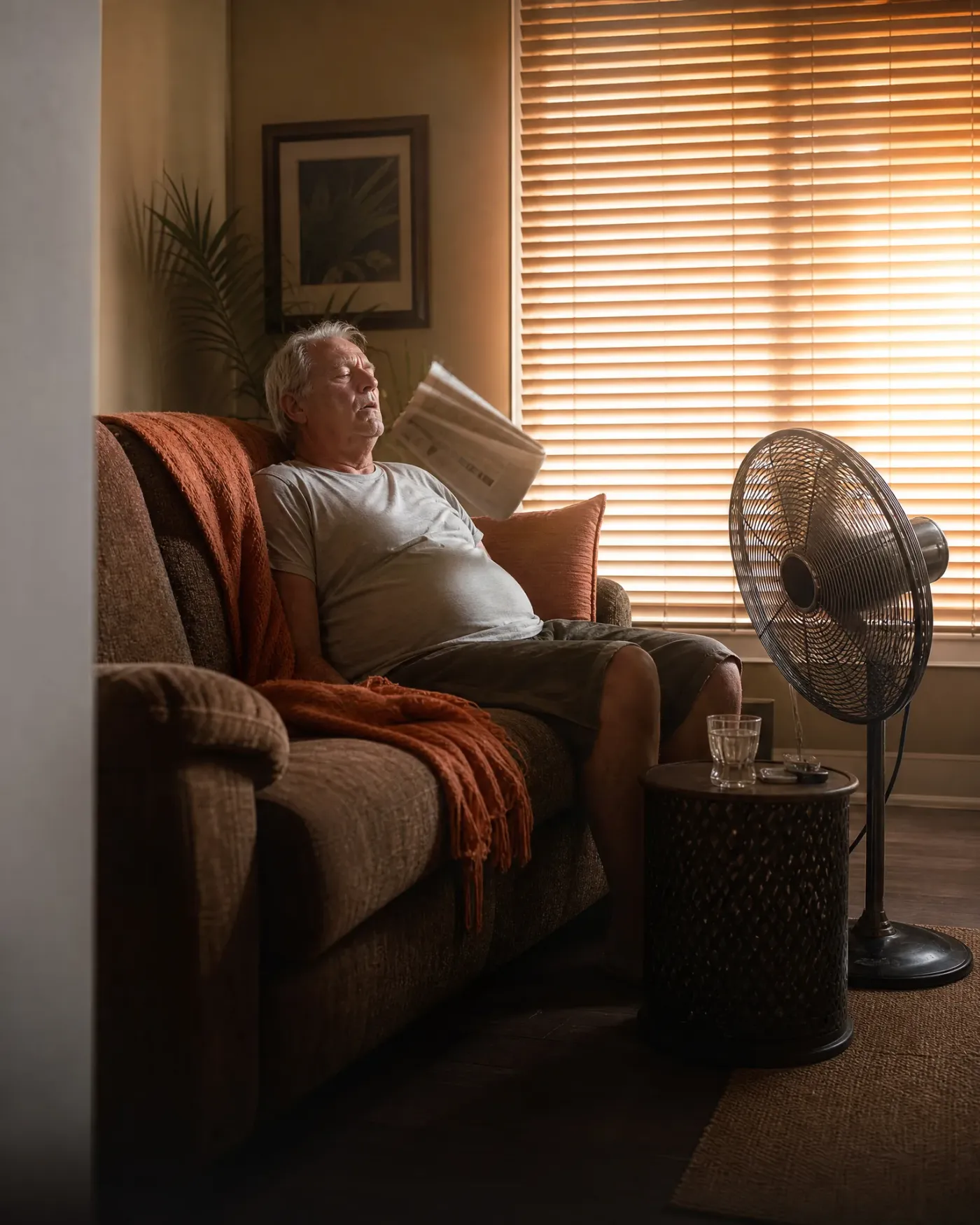
Forsyth County summers run long, and a house with no cold air heats up fast once the sun gets on it. If you've got someone home all day, or someone who doesn't do well in the heat, a few hours without the AC running turns into a real problem by afternoon. Opening windows and running fans buys you some time but it won't keep a closed-up house comfortable through a July day. The longer the unit sits dead, the more the house holds that heat in the walls and furniture, and the longer it takes to cool back down once it's running again.
A compressor that won't start because of a bad capacitor will keep trying every time the thermostat calls for cool, and a compressor that strains against a failing part can burn out a motor winding that would have otherwise been fine. What looks like a simple no-start now can turn into a compressor replacement later if it sits too long. Checking the breaker, the thermostat and the disconnect costs you nothing but a few minutes. Leaving it alone once you know power is reaching the unit and it still won't run is the part that gets expensive.


Five months of that is cooling, so when it stops in the middle of summer there's no shoulder season to wait it out in. Your AC is working most days from May to September, and a unit that won't start on a hot afternoon needs looking at the same day, not the same week.
NOAA nClimDiv 1991-2020

A breaker you can reset. A thermostat you can reprogram. Past that, a unit that still won't start is a call for someone who works on condensers for a living, because guessing at a capacitor or a contactor from the side of the house gets you nowhere and can cost you the compressor if you get it wrong.
Instead of working the phone yourself, listing out what you checked for every company that picks up and then setting their quotes side by side, you get matched with one licensed contractor local to Winston-Salem who already knows the units that show up in Forsyth County homes and what tends to go on them. One call, one visit, and your house is cooling again before the heat of the day gets a hold of it.





The pro who gets in touch is licensed in North Carolina and works in Forsyth County.
There's no charge for the request.