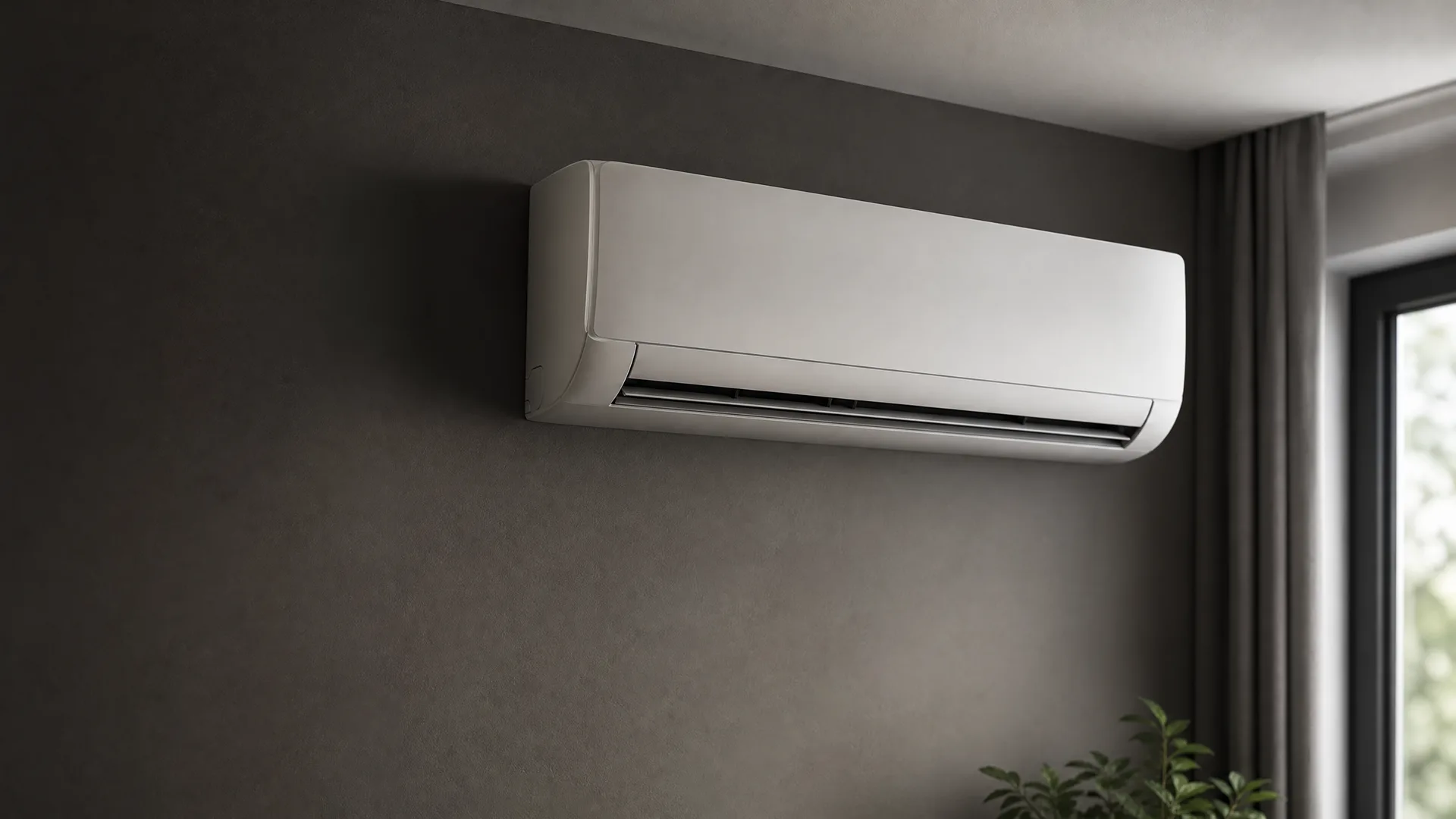
A white wall-mounted mini-split air conditioner on a dark blue-gray interior wall, with a dim adjacent room containing a lit table lamp, framed artwork, curtains and a window, and a houseplant blurred in the foreground.

Stop chasing a mini split pro

Mini split smells musty in Mooresville, NC

That musty smell from your mini split usually means mold or algae growing somewhere in the unit, often on the evaporator coil or in the drain line. With summers here as humid as they get in Mooresville, moisture sitting inside the system has plenty of chances to turn into a smell before you notice it. Below is what causes it and what gets rid of it for good. Skip the search and get matched with someone who can take care of it.

Let a pro reach out

That musty smell means moisture is sitting somewhere inside the unit instead of draining out. A mini split pulls humidity out of the air all summer long, and that water is supposed to run off through the drain line and out of the house. If the line is clogged or sloped wrong, the water backs up and sits in the pan under the coil, and mold starts growing there within days. The coil itself can grow it too, since it stays wet for hours after the unit shuts off. Once mold or algae takes hold, every time the blower runs it pushes that smell through the room. It will not clean itself out, and it will not go away on its own once the weather cools either, because the moisture that started it is already built into how the system runs all summer in Mooresville. A technician can flush the line, clean the coil and pan, and check that the drain is pitched right so it does not come back.

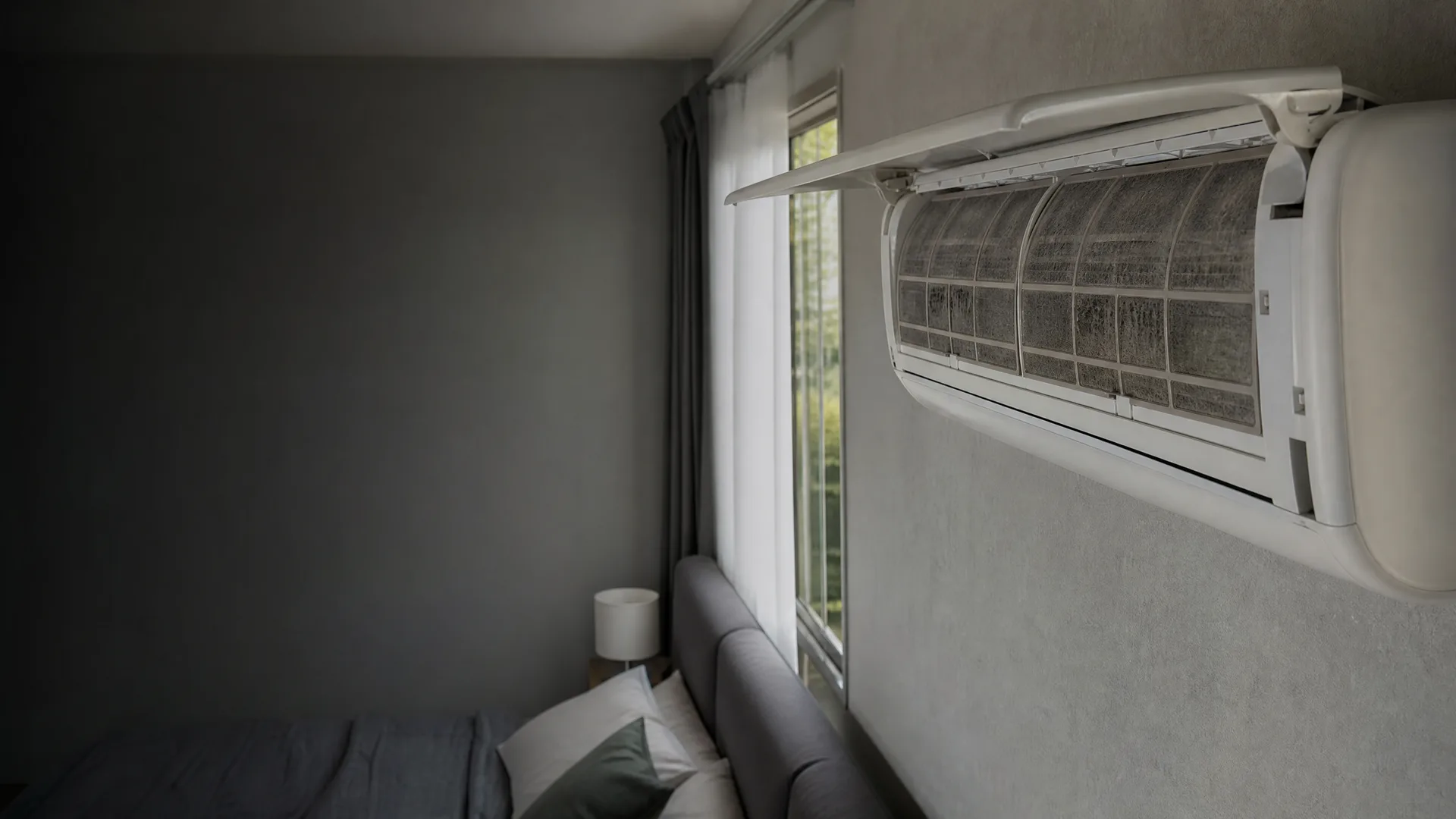
Interior room corner with a wall-mounted mini-split air conditioner, its front panel open to expose dusty coils, beside a curtained window and a gray sofa with pillows.

You pull the cover off the indoor unit on the first warm Saturday of the year, just to check it before the heat sets in. The filter screen is grey with dust, and under it the smell hits you, flat and musty, like a basement after rain. Light comes through the bedroom window at an angle, catching all the dust you're about to stir up. You'd noticed the smell for a few days whenever the air kicked on, figured it was nothing. Now, looking at the screen, you're not so sure. Outside, Iredell County is already warming toward another long, sticky summer, and this unit has months of work ahead of it.

A white wall-mounted mini-split air conditioner on a beige interior wall, with a cream curtain and window at left, a potted plant on a ledge at right, and a wood floor below.
A clean mini split like this moves air without any smell at all, because nothing is sitting wet inside it.
A dusty, discolored white wall-mounted mini-split air conditioner unit installed high on a plain interior wall below a white ceiling molding.
A unit left dusty this long is holding onto moisture in that grime, which is exactly where mold takes hold.

The coil behind the indoor cover does the real work. It pulls moisture out of the air every time the unit runs, and it stays wet for a while after the compressor shuts off. Any dust sitting on those fins gives mold something to grow on while the coil dries. That water is supposed to drain outside through the condensate line, but if the line is clogged, it backs up into the pan under the coil instead. Water sitting there doesn't go anywhere on its own. The blower wheel behind the cover picks up the same dust and moisture, and most filters never reach it, so it grows mold on its own schedule. A dirty filter makes all of this worse, because it slows the air moving across the coil and leaves it colder and wetter longer than it should be. Even the drain line itself can grow algae if water sits in it between cycles, and that smell travels straight back up into the room. Running the fan alone for a few minutes after cooling gives the coil a chance to dry before any of this starts.

Where the smell actually starts

  • The evaporator coil stays wet for hours after the compressor shuts off, and dust on the fins gives mold spores a place to hold on.
  • A clogged drain line backs water up into the pan under the coil instead of letting it run outside through the condensate drain.
  • The blower wheel behind the cover collects a layer of dust and moisture that most filters never touch, and that layer grows mold on its own.
  • A dirty filter slows airflow across the coil, so the coil stays colder and wetter longer than it should after each cooling cycle.
  • Algae grows in the drain line itself when water sits in it between cycles, and that smell travels back up through the indoor unit.
  • Running the unit on fan-only mode for a few minutes after cooling lets the coil dry out before moisture has time to turn into mold.
A bearded man in a dark sweater leans back in a black leather armchair with his eyes closed, with a bookshelf, potted plant, window and a sofa holding a folded newspaper behind him.
A man in a blue sweater sits in an armchair with his eyes closed, beside a window and a side table holding a mug and a folded newspaper, with a dark bookshelf behind him.
A man in a gray knit sweater leans back on a brown leather sofa with his eyes closed, in a room with bookshelves, a lamp, plants, and a side table holding a folded newspaper and a dark mug.
A man in a dark gray sweater reclines in a brown leather armchair with his eyes closed, beside a wooden table holding a striped mug and folded newspapers, in a living room with a sofa, bookshelf, lamp, and window blinds.

Send one request and you're done looking

Skip calling around to set up a mini split tune-up.

No fee to send it, and nothing to sign.

Why the blower makes it worse

Once mold is established on the coil or in the drain pan, the blower that pushes air across it also pushes that smell into the room. The coil sits right in the airstream, so every time the mini split runs, air passes over the wet, moldy surface before it reaches your living room. A system that only smells musty when it first kicks on, then fades, is pushing stale air out of the line first. One that smells the whole time it runs is moving air across mold sitting on the coil itself, not just clearing out a drain line that backed up once.

Why summer here keeps it going

A mini split in Mooresville can run for months straight once the heat and humidity set in, and every hour it runs adds more condensation to whatever is already growing. Mold doesn't dry out and disappear between cycles the way it might in a drier, cooler month. It feeds on the moisture the unit keeps producing, so a smell that showed up in June is usually still there, and worse, by August. Shutting the system off for a day won't clear it. The coil and drain line need to be cleaned out, not just given a rest.

Why does a mini split smell worse here than it would somewhere drier?

  • Cooling runs May through September

    Cooling runs May through September here, which is five months of the coil staying wet every single day it runs.

  • Heat runs October through April

    Heat runs October through April, so for seven months that moisture problem sits untouched in a unit nobody's using for cooling.

  • Power here costs 12.86 cents per kilowatt-hour

    Power here runs 12.86 cents per kilowatt-hour, cheap enough that most homes lean on the mini split hard all summer, which means more hours of condensation.

NOAA nClimDiv 1991-2020 · EIA-861 2025

A white wall-mounted mini-split air conditioner near the ceiling of a room with light gray walls, white crown molding, and a beige curtain at the left edge.

Running clean

This is what a mini split looks like when nothing is wrong. The wall around it stays clean, the coil inside stays dry between cycles, and the air coming off it carries no smell at all. Nothing is sitting wet long enough to grow anything.

A dusty beige wall-mounted mini-split air conditioner indoor unit installed high on a plain light-colored wall below the ceiling.

Mold taking hold

Dust has built up on the housing and dark staining has spread onto the wall above it. That staining is moisture finding its way out of the unit instead of down the drain line. Wherever it's collecting, it's been sitting long enough to feed mold.

A white wall-mounted mini-split air conditioner indoor unit installed near the ceiling on a plain light-colored wall, with its horizontal outlet vent and louvers visible.
Before you get your mini split maintenance
A white wall-mounted mini-split air conditioner on a beige interior wall, with a curtained window on the left and wood flooring with a light rug below.
After you get your mini split maintenance

You keep running the mini split anyway, because it still blows cold and the smell seems like a small thing next to the heat outside.

That smell is mold on the coil getting blown into the room every time the unit runs, and it will keep growing until something changes what's sitting wet inside it.

Cooling runs May through September

Five months of cooling means five months of that coil going wet and drying out, day after day, from May into September. Your mini split doesn't get much of a break in there to dry out fully before the next cycle starts, which is exactly the stretch where that smell takes hold.

NOAA nClimDiv 1991-2020

A white wall-mounted mini-split air conditioner on a beige interior wall, next to a window with sheer white curtains and green foliage outside.

No smell at all

Nothing raised on this wall but the unit itself, sitting clean against the wall with the window light coming in. Air moves through it without any odor, because the coil inside stays dry between cycles instead of holding water.

A dusty, discolored wall-mounted mini-split air conditioner indoor unit on a plain white wall, with its horizontal louvers and vent grille visible.

Grime holding water

Dust has built up thick across the top and around the vents, and that grime is doing more than looking bad. It holds moisture against the coil long after the unit shuts off, which is where the musty smell is coming from.

A wooden table holding a closed silver laptop, a cup of coffee on a saucer, and a glass vase with leafy branches, with a marble-backed counter, potted plant, and window in the background.

The smell has an answer, and it isn't going away on its own

A musty mini split means mold or algae is sitting somewhere inside it, on the coil, in the drain pan, or down the drain line. That's true whether the unit just started smelling last week or has smelled this way since spring. Running it longer only pushes more of that smell into the room, because the blower passes air straight across the coil every time it cycles on. The fix is getting the coil, the pan, and the line cleaned out, not a filter swap or an air freshener near the vent.

Finding someone to do that right is usually the slow part. You'd be looking up HVAC contractors around Mooresville, calling a few, explaining the smell and when it started more than once, then sitting with quotes trying to guess who actually knows mini splits versus who mostly does central air. Send the form instead and that search is off your plate. Someone licensed for this work gets in touch, and from there it's their job to sort out, not yours.

Interior corner of a living room with a beige upholstered armchair holding a textured pillow and throw, a eucalyptus arrangement in a ceramic vase on a wooden table in the foreground, a blurred glass-front cabinet behind, and a potted plant on a sunlit window sill.
A white wall-mounted mini-split air conditioner on a dark gray interior wall, with a curtained window and green plant leaves at the right edge.

Finding a pro stops being your job

Tune-up, service, or cleaningMini-splitIredell County, NC
Step 1 of 2

What ZIP code is the job in?