Running clean
Air moves out of the unit without any smell riding along with it. The panel and louvers stay free of dust, and the coil behind them stays clear enough to drain properly every time the mini split cycles.
You flip on the mini split after a sticky North Carolina day and that musty smell hits as soon as the air starts moving. It's not strong enough to seem like a real problem, but it's not nothing either, and you'd rather understand what's causing it before it turns into something worse.
That smell is mold or mildew growing somewhere inside the indoor unit, usually on the evaporator coil or in the drain pan underneath it. The coil runs cold and wet all summer as it pulls moisture out of the air, and in North Carolina's humidity it almost never gets a chance to dry out between cycles. Water that doesn't drain the way it should sits there, and anything sitting on a wet coil in a warm room starts to grow. The smell usually comes through strongest right when the unit kicks on, because that's when air first moves across the coil and picks it up. It tends to fade once the system has been running a while and the airflow dilutes it, which is part of why it's easy to ignore until it gets worse.
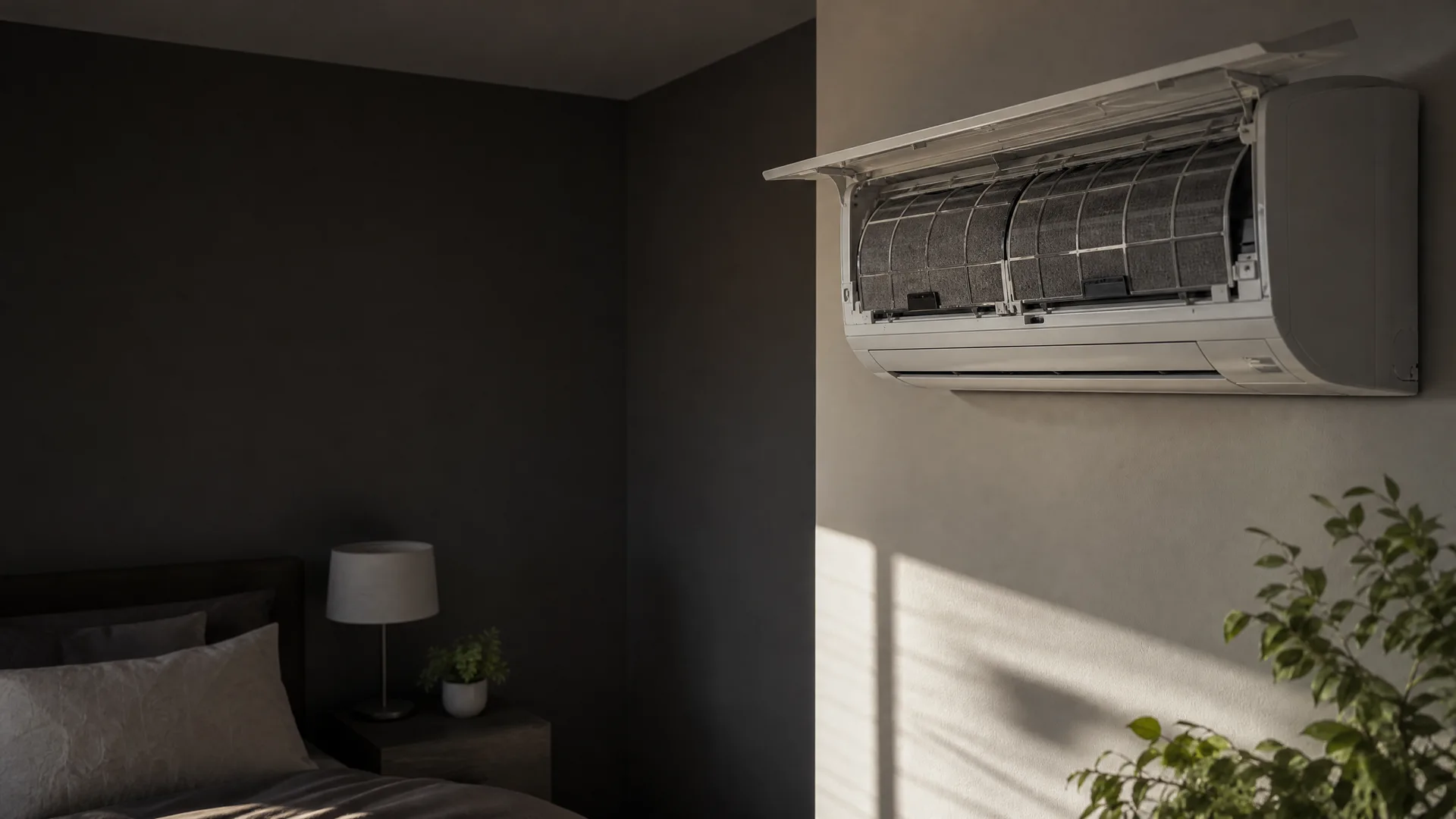
You're changing the sheets on a Saturday morning in April when the smell catches you again, that damp closet smell riding in on the air from the vents. You pull the stepstool over and pop the front cover off the indoor unit. The filter screen behind it is grey with dust, matted down in patches, and when you get close you can smell it before you even touch it. Outside the window it's warming up fast, the kind of North Carolina spring that turns into summer overnight. You know the sticky months are coming, and the unit is going to run most days until October. Right now it's just a smell. You're wondering what else is sitting behind that filter you can't see.
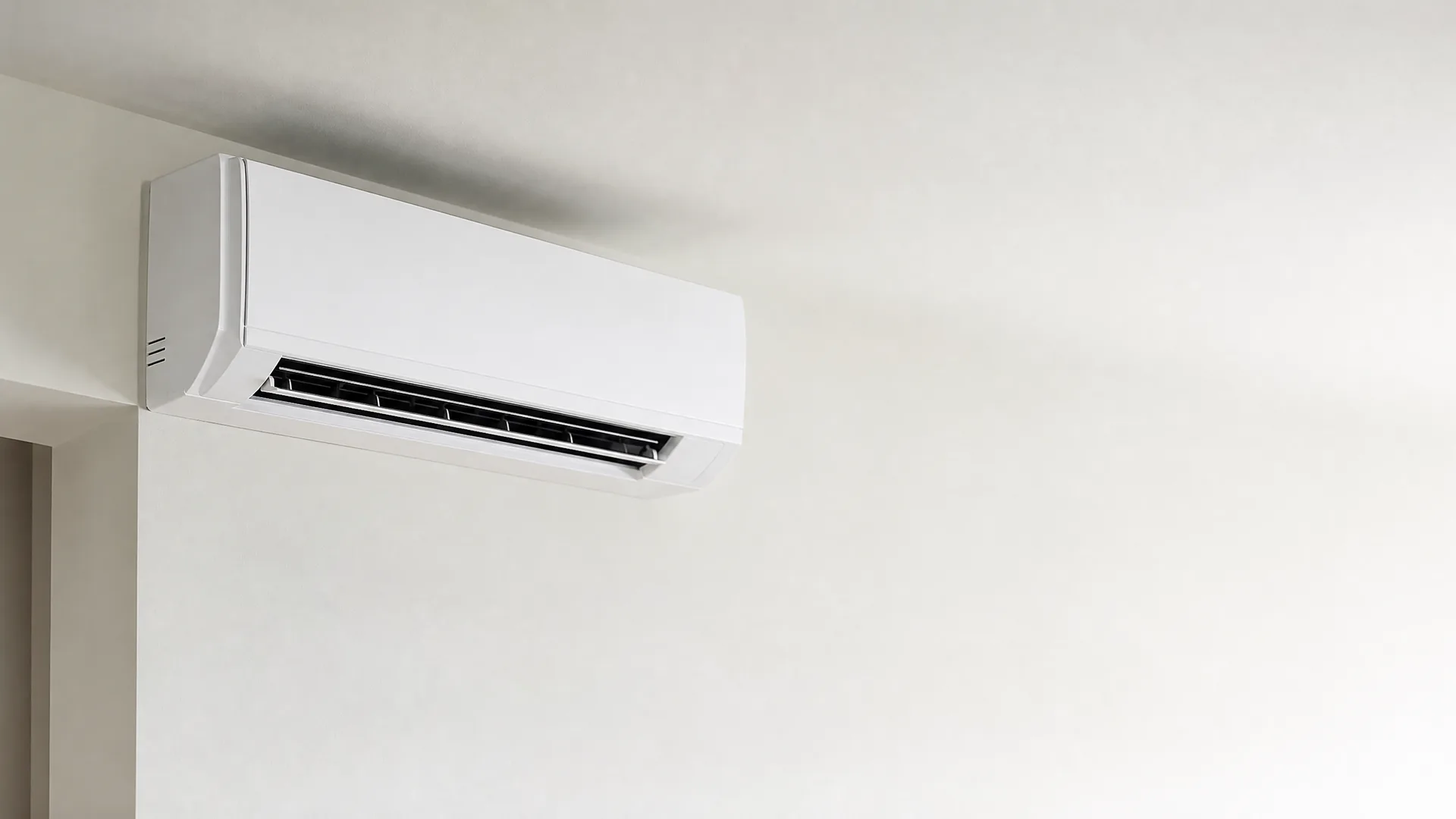
The evaporator coil sits behind the filter and pulls moisture out of the air every time the mini split runs. That water is supposed to drain away, but the coil's fins trap dust that gets past the filter, and mold grows in that film. North Carolina's humid air keeps feeding it all summer, so the smell comes back days after you clean the filter, because the filter was never where it was growing.
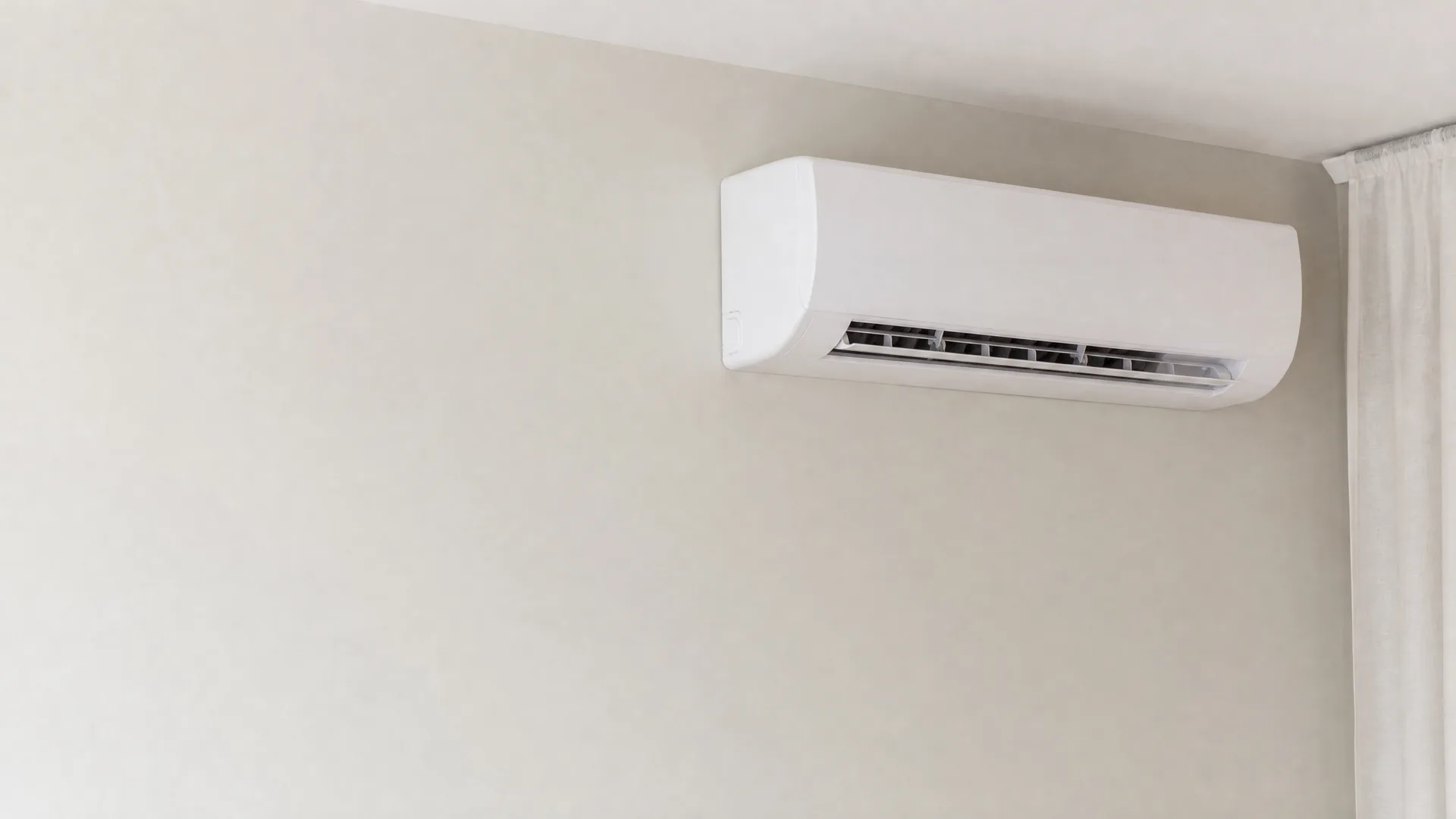
Behind the indoor unit, a small drain line carries off the water the coil pulls from the air. If it slows down or grows a layer of algae inside, water sits longer than it should and starts to smell on its own. A contractor who services mini splits in this climate checks that line along with the coil, since one without the other leaves the smell half solved.

Behind the coil sits the blower wheel, a cylinder of small curved blades that pushes air out into the room. Those blades have a lot of surface area packed into a small space, and in a humid climate that surface stays damp for hours after the unit shuts off. Mold and dust cling to the blades the same way they cling to the coil, and every time the wheel spins it throws a little of that smell into the air before the rest of the unit even gets cold.
A filter rinse and a wipe of the coil don't touch the wheel, since it sits further back in the housing and has to come out to be cleaned properly. That's usually where a musty mini split stops being a quick fix and starts being a job for someone who works on these systems all season in North Carolina and knows the wheel is the part people miss. If you'd rather hand it off, the next step is getting matched with a licensed local contractor near you, one who'll reach out directly instead of a handful of companies competing for the job.





That musty smell comes back every summer because North Carolina air stays heavy for months, and a mini split that runs that much builds coil and blower grime faster than a once-a-year wipe-down can keep up with. A tech who works on these systems all season in this climate knows where that smell hides, how far into the blower wheel it usually goes, and what a coil looks like after a full summer of sticky air versus a normal one. That's a different read than someone pulling a filter once and calling it clean. Getting matched means one local, licensed contractor who handles mini splits in this kind of heat regularly looks at your unit, not a handful of companies working the phones. You already pulled the cover off and saw what's back there. Handing that off now, before the smell gets worse through another stretch of humid weather, is worth more than guessing at it yourself with a brush and a flashlight.
A mini split that's sized right for the room runs long, steady cycles, and that's what actually dries the air out. The compressor stays on long enough for the coil to get cold and stay cold, so moisture keeps condensing and draining away the whole time it runs. A unit that's too big for the space cools the air fast, hits the thermostat setting, and shuts off before it's done much to the humidity. The coil's still wet when the compressor stops, and that water sits there instead of draining. Short cycling does the same thing from a different cause, whether that's a dirty filter, a thermostat set too aggressively, or a refrigerant issue making the system struggle. Either way the coil ends up wet between cycles instead of dry, and mold doesn't need long once that pattern sets in. The drain line matters just as much as the coil. Condensate has to get out of the unit and down through a line that often runs outside through the wall. If that line clogs with buildup or an insect gets past the rubber flap on the outdoor port and nests inside it, water backs up right where the coil sits. Some mini splits have a fan-only setting that runs air across the coil after the compressor shuts off, which helps it dry before the next cycle starts. Whether yours has that option, and whether it's set up to use it, is worth checking.



A summer dew point of 67°F is what that stickiness outside actually comes down to, averaged across North Carolina homes over June, July and August, according to NOAA climate data. Air that heavy holds a lot of moisture for your mini split to pull out of the room, run after run, all summer long. That's more water crossing the coil and dripping toward the drain than a system in a drier climate ever has to deal with, and more of it left behind in the fins and the blower when the unit shuts off. The smell you notice isn't the air outside getting in. It's what that much moisture leaves behind inside the unit itself.
NASA POWER T2MDEW county cells weighted by homes
Walk through your house with that smell running and you'll notice it's not just in the room with the indoor unit. It rides the airflow into the hallway, into closets near the vents, into clothes hanging nearby. Mold needs moisture to keep going, and a coil that stays wet between cycles keeps feeding it all summer. Left alone, that growth doesn't stay put at the unit. It's why a musty mini split can leave a whole room smelling closed up even with windows shut and the AC running. Anyone in the house with allergies or asthma usually notices this kind of air before anyone else does.

Air moves out of the unit without any smell riding along with it. The panel and louvers stay free of dust, and the coil behind them stays clear enough to drain properly every time the mini split cycles.

Dust and grime build up across the front panel and louvers where you can see them, which usually means more is packed onto the coil and blower wheel where you can't. That buildup is what holds the moisture the musty smell needs.
Since most homes here heat and cool with electricity, that 14 cent rate touches your mini split year round, not just in summer. A unit that's pulling moisture through a grimy coil has to run longer to get the room comfortable, and every extra minute shows up on that same bill.
EIA-861 2025 statewide residential average
That musty smell is the coil and blower wheel holding onto moisture they should be draining off, and it keeps coming back because North Carolina summers keep feeding it. Wiping down the filter helps for a week or two, but the parts doing the real work sit further back, where a sink rinse can't reach. Maintenance gets into the coil fins and the blower blades, clears the drain line before it backs up, and gets the unit draining the way it's supposed to. Once that's done, the air moving through your house stops carrying that damp closet smell into the hallway, the closets, the clothes hanging nearby. You've kept this house up for a reason, and a mini split that's doing its job quietly is part of that. The smell isn't something to live with until next summer. It's telling you what's going on inside the unit right now, and it's fixable.


Get your mini split to the right pro
Only one pro gets your request, so you hear from one company.
