
Mini split leaking water in Wilmington, NC
Send the request today and let a mini split pro reach out to you.
Hand it overWater leaking from a mini split almost always means the condensate drain line is clogged or the drain pan has cracked or rusted through. In Wilmington's long, muggy summers, these units pull a steady stream of moisture out of the air for months at a time, and that drain line fills with algae and sludge faster than it would somewhere drier. Once it's blocked, the water backs up and finds the nearest path out, usually down the wall under the indoor unit or across the ceiling below it. A dirty air filter can cause the same problem, because it lets the coil ice over, and the water runs off when it melts instead of draining the way it should. Sometimes the unit itself is mounted slightly off level, which keeps the pan from draining the way it was built to. None of this means the system is failing. It means the drain path needs to be found, cleared, and checked, and that's a straightforward repair once someone is looking at the unit directly.






Why does this mini split leak so much water here?
Cooling runs May through September
Cooling runs May through September, five months straight of pulling moisture out of the air, which is five months for a clogged drain line to back up and spill over.
Heat runs November through March
Heat runs November through March, when the unit isn't producing condensate, so a leak showing up in winter usually points to something else, like a cracked pan.
Power here costs 14.78 cents per kilowatt-hour
Power here runs 14.78 cents per kilowatt-hour, typical for the state, so a mini split working harder because of a clogged line or dirty coil doesn't show up as a huge cost spike.
NOAA nClimDiv 1991-2020 · EIA-861 2025
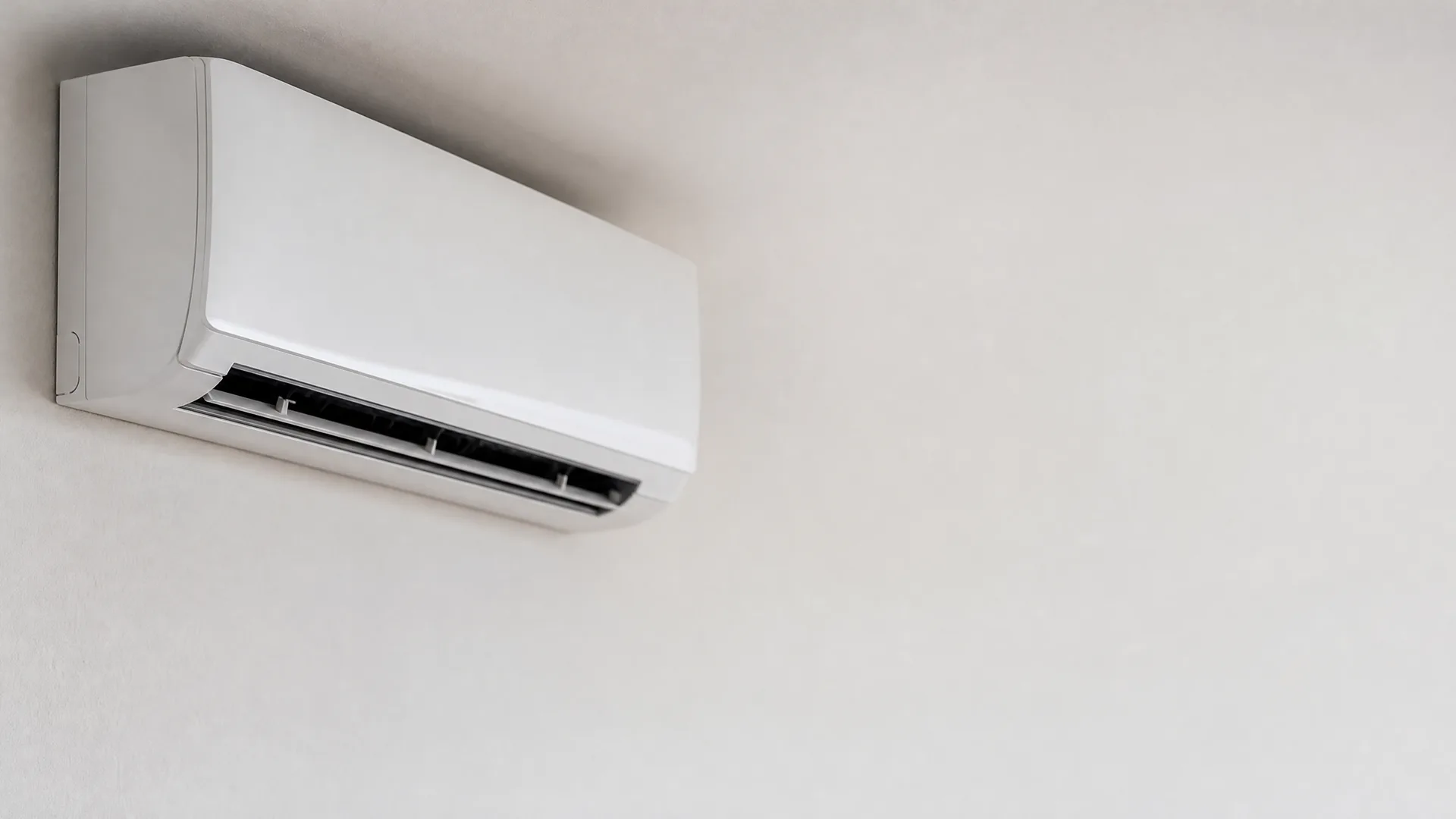
Where the drain line runs
The condensate line carries water from the drain pan inside the indoor unit out to a drain point outside, usually running downhill the whole way. Algae and dust build up inside that line the same way they would in any drain that stays wet for months. Once the buildup narrows the line enough, water backs up faster than it can drain out, and it finds the nearest low point to spill over, often right back into the indoor unit.
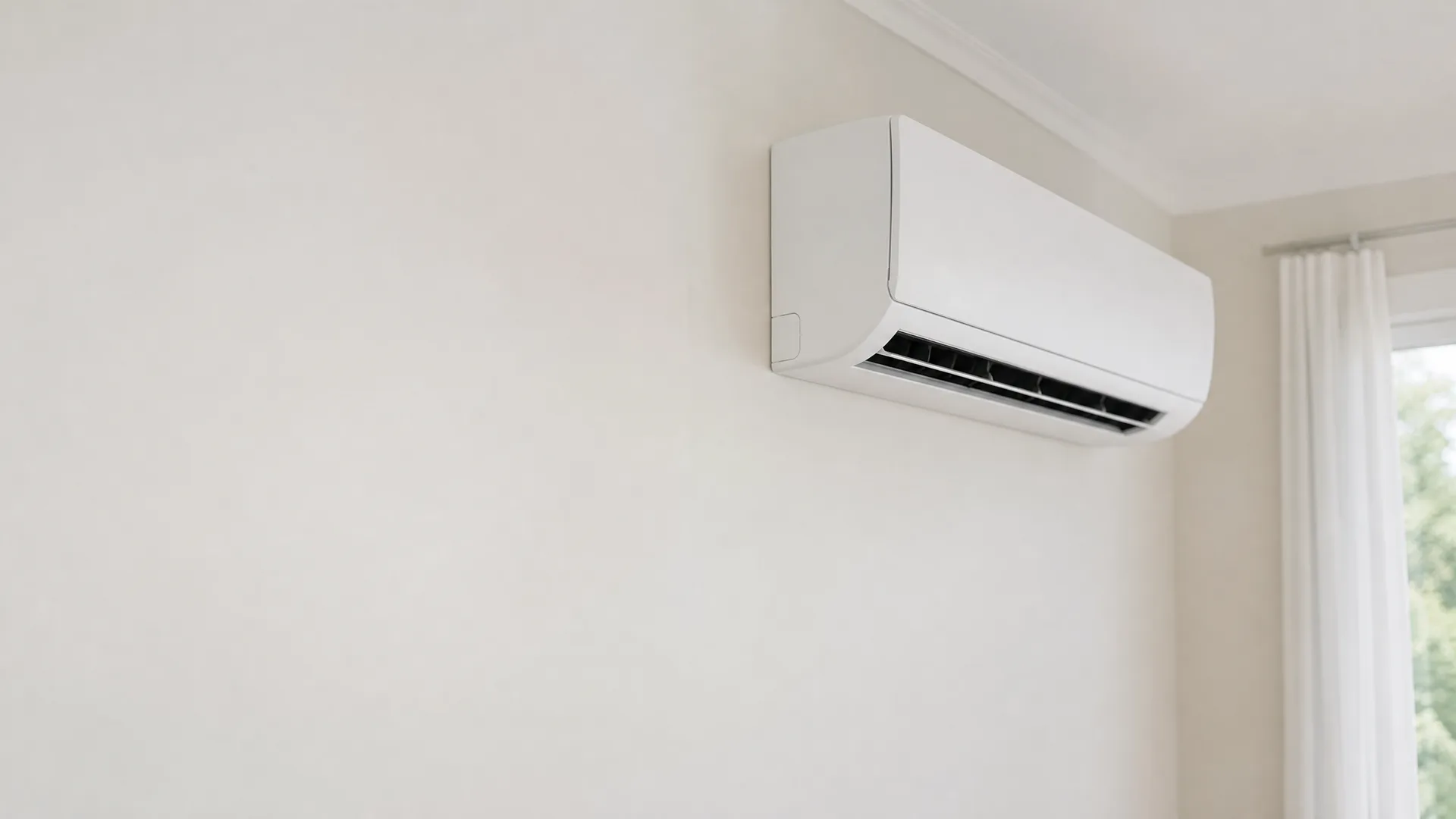
What the pan is for
The drain pan sits under the evaporator coil and catches the water that condenses off it as the unit cools the air. It's thin plastic or metal, and it holds standing water for hours at a stretch during a Wilmington summer. Rust works through metal pans over a few years, and plastic ones can crack where they flex against the mounting bracket. Either way, once the pan fails, water goes wherever gravity takes it instead of into the drain line.
Cooling runs May through September
Five months of steady runtime gives algae and dust plenty of time to build up inside that drain line before it finally backs up. Most mini splits start leaking in the back half of summer, once that buildup has had enough time to choke the line.
NOAA nClimDiv 1991-2020
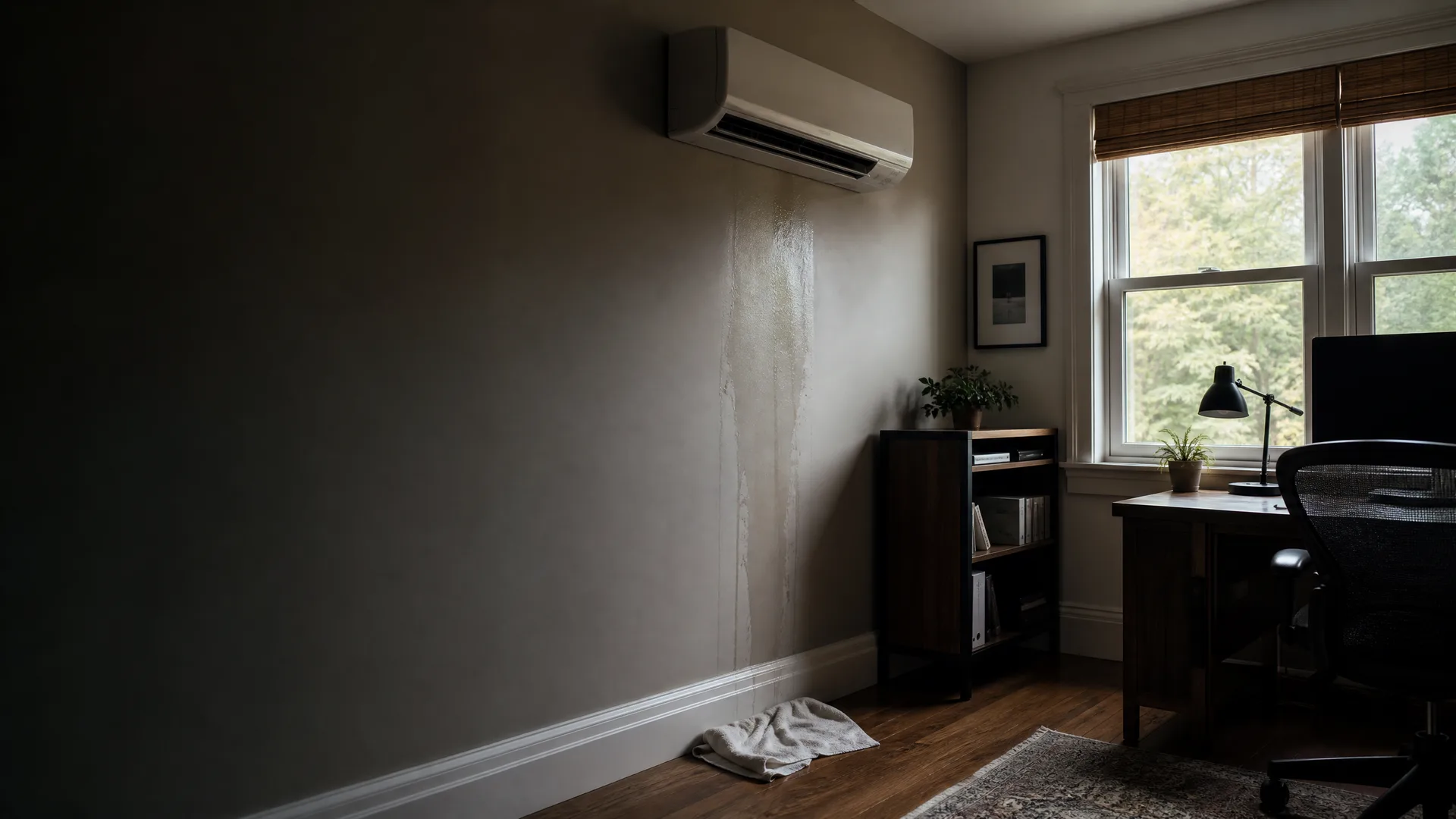
You're at the desk working through the afternoon when you notice the carpet feels damp under your chair. The mini split above the desk has been running most of the day, same as every day this time of year. A wet streak runs down the wall under the indoor unit, pooling at the baseboard. You grab a towel and press it against the wall, then pull the trash can over to catch what's still coming. The unit hums along like nothing's wrong. A tech who works on these units all summer in New Hanover County has seen this exact streak before, same spot on the wall, same time of year, and knows which part of the line to check first.
Stop chasing a mini split pro
A clogged drain line or a cracked pan does not clear itself. The unit keeps cooling, the condensate keeps forming, and the water keeps finding the same path down your wall or across your floor until something stops it. Letting it run through the rest of the summer only gives the stain more time to spread and the wall behind it more time to soak. A contractor local to Wilmington who services mini splits through the muggy stretch from May to September has seen this same leak dozens of times this season alone, usually from the same clogged line or worn pan, and knows where to check first. Send the request and it goes to that one contractor, not a handful of companies competing for the job, so you are not fielding five calls about a wet patch of carpet. You get back to your afternoon, and the leak becomes someone else's problem to find and fix.
What a leaking mini split means
- Water under or around a mini split almost always traces back to a clogged drain line or a cracked, rusted drain pan.
- Summers here run long enough, May through September, that the drain line has plenty of time to build up algae and dust.
- A dry pan with steady drip through the line is normal; staining, pooling, or a damp wall means it isn't draining right.
- Yellowing on the casing or dust caked around the vents usually means water has been going somewhere it shouldn't for a while.
- Mild winters mean the unit still runs enough months of the year for the same clog to form on the heating side too.
- The leak doesn't stop on its own, and the water keeps following the same path until the line or pan gets fixed.
A mini split dripping or pooling water is telling you something specific, not just that it's working hard. Inside the indoor unit, a drain pan catches the water the coil pulls out of the air, and a line carries that water out to a drain point outside. When everything is working, you never see or think about either one. When you do see water, the pan has cracked or rusted, or the line has clogged somewhere along its run, and the water that should be leaving the house is backing up and coming out where it can, down a wall, across a floor, into the carpet under a desk.
Wilmington's long cooling season gives that buildup time to happen. Five months of steady runtime means five months of algae and dust collecting inside a line that's often only a quarter inch wide. Mild winters add to it, since the unit still runs enough months out of the year to keep the same clog forming on the heating side. None of this reverses on its own. The unit keeps running, the coil keeps pulling moisture out of the air, and the water keeps finding the same path until the line gets cleared or the pan gets replaced.
What you're looking at tells you roughly what you're dealing with. A dry pan with water moving steadily through the line is normal and not something to worry about. Staining, pooling, or yellowing on the casing means it's been draining wrong for a while, and that's worth having a contractor look at before the leak finds something it can damage.


Mini Split Repair
Hand off the mini split problem
A licensed pro who works in New Hanover County gets your request.