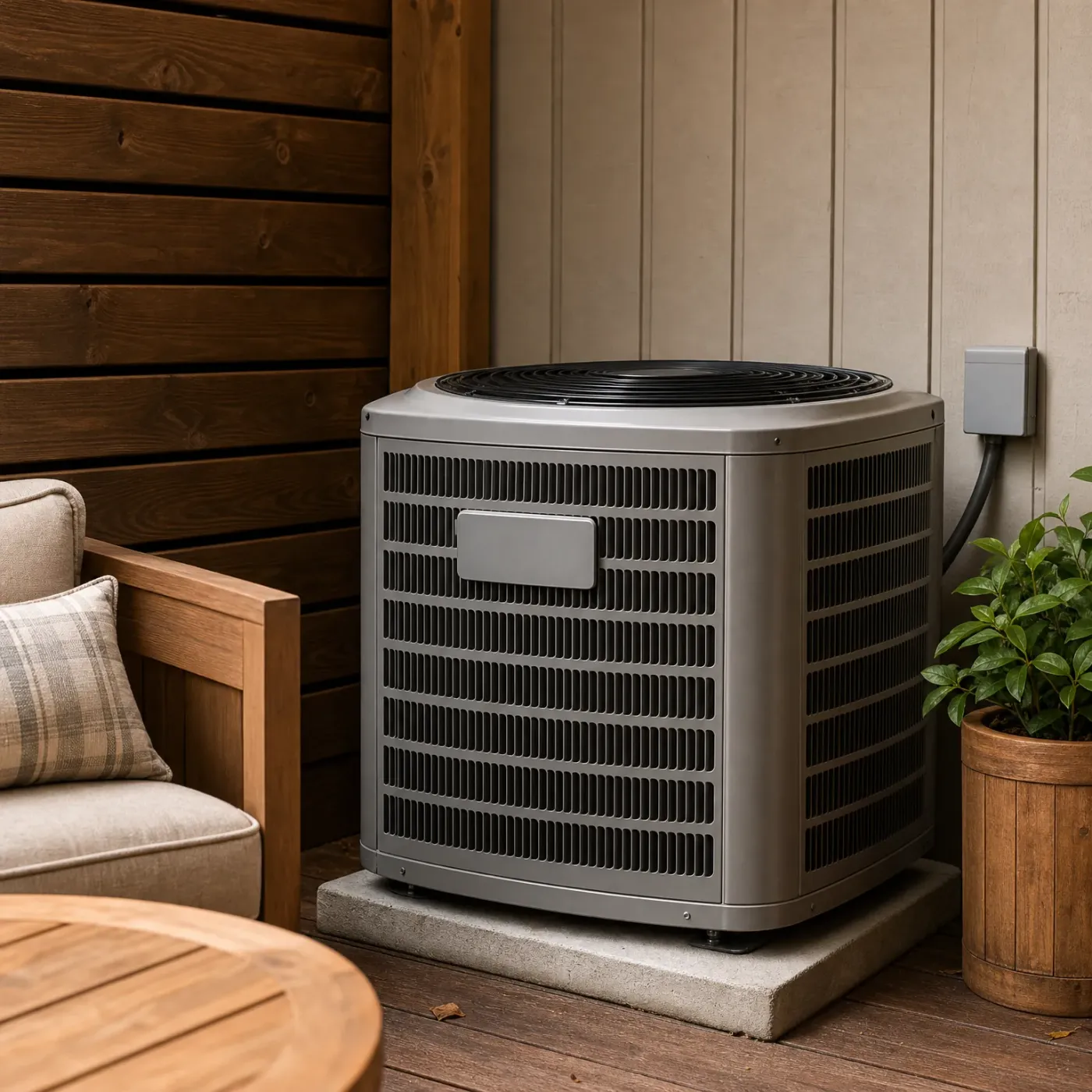
One coil, two jobs
The indoor coil only cools air when refrigerant is moving through it. Lose the charge or the airflow across it, and that same coil does nothing but sit there while the blower keeps pushing air past it.
Get matched with an air conditioner pro in Mecklenburg County
Warm air from the vents means your AC isn't cooling even though it's still running. In Charlotte, that's not something to sit on when summer stretches on this long. Below are the reasons it happens and what each one means for your system. If you'd rather skip the guesswork, get matched with a contractor who can look at your unit and tell you what's actually going on.
Find a pro near meWarm air from the vents usually means the system has lost its charge, lost airflow, or lost power to the part that actually cools the air. A dirty filter or blocked return can starve the indoor coil of airflow until it ices over, and once that happens, the air coming out turns warm even though the blower still runs. Low refrigerant from a leak does the same thing: the coil can't absorb heat properly, so it either freezes or just stops pulling warmth out of the air. Sometimes it's simpler. The outdoor unit has its own breaker and disconnect, and if either one has tripped or been switched off, the compressor sits idle while the indoor blower keeps pushing unconditioned air through the house. With Charlotte summers running long and hot, a system blowing warm air is losing ground fast, not just running inefficiently. The longer it runs this way, the more strain it puts on the compressor itself.


The outdoor unit holds the compressor, and that's the part doing the actual cooling. The indoor blower just moves air, whatever temperature it happens to be. So when something stops that outdoor unit, the blower keeps running and pushes out warm house air, and it can take a minute before you realize the system isn't cooling at all.
A few different things can cause that. A breaker can trip. A capacitor, the small part that gets the compressor motor started and keeps it running, can fail. Either way the outdoor unit sits there doing nothing while the fan inside runs on.
Low refrigerant is another path to the same complaint, but it rarely shows up all at once. A slow leak drops the charge over weeks, and the air coming out gets a little warmer, a little less effective, before it stops cooling entirely. If your system has felt weaker since spring and now blows warm, that's the pattern.
Airflow problems get there a different way. A dirty filter or a blocked return can starve the indoor coil until it ices over. Once that coil is covered in ice, air can't pass through it, and what reaches the vents is warm no matter how hard the compressor is working outside.
Then there's the thermostat. Set the fan to "on" instead of "auto" and it runs continuously, even between cooling cycles. That reads as warm air, but the system might be cycling exactly as it should.
A clogged condensate line can also shut the whole system down on purpose, as a safety measure, while leaving the fan running.




The indoor coil only cools air when refrigerant is moving through it. Lose the charge or the airflow across it, and that same coil does nothing but sit there while the blower keeps pushing air past it.
Air that's cooler than the room but not cold usually points to low charge or a coil losing its fight with poor airflow, not a system that's about to fix itself.
You've probably noticed the thermostat says 72 but the room feels nothing like it. The vents are still pushing air, just not cold air, and the outdoor unit might have gone quiet while the indoor fan keeps running. Some rooms may feel worse than others, especially upstairs. If this has been going on for more than a day or two, check the vents and the outdoor unit for ice. Running a system that's lost its charge or its airflow doesn't just waste power, it can push the compressor toward a failure that costs far more to fix than the original problem. With Charlotte summers lasting as long as they do, a system stuck like this has a lot of hours left to make things worse.
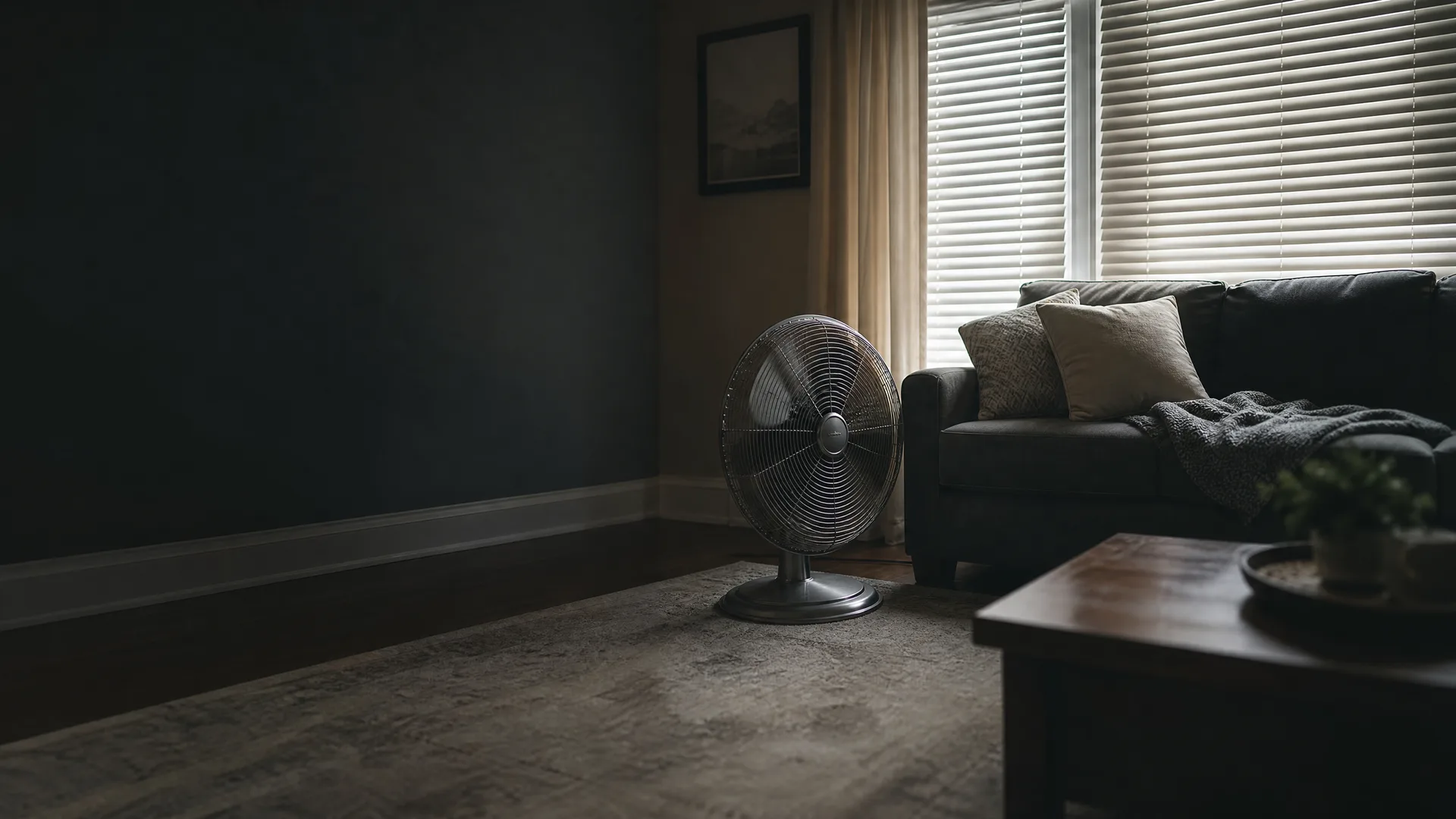
Three thirty in the afternoon and the blinds are shut against the sun, just a few bright lines leaking in around the edges. The floor fan is going next to the couch, pointed at nobody in particular, pushing the same warm air around the room. You can hear the vent overhead still running. You hold your hand up to it and it's not cold, not even cool, just air. Outside the heat sits heavy the way it does for months here, and the house isn't losing any of it. You've already checked the thermostat twice. It still says 72. The room says otherwise.
Skip calling shops to ask who repairs air conditioners in Mecklenburg County.
Asking costs nothing, and the choice to hire stays yours.
A system that's low on refrigerant or starved for airflow can keep running for days like this, cooling less and less, while the power bill climbs for a house that still isn't comfortable.
A system that's lost power to the compressor or tripped a safety switch usually stops trying altogether, and running it longer in that state doesn't cool anything, it just wears on the parts that are left working.


Thermostat calls for cooling and signals the outdoor unit to start.
Compressor should start, pressurizing refrigerant to carry heat outside.
Refrigerant flows inside to the evaporator coil and absorbs heat.
Blower pushes house air across that coil to cool it.
You've gone out and checked the condenser and it's just sitting there, silent, while the indoor fan keeps running and blowing warm air through the house. No hum, no fan spinning, nothing. In Charlotte summers that silence usually means something specific stopped the outdoor unit from getting the signal or the power it needs to start.
The outdoor unit needs two things to start: a signal from the thermostat and power to the compressor and fan. If the breaker feeding it has tripped, or the disconnect pulled near the unit is off, the whole thing stays dead with no hum at all. A failed capacitor is another common cause. That part gives the compressor the jolt it needs to start, and without it the unit can sit there trying and failing, or not attempt to start at all. A faulty contactor, the switch that actually sends power to the compressor, can also keep it silent even when the thermostat is calling correctly.
A big part of why Charlotte summers feel so heavy has nothing to do with the temperature on the thermostat. Across June, July and August, the dew point here averages 67°F, data from NOAA shows, and that's the number that decides how hard your AC has to work just to pull moisture out of the air. A healthy system handles that fine, you feel it as cool, dry air from the vents. But once yours is low on refrigerant or starved for airflow, that same moisture load is what turns a mild problem into warm air fast. The thicker the air outside, the less margin your system has left to hide a fault.
NASA POWER T2MDEW


Your AC in Mecklenburg County earns its keep from May through September, about five months straight. That's a long stretch for a compressor to carry, and it's also a long stretch for a weak charge or a failing part to keep pushing warm air through your vents before you catch it.
NOAA nClimDiv 1991-2020

This one sits clean on its pad, fins clear, lines running straight into the wall. Air moves through it without a fight, and the compressor can do the job it's built for. Nothing here is working harder than it has to.

Years of dirt and weather have packed the fins on this one, and that buildup chokes the airflow the coil depends on. A unit left like this strains to pull heat out of the air, and that strain is often what shows up as warm air at the vents.

Warm air out of the vents means the system has lost its charge, lost airflow, or lost power to the compressor. That's it. Everything above points back to one of those three. The thermostat setting doesn't matter and the age of your unit doesn't change what's happening right now. Something in that chain stopped doing its job, and the blower is just moving house air past a coil that isn't cooling it.
You don't have to figure out which of the three it is before you do anything. That part is a contractor's job once they're standing in front of your unit with gauges in hand. What you can skip is the part where you search around Mecklenburg County for someone to call, explain the warm air and the thermostat reading over the phone two or three times, and sort through quotes from people who haven't seen your system. Tell this page what's going on, and a contractor who covers your area gets in touch with you directly.


A pro who works on air conditioners