Why your AC smells musty in sticky North Carolina summers
Send the request and finding a pro stops being your problem.
You walk in from the heat and the air inside smells off. Damp, a little sour, like a basement even though the thermostat says 72. The AC is running, the house feels cool enough, but that smell says something inside it is staying wet when it should be drying out.
In North Carolina summers, that usually means moisture is sitting somewhere it shouldn't. Could be the drain line is clogged and water is backing up into the pan. Could be the coil is growing something it has no business growing. Could be the system is oversized or just not pulling the humidity down the way it should, so the air moves through cool but still damp, and damp air holds odor. None of that goes away by waiting it out or running the fan more.
Finding someone to look at it is its own chore. You would be searching for a contractor who works on your kind of system, calling a few, explaining the smell and when it started and what the house feels like, then doing it again with the next one so you can compare what they say and what they charge. That is time you probably do not have lying around in the middle of a sticky July.
Send the form here and that part is done. You are not the one tracking down who is licensed, who answers the phone, who can actually get to a musty coil before it turns into something worse. That search gets handed off the moment you submit it. A contractor who works on North Carolina systems gets your information and takes it from there.
You still get a straight answer about the smell and what is causing it. You just do not have to be the one who finds the person to give it to you.
That musty smell means water is sitting somewhere it shouldn't. Your AC pulls moisture out of the air all summer long and that water is supposed to drain outside through a condensate line. When that line clogs with algae and dirt, which it does easily in a house that runs the AC for months straight, the water backs up into the drain pan and sits there instead of draining away. Standing water grows mold fast in a North Carolina summer, and the smell you're catching is that mold riding the air right back out through your vents. It can also mean the evaporator coil itself is damp longer than it should be, either from a dirty filter slowing airflow across it or a system that's oversized and cooling the air faster than it can wring the moisture out. Either way, something inside the system is staying wet between cycles. That's worth having a contractor look at soon, since standing water left alone tends to find its way into the pan, the ducts, or the ceiling below.
Why North Carolina air feeds this
Outside air here holds a lot of water most of the summer. Your AC has to pull a good bit of that moisture out before it ever cools the house, so the coil stays wet for hours at a stretch and the drain line is working the whole time it runs. A system in a drier state deals with a fraction of that water. More water through the line means more chances for algae to build up and slow the drain until it backs up.
What a clogged line does
Water that can't drain has to go somewhere. It backs up into the drain pan, sits against the coil, and soaks the duct insulation nearby. Standing water does not dry out on its own while the system keeps running, since the coil is adding more to it every cycle. That's the smell. A technician can clear the line, flush the pan, and check that the drain is pitched to carry water out instead of letting it pool again.
Before you get your air conditioner repairAfter you get your air conditioner repair
That smell doesn't clear up on its own, and in a North Carolina summer it has months to get worse, not better. Every day it sits is another day the coil stays wet and whatever's growing in that drain line spreads. You could start calling repair companies yourself, sit through hold music, explain the musty smell and the clogged line to three or four different people, then try to judge which one actually knows condensate drains from the one just reading off a script. Or you send this request once and let a licensed contractor who handles this take it from here. You still have to let them into the house and show them the unit, but you're done hunting for who to call. That part of it is off your plate the moment you hit send, and the air in your house stops being something you have to think about every time you walk in the door.
The coil draining the way it should
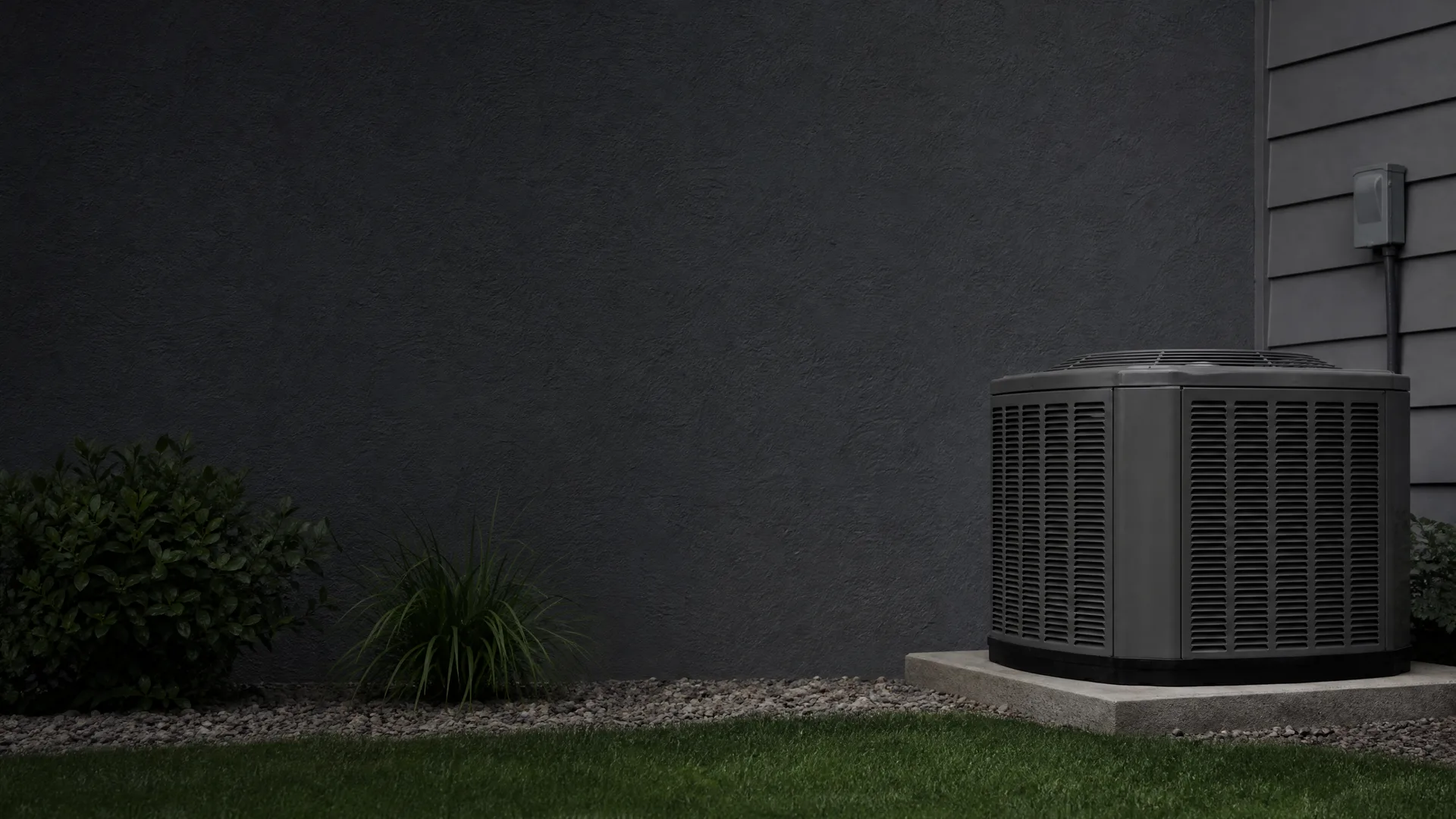
The condenser sits clean on its pad, the conduit feeding it power with nothing pooling nearby. Inside, the coil sheds the water it pulls from the air straight down the line and out of the house. No standing water, no smell.
The coil holding onto water
Leaves and dirt have built up around the base, and the lines running along the wall are doing more work than they should. Debris like that blocks drainage and keeps the coil wet between cycles, which is exactly what that musty smell is telling you.
What else have you noticed since the smell started?
Once that smell is there, look for what usually comes with it. Water staining the ceiling or ceiling tiles under an attic unit. A damp patch on the carpet or drywall near the indoor unit, from the drain pan overflowing instead of draining out. The air feeling heavier than it should even with the thermostat at 72, because a coil fighting a clog isn't pulling moisture out the way it's supposed to. Some people notice it worse in one room, usually whichever one sits closest to the air handler. Left alone, that standing water gives mold something to grow on, inside the unit and sometimes into the drywall around it, which is a harder and costlier problem than a clogged line.
The sun's almost down and the light across the yard has gone gold. You're out pulling weeds near the patio when you notice it, the condenser against the side of the house, dead quiet. No hum, no fan turning behind the grille. Inside, you know the thermostat's set to run. You walk over and put a hand near the top vent. Nothing moving. Crickets starting up already, the air thick and close the way it gets on an August evening here. You think about the smell that's been in the house all week and wonder if this is the same problem or a new one, and either way the house is going to be warm by the time you go back inside.
Power costs 14.00 cents per kilowatt-hour statewide
At 14 cents a kilowatt-hour, your AC fighting a wet coil all summer isn't cheap to ignore. A coil that stays damp makes the system work harder to pull the same heat out of the air, and that extra run time shows up on the bill before the smell ever gets better on its own.
EIA-861 2025 statewide residential average
You smell it the second you walk past the thermostat. You start listing which contractors in your area you'd even call, then picking up the phone and explaining the same thing three or four times to get a quote you can compare.
Send the form once and that search is done. Someone gets matched to your house and the smell, and the work of finding them stops being yours to do.
The smell has an answer
A musty smell from your AC means water sitting where it shouldn't, usually a clogged condensate line or a coil that's staying wet longer than it should in all that North Carolina humidity. That part is clear by now. What's left is getting someone out to look at the drain line and the coil before the smell gets worse and before anything upstream of it, the pan, the ceiling, the drywall, starts to show water damage too.
You don't have to be the one who tracks that down. No sorting through contractor listings, no calling three companies and explaining the smell and the thermostat reading and the drip stain three separate times just to see who can get you a quote. Send the form once and that search is off your plate. Someone licensed to work on your system takes it from there.
Hand off the search today
Describe your air conditioner job once, to one pro.