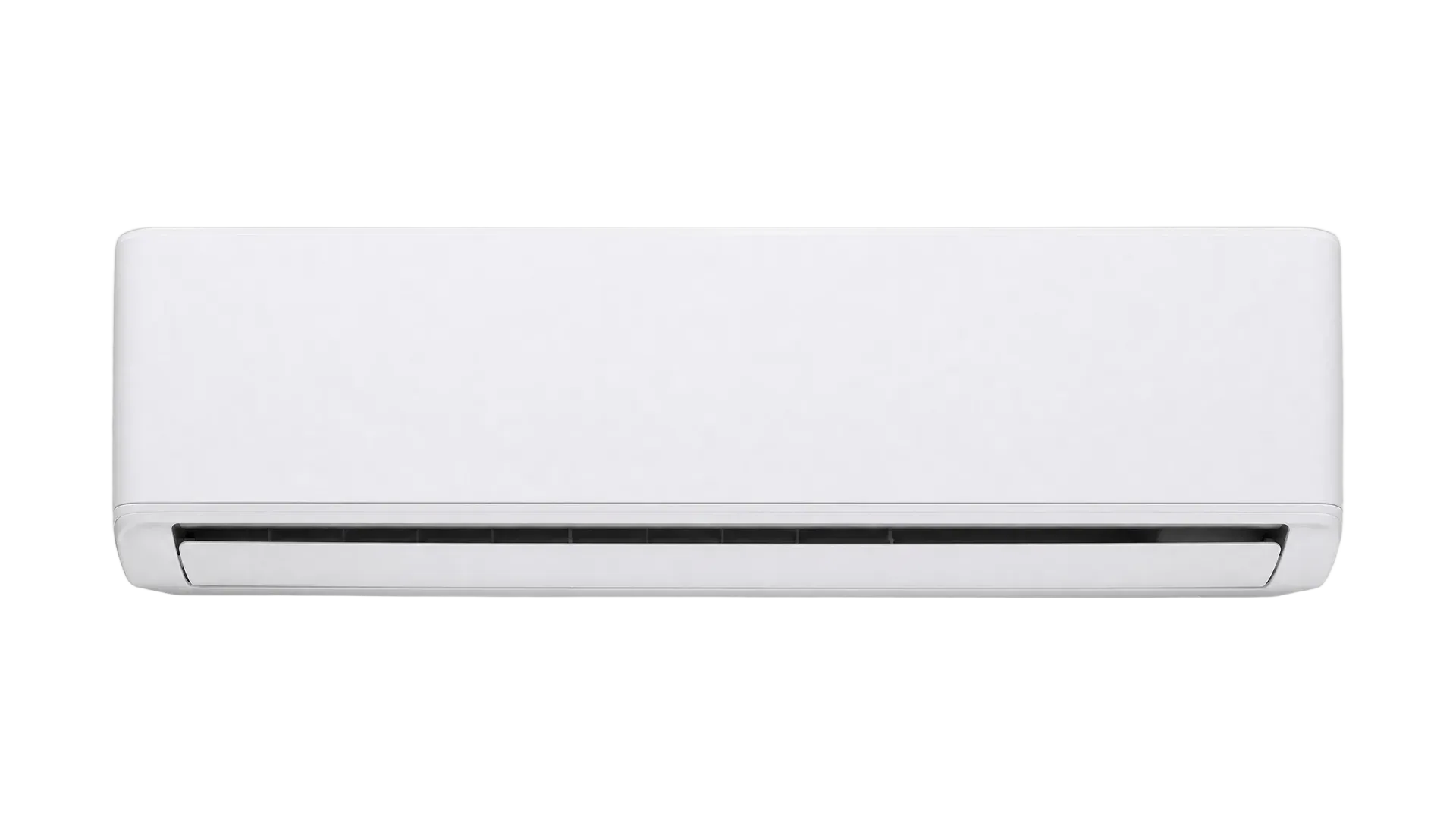
Running the way it should
Air moves freely across the coil here and the unit keeps the room at the temperature you set. The coil face stays clean and dry, no ice, no frost, just steady cooling through a muggy North Carolina afternoon.
A mini split freezes up when the coil runs colder than the air around it can handle, usually because airflow across it has dropped. The filter is clogged, a blower wheel is caked with dust, or the refrigerant charge has leaked down and left the coil too cold for the moisture in the air passing over it. That moisture turns to frost instead of condensation, the frost builds layer on layer, and soon the whole coil is a block of ice. Summers in North Carolina run thick and humid, so there is more moisture in that air to freeze than in a dry climate, which makes the buildup faster once something is wrong. A frozen coil cannot do its job. The unit keeps running but stops cooling, the ice spreads to the lines outside, and running it longer only adds to the block of ice instead of fixing what caused it. The unit needs to thaw and the real cause needs to be found before it is switched back on for the day.


Ice doesn't show up everywhere at once. It starts on the coil itself, right where the airflow is weakest, then works its way down the copper line running to the outdoor unit. Once that coil is covered, it can't pull heat out of the air the way it should, so the system answers by running longer, not better. A low refrigerant charge makes this worse in a particular way. The unit keeps running and the fan keeps moving air, so it still feels like it's working, just the air coming out isn't cold anymore. That's why a frozen mini split can go unnoticed for hours. Nobody's checking the coil, they're just wondering why the room feels off. The first sign is often not ice at all. It's a stain on the wall under the indoor unit, from ice that melted while the system sat idle and water found its way past the drain pan. Switching to fan-only gives that ice a way to melt on its own, without opening up the unit.





Air moves freely across the coil here and the unit keeps the room at the temperature you set. The coil face stays clean and dry, no ice, no frost, just steady cooling through a muggy North Carolina afternoon.

That dust on the coil and housing is blocking airflow the unit needs. Once ice starts building behind it, the mini split cools less and runs longer trying to catch up, and the coil only gets colder.
A North Carolina summer keeps a dew point around 67°F, averaged across June, July and August, per NOAA climate data for the state. That is heavy, damp air for the coil to work on. The wetter the air, the more moisture it dumps onto the coil as it cools, and that moisture turns to frost fast once airflow is already weak from a dirty filter or a low charge. You'll notice the unit running longer to hold the same temperature, and the air coming out feeling weaker than it should, right before ice shows up on the line outside.
NASA POWER T2MDEW county cells weighted by homes
You might notice the unit running but the room not getting any cooler, or water dripping from the indoor head onto the floor or windowsill as the ice melts. Open the cover and you may see frost or solid ice across the coil, sometimes creeping onto the copper line outside. The air coming out feels weak or warm instead of cold. Left running this way, the compressor works harder and longer to do less cooling, and that strain is what eventually shortens its life or leads to a bigger repair. On a muggy North Carolina afternoon, a frozen unit means the room stays hot while the system keeps drawing power without giving you the relief you're paying for.

Warm air moves into the unit and cold air comes back out, steady and even. No frost on the coil, no water pooling under the indoor head. You set the temperature and the room holds it through a sticky North Carolina afternoon.

Dust has built up on the casing and across the coil behind it. The unit runs but the air coming out is weak or warm, and ice is creeping across the coil where clean metal should be. Left alone, the ice only spreads.


Describe your mini split job once, to one pro.
You're not committing to anything by asking.
A mini split is built to handle some ice. The outdoor unit reverses itself on a schedule, running briefly like a heater to melt frost off the coil, then switching back to cooling. That part is automatic and most homeowners never notice it happening. It depends on a thermistor mounted near the coil, a small sensor that reads the coil's temperature and reports it to the control board. When the board sees the reading it expects, it calls for defrost and the ice clears before it can spread. The system breaks down when that signal never arrives. A corroded sensor wire or a thermistor reading the wrong temperature leaves the board blind to what the coil is actually doing, so it keeps running the unit in cooling mode while frost builds unchecked. A stuck reversing valve causes the same result a different way, failing to switch the system into defrost even when the board calls for it. None of this matters if the coil never gets cold enough to need defrost in the first place, and that comes down to airflow. Both fans, the one inside pulling room air across the coil and the one outside pushing air through the condenser, have to run at full speed for the coil to shed heat fast enough. A fan motor losing strength or a blade bent out of true slows that airflow just as surely as a clogged filter does, and the coil starts icing from there.


A mini split that keeps running while iced over is still drawing power the whole time, even though the coil underneath the ice is barely cooling anything.
That's wasted electricity on a system doing less work, not more, which matters in a state where most homes already heat and cool on electric rates.
At 14 cents per kilowatt-hour, a mini split icing over isn't just losing cool air, it's running the compressor hard for little return. Most homes here heat with electric power too, so a frozen unit sitting in disrepair adds up on both ends of the year.
EIA-861 2025 statewide residential average
Warm room air pulls across the indoor coil and the blower.
The coil runs colder than the air can hold its moisture.
Moisture drops out of the air and coats the coil.
Weak airflow or low refrigerant lets that moisture freeze solid.

Ice on the coil means airflow dropped or the refrigerant charge is low. Those are the two reasons, and finding out which one takes opening the unit, not guessing at it from the thermostat. Once it's diagnosed, the fix is usually a cleaning, a repair to the blower or reversing valve, or a charge that gets corrected and checked for the leak that caused it.
You don't have to spend your evening on hold with one company after another, describing the same dripping windowsill three different times and stacking up quotes to compare. Send the form once and the search for someone qualified is off your plate. What's left is the actual repair, done by someone who knows how to find the cause instead of just melting the ice and waiting for it to come back.


It's off your list after this