






Mini split frozen up in Clayton, NC

RepairMini-splitJohnston County, NC
Step 1 of 2

What ZIP code is the job in?

Why is my mini split frozen up?

A mini split that ices over the indoor coil usually stops cooling well before you notice the ice itself, and in Clayton's humid summers that ice can build fast once something is wrong. You want to know what's causing it before you shut the system down or make it worse.

Low refrigerant or blocked airflow is freezing the coil

A mini split freezes when the indoor coil gets too cold for the air moving across it to stay above freezing. That happens two main ways. A dirty filter or blocked vents slows the airflow, so the coil gets colder than it should. Or the system is low on refrigerant, which drops the pressure in the coil and lets frost form even with normal airflow. Johnston County summers run long and muggy, and a mini split working through that humidity for months is more likely to show a slow refrigerant leak or a filter clogged with dust than a unit running only a few weeks a year. Either cause stops the system from cooling the room, and running it iced up can damage the compressor.

A woman in a cream turtleneck sweater stands beside a multi-pane window looking out at falling snow, with a dimly lit living room containing a lamp, sofa and shelves behind her.
A woman in a beige turtleneck sweater stands by a large window with snow-covered trees outside, in a living room with a lit lamp, sofa with cushions, and a wood stove with visible flames.
A woman with long dark hair in a beige knit turtleneck sweater stands beside a window with snow outside, looking off to the side, with a warmly lit living room containing a sofa, lamps and a coffee table behind her.
A woman with shoulder-length brown hair in a beige knit sweater stands near a window looking outside at falling snow and snow-covered evergreens, with a dimly lit living room, sofa, lamp, bookshelf and framed landscape painting behind her.
A woman in a tan sweater and jeans stands in the open black-framed front doorway of a white single-story house, while a blonde woman in an orange sweater and jeans walks toward her along a concrete paver path bordered by shrubs.

Running it iced up makes the problem worse

Once ice covers the coil, the unit is working against itself. The blower pushes air over solid ice instead of a clean coil, so the room stops cooling even though the system runs. Keep it on and that ice can spread into the lines and the compressor, which turns a simple fix into a costlier repair. Shut it off, let it thaw, and leave the fan running if you can. Don't chip at the ice yourself.

In a Clayton summer, a dead mini split in one room doesn't stay a one-room problem for long, especially with the humidity pushing back in through that space. You already know to catch small issues before they grow, and a frozen coil is exactly that kind of issue. Rather than searching around for someone who works on your brand or waiting on hold to explain the problem twice, you can get matched with a contractor who handles mini splits in Johnston County and have them reach out to you directly.

A gray upholstered sofa with a beige cushion and knit blanket beside a curtained window, with a white mug and a book on a dark wooden table in the foreground and a lit lamp in the background.

What's running your mini split so hard in Clayton?

  • Cooling runs May through September

    Cooling runs May through September. That's five months of your mini split pulling humidity out of the air nonstop, and humid air freezes a struggling coil faster than dry air does.

  • Heat runs October through April

    Heat runs October through April. Seven months on the system means seven months where a dirty filter or low airflow has time to turn into frozen coil weather.

  • Power here costs 14.67 cents per kilowatt-hour

    Power here costs 14.67 cents per kilowatt-hour. A mini split icing over runs longer to do less cooling, and that shows up on the bill before the ice ever melts on its own.

NOAA nClimDiv 1991-2020 · EIA-861 2025

A white wall-mounted mini-split air conditioner installed near the ceiling on a light-colored interior wall, with a window and green foliage visible at the left edge.

Running clean

This is what a mini split should look like: vents clear, grille clean, airflow moving straight out into the room. Air passes through without a fight, so the coil behind it stays cold but not wet enough to ice over, even on a muggy Clayton afternoon.


A dusty white wall-mounted mini-split air conditioner indoor unit installed high on a beige interior wall below a white ceiling and trim.

Caked with grime

Dust and grime like this choke the intake grille and the vents. Airflow drops, the coil behind it gets colder than it should, and moisture in the air starts freezing onto it instead of draining off. This is often how the ice starts.

A wall-mounted mini-split air conditioner indoor unit with a yellowed plastic casing and dark horizontal vent louvers, installed on a plain light-gray wall.
Before you get your mini split repair
A white wall-mounted mini-split air conditioner on a light gray wall in an empty room with dark wood flooring, white baseboards, a tray ceiling with recessed lights, and a window at the left.
After you get your mini split repair

A frozen coil almost always traces back to one of two things: airflow that's blocked, or refrigerant that's low. Both stop the coil from staying just cold, not cold enough to freeze.

A dirty filter or a closed vent cuts the airflow enough to drop the coil's temperature below freezing. A low charge does the same thing from the other direction, and only a contractor can check that.

Cooling runs May through September

Five months of steady cooling gives your mini split's coil a lot of chances to ice over if airflow or refrigerant is even a little off. A unit that ran clean last July can still freeze up in August once a filter clogs or a line starts leaking.

NOAA nClimDiv 1991-2020

A dim room with a white wall-mounted mini-split air conditioner above a wall with a vertical line mark, a wooden built-in shelving unit with books and a potted plant at left, and a desk with monitor, keyboard and mesh office chair by a window at right.

It's late afternoon, the middle of July, and you're at your desk in the home office when you notice the wall under the mini split looks dark. You get up and find a streak of water running down from the indoor unit, soaking into the drywall, and a small pool forming on the floor. You grab a towel and lay it down, then stand back and look at the unit. It's still running. You can hear the blower, but the room hasn't felt cool in a while, and now you know why water is where it shouldn't be.

What does the mini split look like right now

Look at the indoor unit and you'll likely find ice along the coil fins, maybe spreading onto the copper lines running out the back. The air coming out feels weak or barely cool, even with the unit set low. You might hear water dripping somewhere behind the wall, or notice the drain line outside isn't running like it should. Some homeowners catch a musty smell first, before they ever see the ice. Left alone through a Clayton summer, that water has to go somewhere, and it often finds drywall, flooring or the cabinet below the indoor unit before anyone traces it back to the coil.

A bearded man in a red and dark plaid flannel shirt looks out a frost-edged window at a snow-covered yard, with a gray mug on the sill in the foreground.
A smiling man with short dark curly hair and stubble, wearing a navy T-shirt, sits on a beige sofa looking down toward a dark object in the foreground, with a living room, round mirror, lamp and bright window behind him.

Get matched with a mini split pro in Johnston County

A frozen mini split doesn't thaw itself out and keep working right. You can turn it off and let the ice melt, but whatever cut the airflow or let the refrigerant get low is still there, and it'll freeze again the next muggy afternoon. Finding out whether it's a dirty filter, a closed vent, or a slow refrigerant leak means someone checking the coil and the line set directly, not guessing from across Clayton. Left alone, a leak doesn't fix itself and the ice keeps coming back worse, sometimes with water getting into your wall before you catch it. You could spend your evening calling around Johnston County, explaining the ice and the weak airflow to each one, then sitting with quotes trying to compare apples to oranges. Or you can hand that off now, while the unit's already down and there's nothing to lose by having someone look at it properly. Either way the coil needs attention before you run it again.

A white wall-mounted mini-split air conditioner unit installed high on a light gray interior wall below crown molding, with a bamboo-shaded window at the lower left.
A clean mini split moves air straight out, no haze or buildup on the vanes, nothing slowing the coil down.
A wall-mounted mini-split air conditioner indoor unit with a dusty, discolored cover, installed near the ceiling on a plain light-colored wall.
Dust caked across the casing and vanes means air is fighting to get through, and that strain is how coils start to ice.
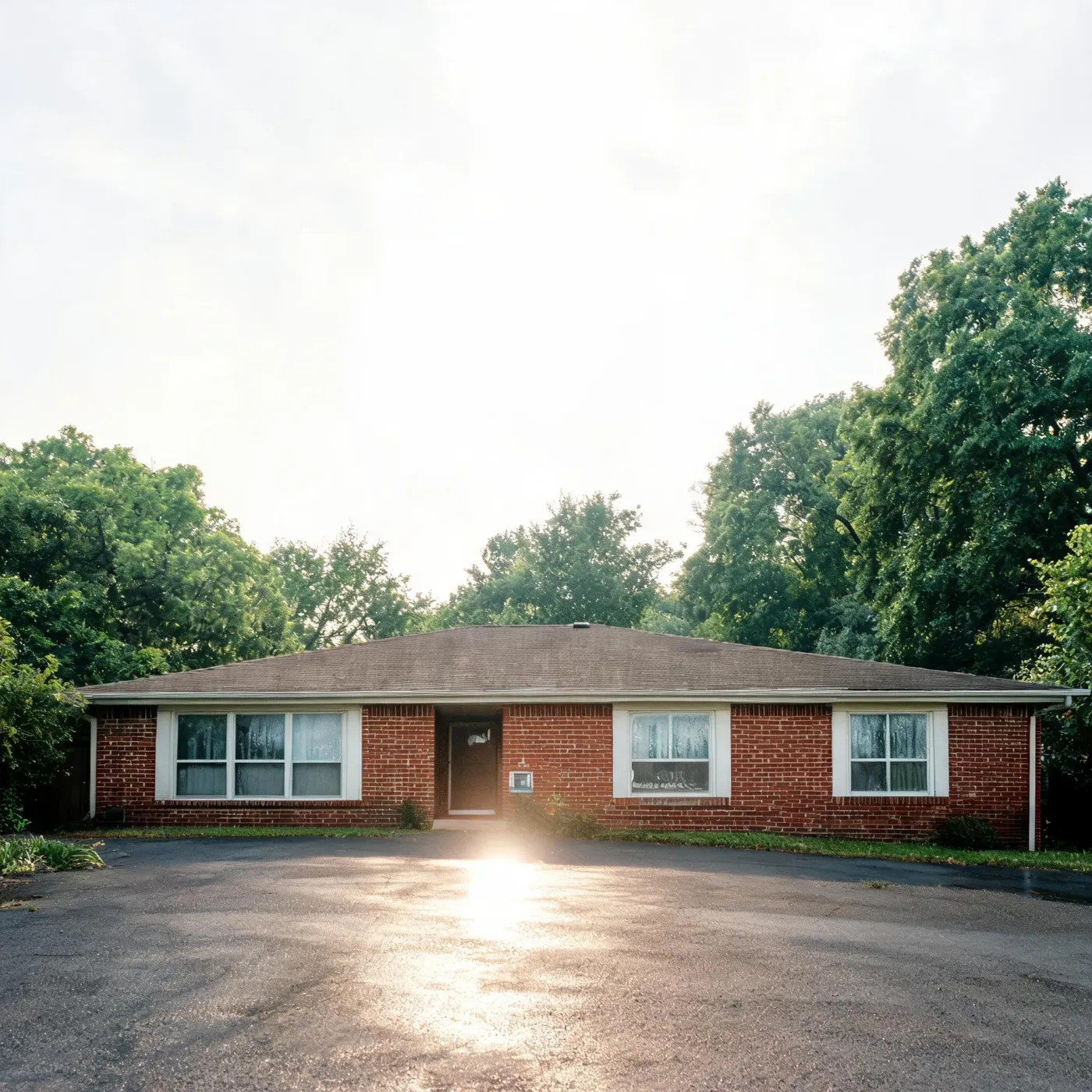
A single-story red brick ranch house with a low hipped shingle roof, white-trimmed windows and a central dark door, fronted by a large asphalt parking area with sun glare, surrounded by leafy green trees under a bright hazy sky.

That stickiness you feel outside in Clayton all summer comes from a dew point that averages 68°F in June, July and August, according to NOAA climate data for Johnston County. Air that heavy holds a lot of moisture for your mini split to pull out, and pulling out that much moisture asks more of the coil every single day it runs. A coil that's already cold from steady cooling has less room for error when the air hitting it is this wet. A clogged filter or a low charge won't show up as slow performance first. It'll show up as ice, because wet summer air freezes a struggling coil faster than a dry day ever would.

NASA POWER T2MDEW

Wait It Out or Call Someone

Turn it off and wait

  • Shutting the unit down stops the blower from fighting a solid coil, and the ice melts over a few hours on its own.
  • You lose cooling in the room until the ice clears and the unit runs again, which matters on a muggy Clayton afternoon.

  • Nothing about airflow or refrigerant gets fixed, so the coil is set up to freeze the same way next time the unit runs hard.
  • Water from the melting ice can keep draining past the pan if the real cause is low refrigerant rather than a blocked filter.
  • You still don't know whether the problem is a closed vent, a dirty filter, or a line that's leaking refrigerant.

Get it looked at

  • A contractor can tell you within minutes whether the freeze came from blocked airflow or low refrigerant, something you can't diagnose by looking at ice.
  • Fixing the actual cause means the coil runs cold enough to cool the room without icing over again in August.
  • You skip the back and forth of searching for someone, calling a few places, and explaining the dripping wall and weak airflow each time.
  • A low refrigerant charge usually points to a leak somewhere in the line set, and that's not something that clears up by itself.
  • Getting matched with a contractor means one call describing the problem instead of repeating it to every place you ring.
  1. A contractor checks the filter and vents for blocked airflow first.

  2. Gauges go on the lines to read the refrigerant charge.

  3. A leak search follows if the charge is low.

  4. The coil gets cleared and the system runs a test cycle.

A frozen mini split comes down to airflow or refrigerant, and no amount of waiting it out fixes either one. The ice will melt if you shut it off, but it comes back the next muggy afternoon until someone checks the filter, the vents, and the charge in the lines. You could start calling contractors around Clayton yourself, explaining the dripping wall and the iced-up coil to each one, then sorting through who can actually get out to look at it and whose quote makes sense. Or you can skip that part. Getting matched with a contractor means you explain the problem once, to someone who shows up ready to check the real cause instead of guessing over the phone. Your mini split's coil should run cold, not frozen solid, and getting there means someone with gauges and a leak detector looking at what's actually happening behind that ice.

Upper gables and shingled roof of a house with a stone chimney, framed by trees draped in Spanish moss, with forested hills and mountains under an overcast sky behind.

Find a mini split repair pro in Johnston County

Get a local pro

There's no charge for the request.

You've already explained the ice once today, and you'd rather not explain it again to the next person who calls. Sending the request means a contractor gets the details up front and reaches out to you, instead of you working the phone yourself while the drywall under the unit stays wet.