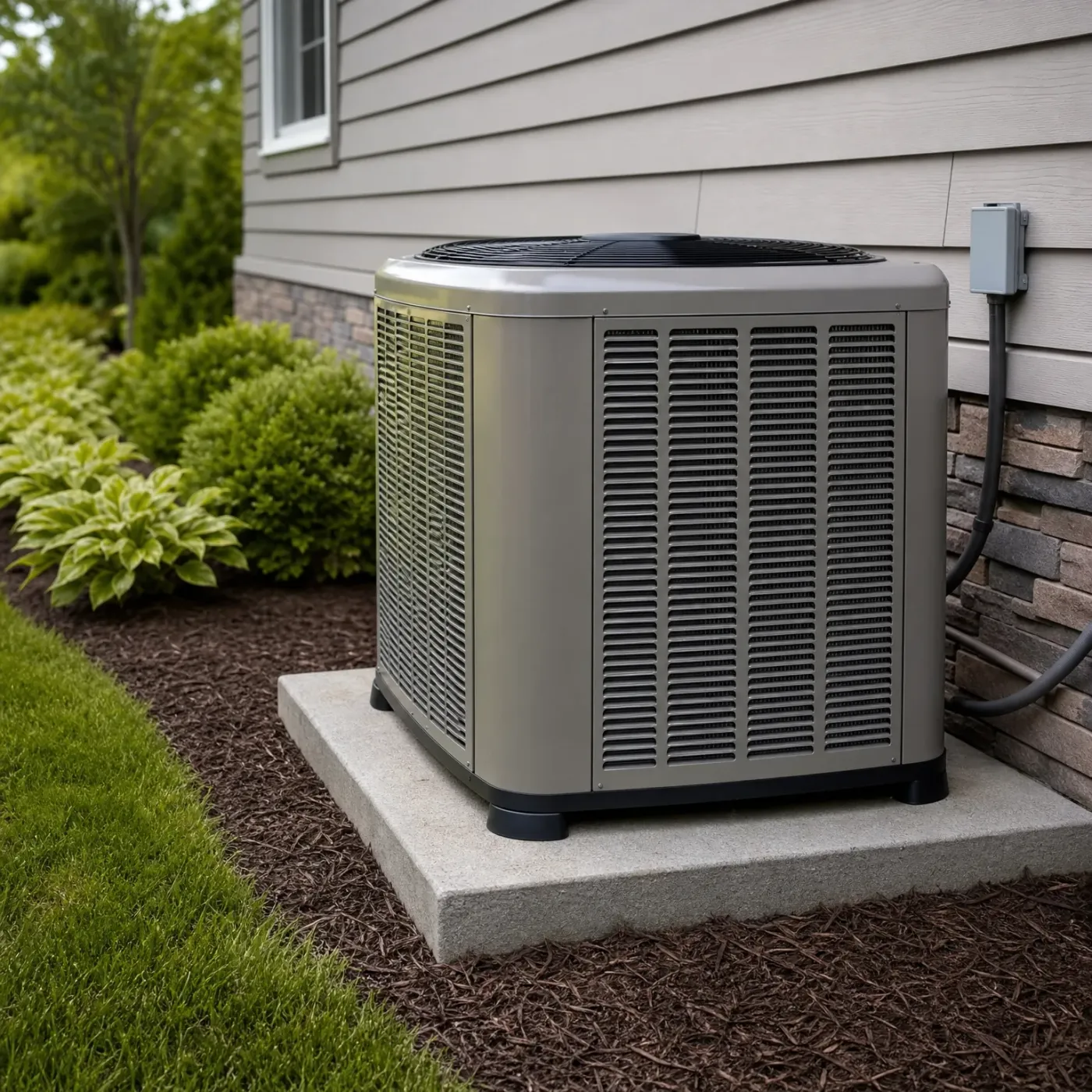
Why AC units freeze up in sticky North Carolina summers
Send the request today and let an air conditioner pro reach out to you.
You walk outside and the unit is running, but the air coming through the vents is warm. Or you pull the cover off and find the coil wrapped in ice, even though it's ninety degrees out. In North Carolina, with the air as thick as it gets from June through September, this happens more than people expect. Humidity plays a bigger part in it than heat does.
An air conditioner needs airflow moving across that coil to keep it at the right temperature. Cut that airflow down, with a dirty filter, a blocked return, or a fan that's struggling, and the coil gets colder than it should. Add in heavy moisture in the air and that cold surface starts collecting ice instead of just condensation. Once ice forms, it blocks even more airflow, and the problem feeds itself. A low refrigerant charge does the same thing from a different angle, dropping the coil temperature until it freezes over.
None of this fixes itself by turning the unit off for an hour. The ice has to melt completely, and whatever caused it in the first place is still there waiting. Running a frozen system can push liquid refrigerant back to the compressor, which is the expensive part to replace.
This is where a call for repair matters more than a guess at the problem. Send in your information and the search for someone to come look at it is off your plate. You're not left sorting through a list of companies or waiting on a handful of callbacks. One licensed contractor local to your area gets your request, someone who works on systems like yours all summer and has a good idea what's behind a frozen coil before they even open the cabinet. From there, it's off your hands.
Your AC freezes up when warm air stops moving across the indoor coil the way it should. That coil needs steady airflow to stay above freezing. Cut that airflow, with a clogged filter, dirty coil, or blocked vents, and the coil gets so cold that the moisture in the air around it turns to ice instead of draining away as condensation. North Carolina summers make this worse because the air is already loaded with moisture from June through September. A system that's already working against that humidity has less room for error when airflow drops even a little. Low refrigerant does the same thing from a different angle: less refrigerant means less heat being carried off, so the coil runs colder than it should and ice builds the same way. Once ice forms, it blocks more airflow, so the problem feeds itself. Left alone, it can push liquid refrigerant back into the compressor, which is the part you don't want to damage.
Before you get your air conditioner repairAfter you get your air conditioner repair
Done looking for an air conditioner pro
Your request goes to one pro, not a list of companies.
Get the air conditioner repair search off your mind today.
It costs nothing to send, and you don't have to hire anyone.
Airflow moving freely
Air passes through the filter and across the coil without a fight. The coil stays well above freezing, so moisture on it drains off as condensate the way it's supposed to. The line to the disconnect box carries steady current, and the unit cycles on and off like it should.
A coil fighting dirt
Grime like this on the fins holds heat away from the refrigerant inside. The coil runs colder to compensate, and the moisture in the air that touches it freezes instead of draining. Once ice builds, even less air gets through, and the unit works harder for less cool air.
Power costs 14.00 cents per kilowatt-hour statewide
At 14 cents a kilowatt-hour, a frozen unit costs you twice. It runs longer trying to cool the house, and once ice builds up it can't actually move any heat out while it does it. A coil that stays clear keeps your bill tied to the cooling you're actually getting.
EIA-861 2025 statewide residential average
North Carolina's humidity means the coil is already handling more moisture out of the air than it would in a dry climate, so it has less room for error when airflow drops even a little.
That's why a dirty filter here turns into a frozen coil faster than it would somewhere dry, and why the same fix, restoring airflow, needs to happen before the ice builds up again.
What a Frozen Coil Comes Down To
A frozen coil almost always comes down to restricted airflow or a refrigerant leak, and both are fixable.
Letting the ice melt before anyone looks at the unit answers nothing about why it froze in the first place.
A contractor who works on North Carolina systems all summer has likely seen the same coil freeze a dozen times this season alone.
Your request goes to one licensed local contractor, not a batch of competing bids pulling your attention in different directions.
Catching a frozen coil early, rather than running the unit through another humid week, keeps a simple fix from turning into a compressor replacement.
You end this knowing what froze the coil and what stops it from happening again.
A frozen coil has a cause. It's airflow that's been cut off somewhere between the filter and the vents, or refrigerant that's leaked out and left the coil too cold for what's moving across it. Shutting the system off and letting the ice melt doesn't touch either one. The unit will run again for a while, and in a North Carolina summer, it will likely freeze again.
Finding out which one happened, and fixing it, is what stops the next freeze. That's diagnostic work, and it goes faster with someone who's already seen it this season. A contractor working on homes in your area through July and August has pulled the cover off a dozen coils that look just like yours, iced over the same way, for the same handful of reasons. That's who gets the request. One licensed local contractor, not several, so you're not fielding calls from companies you didn't ask to hear from.
Waiting costs you more than a few days of warm air. A coil that keeps freezing and thawing is a system working harder than it needs to, and if the cause is a slow leak, every cycle it runs low on refrigerant puts more strain on the compressor, the most expensive part to replace. Catching it now, while the fix is still a filter or a sealed leak, is what keeps it a repair instead of a replacement.
Once this is sorted, you'll know what caused it and what keeps it from happening again. That's the point of sending the request.
Air Conditioner Repair
It's off your list after this
Tell a local repair pro what your air conditioner is doing.
A local pro who knows air conditioners gets your details and gets in touch.
After you send the request, you're done searching.
Send the request today and stop worrying about who to call.
Describe what your air conditioner is doing once, in one form.
Answer a few questions instead of calling shop after shop.
Only one pro gets your request, so you hear from one company.