
Why your AC is running but not cooling in North Carolina

Say what's going on with your air conditioner, and a pro who works on them reaches out.

RepairCentral ACNorth Carolina
Step 1 of 2

What ZIP code is the job in?

Why is my AC running but not cooling my house?

The air is coming out but the house just won't cool down, and in a North Carolina summer that's hard to ignore for long. You've checked the thermostat, maybe bumped it down a few degrees, and the unit outside is humming along like normal. It's running, so it feels like it should be working. When it isn't, you want to know what's actually wrong before you decide whether this is something simple or something that needs a technician.

Your AC is running but not cooling because it isn't moving enough heat out of the house

A running AC still needs three things to work right: airflow across the coil, enough refrigerant, and a coil that isn't frozen over. If any one of those fails, the blower keeps blowing but the air coming out is barely cooler than the room. A dirty filter chokes off airflow. A low refrigerant charge means the system can't pull enough heat out of the air it does move. A coil caked in ice, often the result of one of the first two problems, blocks airflow entirely until it thaws. With North Carolina summers running hot and sticky for months at a time, a unit that's cooling at half capacity falls behind fast and the house never catches up.

A gray outdoor air conditioning condenser unit on a concrete pad beside a house with horizontal lap siding, with a wall-mounted disconnect box and conduit, and shrubs to the left.

Running and cooling

This is what it should look like. The condenser outside cycles on, the air coming through your vents is noticeably cold, and the house actually catches up to the thermostat. Clean coils and a clear pad mean the unit isn't fighting anything extra to do its job.


An outdoor air conditioning condenser unit on a concrete pad beside a house with horizontal siding and a concrete foundation, with dry brown leaves on the ground to either side.

Running but not cooling

This one is working just as hard, maybe harder, and getting nowhere. Leaves piled against the cabinet, grime on the coil, lines that have sat exposed through a few North Carolina summers already. Airflow is choking and heat isn't leaving the house. A contractor can tell you if it's the coil, the charge, or something else.

A smiling bearded man in a dark blue henley shirt sits leaning back on a light grey sofa in a living room, with a bowl of popcorn on a wooden coffee table and a large window behind him.
A bearded man in a dark quarter-zip sweater sits smiling on a brown sofa in a dimly lit living room, with a bowl of popcorn and a mug on a table in the foreground and a potted plant near a window behind him.
A smiling man with graying dark hair and a beard, wearing an olive sweater, sits on a sofa in a living room beside a bowl of popcorn on a wooden table.
A smiling man in a dark green henley shirt sits on a gray sofa in a living room with a lit table lamp, wooden shelving unit, and a bowl of popcorn in the foreground.

Most of these problems trace back to the same part: the evaporator coil, the one inside your house that the warm air passes over. Anything that starves it of airflow or refrigerant throws the whole cycle off. A slow leak means there's not enough refrigerant moving through the coil to pull heat out of the air. A clogged filter or shut vents mean not enough air is moving across the coil in the first place. Either way, the coil gets too cold, moisture on it freezes, and ice builds where there should just be cold metal. Once that happens, the blower is pushing air past a block of ice instead of a cold coil, so it comes out warm no matter how long the system runs. Outside, a weak capacitor or a coil caked in dirt and yard debris keeps the compressor from building the pressure it needs. And sometimes the air never makes it back at all. If a duct came loose in the attic or crawlspace, it's cooling the space under your house instead of the one you live in.

What's Actually Happening Inside

  • Low refrigerant from a slow leak lets the coil ice over, and ice blocks airflow instead of cooling it.
  • A dirty filter or closed vents starve the system of return air, so the coil drops below freezing and frosts up.
  • Once the evaporator coil ices over, the air crossing it stays warm even though the blower keeps running full speed.
  • A failing capacitor can let the outdoor fan or compressor run weak or intermittently, so the refrigerant cycle never builds enough pressure to cool.
  • Dirty outdoor condenser coils trap heat against the unit, and the system ends up fighting its own heat instead of removing it from the house.
  • A duct that's come loose or disconnected in the attic or crawlspace lets cooled air dump outside the living space before it reaches a vent.
An outdoor air conditioner condenser unit on a concrete pad beside a house with beige horizontal siding and a stone-veneer base, with refrigerant lines running to a gray wall-mounted electrical box, surrounded by dark mulch, a flowering shrub and an evergreen on the left.
The condenser cycles on and off at normal intervals, with no ice on the lines and the shrubs around it green and trimmed.
An outdoor air conditioning condenser unit on a concrete pad beside a house with light vinyl siding, an electrical disconnect box and conduit on the wall, bare shrubs and mulch to the right, and a concrete walkway in the foreground.
Here the shrubs are bare and the unit sits idle longer between cycles, a sign something is keeping it from cooling the house.
  1. Warm air returns through the filter and into the duct system.

  2. A dirty filter or closed vents cut down the airflow reaching the coil.

  3. The evaporator coil gets too cold and frost starts forming on it.

  4. Ice builds across the coil until air can no longer pass through it.

Repair Now or Replace

Fix it now

  • A contractor can clear a frozen coil, recharge refrigerant, or swap a failed capacitor in one visit for most calls.
  • Parts like a run capacitor or contactor are specific and bought as needed, so the repair targets the actual failure.
  • If the system is under ten years old, repair usually costs less upfront than a new unit and gets cold air back the same week.
  • A refrigerant leak that gets sealed and recharged stops the slow decline in cooling that led to this call.
  • Repair buys time if you're not ready to plan a full system replacement this summer.

Consider replacement

  • If the compressor has failed or the coil is leaking in more than one spot, a new system may cost less over time than repeated repairs.
  • An older unit that struggles to cool even after repairs may be undersized or worn past the point where parts fix the real problem.
  • A new system comes with a warranty on the whole unit, not just the one part that just got replaced.
  • If this is the second or third repair call this summer, replacement stops the cycle of paying to patch the same system.
  • A new condenser and coil matched to your home's size can handle a North Carolina summer without the strain that caused this breakdown.
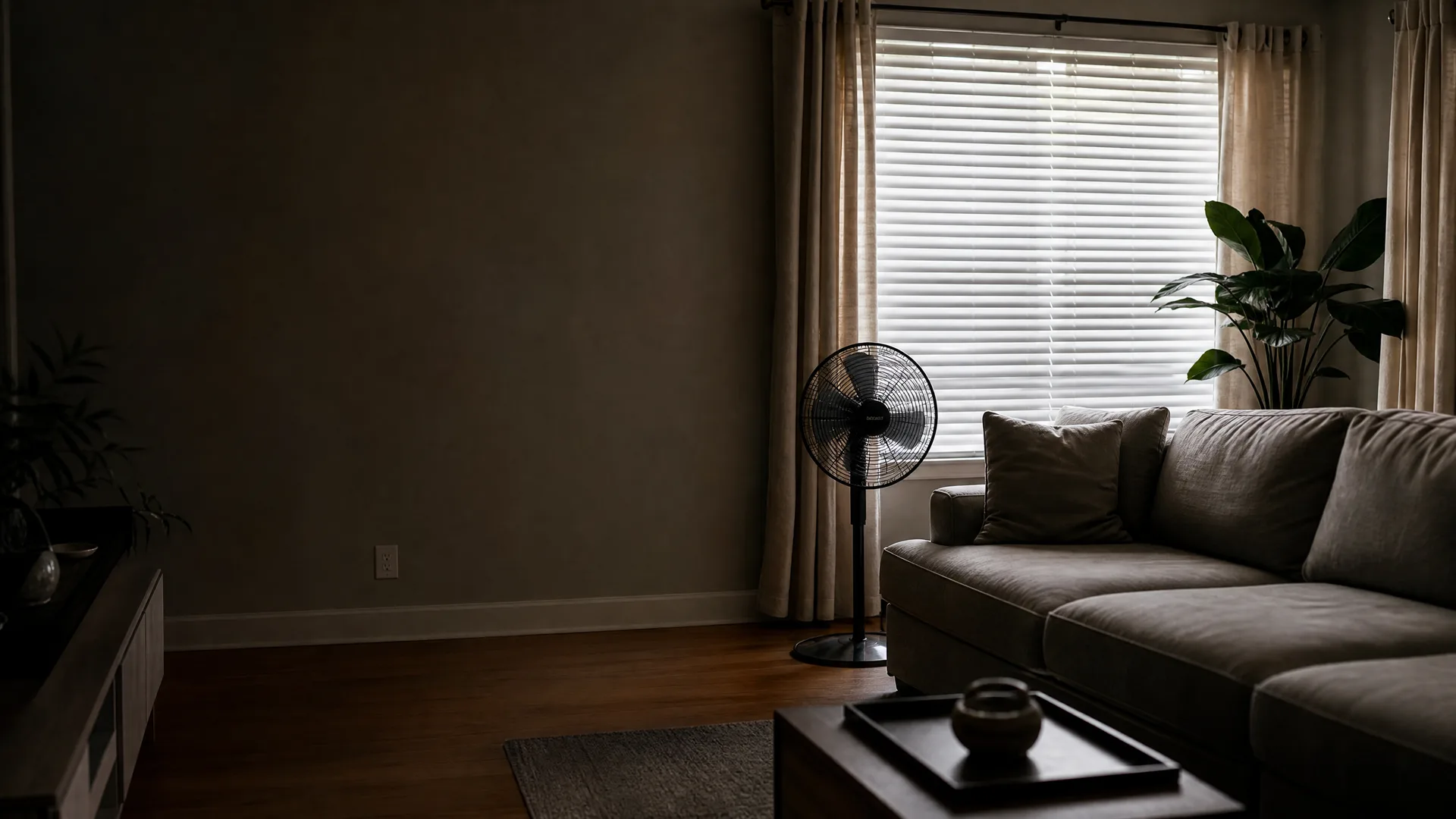
A dimly lit living room with a gray sectional sofa, a standing pedestal fan, a curtained window with blinds, a potted broad-leaved plant, a wooden coffee table with a tray and lidded jar, and a rug on dark wood flooring.

It's gone on long enough that you've stopped waiting for it to fix itself. Blinds are drawn against the afternoon sun, but the living room still holds onto the heat from lunchtime. The floor fan next to the couch pushes the air around without doing much about it. You've had a hand up at the vent twice now, and it's cool, just not cool enough. Outside, the condenser clicks on like it's supposed to. Somewhere in the walls, something isn't holding up its end. You've already decided this is the afternoon you stop guessing and get someone out to look at it.

The right pro for this job

A system that runs without cooling doesn't fix itself by running longer. If the coil has iced over, more runtime just means more ice, and once the blower can't push air past it, the compressor keeps cycling for nothing. If refrigerant is low from a slow leak, it stays low until someone finds the leak and recharges the line, and that's not a thermostat setting, it's a repair. Every day it goes on is another day of a North Carolina summer spent indoors without real relief, and the part that's actually failing, a capacitor, a contactor, a frozen coil, doesn't show itself from the thermostat or the vents. It takes someone looking at the unit to know which one it is. Once you send the request, that part stops being something you have to figure out yourself.

A compressor pulling in a low charge still draws power and still runs, so the outdoor unit sounding normal tells you nothing about whether refrigerant is where it needs to be.

That's why a system can run all afternoon in a North Carolina summer and the house still sits at the same temperature it started at.

An outdoor air conditioner condenser unit on a concrete pad beside a house with light horizontal lap siding, with an electrical disconnect box and conduit on the wall behind it.
Before you get your air conditioner repair
An outdoor air conditioning condenser unit on a concrete pad beside a house with white horizontal lap siding, with an electrical disconnect box and insulated refrigerant line on the wall and a shrub over mulch to the right.
After you get your air conditioner repair

Let it run as is

The house stays warm through another North Carolina afternoon, the unit keeps cycling, and whatever is blocking the cooling, ice, low refrigerant, a bad part, stays exactly where it is.

Send my request

Get it looked at

A contractor who works on your equipment finds what's actually stopping the cooling and the house starts catching up to the thermostat again.

Send my request
A man in a dark jacket and khaki pants walks through an open gate in a stone wall toward a woman standing in the open front doorway of a single-story white house with a dark shingled roof and river-rock accents.

What this does to your house

Every hour the system runs without cooling, it's pulling power the same as if it were working. Your electric bill doesn't know the difference between a cold house and a warm one, it just counts the runtime. Meanwhile the humidity in the house climbs because a coil that's iced over or short on refrigerant isn't pulling moisture out of the air either. That's why the house can feel heavy and damp even with the vents blowing.

The longer it goes, the more is riding on it. A compressor that keeps cycling against a frozen coil or a low charge is working harder than it should, and that kind of strain is how a bigger repair gets started. You don't have to figure out which part it is or whether the coil needs time to thaw before anyone can look at it. Once you send the details, a contractor who handles this in North Carolina homes gets matched to your situation and reaches out to you directly.

A light gray sofa with gray and beige textured throw pillows and a cream knit blanket beside a white-framed window, with a small round side table holding a ceramic vase and potted greenery.
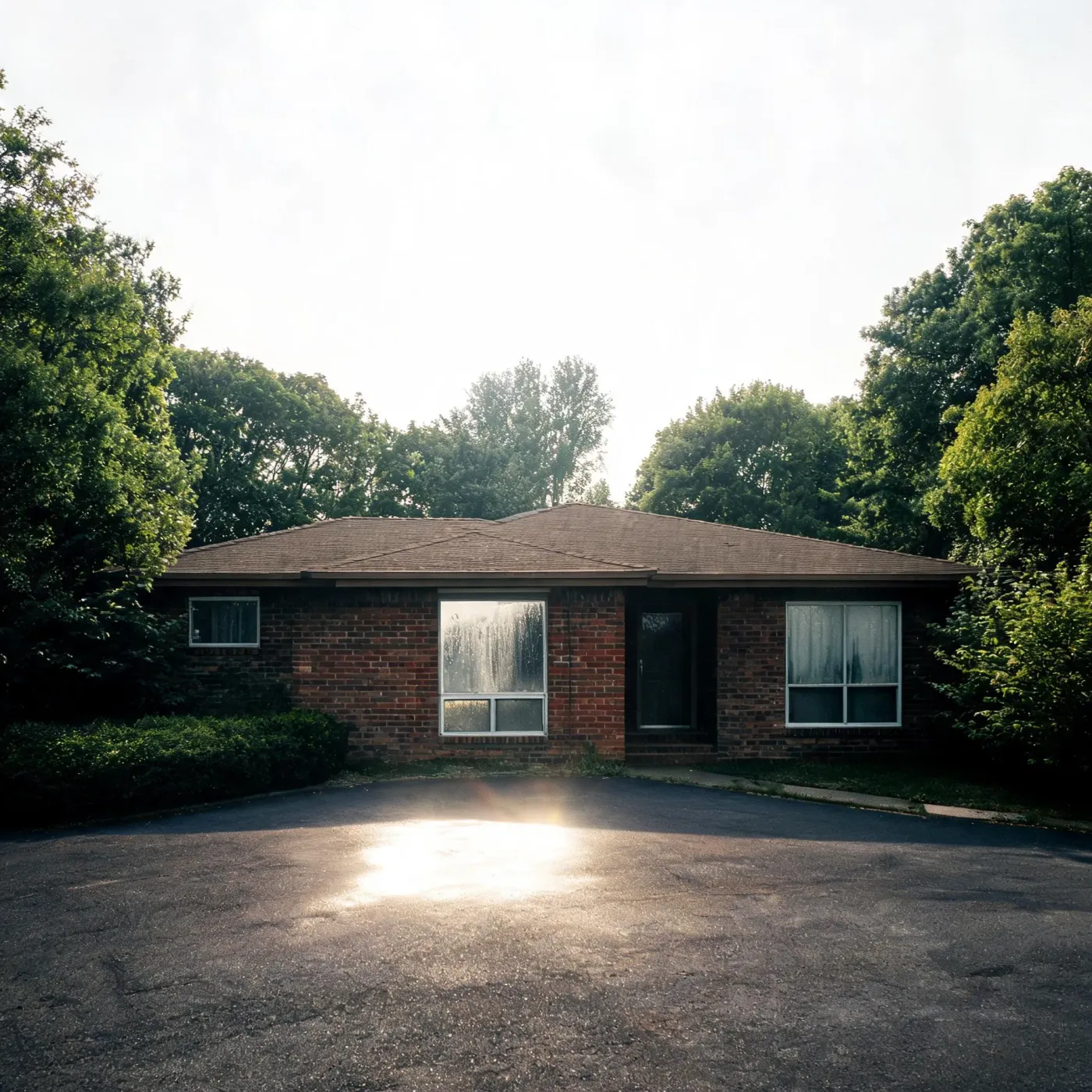
A single-story brick house with a low hipped shingle roof, a large picture window, a dark front door and shrubs, fronted by a wide asphalt lot with sun glare, surrounded by green deciduous trees under a bright hazy sky.

Summer air in North Carolina holds a dew point around 67°F, according to NOAA climate data, which is the kind of heavy, damp air that makes a struggling AC fall further behind than the thermostat number alone would suggest. Your system isn't just lowering temperature, it's also supposed to pull that moisture out of the air as it runs. When something is already blocking the cooling, whether that's ice on the coil or a low charge, the unit has no capacity left to handle the humidity either. That's why the house can feel damp and sticky even with the fan blowing, and why rooms that are technically at the right temperature still feel uncomfortable to sit in.

NASA POWER T2MDEW county cells weighted by homes

A woman in a cream knit sweater reclines on a beige couch with eyes closed and a slight smile, a gray hardcover book resting open on a textured blanket over her lap, with a lit table lamp and a leafy plant in the dim background.
A smiling middle-aged man in a dark green sweater sits at a candlelit table with a glass of red wine and a bowl of salad in the foreground.

Power costs 14.00 cents per kilowatt-hour statewide

At 14 cents a kilowatt-hour, a system running all afternoon without cooling the house is still running up the meter at that same rate. You're paying full price for air that never gets cold, hour after hour, until someone fixes what's actually wrong with it.

EIA-861 2025 statewide residential average

A gray outdoor air conditioner condenser unit on a concrete pad beside a house with white horizontal siding and a brick foundation, with a wall-mounted disconnect box and conduit, and a green shrub with mulch at left.

Clean and cycling normally

This unit sits on a clear pad with the grille free of dirt. The conduit and refrigerant lines run straight up to the disconnect box, nothing taped or jury rigged. A unit that looks like this is usually one that's been cycling on and off as designed, not running nonstop trying to catch up.

An outdoor air conditioning condenser unit on a concrete pad beside a house with white horizontal vinyl siding, with a gray electrical disconnect box and refrigerant lines on the wall behind it.

Caked in grime and overworking

Dirt and grime cover the wire grille and top cover of this one. When the grille is this blocked, airflow through the coil drops, and the system can run longer each cycle without getting your house any cooler. The disconnect box and conduit are fine. The problem is what's built up on the unit itself.

The air coming through your vents was supposed to tell you the system was working. It wasn't. An AC that runs but doesn't cool has something specific stopping it, ice on the coil, refrigerant that's low, a part that's failed, and running it longer doesn't change what's wrong, it just keeps the house warm while the meter keeps turning. None of that gets fixed by waiting through another North Carolina afternoon. A contractor who works on these systems can look at yours, find which of those it is, and deal with it directly instead of you guessing from the thermostat. Once you send the form, that search is off your plate. You're not the one tracking down who's available or whether they do this kind of repair. Someone reaches out to you instead. The house gets its evenings back, the ones you'd rather spend on anything other than a fan pushing around warm air.

A lit ceramic table lamp with a linen shade sits on a round wooden side table with a small vase of greenery and a dark shallow bowl, beside a beige upholstered sofa with a cushion and knit throw, below a framed artwork on a pale wall.
Corner of a beige linen sofa with a large woven cushion and a fringed knit throw, beside a potted leafy tree in a woven basket against a neutral wall.
Sunlit interior corner with a wood-framed armchair with beige cushions and a striped pillow, a leafy plant in a tall ceramic pot, a window with wood sill showing green foliage outside, and dark wood flooring.
A lit black path light beside a stone walkway leading to a dark front door of a white clapboard house, with shrubs and flowering plants in the bed at dusk.
A covered porch at dusk with a wooden front door, a lit lantern wall sconce on gray horizontal siding, a black rocking chair with a cream throw, a potted white flowering plant, a coir doormat, and a window showing a lit interior lamp.

An air conditioner pro near you

Send the request today and stop worrying about who to call.

Get my match

There's no charge for the request.