






Why your AC is blowing warm air in North Carolina

RepairCentral ACNorth Carolina
Step 1 of 2

What ZIP code is the job in?

Why is my AC blowing warm air?

You walk up to the vent expecting cool air and feel nothing but room temperature, maybe worse. In North Carolina summer, that's not something you can live with for long. The air feels sticky the minute the AC stops pulling its weight, and you want to know whether this is something simple or the start of a bigger repair before the heat really sets in.

Your AC is probably low on refrigerant or struggling to move air across a dirty coil

Warm air from the vents usually means one of two things. Either the refrigerant charge is low, often from a slow leak, or the coil that's supposed to pull heat out of your air is coated in dirt and can't do its job. A clogged filter can cause the same problem by starving the system of airflow. In North Carolina, where the unit runs hard for months straight, coils collect grime faster and small leaks get pushed harder, so what started as a minor issue shows up sooner. Either way, the system is running but not doing the one thing it's built to do, which is move heat out of your house.

A man with grey hair and stubble in a dark sweater sits on a grey sofa indoors, looking off to the side, with a potted plant and a sunlit window behind him.
A man with gray hair, a beard and glasses, wearing a dark green sweater, sits on a gray sofa in a sunlit living room with a potted plant, table lamp and wooden sideboard behind him.
A middle-aged man with graying hair and a short beard sits on a blue sofa in a living room, looking toward a window, with a bookshelf, lamp and framed picture in the background.
A man with graying curly hair and a dark green sweater sits on a gray sofa in a sunlit living room, looking off to the side, with a framed picture, shelving, an armchair and a window with sheer curtains behind him.

What does it look like when your AC quits cooling

You might notice the air at the vent is only lukewarm, or the system runs and runs without the house ever feeling cooler. Sometimes the outdoor unit is dead quiet when it should be running. Sometimes it's running but you can hear it straining, or there's ice built up on the refrigerant line. The thermostat might show the temperature you set, but the room tells a different story. In North Carolina's humidity, a house that isn't actually cooling gets sticky fast, and that dampness in the air gives mold and mildew a place to start, especially if the system sits warm for days before anyone looks at it.

A gray outdoor air conditioner condenser unit on a concrete pad beside a house with horizontal siding and a light stucco wall, with a disconnect box and refrigerant lines on the wall and a shrub and mulch bed at left.

What a low charge does to the coil

Refrigerant that's low on charge can't absorb heat the way it should, and the indoor coil gets cold enough to frost over. Once ice builds up on that coil, air can't pass through it anymore, so the vents put out warm air even though the system is running. A contractor checks the charge with gauges and looks for where it's leaking out, because adding refrigerant without finding the leak just means doing it again.

A gray outdoor air conditioning condenser unit on a concrete pad surrounded by gravel, next to a white horizontal-lap-sided house wall with an electrical box and conduit, against a blank white background on the left.

Why the outdoor unit matters too

The compressor outside is what actually moves the refrigerant through the system. If it fails, or if the capacitor that starts it goes bad, the outdoor fan may not run at all, and the whole cycle stops even though the indoor blower keeps pushing air. In North Carolina heat, a compressor that's working harder every summer is more likely to be the reason a system that cooled fine last year doesn't this year.

Call a Tech or Wait It Out

Call a Repair Tech

  • A licensed tech can check the refrigerant charge and find the leak instead of just topping it off.
  • If the compressor is cycling on overload protection, someone needs to measure the actual current draw to know why.
  • A frozen coil needs to thaw fully before anyone can tell if the problem is airflow, charge, or something electrical.
  • Local techs who work on North Carolina systems all summer know which parts tend to fail first in this heat and humidity.
  • Getting one contractor out means one diagnosis you can trust, not three different guesses from three different companies.
  • Some fixes, like a bad capacitor or a failed contactor, take a trained eye only minutes to spot and correct.

Wait It Out

  • A system blowing warm air usually isn't fixing itself, and the strain of running without cooling can damage the compressor further.
  • Letting a frozen coil keep running can push ice back into the compressor and turn a repair into a replacement.
  • Humidity inside the house climbs fast once the AC stops actually cooling, even if the blower is still moving air.
  • A refrigerant leak that goes unaddressed only gets worse, and low charge over time wears on the compressor.
  • Guessing at the cause yourself without the right gauges and meters means the real problem stays hidden.
  • Every day without proper cooling in a North Carolina summer is a day the house stays uncomfortable and the system works harder.
A gray outdoor air conditioner condenser unit on a concrete pad beside a house with horizontal lap siding, with a wall-mounted disconnect box and conduit at left and a green shrub and mulch bed at right.

When the unit outside is doing its job

The condenser hums along on its pad, the fan turning, the air coming off it warm. That's heat being pulled out of your house and dumped outside, which is exactly what should happen on a hot North Carolina afternoon. Nothing about this picture needs attention.


An outdoor air conditioner condenser unit on a concrete pad beside a house with horizontal lap siding, with a conduit running to a gray electrical disconnect box on the wall.

When it isn't

If that same unit sits silent, or you hear it click and stop, something's keeping it from running a full cycle. A tripped breaker, a failed capacitor, or overload protection kicking in are the usual reasons. Until a tech finds which one it is, the vents inside stay warm.

A woman with shoulder-length brown hair wearing a beige knit cardigan sits in a gray upholstered armchair near a window, looking off to the side with a slight smile, with bookshelves blurred in the background.
A woman and a sleeping child wrapped together in a cream knitted blanket on a couch, with a potted plant, framed photo and lit lamp in the background.

Get the right pro for your air conditioner

The pro who reaches out is licensed in North Carolina.

Asking costs nothing, and the choice to hire stays yours.

How the system actually fails

  • Refrigerant runs in a closed loop, so a low charge almost always means a leak, not normal use.
  • The compressor can only push so much current before its overload switch trips to protect the motor windings.
  • A dirty outdoor coil traps heat against the compressor, which is one reason units pull more amps than they should.
  • The indoor coil needs steady airflow across it or it drops below freezing and ices over within an hour or two.
  • A failing capacitor makes the compressor or fan motor strain to start, drawing extra current every single cycle.
  • Warm air at the vent can trace back to the outdoor unit even though that's not where you feel the problem.

Refrigerant doesn't get used up. It stays in a sealed loop between the indoor coil and the outdoor compressor, so if the charge is low, it left through a leak somewhere in that loop. Topping it off without finding the leak just buys a few weeks before the same warm air comes back. Inside the compressor, there's a motor winding and an overload switch built to protect it. That switch trips when the current draw gets too high, and current climbs for reasons that trace back to other parts of the system. A dirty outdoor coil is one of them. Dirt and grass clippings on those fins trap heat against the compressor instead of letting it release outside, so the compressor works harder and pulls more amps to do the same job. A weak capacitor causes the same kind of strain, because it's what gives the compressor or fan motor the push to start each cycle. When it's failing, that start takes more current than it should, every time the system kicks on. Airflow across the indoor coil matters just as much. Cut that airflow down, with a clogged filter or a blower that's not moving enough air, and the coil can drop below freezing and ice over in an hour or two. Once that happens, no air gets through it at all. None of this is visible from the vent. The problem usually sits outside, in the unit doing the work you can't see.

An outdoor air conditioning condenser unit on a concrete pad beside a house with horizontal siding and a concrete foundation, with dry brown leaves on the ground to either side.
Before you get your air conditioner repair
A gray outdoor air conditioning condenser unit on a concrete pad beside a house with horizontal lap siding, with a wall-mounted disconnect box and conduit, and shrubs to the left.
After you get your air conditioner repair

Fixing it yourself

You can pull the filter and check it, clear leaves off the outdoor unit, and make sure the thermostat is set right. Those things take a few minutes and sometimes that's really all it is. But if the problem is a refrigerant leak, a failing capacitor, or a compressor tripping on overload, there's no fixing that from the outside. Opening the refrigerant lines without a license is illegal in North Carolina, and guessing at electrical parts on a 240 volt system risks shocking yourself or shorting something worse. Past the filter and the breaker, this is a job for someone with gauges, a meter, and the training to use them.

Having a tech look at it

A licensed contractor brings gauges to check the refrigerant charge, a meter to test the capacitor and the compressor's current draw, and the experience to know which of those is likely given what the system is doing. Someone local who works on these systems all summer has probably seen your exact symptom a hundred times on other homes in the same heat and humidity. You get matched with one contractor, not several, so you aren't fielding calls from a handful of companies trying to win the job. They come out, find what actually failed, and fix that part instead of guessing.

Power costs 14.00 cents per kilowatt-hour statewide

At 14 cents a kilowatt-hour, a struggling AC costs you more than a working one. A unit low on charge or fighting a dirty coil runs longer to reach the same temperature, and every extra hour it runs shows up on the next bill.

EIA-861 2025 statewide residential average

  1. A tech hooks up gauges and checks the refrigerant pressure

  2. Low pressure points to a leak somewhere in the line set

  3. A dye or electronic sniffer finds where refrigerant is escaping

  4. The leak gets sealed or the bad section gets replaced

An outdoor air conditioner condenser unit on a concrete pad beside a house with beige horizontal siding and a stone-veneer base, with refrigerant lines running to a gray wall-mounted electrical box, surrounded by dark mulch, a flowering shrub and an evergreen on the left.
This condenser is doing exactly what it should, fan turning, pad clear, nothing blocking the airflow around it.
An outdoor air conditioning condenser unit on a concrete pad beside a house with light vinyl siding, an electrical disconnect box and conduit on the wall, bare shrubs and mulch to the right, and a concrete walkway in the foreground.
This one sits against bare shrubs with no airflow issue in sight, which means the trouble is likely inside the unit itself.
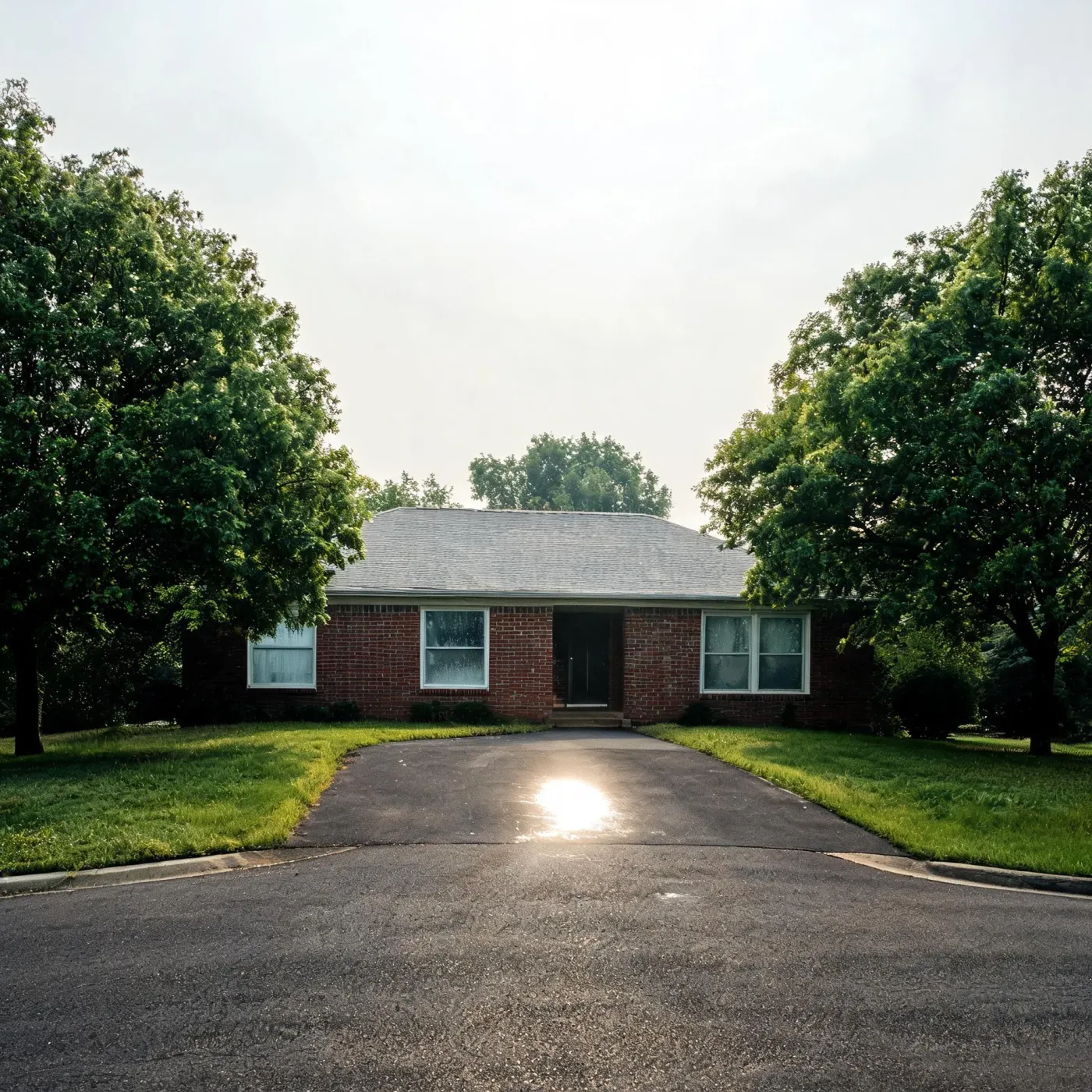
A single-story red brick ranch house with a gray shingled roof, white-framed windows and a central dark front door, fronted by a wide asphalt driveway, green lawn and large deciduous trees on both sides under a bright hazy sky.

Summer air in North Carolina holds a dew point around 67°F, averaged across June, July and August according to NOAA climate data. That's heavy, damp air, and your AC has to pull the moisture out of it before the house ever feels cool. A system working properly handles that load without much trouble. One that's low on refrigerant or fighting a dirty coil can't keep up, so the air at the vent feels cool but the house still feels clammy, or the system runs long stretches and never quite gets there. That stickiness you feel indoors is often the first sign something's off, well before the air turns warm.

NASA POWER T2MDEW county cells weighted by homes

Warm air at the vent means something specific is wrong, a low charge, a tripped overload, a coil frozen solid, and each of those needs a tech with gauges, not a guess. A licensed contractor working North Carolina AC systems through another sticky summer has seen these failures before and knows where to look first. When you request service here, you get matched with one local contractor suited to your situation, not a handful of companies competing for your callback. That means one visit, one person who already has a sense of what's likely wrong before they knock on your door. Your system might need a refrigerant leak found and sealed, a compressor given room to breathe again, or a coil cleared so air can move through it. Whatever it turns out to be, the fix starts with someone qualified actually looking at the unit instead of you guessing from the thermostat. That's the part worth getting right.

Kitchen corner with cream upper cabinets, oak lower cabinets, white marble-look countertop, beige tile backsplash, a ceramic vase of greenery, a wooden cutting board and bowl, and a black-framed window at right.
Interior corner of a room with a white-framed window and wide sill, beige walls with panel molding, a wooden cabinet holding a ceramic vase with a green leafy plant, and blurred shrubs and trees outside.
A wood-framed armchair with beige cushions and a woven lumbar pillow sits in a corner beside a large window overlooking green trees, with a tall ceramic vase holding leafy branches on the left and plaster walls and wood flooring.
Interior corner with a white-framed window above a sill, beige walls with baseboard molding, a greige shaker-style cabinet with brass knobs and a potted plant on top, light wood flooring and a woven jute rug.
A dark-framed six-pane window with white trim and sill set in gray horizontal lap siding, with hydrangea shrubs below and a white column and shingled roof section at left.

A pro who works on air conditioners

Only one pro gets your request, so you hear from one company.

Get a licensed local pro

No fee to send it, and nothing to sign.