
When to replace an AC unit in Mooresville, NC

Your new air conditioner project goes to an installer who works in Iredell County.

Find my pro

When should I replace my AC unit in Mooresville, NC?

Summers in Mooresville run long and muggy, and an AC that's struggling shows it fast, whether that's warm air coming through the vents, the unit running nonstop, or a utility bill that's climbed for no clear reason. You're trying to figure out if this is a repair or if the unit is at the point where replacing it makes more sense, especially with the next hot stretch still ahead.

Replace it once repairs get frequent or the unit is past 12 to 15 years old

An AC working against a Mooresville summer runs for months at a stretch without much break, and that wear adds up faster here than it would somewhere with a short cooling season. Once a unit is past 12 to 15 years old, the compressor and coil have logged a lot of hours, and a breakdown in July or August means days without cooling while parts get sourced. If you're calling for repair more than once a year, or a technician has quoted a fix that costs a large share of what a new unit would run, that's the point where replacing it stops being premature. A newer unit also handles the humidity here better, since it cycles more efficiently and pulls moisture out of the air more consistently than an aging one.

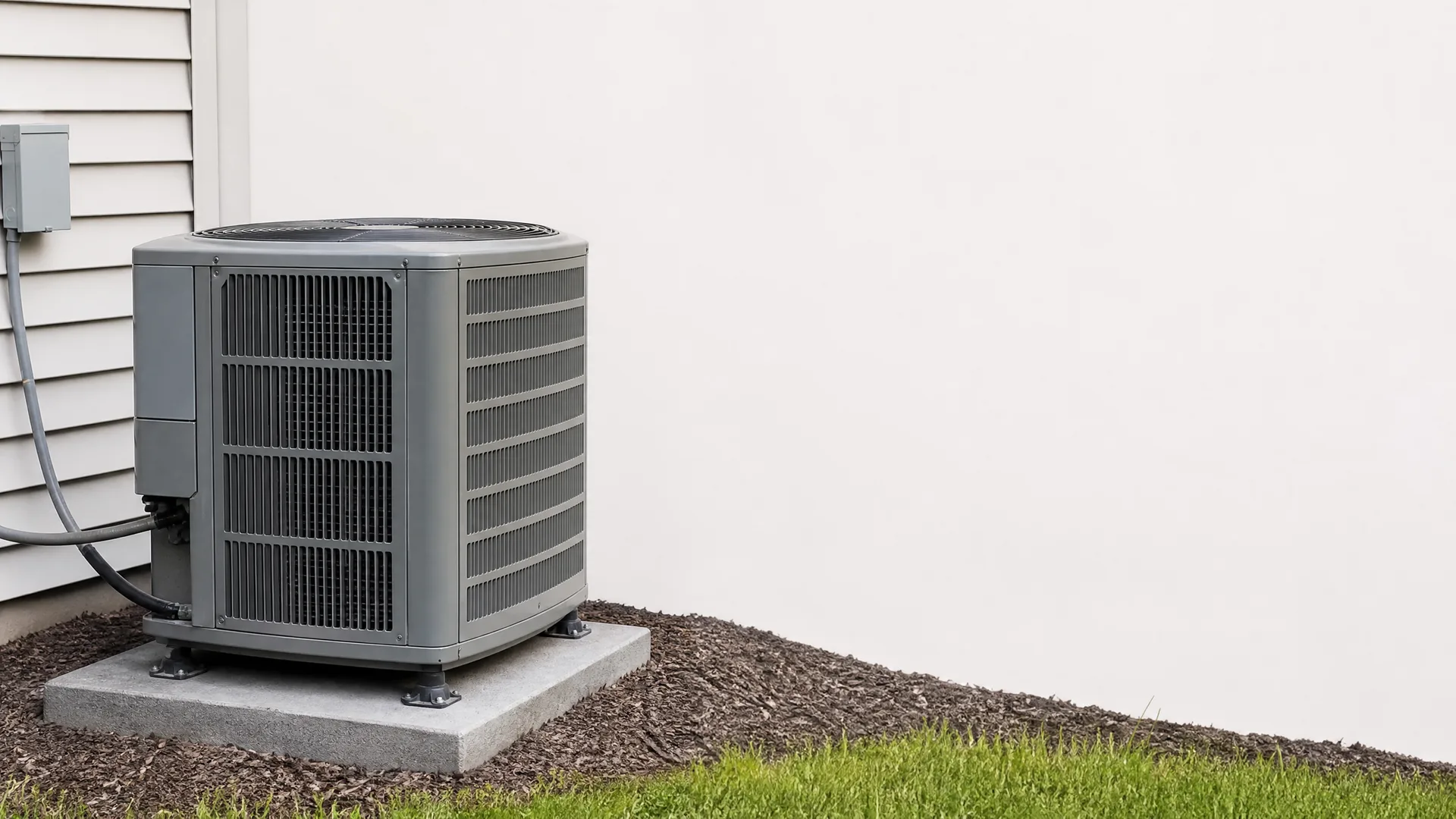
A gray outdoor air conditioning condenser unit on a concrete pad beside a house with vinyl siding and a large blank light-colored wall, surrounded by dark mulch and grass.

What long summers do to the unit

An AC here can run from April into October without much of a break. That kind of stretch wears on the compressor and the fan motor faster than it would somewhere with a short summer. If your unit is already pushing fifteen years and it's working through another long run of ninety-degree days, that strain adds up. A unit nearing the end of its life has less margin left for a summer that doesn't let up.

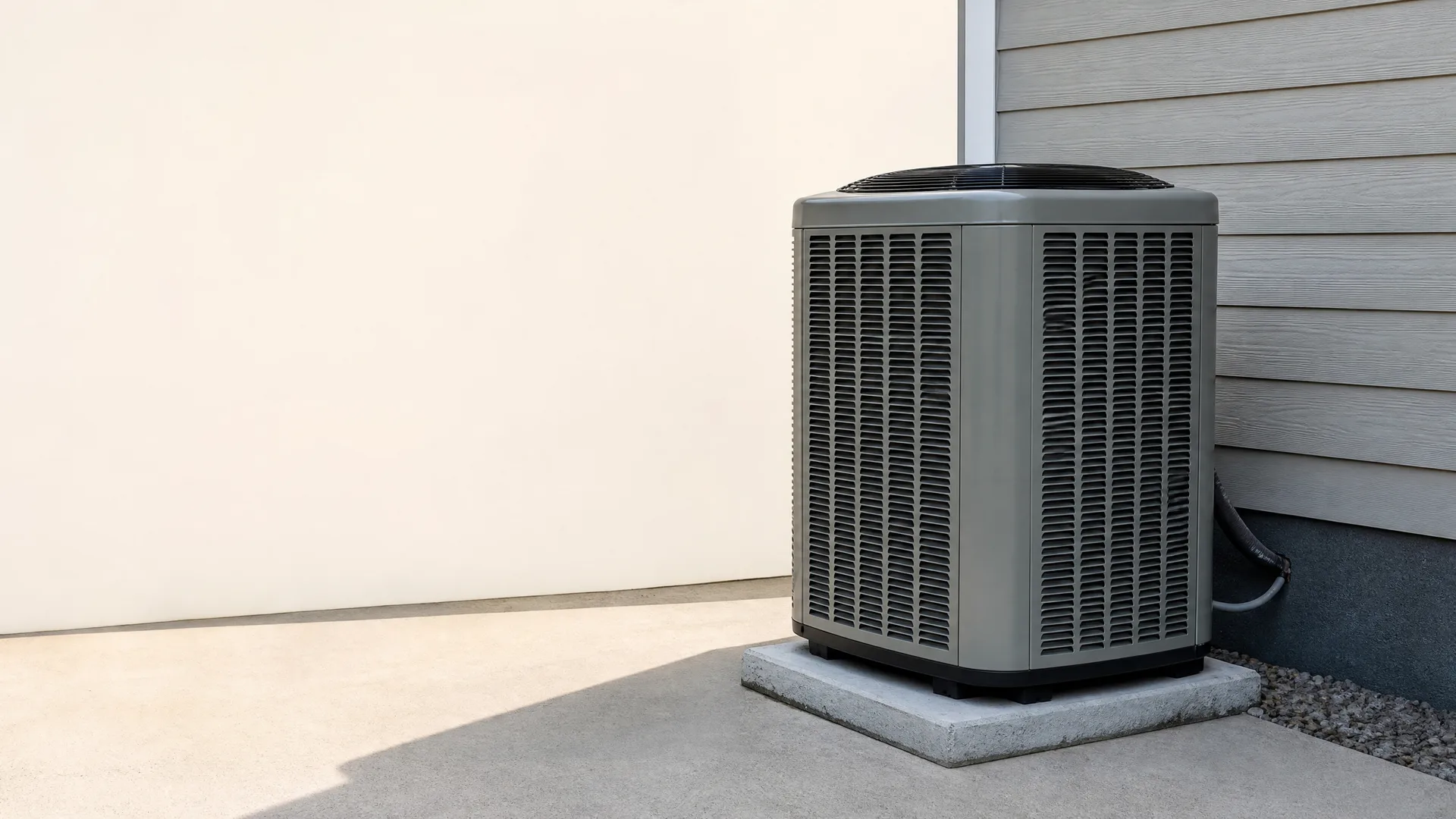
An outdoor air conditioner condenser unit on a concrete pad beside a house with horizontal lap siding, next to a plain light-colored wall and gravel bed.

Checking the age against the nameplate

Every outdoor unit has a nameplate riveted to the cabinet, usually on the side or back, with a manufacture date stamped or printed on it. That date tells you more than a guess based on how old the house is, since a system can be replaced at any point in a home's life. If your unit's nameplate reads earlier than you expected, it's worth weighing that against how hard it's had to work.

Repair It or Replace It

Repair

  • A single failed part, like a capacitor or a contactor, is worth fixing on a unit that's cooled your house reliably for years.
  • If the unit is under ten years old, a repair usually makes more sense than starting over on the cost of a new system.
  • A repair this year doesn't rule out needing another one next summer, especially once the unit has logged ten or more Mooresville summers.
  • If the compressor itself is still sound and only a secondary part failed, fixing it buys you real time, not just a few weeks.

Replace

  • Once the compressor fails on a unit that's already fifteen years old, replacing it is usually the sounder call than paying to rebuild it.
  • A unit that can't keep up through a full Mooresville summer, even after a repair, is telling you the system itself is the problem.
  • Newer AC units cool more efficiently, which matters here where the unit runs for months at a stretch.
  • If you're repairing the same system every summer, the pattern itself is a reason to stop patching it.
  • Replacing before a full breakdown means you're not choosing a system in a hurry during the hottest part of the year.
A gray outdoor air conditioning condenser unit on a concrete pad beside a house with horizontal lap siding, with a wall-mounted disconnect box and conduit, and shrubs to the left.

Running the way it should

This is what a healthy unit looks like: clean, clear of debris, sitting level on its pad with the disconnect box dry and secure. Air moves through it the way it's supposed to, and the compressor isn't straining to keep up with a Mooresville afternoon.


An outdoor air conditioning condenser unit on a concrete pad beside a house with horizontal siding and a concrete foundation, with dry brown leaves on the ground to either side.

Signs it's falling behind

Leaves piled against the cabinet block airflow, and years of grime on the coil make the unit work harder to move heat outside. Add some age to that and you've got a unit spending more to do less, with a breakdown somewhere in its future.

An outdoor air conditioning condenser unit on a concrete pad beside a house with light vinyl siding, an electrical disconnect box and conduit on the wall, bare shrubs and mulch to the right, and a concrete walkway in the foreground.
Before you get your air conditioner installation
An outdoor air conditioner condenser unit on a concrete pad beside a house with beige horizontal siding and a stone-veneer base, with refrigerant lines running to a gray wall-mounted electrical box, surrounded by dark mulch, a flowering shrub and an evergreen on the left.
After you get your air conditioner installation
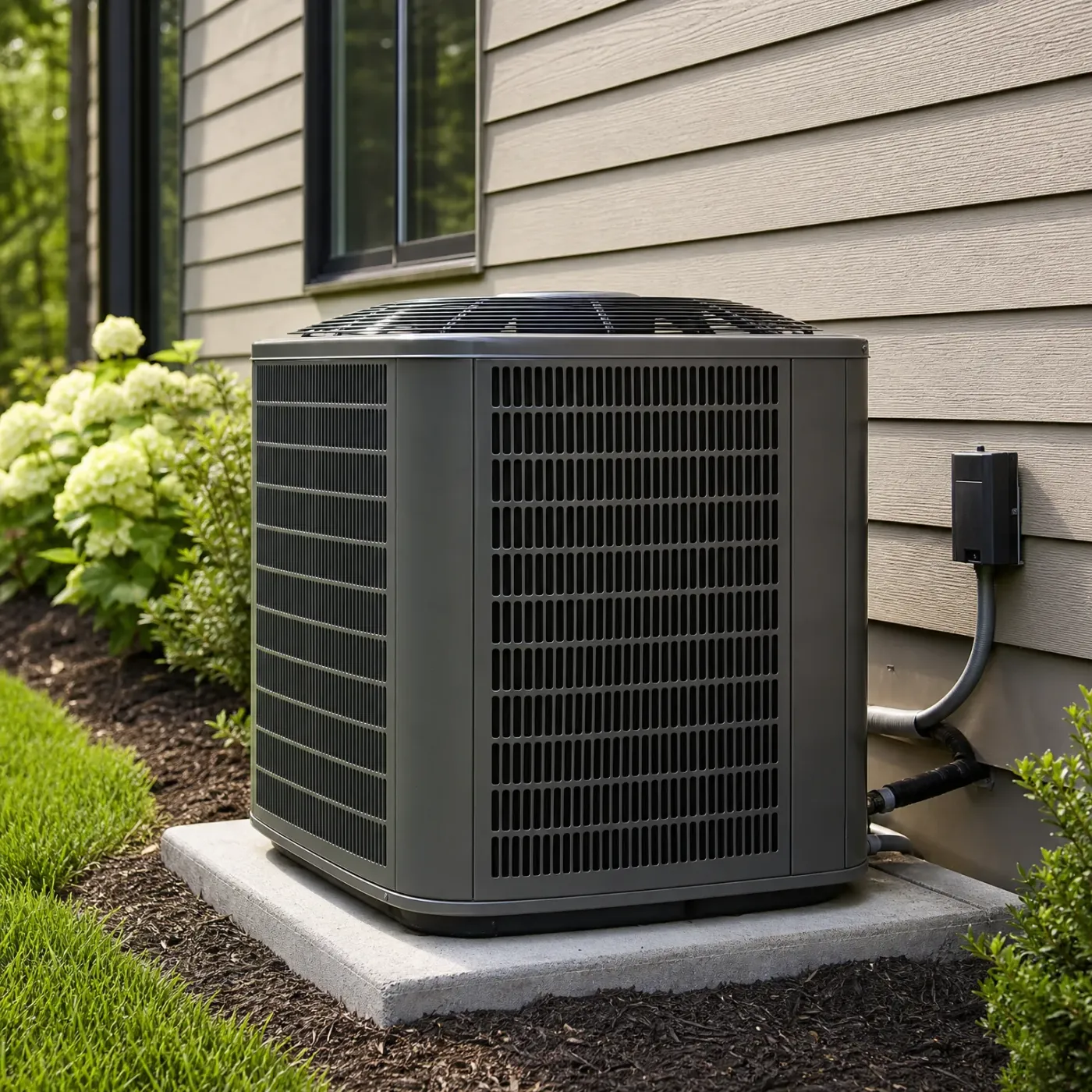
A gray outdoor air conditioner condenser unit sits on a concrete pad beside a house with horizontal lap siding, with a disconnect box and refrigerant lines on the wall and shrubs, hydrangeas, mulch and lawn nearby.

Matched to your air conditioner job

A licensed installer who works in Iredell County gets your project.

Get matched with someone who does this kind of work in Iredell County.

Find a licensed pro

No fee to send it, and nothing to sign.

A gray-haired man in a dark coat with snow on the shoulders and collar stands smiling in a dimly lit entryway with a paneled front door, lamps, and a framed picture in an adjoining room.
A gray-haired, bearded man in a dark winter coat with snow on the shoulders stands in a doorway of a home interior with a lit lamp, framed pictures, a potted plant and a staircase behind him, and an evergreen wreath at the left edge.
An older man with gray hair and a beard, wearing a snow-dusted dark coat and knit scarf, stands smiling in a dimly lit house entry with a lit lamp, mirror, and a living room with snow visible through the window behind him.
A smiling gray-haired man in a dark wool coat with snow flecks stands in a dimly lit home entryway, with a lit table lamp, potted plant, framed pictures and a living room visible behind him.

Your air conditioner doesn't make cold air. It moves heat out of your house using refrigerant, and that only works right when the charge is where it should be. Run low on refrigerant and the compressor has to work harder just to push what's left through the lines, which is wasted effort that shows up on your bill. Outside, the fan pulls air across the condenser coil so that heat has somewhere to go. If the coil's caked in dirt or the fan motor is on its way out, that heat has nowhere to go but back into the system, and the unit runs longer to reach the same setting on your thermostat. None of this is gentle on the compressor. Every time it struggles to start or cycles under strain, it builds up heat that wears down the windings inside the motor. A weak start capacitor makes that worse, since the compressor hesitates or just hums instead of kicking on clean. Each of these problems feeds the next one.

How your AC actually cools

  • Refrigerant moves heat from inside your house to the outdoor coil, and it only works if the charge matches what the system calls for.
  • A unit low on refrigerant doesn't just cool less, it makes the compressor work harder to move what's left through the lines.
  • The outdoor fan pulls air across the condenser coil to dump that heat outside, and a failing motor slows that whole process down.
  • Every time the compressor cycles on and off under strain, it builds heat that shortens the life of the windings inside it.
  • A dirty condenser coil traps heat against the unit the same way a blanket would, so the system runs longer to reach the same temperature.
  • The start capacitor gives the compressor the jolt it needs to get moving, and once it weakens, the motor hesitates or hums instead of starting clean.
A woman wrapped in a thick cream knit blanket sits in a chair with an open book on her lap, beside a lit table lamp and a frost-covered window at night.
A woman in a cream knit sweater sits with closed eyes in an armchair beside a window showing orange autumn foliage, with a mug and plate of cookies on a small side table.
A man in a dark blue shirt stands in an open front doorway of a stucco and wood-clad house, facing a blond woman seen from behind in the foreground on a stone walkway.

What an aging AC costs you at home

You'll notice it room by room before you notice it on paper. The upstairs bedrooms stay warm while the thermostat says you've hit your set point. The unit cycles on again ten minutes after it shuts off. By August you're closing vents and running fans just to even things out, and the power bill has crept up a little more each month without any one thing you can point to.

There's also what you don't see. A compressor working harder than it should puts strain on parts that are expensive to replace on their own, and if one goes on an older unit, you're often looking at the same cost as starting over with a new system. A local contractor who services this equipment all summer can tell you, from the model and how it's running, whether you're near that point or still well short of it. Getting matched with one means someone looks at your actual unit, not a general rule, and calls you with what they find.

A gray upholstered sofa with a textured cushion sits beside a dark round side table holding a vase of green foliage, with a table lamp and sheer-curtained window behind.

Cooling runs May through September

Five months of cooling a year is real work for one unit, month after month without a break. A system already on its last few years in Mooresville doesn't get much recovery time between April and the first cool snap in fall.

NOAA nClimDiv 1991-2020

An outdoor air conditioning condenser unit on a concrete pad beside a house with white horizontal lap siding, with an electrical disconnect box and insulated refrigerant line on the wall and a shrub over mulch to the right.
This unit cools evenly and the pad around it stays clear, no pooled refrigerant oil or rust streaking down the cabinet.
An outdoor air conditioner condenser unit on a concrete pad beside a house with light horizontal lap siding, with an electrical disconnect box and conduit on the wall behind it.
Rust along the base and a disconnect box that's seen better days point to a unit closer to the end than the middle.

What's your AC actually doing right now

Walk through your house on a hot afternoon. Is every room the same temperature, or does the den stay warm no matter where you set the thermostat? Listen to the outdoor unit. A healthy one runs, cools the house, and shuts off. One that's struggling runs long stretches, shuts off, then kicks back on a few minutes later because it never caught up. Check the vents for a musty smell or weak airflow. Look at your electric bill next to last August's. None of these by themselves mean the unit is done, but together they tell you it's working harder than it should, and a system that runs stressed all summer is more likely to fail on the one day you need it most.

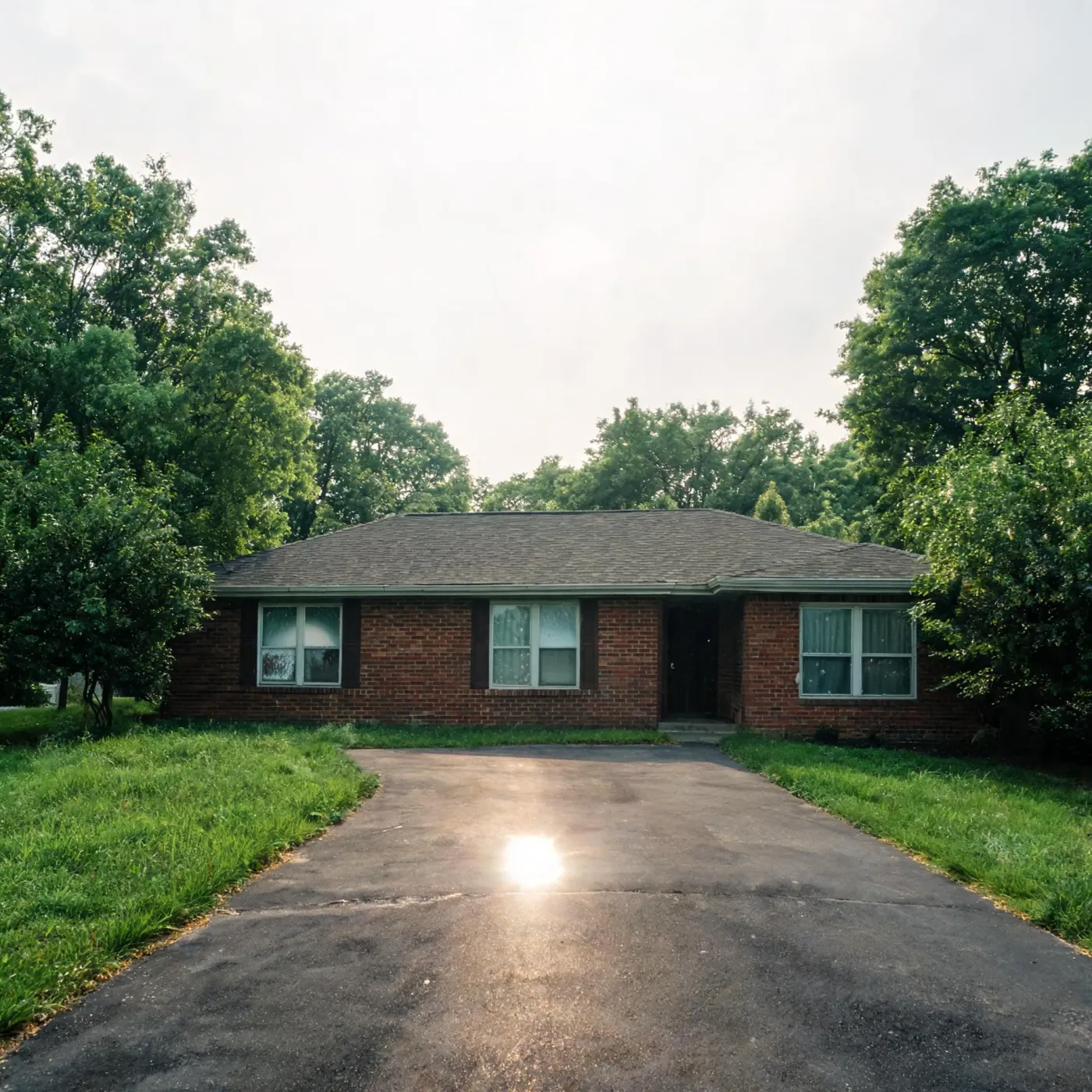
A single-story brick ranch house with a shingled hip roof and dark front door, fronted by a wide asphalt driveway with sun glare, flanked by grass and leafy trees under a pale overcast sky.

The air here doesn't just get hot, it sits heavy. Iredell County averages a summer dew point of 66°F across June, July and August, according to NOAA climate data. At that level, your AC isn't only pulling heat out of the house, it's wringing a lot of moisture out of the air too, and that's the harder half of its job. A unit nearing the end of its life starts to lose ground on that second task first. The thermostat might read 72, but the house still feels damp, the floors feel cool and clammy, and the air doesn't feel like it's actually moving.

NASA POWER T2MDEW

If your AC is past ten years old and you're seeing more than one of the signs above, the math favors replacing it rather than paying for another repair. If it's younger than that and the problem is one part, fixing it is still the right call. Either way, you don't have to figure out which side of that line you're on by yourself. A licensed contractor working in Mooresville sees these units in this heat every summer and knows what fifteen years of a Carolina cooling season does to a compressor or a coil. You'll be matched with one contractor, not a handful of companies competing for your number, someone who can look at your system, tell you straight what it needs, and go from there. You've already walked through what your unit is telling you. The next step is getting someone local to confirm it in person.

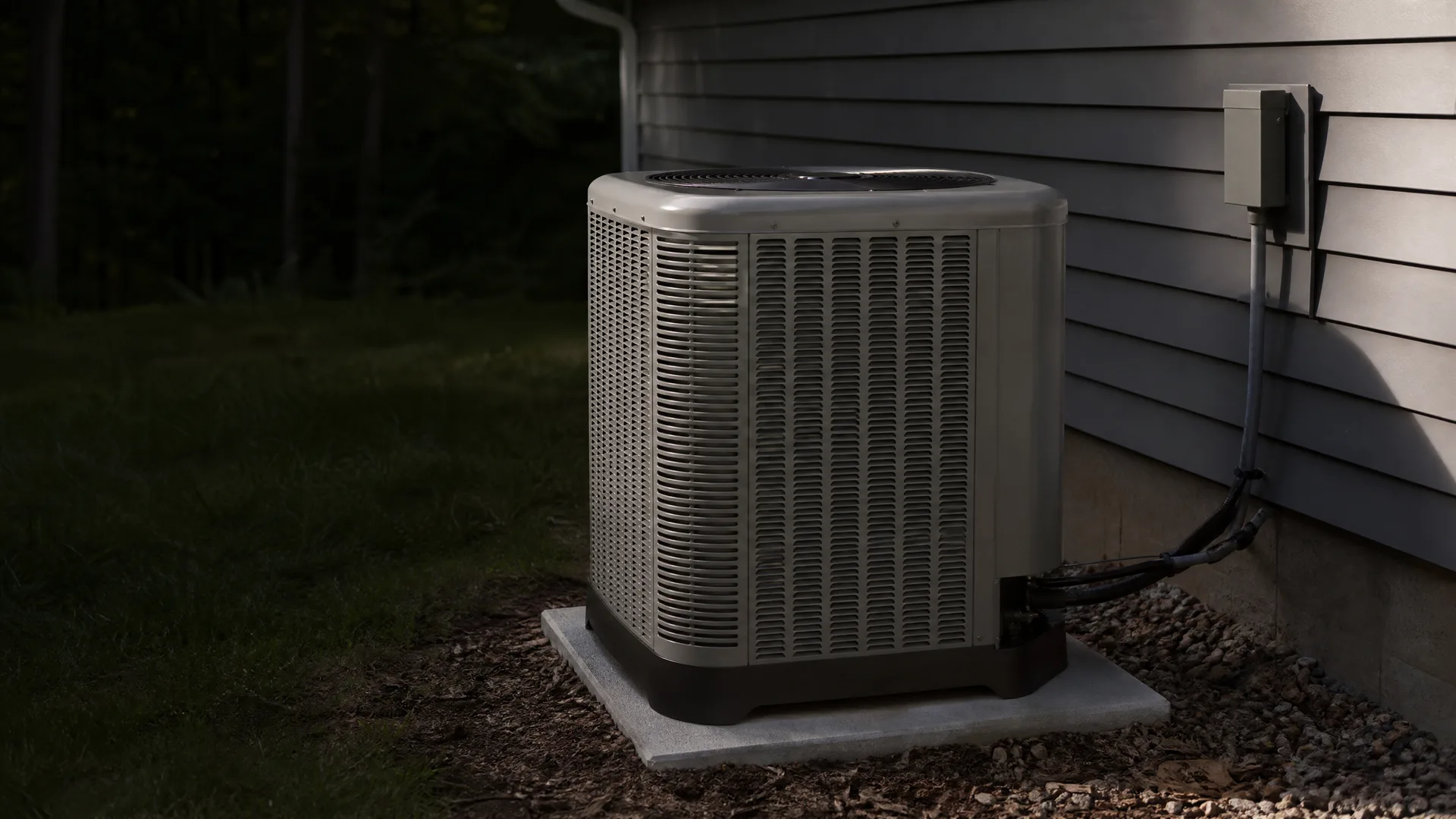
An outdoor air conditioning condenser unit sits on a concrete pad beside a house with horizontal lap siding, with a wall-mounted disconnect box and refrigerant lines entering the wall, gravel and grass around it and dark trees behind.

An air conditioner pro near you

New system or replacementCentral ACIredell County, NC
Step 1 of 2

What ZIP code is the job in?