How long an AC unit lasts in Burlington, NC

Let a pro reach out

Most AC units in Burlington and around Alamance County run somewhere between 12 and 15 years before they need to be replaced rather than repaired. Summers here get sticky and stretch on long, so a system here works harder across more months than one up in the mountains, and that catches up with it. If yours is getting old, or a tech has already told you it's done, the next step is finding someone to put in a new one, and that usually means calling around, explaining your situation to each one, and stacking up quotes to see who's fair. You don't have to do that part. Send the form and let someone qualified come to you with a straight answer about what your home needs. That's the part that takes the most out of you, and it's the part this page takes off your plate.

Most air conditioners in Burlington and the rest of Alamance County last 12 to 15 years before replacement makes more sense than another repair. Summers here run long and stay sticky well into September, so the system cycles on more days out of the year than one would in a milder climate, and all that extra running wears on the compressor and the coils faster. A unit that sits outside through a Burlington summer is working most months it could be idle somewhere else. Where your unit falls in that range depends on how well it was installed, how often it got serviced, and whether it was sized right for your house in the first place. If yours is past 12 years and you are already calling for repairs more than once a season, that is usually the point where replacing it costs less over time than keeping it alive.

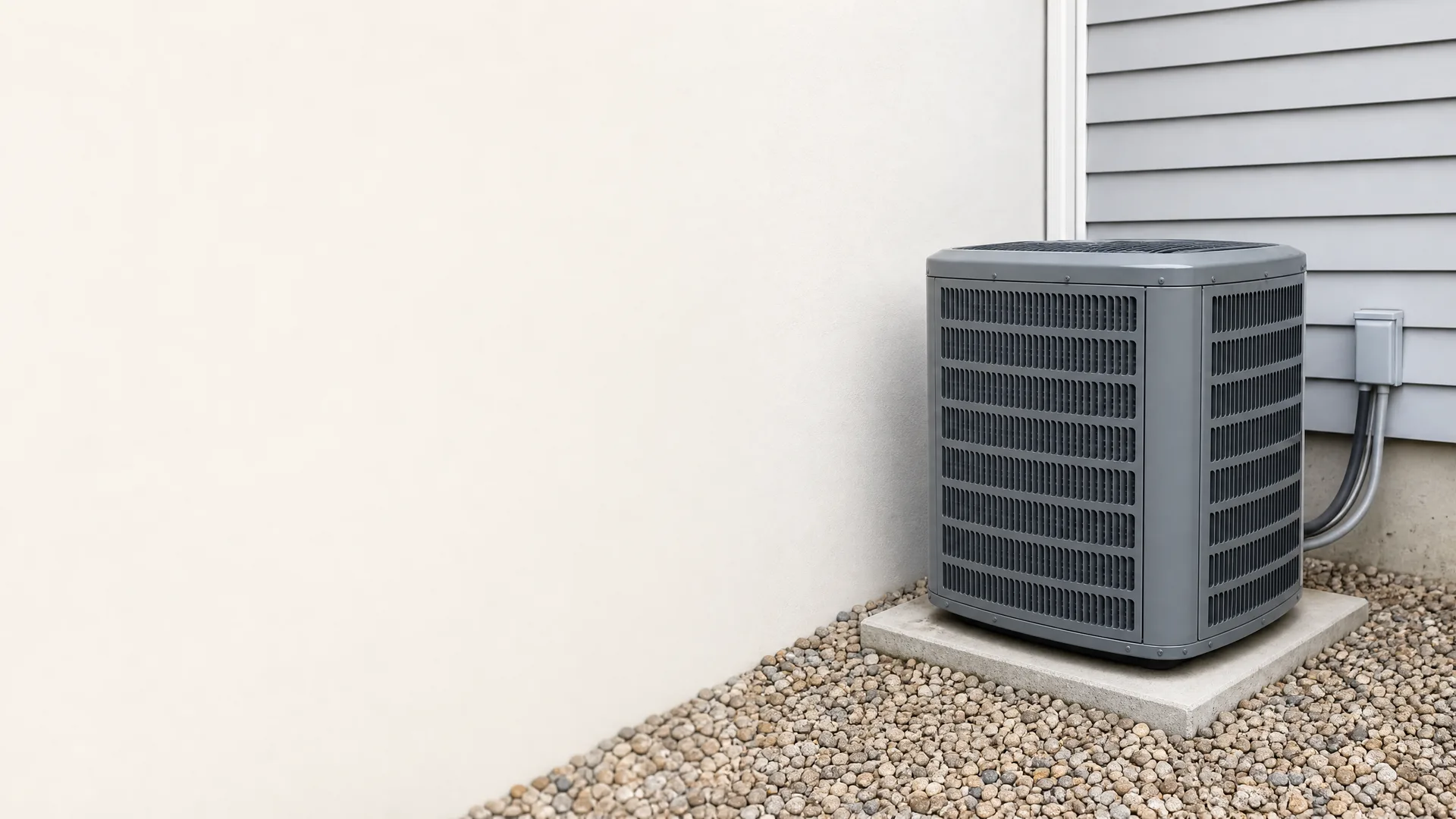
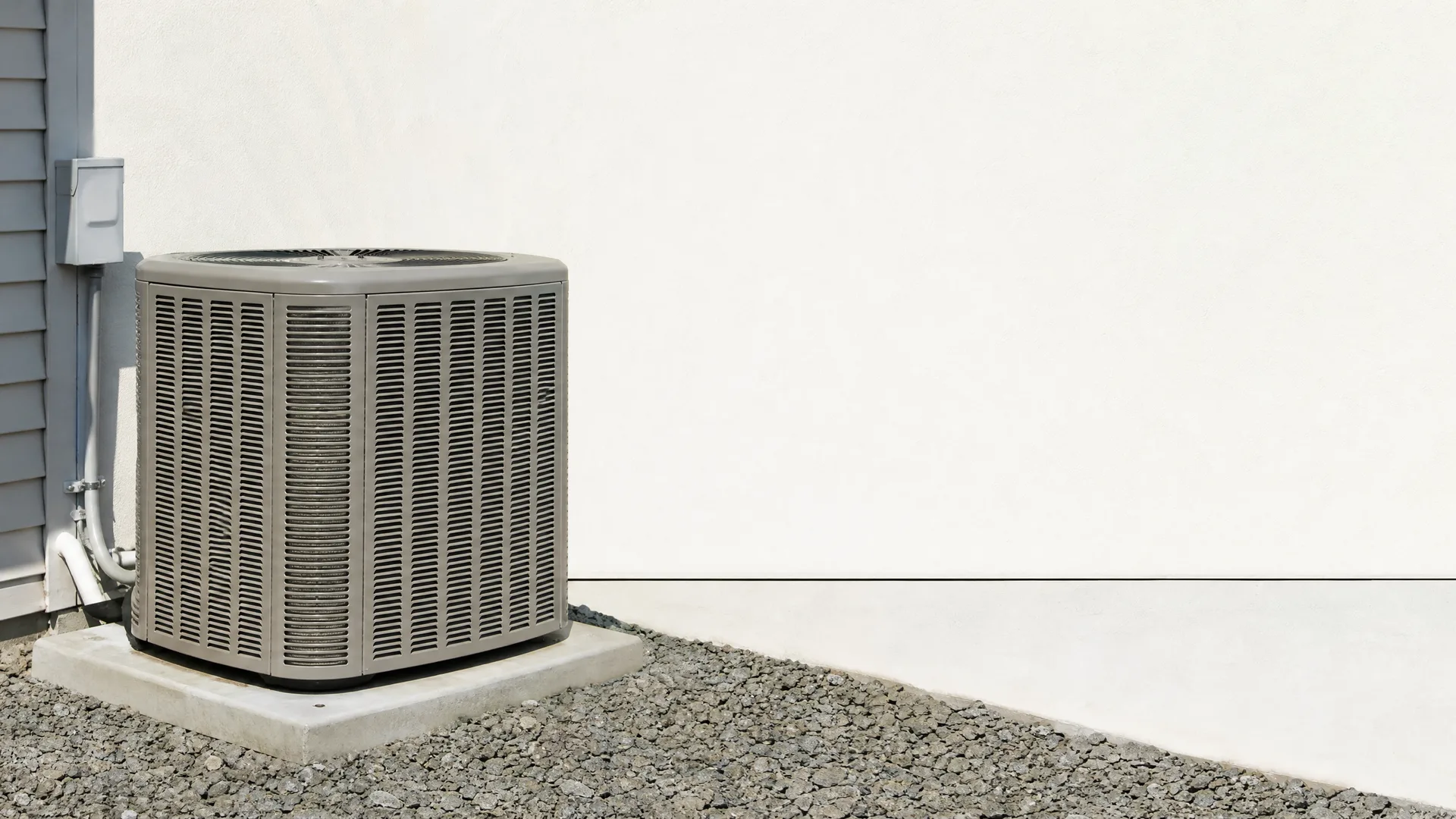
An outdoor air conditioning condenser unit sits on a concrete pad beside a plain light-colored wall, surrounded by gravel, with vinyl siding and an electrical box at the left edge.

Why the long summer matters

An AC unit in Alamance County isn't just running more days a year. Once it's on, a sticky afternoon in July asks more of the compressor than a dry one would, because the system has to pull extra moisture out of the air on top of cooling it. That's more wear per hour of runtime, not just more hours. A unit left off during mild spring weeks elsewhere is already working here.

A gray outdoor air conditioning condenser unit sits on a concrete pad surrounded by gravel, beside a stucco wall and vinyl siding with an electrical disconnect box and conduit.

What shortens a system early

A unit can fall short of 12 years for reasons that have nothing to do with its age. A size that doesn't match the house makes it cycle on and off more than it should, and that short-cycling wears the compressor faster than steady runtime does. Skipped maintenance lets dirt build up on the coil, which makes the system work harder to move the same heat. Either one can end a system's life well before year 12.

A closed dark gray laptop and a ceramic mug on a wooden table in a kitchen, with a window, potted plant, bowl on a counter, and cutting boards near white cabinets in the background.

What that means for your system

If your AC came with the house and the house is more than a dozen years old, you're in the range where a breakdown in August is a real possibility, not a distant one. A unit that's working that hard through a long Alamance County summer tends to give some warning first: it runs longer to hit the same temperature, or the power bill creeps up without you changing the thermostat. Short cycles of cool, humid stretches are the other sign, since the compressor is straining to keep up.

When a system this age does fail, you're not just dealing with the heat. You're also stuck figuring out who to call, waiting on callbacks, explaining the same problem to three different companies, and comparing quotes you don't have the background to judge. Sending one form here replaces all of that legwork. You stop hunting for a contractor and start waiting for one to reach out.

A large weathered ceramic vase and a shallow wooden bowl sit on a rustic wooden table beside a window with linen curtains, with a blurred sofa with cushions and a hanging fabric panel in the background.
A gray outdoor air conditioner condenser unit on a concrete pad beside a house with white horizontal siding and a brick foundation, with a wall-mounted disconnect box and conduit, and a green shrub with mulch at left.

Running the way it should

A clean condenser lets air pass through the coil easily, which is what lets it shed the heat it pulls out of your house. The lines and conduit run straight from the unit to the disconnect, and the space around it stays clear so it can breathe.

An outdoor air conditioning condenser unit on a concrete pad beside a house with white horizontal vinyl siding, with a gray electrical disconnect box and refrigerant lines on the wall behind it.

Signs of a unit under strain

Dirt caked across the grille and top cover blocks airflow through the coil, so the unit runs longer to do the same job. Left like this through another Alamance County summer, it's working harder than it was built to, and that catches up with it.

What actually fails first when an AC unit wears out?

You've seen the number, 12 to 15 years, and maybe your unit is getting close to that. What you want to know now isn't the age, it's what actually goes wrong first. If you know what to watch for, you'd rather catch it before a July afternoon when the house is at its hottest and the system just stops.

The compressor usually goes first, and once it does, replacement is the only option

The compressor is what moves refrigerant through the system, and it's sealed, so a contractor can't open it up and fix what's inside. After a dozen summers of long, hard cycles, the windings inside it wear down or the motor seizes. When that happens, the unit can't cool at all. Before it fails outright, you'll often notice warning signs: the system runs longer to reach the same temperature, it short cycles on and off, or it trips the breaker on a hot afternoon. Capacitors and contactors fail too, and those are worth fixing. But a dead compressor on a unit already past 12 years is the point where most homeowners in Alamance County choose a new system over a repair.

A gray outdoor air conditioner condenser unit on a concrete pad beside a house with horizontal siding and a stucco foundation, with a disconnect box and conduit on the wall, decorative gravel, mulch, and a shrub nearby.

A unit holding up

This condenser sits clear of the shrub bed, gravel underneath instead of mulch or grass pressing against the cabinet. The disconnect box on the wall is reachable, nothing blocking it. Air can move through the coil the way it's supposed to, which is most of what keeps a unit running toward 15 years instead of 12.

An outdoor air conditioning condenser unit on a concrete pad beside a house with horizontal lap siding, with an electrical disconnect box and conduit on the wall, mulch and a green shrub to the right, and a concrete walkway in the foreground.

A unit struggling

The coil grilles on this one are caked with dirt, which makes the compressor work harder to move the same amount of heat out of the house. Left alone through another Alamance summer, that strain adds up. A unit in this shape is closer to the end of its 12 to 15 years than its start.

An older man with gray hair and a beard, wearing a dark blue fleece zip jacket, leans back in an upholstered chair with his eyes closed in sunlight near large windows, with a potted green plant and bare trees behind him.
A woman in a cream knit sweater sits in an armchair with her eyes closed and head tilted back, beside an open window showing orange and yellow foliage, with a mug on a small round table and a bookshelf behind her.
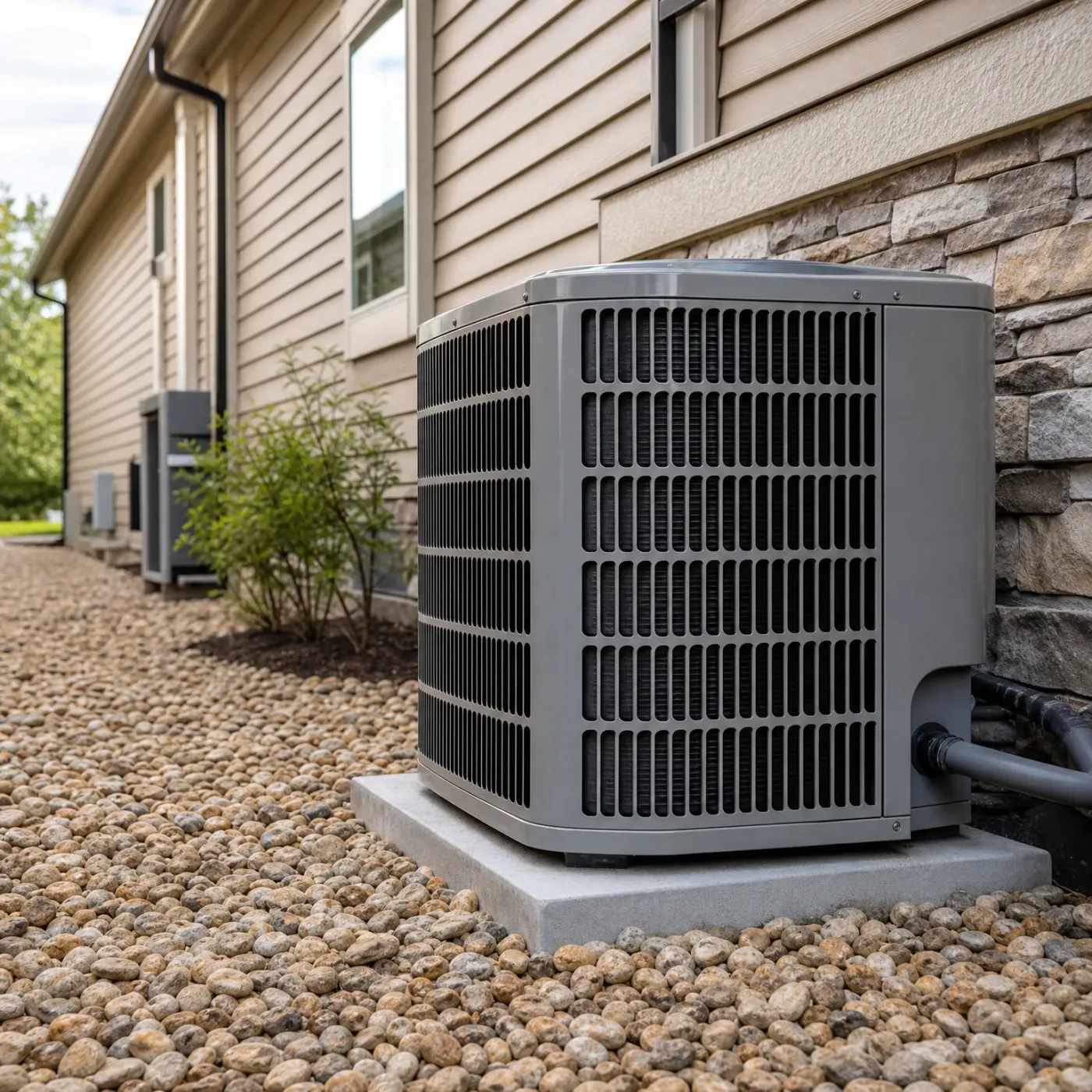
A gray outdoor air conditioner condenser unit on a concrete pad beside a house with vinyl siding and stone veneer, surrounded by gravel, with a second smaller unit and a shrub farther along the wall.

Send one request and you're done looking

Skip collecting and comparing quotes for the new air conditioner.

One request ends the search for an air conditioner installer.

Skip the calls

Sending the form costs nothing.

Why is your house harder to keep cool lately?

You set the thermostat where you always do and the house still sits a few degrees warm by late afternoon. The system runs longer to get there, and you hear it, a cycle that used to end now keeps going through the hottest part of the day. Some rooms cool fine and others lag behind. The air coming out of the vents doesn't feel as cold as it used to. Outside, the unit runs almost constantly once the sun's been up a few hours. None of this means it's about to quit, but a system working this hard through an Alamance County summer is closer to a breakdown than one that cycles on and off the way it's supposed to, and that breakdown tends to land on the hottest day you have.

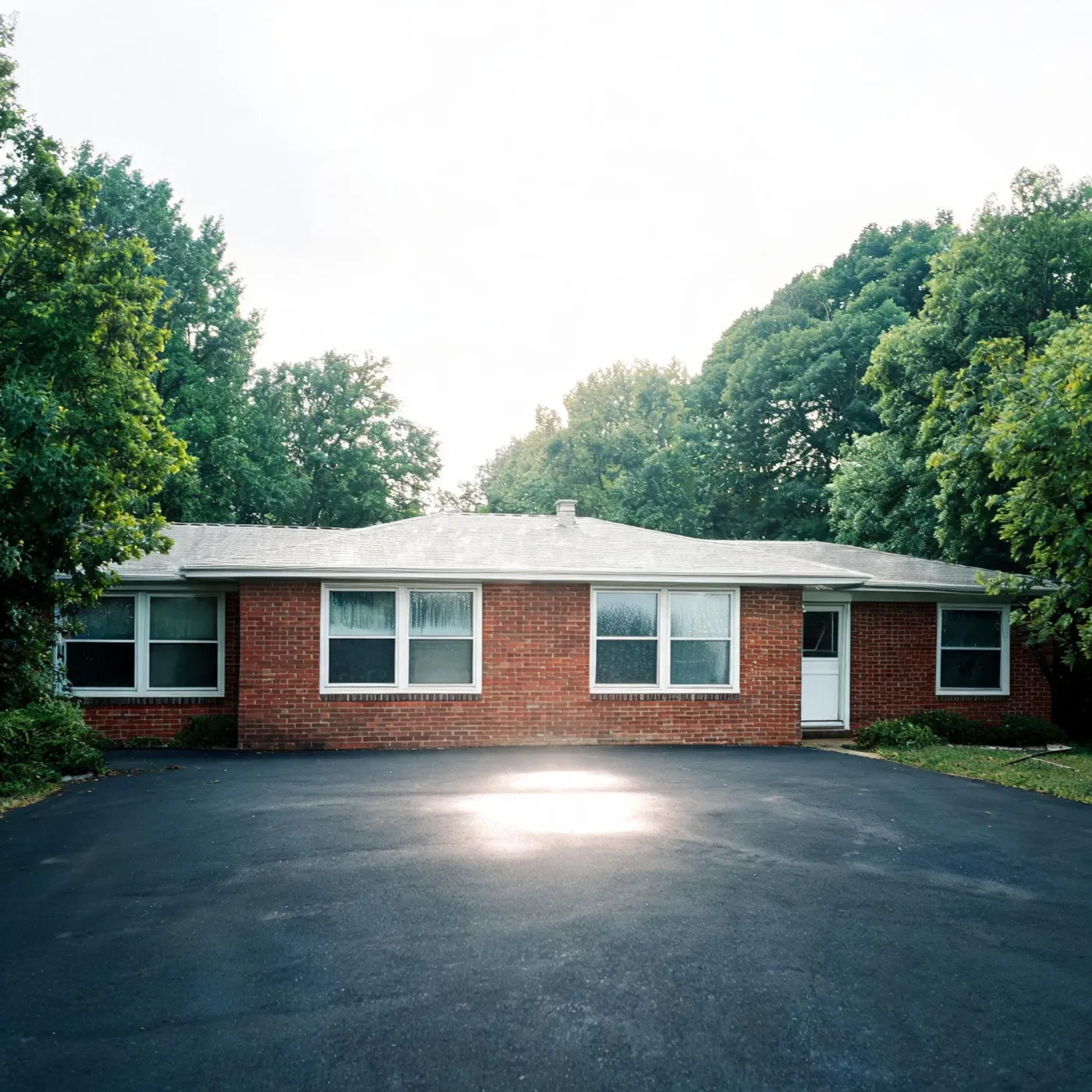
A single-story red brick ranch house with white-framed windows, a white side door, and a shallow gray roof, fronted by a large empty asphalt driveway and surrounded by green deciduous trees under a bright overcast sky.

Alamance County's summer air averages a dew point of 66°F across June, July and August, figures from regional climate records. That's heavy air, the kind that sticks to your skin on the porch. Your AC isn't just cooling that air, it's wringing the moisture out of it before the house feels right. That extra step runs the compressor longer than a dry heat ever would. You'd notice it as a system that seems to run all afternoon without much of a break, and a house that still feels a little damp even when the temperature reads where you set it.

NASA POWER T2MDEW

An outdoor air conditioner condenser unit on a concrete pad beside a house with light horizontal vinyl siding, surrounded by bare dirt, gravel and dry leaves, with refrigerant lines and conduit running along the wall.
Before you get your air conditioner installation
A gray outdoor air conditioner condenser unit on a concrete pad beside a house with horizontal lap siding, with a flowering shrub at left and a disconnect box with conduit on the wall at right.
After you get your air conditioner installation
  1. The old unit comes out, lines and pad included.

  2. The new condenser sets on a level pad outside.

  3. The indoor coil and line set go in next.

  4. The contractor charges the system and checks the pressures.

A gray outdoor air conditioner condenser unit on a concrete pad beside a house with dark horizontal siding and a stone base, surrounded by gravel, with a flowering shrub at left and a concrete walkway in front.
A clean condenser with clear space around it moves air through the coil the way the system was built to.
An outdoor air conditioner condenser unit sits on a concrete pad beside a stucco wall, with refrigerant lines and conduit running to the wall and a shrub to the left.
Grime packed into the fins and a weathered cabinet mean the compressor is working past what the unit was built for.
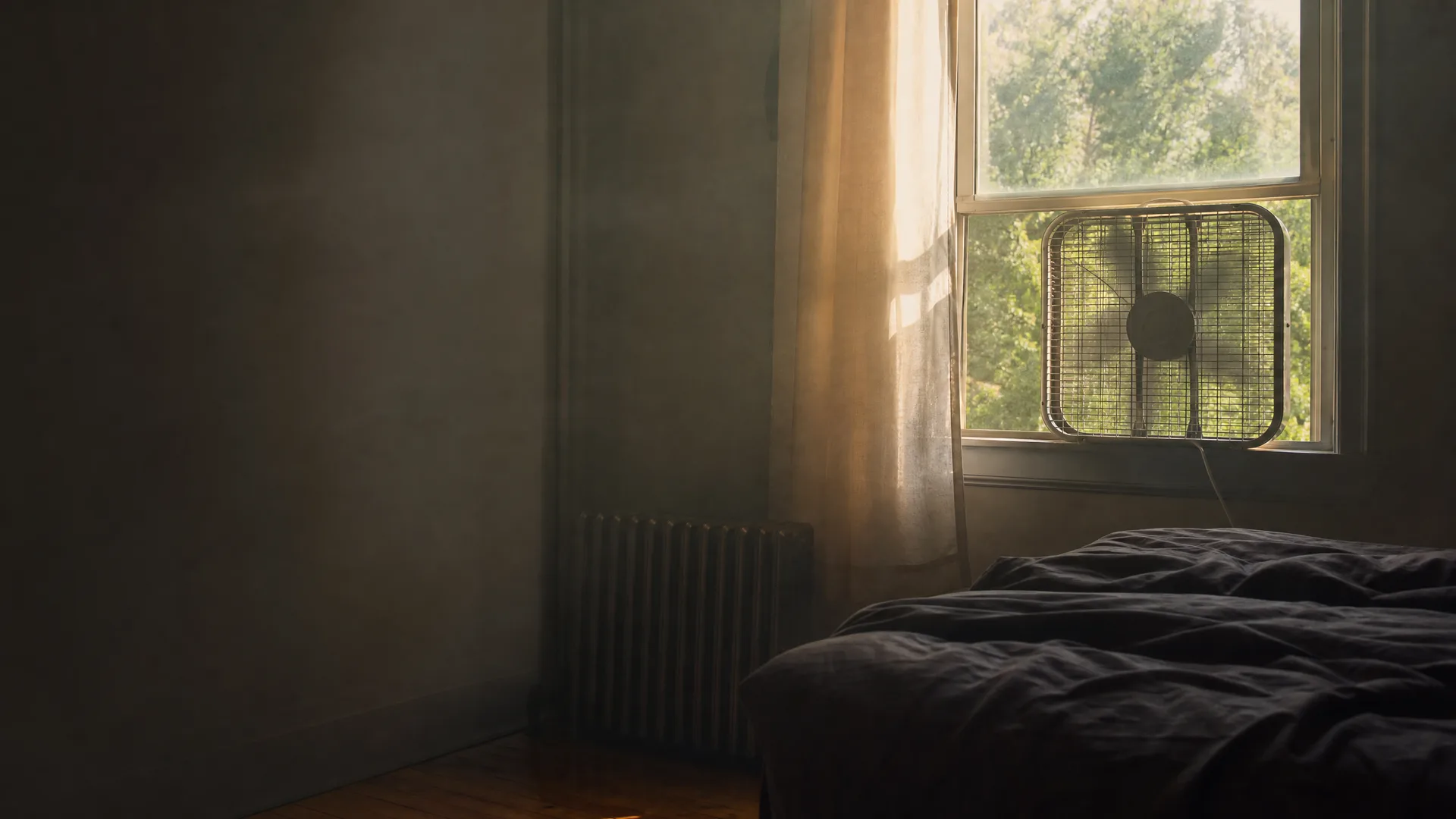
A dim bedroom with a bed covered in gray bedding, a cast-iron radiator against the wall, and sunlight entering through a window fitted with a box fan and a sheer curtain, with green trees outside.

It's past eight and still light out, the sky that late-June white-gray that hangs on past dinner. Upstairs the bedroom holds the day's heat like a held breath. A box fan sits wedged in the open window, pulling in air that isn't much cooler than what's already in the room. You can hear it more than feel it. The sheets are warm before anyone lies down on them. Out past the fan, cicadas going steady, somebody's sprinkler ticking a few yards over. The AC downstairs is running, you can hear that too, but up here the air just sits, heavy, the kind that doesn't move unless the fan pushes it.
Cooling runs May through September

Five months is a long stretch for a system to carry the whole cooling load for your house. From the first warm week in May to the last muggy days in September, your AC doesn't get much of a break to recover between cycles.

NOAA nClimDiv 1991-2020

What this comes down to

  • Most AC units in Burlington and Alamance County last 12 to 15 years given the long, muggy summers they run through.
  • A unit over a dozen years old is at the point where a repair bill starts to compete with the cost of replacing it.
  • What fails first is usually the compressor, worn down by the extra load of pulling moisture out of thick summer air.
  • A condenser kept clear of debris and leaves with clean airflow tends to hold up closer to the far end of that range.
  • Once a system is past 12 years, an August breakdown is a real possibility, not a distant one.
  • Replacing a unit before it fails means you choose the timing instead of a heat wave choosing it for you.

Twelve to 15 years is what an AC unit in Burlington and the rest of Alamance County gives you, and the long muggy stretch from May through September is why that number isn't higher. Every system wears toward the same end: the compressor carries the load of pulling moisture out of thick summer air, year after year, until it can't anymore. Where your unit falls in that range comes down to upkeep. A condenser kept clear of leaves and grime, with air moving freely through the coil, tends to land closer to 15 than to 12. One that's been crowded by a shrub bed or caked with grime is working harder than it should, and that shortens things. If your system came with the house and the house is past that dozen-year mark, you're at the point where the next repair bill is worth weighing against the cost of replacing the unit outright, because past a certain age the repairs stop being the cheaper choice. You're also at the point where an August breakdown isn't a distant risk, it's a real one, and a sticky Alamance County summer is not a good time to find that out. The alternative is choosing your own timing. A system replaced on your schedule, before it fails, means you're not standing in a hot house in July trying to find someone who can come look at it. That choice is the one still in your hands right now.

A man in a gray quarter-zip sweater sits with closed eyes and a slight smile in a dark leather armchair in a wood-paneled room, with a window, framed picture, bookshelf and a table holding a mug and papers nearby.
A man with greying hair and a beard, wearing a dark blue sweater, reclines with closed eyes and a slight smile in a brown leather armchair in a room with a bookshelf, houseplant, window, and a folded newspaper on a wooden table.
A man in a dark green sweater reclines with eyes closed in a brown leather armchair beside a wooden table holding a dark mug and a folded newspaper, with houseplants, a framed picture and a bookshelf in the background.
A man in a dark blue sweater reclines with closed eyes in a brown leather chair, beside a side table with a mug and folded newspaper, a potted plant and shelving in the background.

Air Conditioner Installation

Finding a pro stops being your job

Skip the round of in-home estimates for a new air conditioner.

A black-framed smartphone standing upright against a plain white background, its screen filled with solid green.
New system or replacementCentral ACAlamance County, NC
Step 1 of 2

What ZIP code is the job in?