




When to replace a heat pump in Mooresville, NC

Your new heat pump project goes to an installer who works in Iredell County.

Get a heat pump pro

When should I replace my heat pump in Mooresville, NC?

Your heat pump works twice as hard here as it would somewhere with a mild summer or a mild winter, not one or the other. By the time it's struggling, you've probably already noticed: a system that runs longer to hit the same temperature, a bedroom that never quite matches the thermostat, bills that climb even though nothing in the house changed. You want to know if that's normal wear or the start of the end, and whether to fix it again or start planning for a new one.

Replace it at 10 to 15 years, or sooner if repairs keep adding up

Most heat pumps last 10 to 15 years, and yours is working year round here, not just a few months. It carries the cooling load through a long, humid summer, then switches over and carries the heat through a cold winter, with almost no break between. That's double duty most parts of the country don't ask of a heat pump. Once yours passes 10 years, a breakdown costs more to fix each time, and a major repair, like a failed compressor, often costs enough that replacing the unit makes more sense than saving one that's already worn down. If yours is still under 10 years and running fine, a repair is usually the right call. Past that, weigh the repair against a new system before you pay for it.

A woman with long gray hair in a green sweater sits on a sofa in a living room, looking out a large window toward trees with yellow autumn leaves.
A gray-haired woman in a dark cowl-neck sweater sits on a couch with cushions and a blanket, looking out a large window toward yellow autumn foliage.
An older woman with gray hair in a knit cardigan sits on a sofa indoors, looking out a window at trees with yellow autumn foliage.
A gray-haired woman in a knit sweater sits in a chair with a blanket over her lap, looking out a large window toward sunlit yellow-green foliage, with a living room and houseplant behind her.

How much does your heat pump really have to carry each year?

  • Winter nights average 30°F

    Nights this cold mean the system switches to backup heat more often, and that strain adds up over a seven month stretch.

  • Heat runs October through April

    Seven months of heating is a long run for any unit, and an aging heat pump feels every one of those days.

  • Cooling runs May through September

    Five more months of cooling on top of that heating load leaves almost no month where the system gets to rest.

NOAA nClimDiv 1991-2020

When repair still makes sense

If your heat pump is a few years old and the repair is a single part, fixing it is usually the right call. A capacitor, a contactor, a run of refrigerant, none of that means the system is done. If it's kept up with maintenance and this is the first real issue it's had, paying for the repair gets you back to normal without betting on a whole new install. A system that's handled seven months of heating and a long muggy summer without major trouble has already shown it can do the job here.


When replacement is the better bet

If the repair quote is a big share of what a new system costs, or if this is the second or third breakdown in a couple years, you're paying to delay the same decision. An old heat pump working through another Iredell County winter on backup heat more than it should is costing you on the power bill every month it keeps running that way. Once a system starts needing a service call every season, the math stops favoring repair. Replacing it now means you choose the timing instead of a failed unit choosing it for you, in January, when you need it most.

A woman in a cream knit sweater sits in an armchair with her eyes closed beside a window showing orange autumn foliage, with a lamp behind her and a cup of tea and white flowers on a side table.
An older man with gray hair in a navy quarter-zip fleece reclines on a light upholstered sofa with his eyes closed, beside a potted plant and large sunlit windows.

A heat pump doesn't burn fuel to make heat. It moves heat from one place to another, and the reversing valve is what decides the direction, pulling warmth out of the outdoor air in January and pushing it outside in July. That valve works every month, not just a few, so it wears differently than equipment that only runs half the year. When the outdoor coil frosts over in cold weather, the system pauses to run a defrost cycle. That's normal on its own, but if it's happening often, the unit is losing ground and leaning harder on the electric heat strips to make up for it. Those strips will keep a house warm, but they do it by pulling more power, not by fixing whatever is making the heat pump fall behind. A compressor that starts cycling on and off in short bursts is usually telling you it's tired. And because the refrigerant charge has to be right for both heating and cooling, a slow leak doesn't stay hidden in just one season. It shows up in both.

How a heat pump actually runs

  • A heat pump moves heat instead of making it, so the compressor and reversing valve run nearly every month of the year here.
  • The reversing valve switches the refrigerant flow between heating and cooling, and once it sticks, the system often gets stuck in one mode.
  • Below freezing, the outdoor coil frosts over and the unit runs a defrost cycle, which is normal, but a system doing it too often is losing capacity.
  • Electric backup heat strips kick in when the heat pump can't keep up, and leaning on them all winter drives the power bill up without fixing the real problem.
  • A compressor that short cycles, turning on and off in quick bursts, wears out faster and usually points to a system near the end of its life.
  • Refrigerant charge has to be exact in a heat pump, since it depends on the same charge for both heating and cooling, and a slow leak shows up in both seasons.
A gray outdoor condenser unit on a concrete pad beside a white horizontal-siding house, with refrigerant lines and conduit running to a wall-mounted disconnect box, bare soil in front and a green shrub at left.
A clean unit with clear airflow around it holds its charge and runs the compressor without extra strain, year after year.
A weathered outdoor condenser unit on a concrete pad beside a house with light horizontal siding, surrounded by bare dirt and a shrub.
A unit coated in grime like this is losing airflow at the coil, and a heat pump breathing that poorly is closer to its last season than its next one.
  1. The thermostat calls for heat and the reversing valve sets flow direction.

  2. The compressor pulls in refrigerant and raises its pressure and temperature.

  3. Outdoor or indoor coils release or absorb heat as refrigerant changes state.

  4. The indoor blower pushes that conditioned air through the ducts into your home.

Does this sound like what's happening at your house?

Rooms upstairs stay warmer or colder than the rest of the house no matter what the thermostat says. The outdoor unit runs long stretches without shutting off, especially on the coldest nights. You hear it click into backup heat more than it used to, and the power bill shows it. Inside, the air coming out feels lukewarm instead of warm, or the system cycles on and off in short bursts. If any of this has been going on for more than a season, the heat pump is working harder to do less, and a breakdown in the middle of a cold snap or a muggy stretch leaves the house without reliable heating or cooling until it's fixed.

An outdoor air conditioner condenser unit on a gray composite pad beside a house with horizontal lap siding, with refrigerant lines and a conduit running to a wall-mounted disconnect box, and a shrub at left.
Before you get your heat pump installation
A gray outdoor condenser unit on a concrete pad beside a beige vinyl-sided house, with a wall-mounted disconnect box, flexible conduit, mulch bed, shrubs and a concrete walkway in front.
After you get your heat pump installation

Get matched with a heat pump pro in Iredell County

One request ends the search for a heat pump installer.

You only hire the pro if you want to.

An outdoor air conditioning condenser unit on a concrete pad beside a house with horizontal lap siding, surrounded by rocks, shrubs and trees.

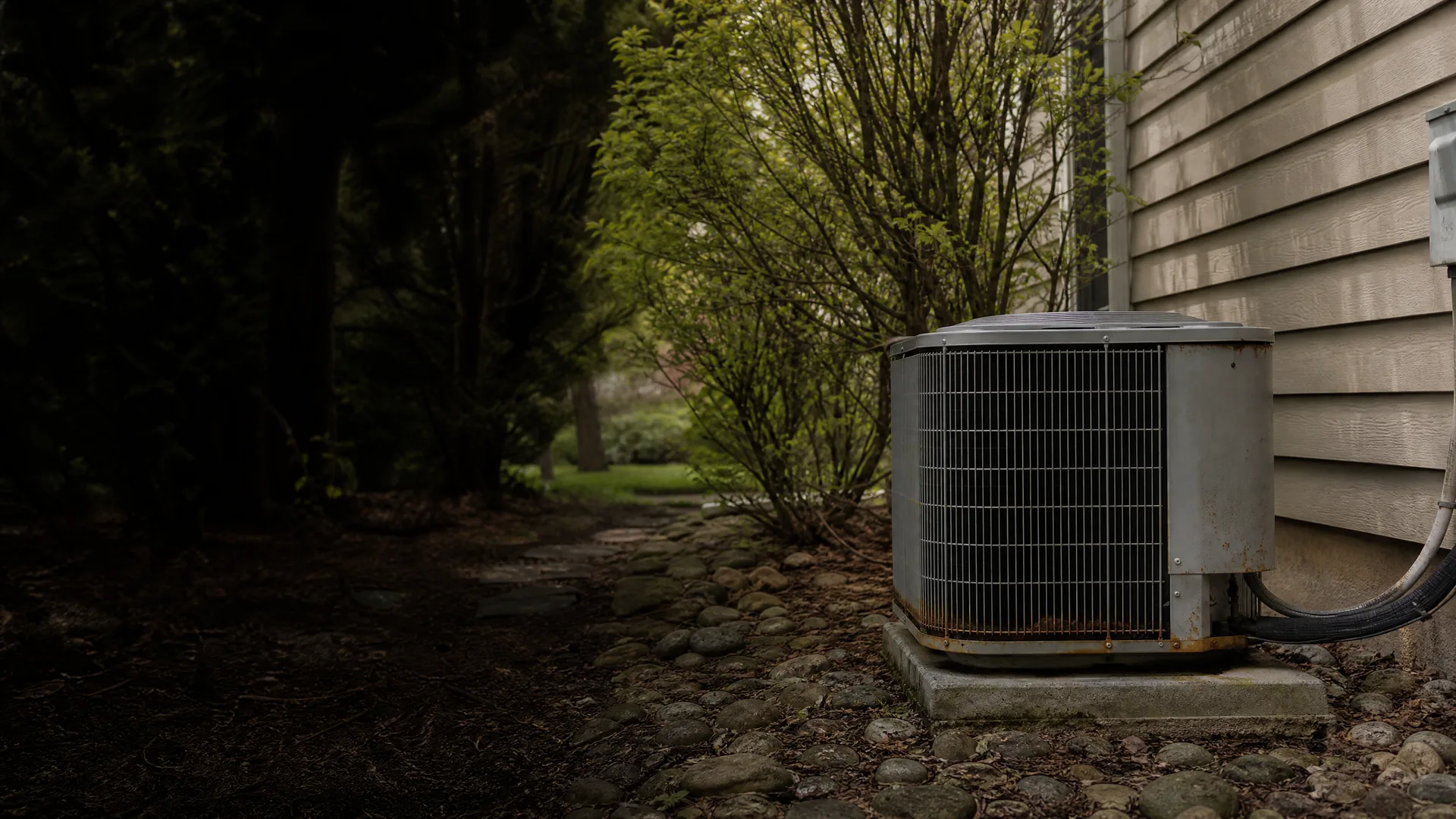
You're out in the side yard on one of those first warm March afternoons, the kind that comes early some years in Iredell County. You crouch down to pull the winter leaves away from the outdoor unit and that's when you see it, rust climbing the base along the seam where the cabinet meets the slab. The metal's gone soft looking in one corner. You run a finger along it without really meaning to, like you're checking if it's as bad as it looks. It is. The unit still runs. It kicked on fine this morning. But you stand there a minute longer than you planned to, doing the math on how many more summers this one has in it.

A woman stands in the open doorway of a white stucco house holding the dark door, facing a man in a black cap and shirt seen from behind in the blurred foreground, with a potted flowering plant beside the entry.

What an aging heat pump does to your house, not just your bill

A heat pump on its way out shows up in the rooms first. The bedroom over the garage runs cold in January no matter where you set the thermostat, because the system can't push enough heat through the whole house anymore. Humidity sits heavier in the house through July and August, even with the AC running, because the unit isn't pulling moisture out the way it used to. You notice the electric bill climbing months before anyone tells you why, because a struggling compressor pulls more power to do the same job.

None of that means tearing out the system tomorrow. It means knowing when the signs add up to more than one bad part. If you send in your information, a licensed contractor who knows Iredell County homes will look at your actual system and tell you whether this is a year to repair or a year to replace, and reach out to go over it with you. You stop guessing from the thermostat and let someone who can see the unit tell you where it stands.

A living room corner with a beige upholstered armchair holding navy and striped cushions, a small round wooden side table with a carved bowl and a potted green plant, a framed landscape picture on a pale wall, built-in shelving, and a curtained window.
A gray outdoor condenser unit on a concrete pad beside a house with horizontal lap siding, a conduit and disconnect box on the wall, a shrub with white flowers at right and evergreen foliage at left.

Running the way it should

The pad is clear, the grilles are clean, and the lines running into the wall are intact. A unit kept like this holds its charge and pulls air through the coil without a fight, through another humid summer and another cold winter.

A weathered outdoor condenser unit on a concrete pad beside a house with white horizontal vinyl siding, with refrigerant lines and conduit running to a wall-mounted electrical box.

Running on borrowed time

Grime has built up across the grilles and the cabinet shows years of weather. A heat pump working that hard to breathe is pulling more power to do the same job, and it's closer to its last season than its first.

Power here costs 12.86 cents per kilowatt-hour

At 12.86 cents per kilowatt-hour, your heat pump stays cheap to run as long as it's working the way it should. An aging unit that's lost efficiency pulls more power to do the same job, and that difference shows up on the bill long before the system fails outright.

EIA-861 2025

A heat pump that runs seven months of heat and a full summer of cooling every year doesn't have much time to rest, and that's the job yours has in Mooresville. If it's past ten or twelve years old, losing efficiency, or needing one repair after another, replacing it is the straightforward call. If it's younger and the problem is a single part, fixing it still makes sense. Either way, you don't have to work out which situation you're in by yourself. Once you send the form, the search is no longer something you have to carry. A contractor who knows these systems and this area takes it from there, looks at your unit, and tells you plainly whether it's worth repairing or time to replace it. That's one less thing sitting on your list before the next cold night or the next stretch of summer heat.

A white board-and-batten two-story house at dusk with a lit covered porch, wooden front door flanked by potted shrubs, warm-glowing black-framed windows, stone steps and a paved walkway bordered by hedges and lawn.

Heat Pump Installation

A local pro for your heat pump installation

New system or replacementHeat PumpIredell County, NC
Step 1 of 2

What ZIP code is the job in?

  • A living room corner with a beige upholstered sofa holding a brown pillow and cream knit throw, beside a wooden side table with a lamp and a small vase of autumn leaves, in front of a white-framed double window showing yellow-green trees outside.
    • Get matched with a pro who works on heat pumps in Iredell County.
    • A local installer who puts in heat pumps gets your project.
  • A wicker basket holding a cream chunky knit blanket sits on a weathered wooden bench beside a small bowl and a pale ceramic vase with dried branches, next to a window.
    • Send the form and stop researching installers for the new heat pump.
    • Send it once and finding someone is no longer on you.
  • A covered front porch with a black front door flanked by sidelights and two lit lantern wall sconces, a dark rocking chair with a striped pillow, a potted plant, stone-faced columns, and white hydrangeas beside the steps.
    • Skip collecting and comparing quotes for the new heat pump.
    • Skip the round of in-home estimates for a new heat pump.
  • Front entry of a dark gray shingled and lap-sided house with stone veneer, wood porch posts, and a paver walkway bordered by shrubs and a tree with orange autumn leaves.
    • A licensed installer who works in Iredell County gets your project.
    • One installer gets your project, so there's no bidding war over it.