







Profile view of a bearded man wearing a black baseball cap and a dark gray T-shirt against a plain light background.

How long a central air conditioner lasts in North Carolina

New system or replacementCentral ACNorth Carolina
Step 1 of 2

What ZIP code is the job in?

A central air conditioner in North Carolina lasts about 12 to 15 years. The muggy summers here push the system hard for months at a time, and that long, humid stretch of runtime wears on the compressor and the coils faster than it would somewhere drier. Most homes here heat with electricity, so the same outdoor unit or a connected heat pump may also be carrying part of the winter load, which adds to its hours of work over the year. Once a unit passes the 12 to 15 year mark, breakdowns tend to come more often, and parts for an older system can be harder to find. If your air conditioner came with the house, it is worth finding out its age and watching for signs it is struggling to keep up on the hottest days. A system nearing the end of its life does not have to fail outright before it is worth replacing.

An older man with gray hair and a beard leans back on a beige sofa with his eyes closed, in a sunlit room with potted plants, a wicker chair and large windows behind him.
A woman in a cream knit sweater sits in an armchair with her eyes closed and a slight smile, beside an open window showing orange autumn foliage, with a mug, books and a lit candle on a small side table.

The compressor is the part doing the real work, and in North Carolina it rarely gets an easy stretch. From June through September it's pulling heat and moisture out of the house on afternoons that don't let up, and that steady load is what ages it. Airflow matters more than people think. When a filter is clogged or a duct is restricted, the compressor has to run longer to move the same amount of heat, and that extra runtime adds up over a summer. The coils take their own kind of beating here. Humidity keeps them wet longer than they'd stay in a drier climate, and a coil that doesn't dry out between cycles corrodes faster. Refrigerant matters too. Even a small drop in charge pushes the compressor outside its normal operating range, and it stays there until someone corrects it. Sizing plays a part as well. A unit matched to the house settles into a steady on-off rhythm, while one that's too big or too small is either short-cycling or straining, and both wear it down faster.

What Wears a System Down

  • The outdoor unit's compressor pushes refrigerant hardest on the humid afternoons that run from June through September here.
  • A dirty or low-airflow system makes the compressor run longer to pull the same heat out of the house, which adds wear over a season.
  • The coils shed moisture constantly in North Carolina's humidity, and a coil that stays wet longer corrodes faster than one that dries out between cycles.
  • Refrigerant charge that drops even a little forces the compressor to work past its normal range, which shortens its life over the years.
  • A system sized correctly for the house cycles on and off in a steady rhythm, while an oversized or undersized one short-cycles or runs too long and ages faster either way.
  • Routine servicing before the first hot stretch catches a weak capacitor or a failing contactor before it takes the compressor down with it.
An outdoor air conditioning condenser unit on a concrete pad beside a house with horizontal lap siding, with a gray electrical disconnect box and conduit on the wall, mulch bed and shrub to the right, and mown grass in the foreground.
The coils are clean and the condenser runs free of strain, which is what lets it reach 12 to 15 years here.
An outdoor air conditioning condenser unit on a concrete pad beside a house with light blue horizontal siding, with a shrub to the left and a conduit and disconnect box on the wall to the right.
Coils caked with dust force the compressor to work harder in July and August, and that cuts the unit's life short.
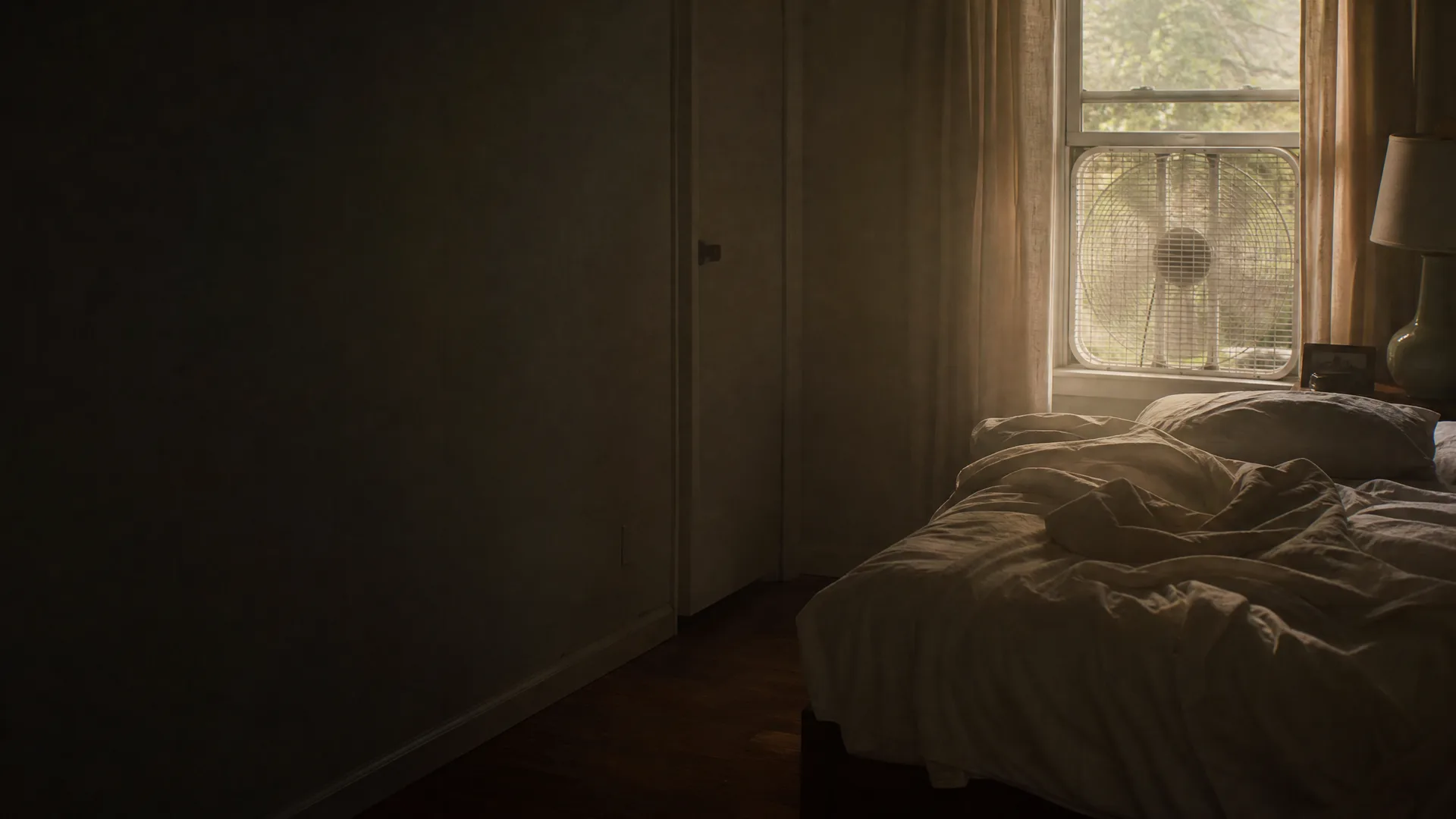
A dim bedroom with an unmade bed beside a window holding a box fan, with sheer curtains, a lamp at right and a large blank wall at left.

By nine the sun's down but the upstairs room still holds the heat of the day. The box fan sits in the window, pulling in air that isn't much cooler than what's already inside. You're on top of the sheets, not under them. The fan hum is steady but it just pushes the warm air around, doesn't cut it. Down the hall the thermostat reads where you set it, but up here, this high in the house, it doesn't feel like it. You get up once to flip the fan the other way, then lie back down and wait for sleep to come anyway, the window dark now, the room still thick with it.

Finding a pro stops being your job

Skip collecting and comparing quotes for the new air conditioner.

You're not committing to anything by asking.

  1. The thermostat calls for cooling and starts the system.

  2. The compressor squeezes refrigerant into a hot, high-pressure gas.

  3. The outdoor coil releases that heat into the summer air.

  4. Refrigerant cools and expands as it enters the indoor coil.

Repair the Unit or Replace It

Repair

  • Makes sense if the unit is under 10 years old and the repair is a single part like a capacitor or a contactor.
  • Keeps the system you already have running through the rest of this summer without a new install.
  • A good option when the compressor and coils are still sound and the problem is electrical or mechanical, not wear.
  • Costs less upfront, but a unit already near 12 to 15 years old may need another repair again soon.
  • Doesn't buy you a better SEER2 rating, so your power bill stays where it's been.

Replace

  • Makes sense once the unit is past 12 to 15 years old or the compressor itself has failed.
  • Stops the cycle of repeat service calls on a system that keeps breaking down in July and August.
  • A new system is sized and installed to handle North Carolina's humid summers from the start.
  • Comes with a warranty on the whole system instead of just the part that was swapped.
  • Higher cost upfront, but you're not paying to patch a unit that's already near the end of its life.
A gray outdoor air conditioning condenser unit on a concrete pad beside a house with horizontal siding and a stone veneer base, with refrigerant line and electrical disconnect box on the wall and flowering shrubs to the left.

Running clean

This one sits on its pad with the lines running straight into the wall, fins clear and the coil doing its job. A unit kept this way earns its full 12 to 15 years here, even with June through September pulling on it hard. Nothing about it is working harder than it has to.


An outdoor air conditioner condenser unit on a concrete pad beside a house with light gray horizontal siding, with mulch and green shrubs on either side and a concrete walkway in the foreground.

Worn down early

The fins on this one are packed with dirt and grime, and that makes the compressor strain to move the same heat out of the house. A unit in this shape won't see 12 years, let alone 15. By the time it looks like this, replacing it is usually the better call than repairing it again.

Is your air conditioner telling you something right now

Walk through the house in the afternoon. Some rooms are cooler than others, and the one furthest from the unit never quite gets there. The system runs longer than it used to before it shuts off, and your power bill in July or August is higher than last year even though you haven't changed the thermostat. Maybe you've heard a rattle from the outdoor unit, or noticed water pooling near the indoor coil. None of that means it's finished, but it means it's working harder for less. Left alone through another North Carolina summer, that strain is what turns a repair into a full replacement before its time.

A gray outdoor air conditioner condenser unit on a concrete pad beside a house with horizontal vinyl siding, surrounded by mulch, flowering shrubs, and lawn.

Clear and unobstructed

This condenser sits on its pad with the fins open to the air, mulch and grass kept back, nothing pressed against the cage. Air moves through the coil the way it was built to, so the compressor isn't working past what the job requires.

A weathered outdoor air conditioning condenser unit on a concrete pad beside a house with light horizontal siding, an electrical disconnect box and conduit on the wall, and mulched soil on either side.

Caked and restricted

Dirt and grime have built up over the coil fins here, and the cage is holding debris instead of shedding it. Through a North Carolina summer, that film makes the compressor run longer to move the same heat out of the house.

Power costs 14.00 cents per kilowatt-hour statewide

At 14 cents a kilowatt-hour, a compressor that's working harder than it should shows up fast on your bill. A dirty coil or weak airflow makes the system run longer to cool the same house, and every one of those extra hours gets billed at that rate.

EIA-861 2025 statewide residential average

A man in a blue sweatshirt reclines with closed eyes in a brown leather armchair in a living room with a bookshelf, houseplant, sofa, window, and a side table holding newspapers and a dark mug.
A bearded man in a gray pullover reclines with closed eyes on a brown leather sofa in a sunlit room with a window, framed picture, potted plant, and a wooden cabinet holding papers and a dark mug.
A man in a gray sweater leans back with closed eyes in a brown leather armchair beside a wooden side table holding a dark mug and a folded newspaper, with bookshelves and a window seat behind him.
A man in a green sweater reclines in an armchair with his eyes closed and a slight smile, beside a window with plants, a small table holding a mug and folded newspaper, and bookshelves behind him.
A closed silver laptop and a ceramic mug of dark coffee sit on a wooden table in front of two chair backs, with a kitchen counter, tiled backsplash, wooden cutting boards, a vase of greenery and a potted plant by a window behind.

Where that leaves you

12 to 15 years is what a central air conditioner gives you here, and whether yours gets the full stretch comes down to how it's been run and kept up. A unit with clean coils and steady airflow through those four hard months in the middle of summer gets there. One that's been working past what the job requires doesn't.

If yours is already showing its age, or you'd rather replace it on your own schedule than wait for it to quit in July, you don't have to spend your evenings calling around and explaining the same thing to every contractor who picks up. Send the form once and that search is off your plate.

Interior corner of a room with a window and sheer curtain at left, a gray upholstered sofa with a cushion at right, and a round wooden table holding stacked books and a round vase with an olive branch.
A curving paver walkway runs alongside a house with beige lap siding and a white-trimmed window, bordered by low shrubs, grassy plants, and trees in sunlight.
A dark-framed casement window with divided upper panes set in a stucco wall beside a stone-clad section, with hydrangeas, hostas and trimmed shrubs in a mulched bed above a lawn.
White horizontal lap siding wall with a single six-pane double-hung window, above a mulched bed of hydrangea shrubs with browning blooms, bordered by mown grass in low sunlight.
Interior corner with tan plaster walls, a potted olive tree in a large terracotta urn beside a floor-to-ceiling window, and a wooden bench with a beige cushion on a herringbone brick floor partly covered by a woven jute rug.
A wooden bench beneath a window holds a green linen cushion and a fringed cream throw, with a woven basket stored underneath on a wood plank floor.

Let someone else find the pro

Skip the round of in-home estimates for a new air conditioner.

Hand it over

It costs nothing to send, and you don't have to hire anyone.











