10 years or older
A heat pump that's put in 10 or more winters of electric heating in North Carolina has earned a harder look before you sink money into another repair.

A heat pump worth repairing is one that still keeps the house warm without running nonstop, and most problems short of that point are worth fixing: a bad capacitor, a stuck reversing valve, a refrigerant leak. Replacement makes more sense once the compressor fails or the system can't keep up on the coldest nights, because North Carolina winters still ask a lot of a heat pump even without extreme cold, and most homes here lean on it for heat, not just air conditioning. An older unit working harder than it should will show it in the power bill before it shows it in comfort. If yours is still under ten years old and the problem is one part, repair is usually the answer. If it's older and failing in more than one way, replacement stops being a question of if and becomes a question of when. Either way, the first step is the same: getting a straight answer from someone who can look at the system itself.


A heat pump that's put in 10 or more winters of electric heating in North Carolina has earned a harder look before you sink money into another repair.
Send one form instead of chasing down contractors, waiting on callbacks, and repeating the same story about your heat pump to each one.
You might notice the air coming from the vents feels cool instead of warm, or the system runs for long stretches without the house ever feeling heated through. Some homes hear a clicking that doesn't lead to the unit starting, or the outdoor unit stays coated in ice well past a normal defrost cycle. You might see your electric bill climb while the house still feels colder than you set it. Since most homes here rely on electric heat, a heat pump working harder than it should shows up fast on that bill. Left alone, a struggling unit can freeze up outside or stop producing heat at all on the coldest night of the year.

This is a heat pump doing its job. The coil is clear, the fins are open, and the unit sits clean on its pad. Nothing here stops it from moving heat the way it should, winter or summer.

The fins on this one are packed with dirt. Air can't move through a clogged coil the way it needs to, so the system works harder to do less. Left alone, that strain is what shortens a compressor's life.

This one sits clean on its pad, lines run neat to the disconnect, and nothing around it blocks the airflow. A heat pump set up like this moves heat in both directions without a fight, keeping the house warm through a Carolina winter and the humidity down come summer.

Same setup, same spot against the house, but a unit that struggles doesn't always show it on the outside. If the air at the vents has gone lukewarm or the system runs without catching up, what's wrong is inside, and a contractor needs to look before you know if it's a quick fix or time for a new one.


Skip the round of in-home estimates for a new heat pump.
You only hire the pro if you want to.
A summer dew point averaging 67°F across North Carolina, per NOAA, is the kind of air that feels heavy even when the temperature itself isn't that high. Your heat pump has to pull that moisture out before the house feels cool, not just push cold air into it. That's more work than a dry 85 degree day asks of it, and it's why the unit can run long stretches on humid nights and still leave the air inside feeling damp. A system that's lost some of its capacity shows it here first.
NASA POWER T2MDEW county cells weighted by homes




Since most homes here heat with electricity, your heat pump is running the furnace's job at 14 cents a kilowatt-hour. A unit that's lost efficiency, through age or a bad part, shows up directly on that bill every month it runs.
EIA-861 2025 statewide residential average

A heat pump near the end of its life can still take your money a little at a time. One winter it's a contactor, the next it's a low charge, and each fix buys you a few more months before the next part goes. You end up paying for a system that never really gets better, just less broken than it was the week before.

Replacing the unit closes that cycle. You pick a system sized for your house, it goes in, and you stop guessing which part is about to fail next. There's no more watching the thermostat for signs of trouble or wondering if tonight is the night it quits outright during a cold snap.
You've gone out on a cold morning and found the outdoor unit crusted in ice, and it looks wrong even though the system still seems to be running. It's natural to wonder if something has failed, especially when the ice shows up on the coil every time the temperature drops.
That outdoor coil is where your heat pump pulls heat out of the cold air, and in the process moisture in the air freezes onto it, the same way frost forms on a cold windshield. A little frost in the winter is normal. To deal with it, the system reverses itself every so often, sends warm refrigerant through that outdoor coil, and melts the ice off in a few minutes before switching back to heating the house. You may see steam coming off the unit during this, which is normal too. What's not normal is a thick layer of solid ice that doesn't clear, or ice that builds back up right away. That points to a problem worth having looked at.


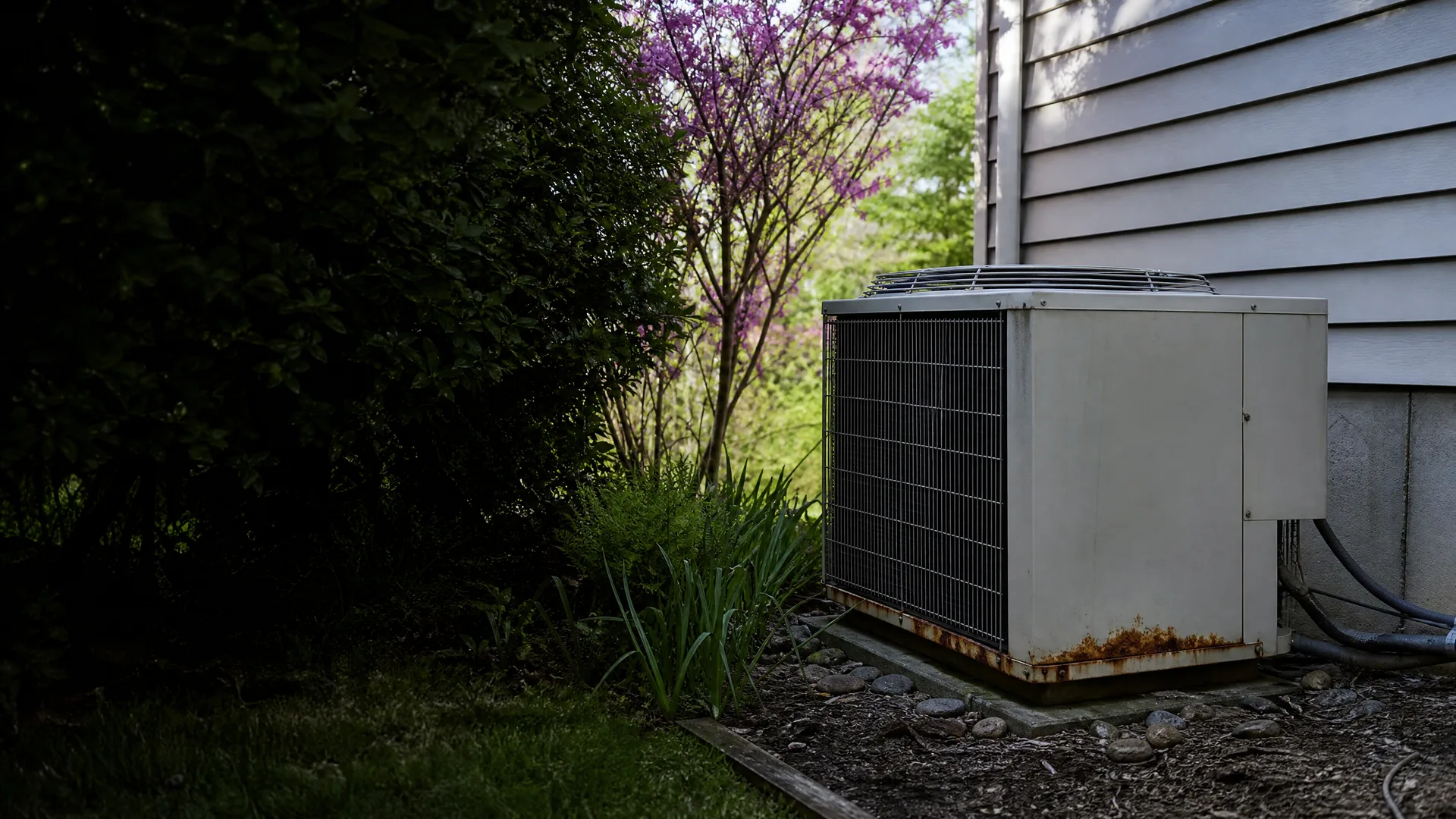
The rhododendron by the side yard is budding out, and you're finally out there in a light jacket cleaning up what winter left behind. That's when you see it, crouched down pulling weeds from along the fence: rust creeping up the base of the outdoor unit, flaking off orange where the metal meets the pad. You run a finger along it without thinking. It's been sitting there all winter doing its job, and you never looked at it close until now. The grass around it is coming back green already. You straighten up, brush off your knees, and figure you'll mention it to somebody before summer gets here and the thing has to work for its living again.

A heat pump that still heats the house without running nonstop is worth repairing. One that's 10 or more winters old and losing ground on a cold morning, running up the bill while it struggles, is worth replacing instead of feeding another part into it. That's the whole decision.
What's left is finding someone licensed to look at it and tell you which side of that line your unit is on. Send the form and you're done with the part that eats an evening: no calling around to see who answers, no explaining the clicking noise and the ice on the coil to three different people, no sitting on quotes trying to compare one against another. That work moves off your plate once you send it.


Asking costs nothing, and the choice to hire stays yours.
You don't have to spend another evening on hold with contractors who can't come out until next week. Send the form once, and the work of finding someone who installs heat pumps in North Carolina stops being your problem to solve.
