
How long heat pumps last in North Carolina
How long do heat pumps last in North Carolina?
You're planning ahead, maybe wondering if your heat pump will make it through another summer or if you should start budgeting for a replacement. Since the system handles both your heating and cooling, you want a real number to work with, not a vague range that could mean anything from two years to ten.
About 10 to 15 years
A heat pump in North Carolina typically lasts 10 to 15 years. That's shorter than the 15 to 20 years you might see quoted for colder states, and the reason comes down to how the system gets used here. Most homes in North Carolina heat with electricity, which means the heat pump runs for heating all winter and then switches straight into cooling duty for the humid summer months. There's no break in the schedule. The compressor and outdoor unit work through both seasons instead of resting half the year, so the wear adds up faster. If your system is approaching 10 years, it's worth watching for signs it's struggling to keep up, especially once the muggy months hit.




Repair the Heat Pump or Replace It
Keep It Running
- A heat pump that's getting annual maintenance and hasn't needed major repairs can often make it to 15 years or more.
- Since North Carolina homes lean on the heat pump for winter heat too, a unit still cycling evenly through cold snaps is doing its job.
- Replacing a compressor or reversing valve costs real money, but if the rest of the system is sound it can still make sense over buying new.
- A system under 10 years old with a minor repair ahead of it usually isn't worth replacing yet.
- If your energy bills have stayed steady season to season, that's a sign the unit isn't struggling to keep up.
Plan to Replace
- Once a heat pump is past 12 to 15 years, parts get harder to find and repairs start costing more relative to a new system.
- A unit that's lost its ability to pull enough humidity out of the air during a muggy summer is falling behind on half its job.
- Rising bills with no change in how you use the system usually point to a compressor or coil that's wearing out.
- If the system needs a second repair within a year or two, that pattern tends to continue and get pricier.
- A heat pump nearing the end of its life struggles more in extreme cold, which matters since it's carrying your winter heating load too.
- Newer systems run on more efficient refrigerants and compressors, which matters most to homes paying for electric heat all winter.
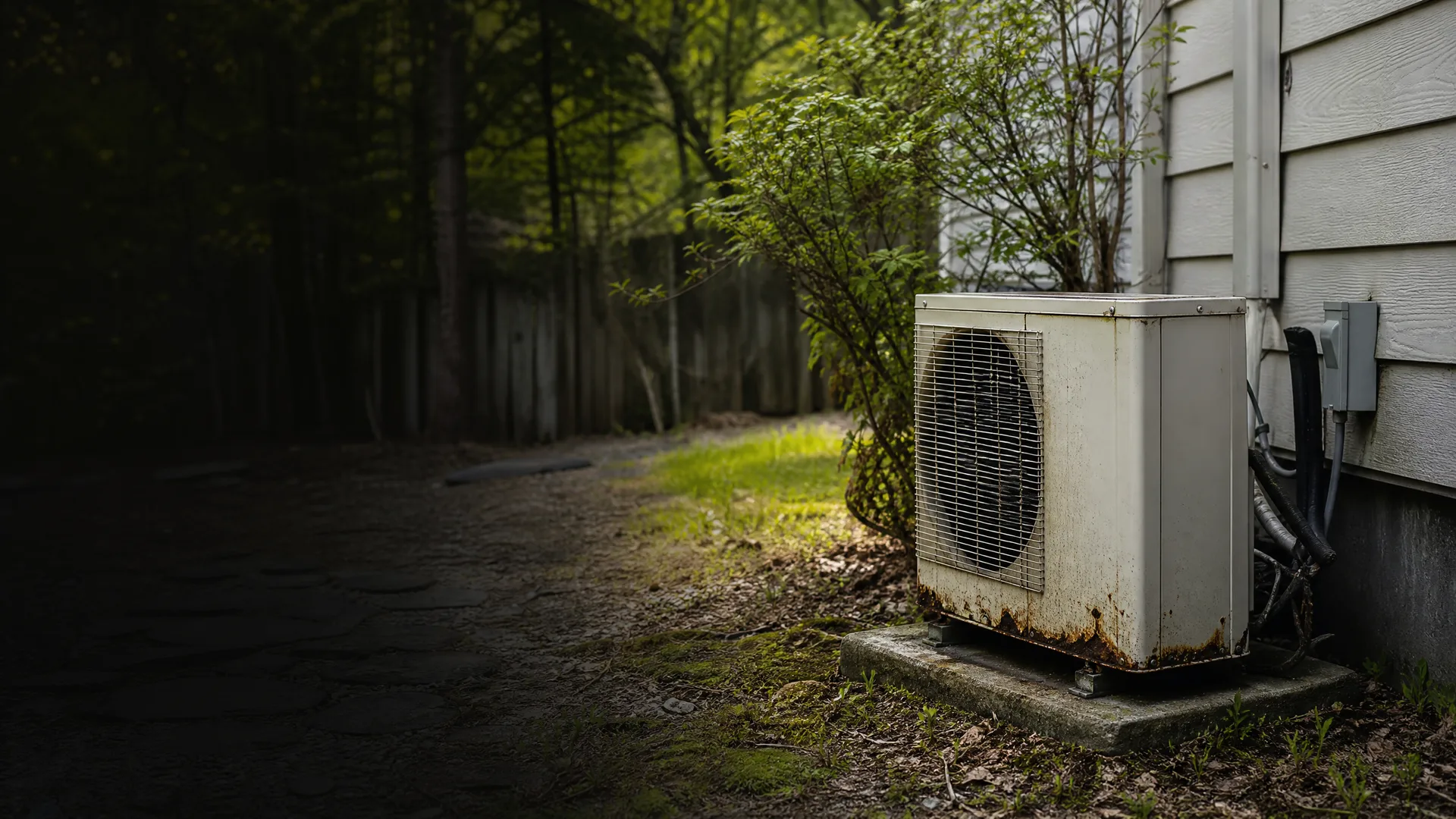
You're out in the side yard in March, checking the azaleas, when you notice the outdoor unit sitting there in the sun. Rust has crept along the base, orange streaks down to the pad. You crouch down and run a thumb over it. The unit still runs. It kept the house warm through the cold snaps in January, and it'll need to carry the cooling soon enough once the humidity rolls back in. But that rust wasn't there last spring, and you find yourself wondering how many more summers it has in it. You straighten up, brush off your knees, and decide it's worth getting someone out to look at it before you're relying on it in July.
Get your heat pump to the right pro

Skip collecting and comparing quotes for the new heat pump.
No charge to send it. You decide if you hire them.
How a Heat Pump Wears
- A heat pump runs the reversing valve to switch between heating and cooling, and that valve sees far more cycles here than in a furnace-only climate.
- The outdoor unit pulls heat from the air even in a North Carolina January, so the compressor works through more cold starts than a straight AC system would.
- Run hours stack up fast when one system covers both muggy summers and winter heat, which shortens the gap between major services.
- The defrost cycle melts ice off the outdoor coil during cold snaps, and a sensor or board failure there can force the system into cooling mode by mistake.
- Refrigerant charge affects both sides of the system, so a slow leak shows up as weak heat in winter and weak cooling in summer instead of just one season failing.
- The compressor is the part most likely to end a heat pump's life, and it works harder here than in a climate where it only runs half the year.
A furnace only has to run half the year. A heat pump in North Carolina doesn't get that break. It switches back and forth between heating and cooling through the reversing valve, and every one of those switches is a cycle that valve has to survive. Come winter, the outdoor unit is still pulling heat out of cold air, which means the compressor is starting up in weather an AC-only system never sees. Add in a sticky summer on the other end, and you've got a compressor logging run hours nearly year-round instead of for a few months.
Cold snaps bring frost on the outdoor coil, and the system handles that with a defrost cycle, melting the ice off before it builds up and blocks airflow. That cycle depends on a sensor and a control board doing their job. When either one fails, the system can get stuck, sometimes locking into cooling mode even though it's thirty degrees outside.
Refrigerant charge matters on both ends too. A slow leak doesn't wait for one season to show up. You might notice the heat struggling to keep up in January, then notice the same unit falling short on a July afternoon.
When a heat pump finally quits, it's usually the compressor. That part carries the load of both seasons here, and it tends to show the wear first.


A heat pump doesn't just blow warm air in winter. It switches modes to do it. The reversing valve flips the refrigerant flow so the same unit that cools your house in July can pull heat out of cold air in January, and when frost builds on the outdoor coil, the system briefly reverses into cooling mode just to melt it off before going back to heating. That valve, and the defrost cycles it enables, don't exist in a furnace. More cycling means more chances for something to stick or wear. A capacitor that's starting to fail lets the compressor or fan motor pull more current than it should, and that strain shortens both. Low refrigerant charge works against the compressor quietly, making it run longer to hit the same setpoint, which adds up over a sticky Carolina summer. The outdoor coil itself never gets a break here. It's working through winter heating and summer cooling both, so pollen and dirt on the fins cut efficiency faster than they would on a system that only runs half the year.
Inside the System, Year Round
- Every defrost cycle sends the system into cooling mode for a few minutes to melt frost off the outdoor coil, even in the middle of January.
- A heat pump that short cycles, turning on and off in quick bursts, puts more wear on the compressor than one running longer, steady stretches.
- The reversing valve is a solenoid-controlled part with no equivalent in a furnace, and once it sticks, the system can get stuck heating or cooling only.
- Low refrigerant charge forces the compressor to run longer to hit the same temperature, and that extra runtime adds up over a humid North Carolina summer.
- The outdoor coil works year round here instead of sitting idle half the year, so dirt and pollen buildup on the fins cuts efficiency faster than in a cooling-only system.
- A failing capacitor can let the compressor or fan motor draw too much current, and that strain shortens the life of both.


Power costs 14.00 cents per kilowatt-hour statewide
At 14 cents a kilowatt-hour, a heat pump nearing the end of its life costs you more every month it keeps running, since older units lose efficiency as the compressor and coils wear. A newer system puts that rate to better use, which matters since your heat pump covers both your heating and cooling here.
EIA-861 2025 statewide residential average
A heat pump in North Carolina runs somewhere around 12 to 15 years, less if it's been skipping maintenance, more if it's been looked after. You already know yours is getting older, and the question now is what to do with that. Instead of searching through contractors, calling a handful, explaining the rust on the pad or the short cycling or the uneven heat one more time, and then sitting with a stack of quotes trying to tell them apart, you can skip straight to the part that matters: getting matched with a contractor who knows North Carolina systems and having them reach out to you. The azaleas will still be there in March either way. What you decide now is whether you're planning the replacement on your own schedule or waiting for the compressor to decide for you.


The right pro for this job
Fill out one short form instead of calling around.
There's no charge for the request.