
Running the way it should
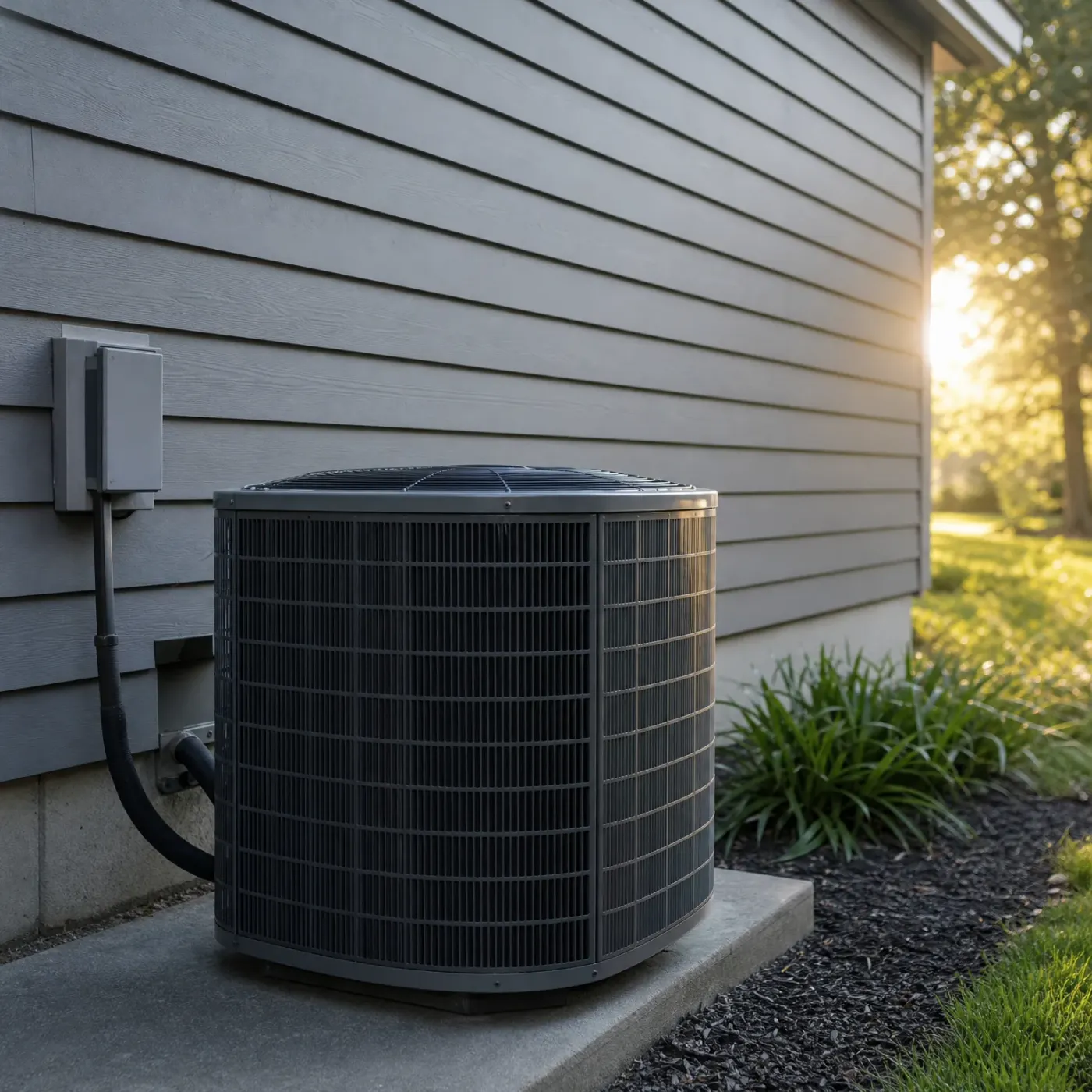
The unit sits clean on its pad, conduit running up to the disconnect box without any mess around it. Air moves through the coil fins freely. When the thermostat calls for heat, it starts without a fight.
You flip the thermostat up or down and nothing happens. No hum, no fan, no air moving. In North Carolina, with most homes running on electric heat, a dead heat pump means you're stuck relying on space heaters or just waiting it out. You want to know if this is something simple or if you're looking at a repair call.
Check the breaker panel first. Heat pumps draw a fair amount of power, and a breaker that's tripped or a disconnect switch that's been bumped off will stop the whole system cold. Next, look at the thermostat. If it's set to cool instead of heat, or the batteries are dead, the unit never gets the signal to run at all. If the breaker is fine and the thermostat looks right, the problem is likely inside the unit itself, a failed capacitor, a bad control board, or a safety switch that's shut it down. Since electric heat is what most homes here rely on through the winter, a heat pump that won't start isn't something to leave alone for long.
Thermostat calls for heat and sends a signal to the heat pump.
Low voltage wiring carries that signal out to the outdoor unit.
The contactor should pull in and send power to the compressor.
A dead contactor, blown fuse, or tripped breaker stops power right there.


A heat pump that stays silent doesn't just mean a cold room. It means the rest of your night rearranges around it. Space heaters come out, doors get shut to hold heat in one or two rooms, and the breaker panel becomes something you check before bed. If your system has strip heat, it can carry the house for a while, but it isn't built to run as the main source of heat for long, and the bill reflects that. A breaker that trips once might be a fluke. One that trips again after you reset it is telling you something in the unit is drawing more than it should, and resetting it over and over can wear on the compressor itself. Ice on a unit that's gone quiet is its own warning. A working heat pump sheds frost through its defrost cycle. One that's stuck can build ice over the coil and fins, and that ice doesn't melt on its own once the system has shut down. None of this is the same problem in May as it is in January, when there's no open window to fall back on. And once you're dealing with it, the search itself costs you something: finding someone who actually services your brand, describing the same symptoms to three different companies, then sitting with quotes trying to compare apples to apples. That's hours most evenings don't have room for.





One form replaces the calls you'd make to find a heat pump pro.
Tell a local repair pro what your heat pump is doing.
Sending the form costs nothing.

If your heat pump won't start, you'll feel it in the rooms farthest from the thermostat first. Those rooms cool down while you're still deciding whether to wait it out or call someone. If you end up running space heaters through the house to cover for it, that's electricity use on top of what you're already paying, and it still won't heat the place the way the heat pump did.
You don't have to spend the evening on hold with one company after another, describing the same dead outdoor unit each time and trying to figure out who actually works on your brand. Answer a few questions about what's happening and a contractor who handles heat pump repair in your area will reach out to you directly, so you can get back to your evening instead of running down a list of numbers.


The unit sits clean on its pad, conduit running up to the disconnect box without any mess around it. Air moves through the coil fins freely. When the thermostat calls for heat, it starts without a fight.

Dirt has built up on this one, and years outside have left their mark. A unit in this shape works harder to pull air through the coil, and that strain is often what trips the switch that shuts it down for good.

Summers here run muggy, with the dew point averaging 67°F across June, July and August, according to NOAA climate data. Air that heavy means your heat pump's outdoor coil is working against moisture as much as heat, and the system leans on its defrost and reversing valve components more than it would somewhere drier. When those parts wear down or stick, the unit can fail to start at all, not just in winter. A heat pump that's been straining through sticky summers for years has already put more hours on the parts that tend to fail first.
NASA POWER T2MDEW county cells weighted by homes


At 14 cents per kilowatt-hour, a dead heat pump costs you twice: once in space heater use while it's down, and again if strip heat has to carry the house until it's fixed. Electric heat here isn't cheap enough to backstop a broken system for long.
EIA-861 2025 statewide residential average


A heat pump that won't turn on comes down to a handful of things: no signal from the thermostat, no power getting to the outdoor unit, or a coil so dirty it tripped its own safety switch. None of those are mysteries once someone is standing in front of the unit with a meter. What's left is figuring out which one it is, and that's not something to sort out alone on a cold night while space heaters run room to room. Instead of calling around to find a contractor who works on heat pumps, checking if they're licensed, explaining the no-start problem from scratch, and waiting to see what they quote, you answer a few questions once and get matched with a contractor who takes it from there. They'll have the make and model and the symptoms before they call you back. Your heat pump is either working or it isn't. Right now you know why it might not be, and the next step is getting someone out to look at the actual unit on the actual pad behind your house.
Describe what your heat pump is doing once, in one form.
You're not committing to anything by asking.