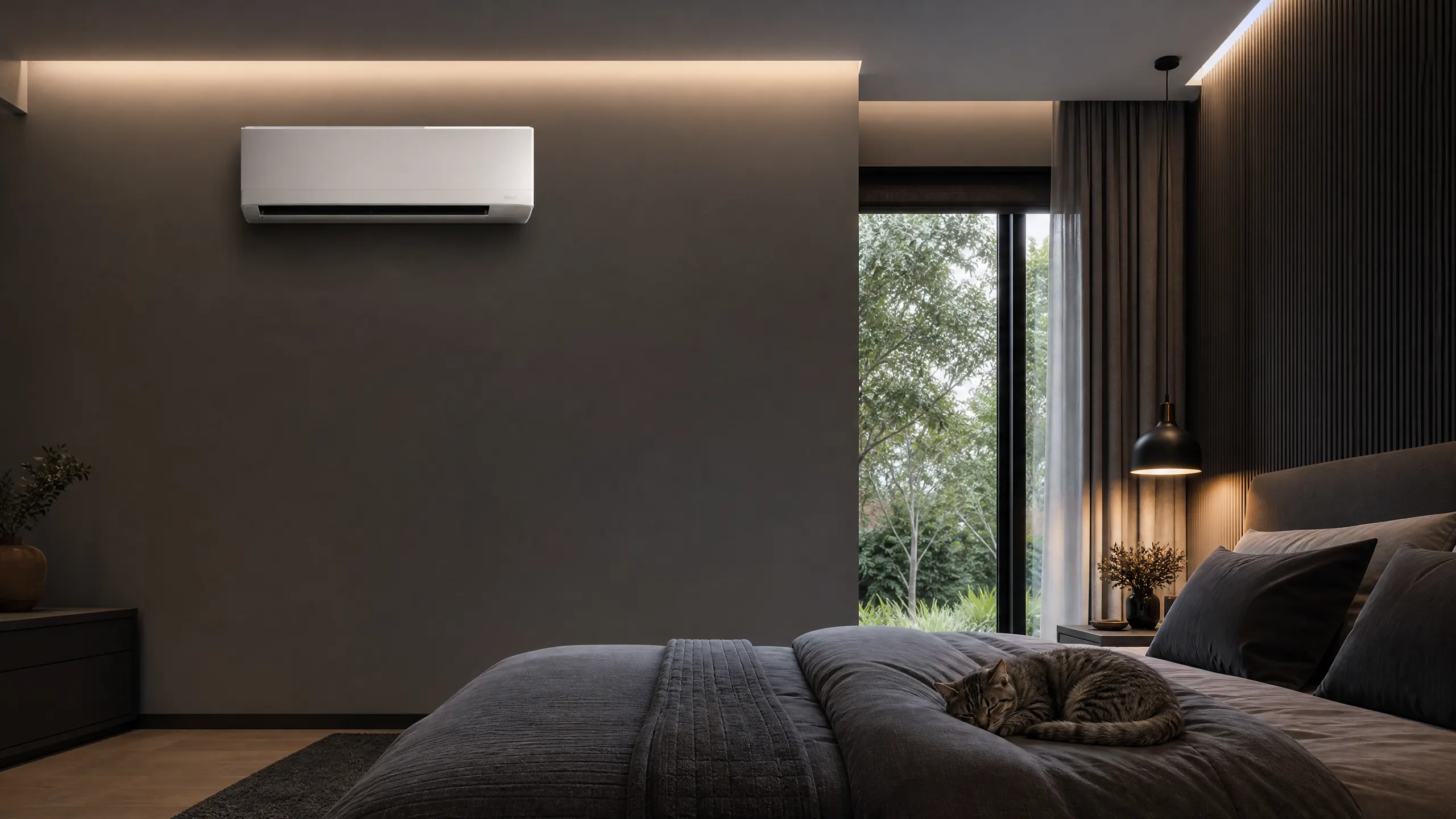




A tabby cat sleeps curled up on a dark grey bed in a modern bedroom equipped with a wall-mounted air conditioning unit.

Mini Split Installation in Waynesville, NC

Tell us about the job

Takes about a minute. No obligation.

New system or replacementMini-splitHaywood County, NC
Step 1 of 2

What ZIP code is the job in?

Most homes in Haywood County heat with electricity, at 61.2 percent. A mini split runs on electricity too, so it fits right into how this county already heats its homes. Fuel oil and propane heat a good share of the rest, and for those homes a mini split means a different way of heating altogether, not just a new unit doing the same job. If your home already runs on electric heat, this is a straightforward swap.

8 months
October through May, your system heats
1 months
July through July, it cools
26°F
the average winter night it heats against
76°F
the average summer afternoon it cools against
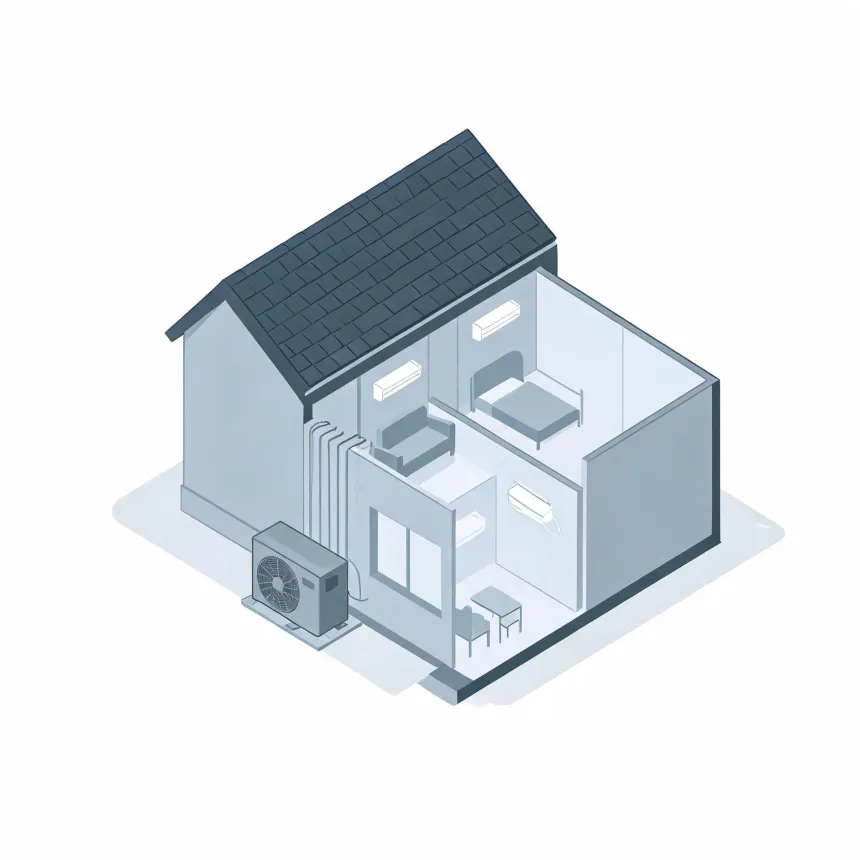
Isometric illustration of a cutaway house with a dark shingled gable roof, showing interior rooms with a bed, chairs and table, three wall-mounted mini-split indoor units connected by line sets to an outdoor condenser unit on a pad outside.
Your system heats October through May and cools July through July.

NOAA nClimDiv, 1991–2020 normals

Cooling in Haywood County only runs in July.

Get a mini split installed by June and it's ready before the one month it needs to work.

One month of real heat means this system won't be pushed hard

Cooling runs July through July
Summer afternoons average 76°F
18 damaging wind events from 2015 to 2024

Electricity here runs 14.13 cents a kilowatt-hour, cheaper than most of the country. That changes how to think about a mini split's efficiency rating. A higher SEER2 model costs more up front and takes longer to earn that back when power is already cheap. It still matters, since a mini split that holds up and keeps the house comfortable is worth more than one that's rated a point or two higher on paper. In a place where cooling only runs one month a year, getting a unit that fits the house right counts for more than chasing the top efficiency number.

Any system going in here has to clear 14.3 SEER2 and 7.5 HSPF2

Any mini split going into a Haywood County home has to meet 14.3 SEER2 for cooling and 7.5 HSPF2 for heating, the federal minimum for split-system heat pumps. Zone 4A asks real work of both sides of the unit, the cooling and the heating, so that floor is there for a reason. A federal tax credit is available on top of that for qualifying equipment.

Find a contractor
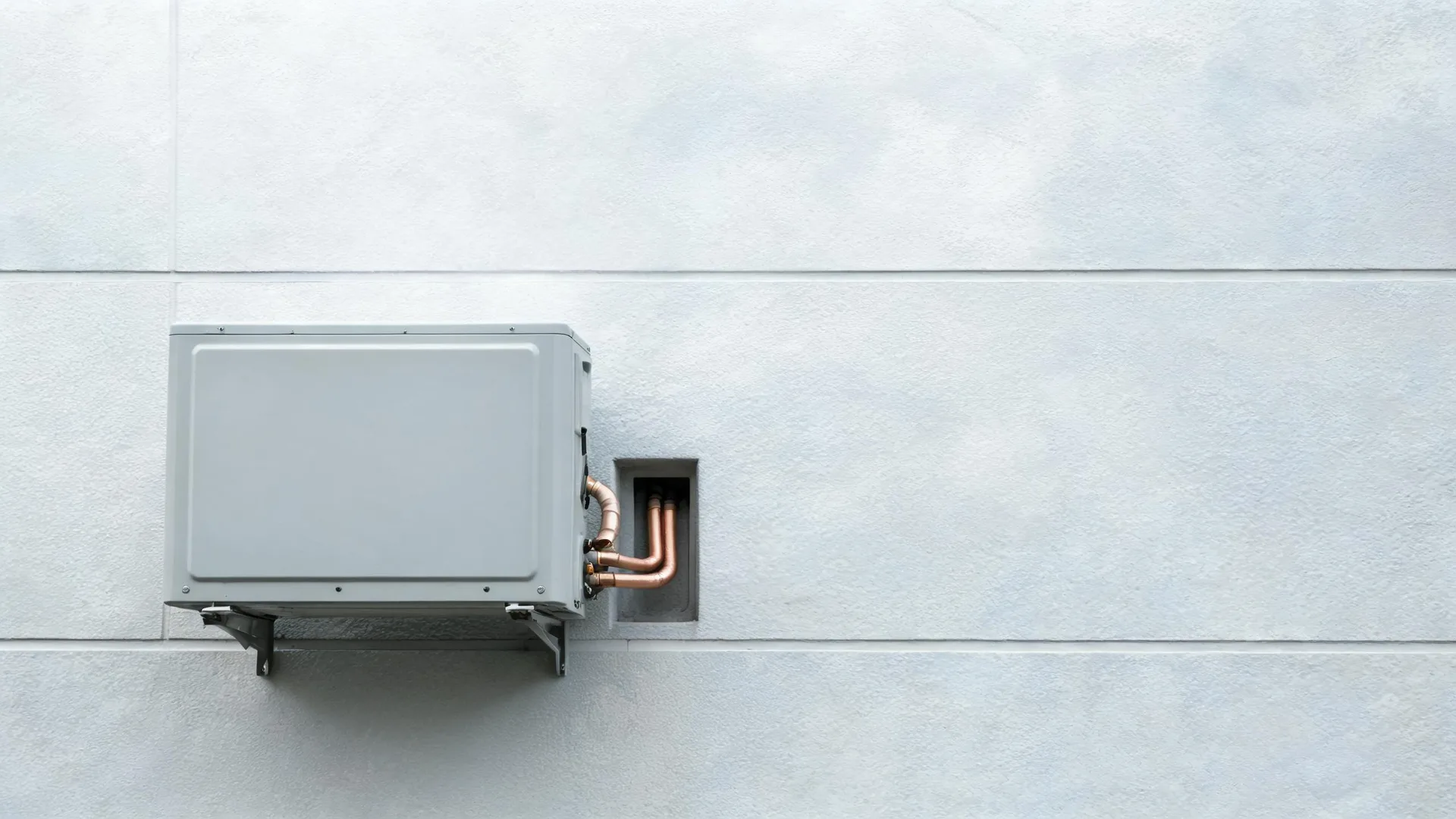
A white outdoor air conditioner condenser unit mounted on metal wall brackets against gray horizontal siding, with a blue sky and white clouds behind it.

The house doesn't change what the unit needs to be

Half the homes in Haywood County were built in 1983 or earlier, half in 1983 or later. Neither age calls for a bigger or higher-end unit. What sizes a mini split is the room it's heating and cooling, not the age of the house around it. Mobile homes make up 17.1 percent of the housing here, and those call for the right line set and mounting approach, not different equipment. A standard mini split, sized to the space, holds up over the hours it runs whether the house is old or new.

The old equipment doesn't stay behind

If a furnace, boiler or window units are being replaced, that equipment comes out as part of the job. A furnace or boiler gets disconnected from its gas line or oil line and removed. Window units just get pulled and hauled off. None of it gets left in a closet or crawlspace for later.
The old fuel source needs its own shutoff

A mini split doesn't use the gas line or oil tank that used to feed the heating system. That line or tank needs to be properly capped or shut off, not just left connected with nothing drawing from it. An abandoned gas line is a safety problem, not a convenience for later.

SEER2 and HSPF2 measure how much heat a unit moves for the power it draws, one rating for cooling and one for heating, not how big or strong the unit is. A higher number means less waste doing the same work, nothing more. The rating is measured under fixed test conditions, not the conditions inside any particular room, so a unit sized wrong for the space will still run poorly no matter what its label says. It also doesn't account for installation. A unit with a strong rating still depends on the line set, the mounting and the refrigerant charge being done right, or it won't perform the way its label promises.

Installation starts with the outdoor unit and where the line set will run between it and each indoor head. That path gets planned before anything gets mounted, since the line set carries refrigerant and that run affects how well the system performs once it's charged. The indoor head gets mounted on an interior wall, usually high up, and a small hole gets drilled through the wall to pass the line set, a drain line and electrical wiring out to the condenser. Once everything is connected, the line set gets evacuated to pull out air and moisture before refrigerant is released into it. That step matters more than people expect. Moisture or air left in the line set will cause problems down the road that have nothing to do with how the unit was built.