






Can a mini split cool a whole house in Charlotte, NC

Skip collecting and comparing quotes for the new mini split.

Skip the search

A single mini split can cool a whole house, but only if it's sized and placed for that job. One indoor head cooling a bedroom won't touch the rest of the house. What works is a multi-zone system, with a head in each main room, matched to the square footage and layout of your home. In Charlotte, summers run long and stay humid from May into September, so undersized equipment runs constantly and still leaves rooms warm. A properly designed system handles that load room by room instead of pushing air through one or two spots and hoping it spreads. This is a load calculation and layout job, not a matter of buying a bigger unit. A contractor who installs these year after year in homes around here knows how many zones a house needs and where they have to go.

What does running a mini split year-round actually cost you in Mecklenburg County?

  • Cooling runs May through September

    Five months of cooling means your outdoor unit and every indoor head run long hours, May through September. A whole-house system has to hold up to that.

  • Heat runs October through April

    Seven months of heat is longer than it cools here, and most homes run that heat on electricity. A mini split sized for the whole house carries that load too.

  • Power here costs 13.33 cents per kilowatt-hour

    At 13.33 cents per kilowatt-hour, a system that's sized right and placed right in each room is what keeps that rate from turning into a high bill.

NOAA nClimDiv 1991-2020 · EIA-861 2025

How a Multi-Zone System Works

  • A multi-zone system runs one outdoor condenser connected by refrigerant lines to a separate indoor head in each room.
  • Each indoor head has its own thermostat and its own inverter-driven blower, so one room can run while another sits off.
  • The outdoor unit's compressor adjusts its speed to match the combined demand from every head calling for cooling at once.
  • Line sets carry refrigerant between the outdoor unit and each head, and a condensate line drains the moisture each head pulls out of the air.
  • Most outdoor condensers support a fixed number of indoor heads, so the whole-house layout has to be decided before installation, not added onto later.
  • A head sized too small for its room will run constantly and still lose ground on the hottest days in July and August.

A whole-house mini split is really one outdoor condenser serving several indoor heads, one per room, each tied back by its own refrigerant line. The condenser holds the compressor, and that compressor does not just switch on and off. It ramps its speed up and down depending on how many heads are calling for cooling and how hard each one is working. Three rooms asking for cooling on a mild April afternoon pulls a different load than all five rooms running flat out in August, and the compressor adjusts to that in real time.

Each indoor head is its own unit in miniature. It has its own thermostat, so the room it serves can be set differently from the room next door, and its own blower, driven by an inverter rather than a simple on-off motor, so it can run at a low steady speed instead of cycling hard. Every head also needs somewhere for the water it pulls out of the air to go, so a condensate line runs alongside the refrigerant lines back out of the house.

None of this is something you add to as you go. A given outdoor condenser is built to support a set number of indoor heads, so the number of rooms and the size of each head has to be worked out before anything gets mounted. A head that's too small for its room will run nonstop in July and still lose ground.

A white wall-mounted mini-split air conditioner on a beige interior wall, with a cream curtain and window at left, a potted plant on a ledge at right, and a wood floor below.
One head in every room it needs to reach, sized for that room, keeps the whole house even on an August afternoon.
A dusty, discolored white wall-mounted mini-split air conditioner unit installed high on a plain interior wall below a white ceiling molding.
A mini split caked in dust like this is losing airflow, and a system fighting itself can't hold a whole house to temperature.
A man with graying curly hair and a dark green sweater sits on a gray sofa in a sunlit living room, looking off to the side, with a framed picture, shelving, an armchair and a window with sheer curtains behind him.
A middle-aged man with graying hair and a short beard sits on a blue sofa in a living room, looking toward a window, with a bookshelf, lamp and framed picture in the background.
A gray-haired man in a dark blue sweater sits on a light gray sofa in a sunlit living room, looking off to the side, with a potted plant, shelving unit, and large glass doors behind him.
A gray-haired man in a dark sweater sits on a light gray sofa in a living room, looking toward a sunlit window with trees outside.

One Room or the Whole House

One zone, one room

  • A single indoor head covers the room it's mounted in and maybe the one next to it, not the house.
  • Rooms down the hall or upstairs stay off the airflow path and sit warmer all summer.
  • Closed doors and interior walls stop the thrown air before it reaches other rooms.
  • Upfront cost is lower because there's one indoor head and one smaller outdoor condenser.
  • On a mild April day it may feel like enough, then falls short once July and August settle in.

Multi-zone, whole house

  • A head in every main room means every room has its own thermostat and its own airflow.
  • Sizing is done room by room, so bedrooms, the living room and the kitchen each get matched to their actual load.
  • Rooms that sit empty during the day can run warmer while occupied rooms stay set, without one system fighting the whole house.
  • The outdoor condenser is sized for the sum of every zone running at once, not just one room.
  • Costs more to install than a single head, since it means more indoor units, more refrigerant line and a larger outdoor unit.
  • Holds the house even through a muggy Mecklenburg County afternoon in August because no single room is carrying the rest.
A white wall-mounted mini-split air conditioner near the ceiling of a room with light gray walls, white crown molding, and a beige curtain at the left edge.

Sized and placed right

A head mounted high on the wall, pulling air across the whole room, is what a correctly sized system looks like day to day. No short cycling, no struggling. This is what every room should have if a mini split is going to carry the whole house through August.


A dusty beige wall-mounted mini-split air conditioner indoor unit installed high on a plain light-colored wall below the ceiling.

Neglected and failing

Dust caked across the coil and a dark stain spreading up the wall mean the unit's been leaking condensate and starved of airflow for a while. A head in this shape can't cool the room it's in, let alone carry its share of the house.

Why does one room stay cold while the rest of the house doesn't?

If you've got one indoor head mounted in the living room and the rest of the house runs on ducts or window units, you already know the pattern. The living room holds 72 degrees. The bedrooms down the hall climb into the upper 70s by afternoon, and anything upstairs is worse. You hear the outdoor unit working hard and still feel warm air drifting out of the vents elsewhere, or no air at all in rooms it was never meant to reach. Closed doors make it worse. Left alone, the system you have keeps doing exactly what it was installed to do, cool one zone, while the rest of the house falls on window units, fans, or a furnace blower moving air it can't cool.

A white wall-mounted mini-split air conditioner indoor unit installed near the ceiling on a plain light-colored wall, with its horizontal outlet vent and louvers visible.
Before you get your mini split installation
A white wall-mounted mini-split air conditioner on a beige interior wall, with a curtained window on the left and wood flooring with a light rug below.
After you get your mini split installation
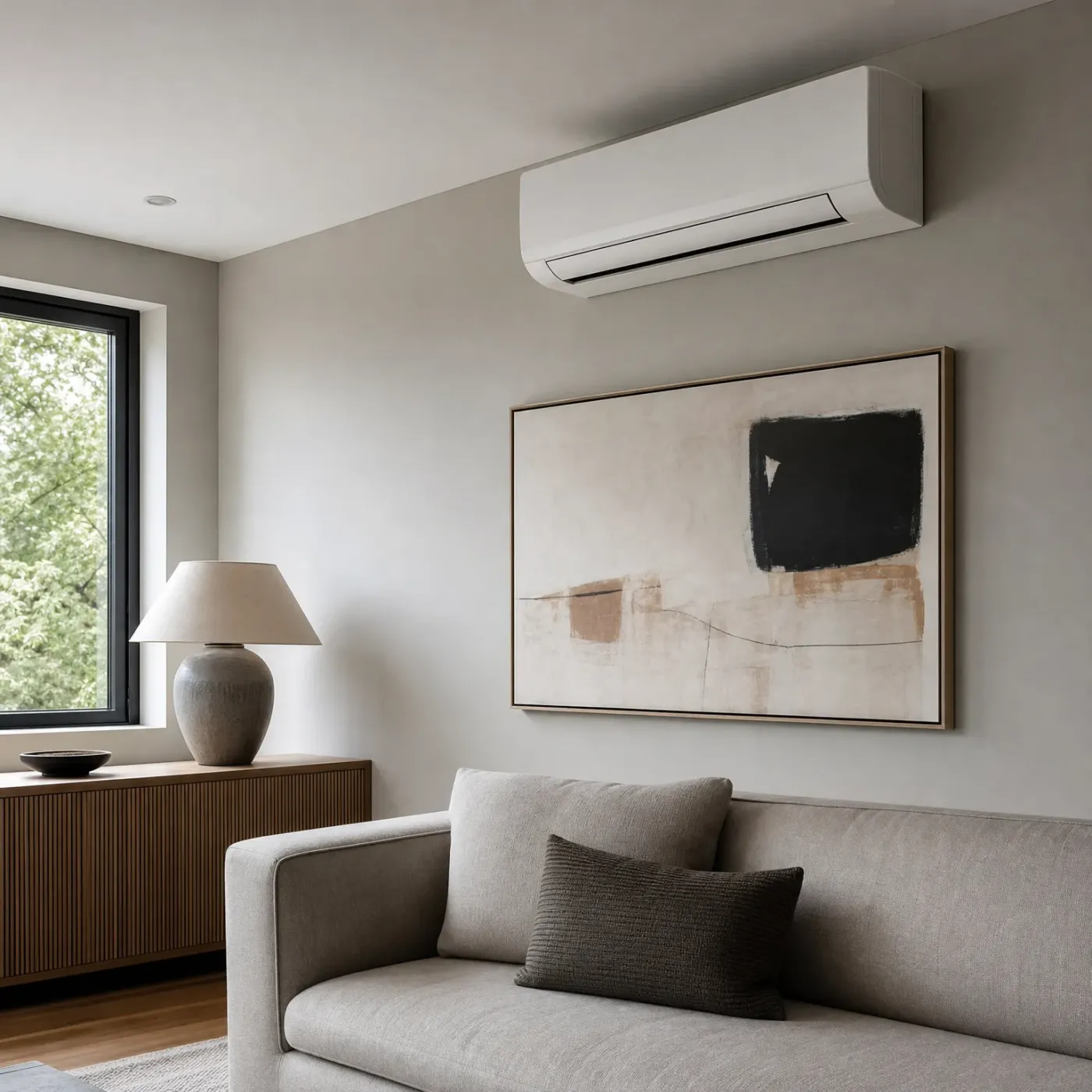
Living room with a wall-mounted mini-split air conditioner near the ceiling, a large framed abstract painting, a gray sofa with a dark cushion, a ceramic table lamp on a wood sideboard, and a window showing green trees.

No calling every shop in Mecklenburg County

A licensed installer who works in Mecklenburg County gets your project.

Skip the round of in-home estimates for a new mini split.

Skip the calls

It costs nothing to send, and you don't have to hire anyone.

Cooling runs May through September

Five months of cooling is five months every indoor head has to earn its keep, not just the one in the living room. A multi-zone system sized for the whole house holds every room through that stretch instead of just the one it's mounted in.

NOAA nClimDiv 1991-2020

Adding a head room by room

Some homeowners start with one zone and plan to add a head in another room next year, then another after that. It can work, but the outdoor condenser has to be sized for the full system from the start, not just the first head. Add zones to a condenser picked for one room and every head on it will struggle on the hottest afternoons. Get the load calculation done for the whole house up front, even if the install happens in stages, and the system you end up with actually matches the house it's cooling.

Installing the whole system at once

A multi-zone system installed in one job gets sized against the whole house from day one: every room's square footage, every head's placement, the condenser matched to all of it together. There's one install, one crew in the house, one set of refrigerant lines run. Every room comes online at the same time, so you're not living with three cool rooms and two warm ones while you wait on a second phase. For a house that needs the same coverage either way, this is the more direct path to it.

A gray-haired woman in a white top and gray cardigan sits in an upholstered armchair indoors, looking toward a window with a green potted plant, with a bookshelf behind her.
A woman with her hair in a bun sits wrapped in a gray knit blanket on a couch, eyes closed, with a young boy asleep against her shoulder, beside a lit table lamp in a dim room.
  1. A load calculation sizes the system room by room, not by total square footage alone.

  2. Refrigerant line sets run from the outdoor condenser to each indoor head's location.

  3. An electrician runs the dedicated circuit the outdoor condenser needs to operate.

  4. Each indoor head mounts high on the wall and connects back to the line set.

How does the outdoor unit know how much to run for each zone?

You've got a multi-zone mini split or you're looking at one, and you're picturing one outdoor condenser trying to keep up with heads running in different rooms at different times. It seems like it would either overwork itself or shortchange whichever room asked last. The logic behind how the condenser splits its output isn't obvious from looking at it, and it matters for whether the system actually holds every room through a Charlotte summer.

The compressor adjusts its speed to match total demand

The outdoor unit runs an inverter-driven compressor, not a fixed-speed one. Each indoor head reads its own room temperature and sends the outdoor unit a signal for how much refrigerant it needs right now. The compressor adds up those requests and speeds up or slows down to supply the total, then a set of electronic valves at the outdoor unit meters refrigerant to each line based on what its head asked for. A bedroom holding steady at night might ask for almost nothing while a living room full of people in the afternoon asks for a lot, and the compressor shifts between those loads continuously rather than cycling fully on and off. That's what lets one room run hard while another sits idle without either one losing out.

A single-story brick house with a shingled roof and white-framed windows, set behind a mown lawn and an asphalt street, flanked by large deciduous trees under a bright hazy sky with sun flare.

Weather service data puts the summer dew point here at an average of 67°F across June, July and August. That's thick, heavy air, the kind that sits on you the second you step outside. A mini split sized for the whole house has to pull that moisture out of every room, not just cool the air, and that's harder work than dropping a few degrees. If one zone is undersized, you'll notice it as dampness more than heat, a bedroom that feels sticky even when the thermostat says it hit the set point.

NASA POWER T2MDEW

A closed silver laptop and a light ceramic mug of dark coffee on a wooden table, with a wooden chair, kitchen counter with sink, pendant lamp, potted plant, and a window showing a sunset sky in the background.

A mini split can cool your whole house

It takes a head in every room that needs one, an outdoor unit sized for all of them together, and a load calculation that gets the sizing right before anything goes on the wall. Skip any of that and you end up with the same complaint: one cold room and a house that stays warm around it. Get it right and there's no reason the bedrooms and the upstairs can't hold the same temperature as the living room, straight through a Charlotte summer.

Finding someone to size and install it is the part you don't have to carry on your own. That usually means calling around to a handful of installers, explaining your house and your rooms to each one, then sitting with a stack of quotes trying to tell a system sized for the whole house apart from one that isn't. You'd be working with a local installer who sizes these systems for Mecklenburg County homes all season, not a stranger reading your square footage off a form.

A wooden table holding a stone vase with a bare branch, two stacked books and a small dark bowl, beside a window with green foliage outside and a sofa in the dim background.
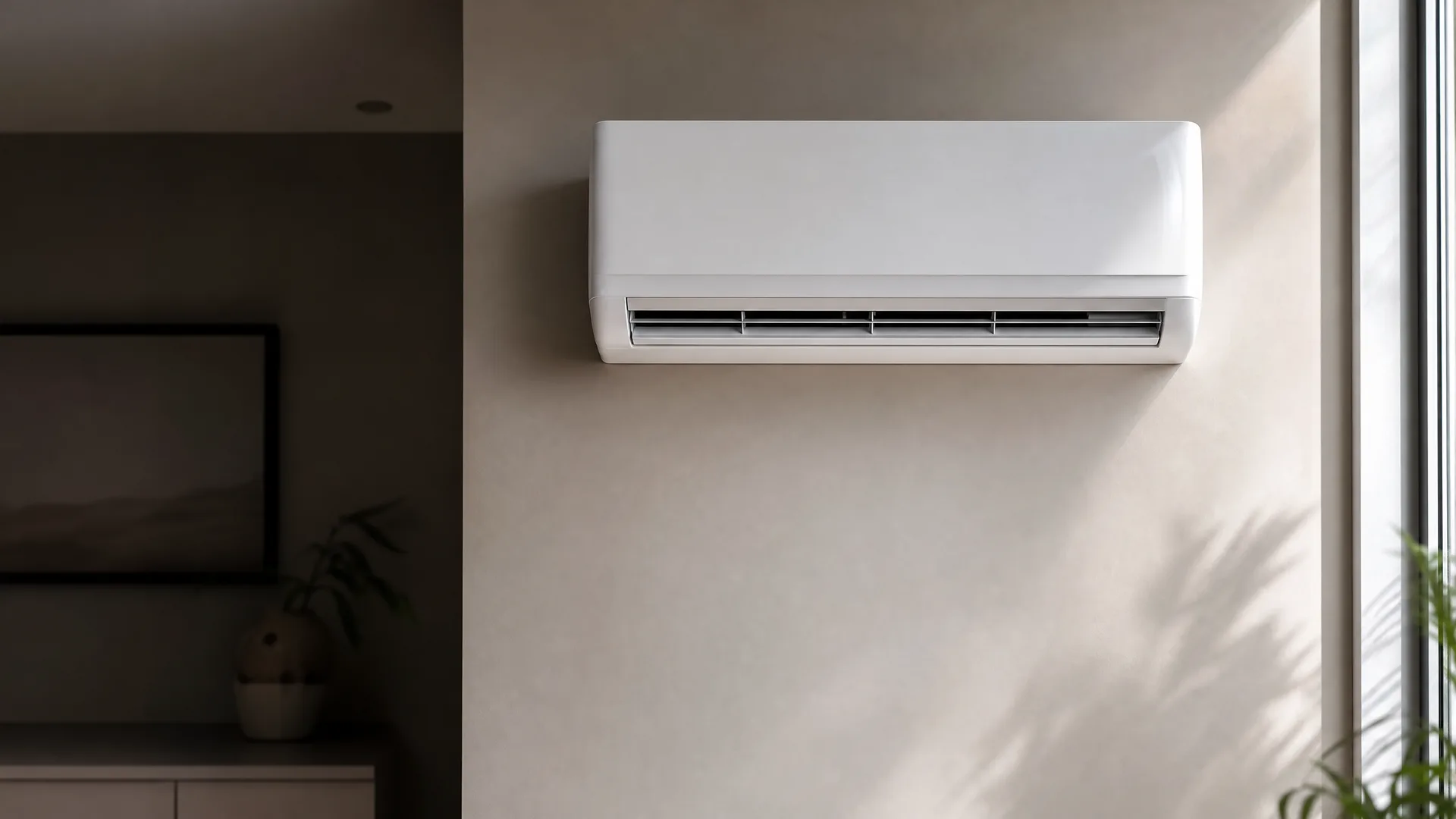
A white wall-mounted mini-split air conditioner on a plain beige interior wall, with a framed picture and potted plant in the dim left background and sunlit window with foliage at right.

No quotes to chase

New system or replacementMini-splitMecklenburg County, NC
Step 1 of 2

What ZIP code is the job in?