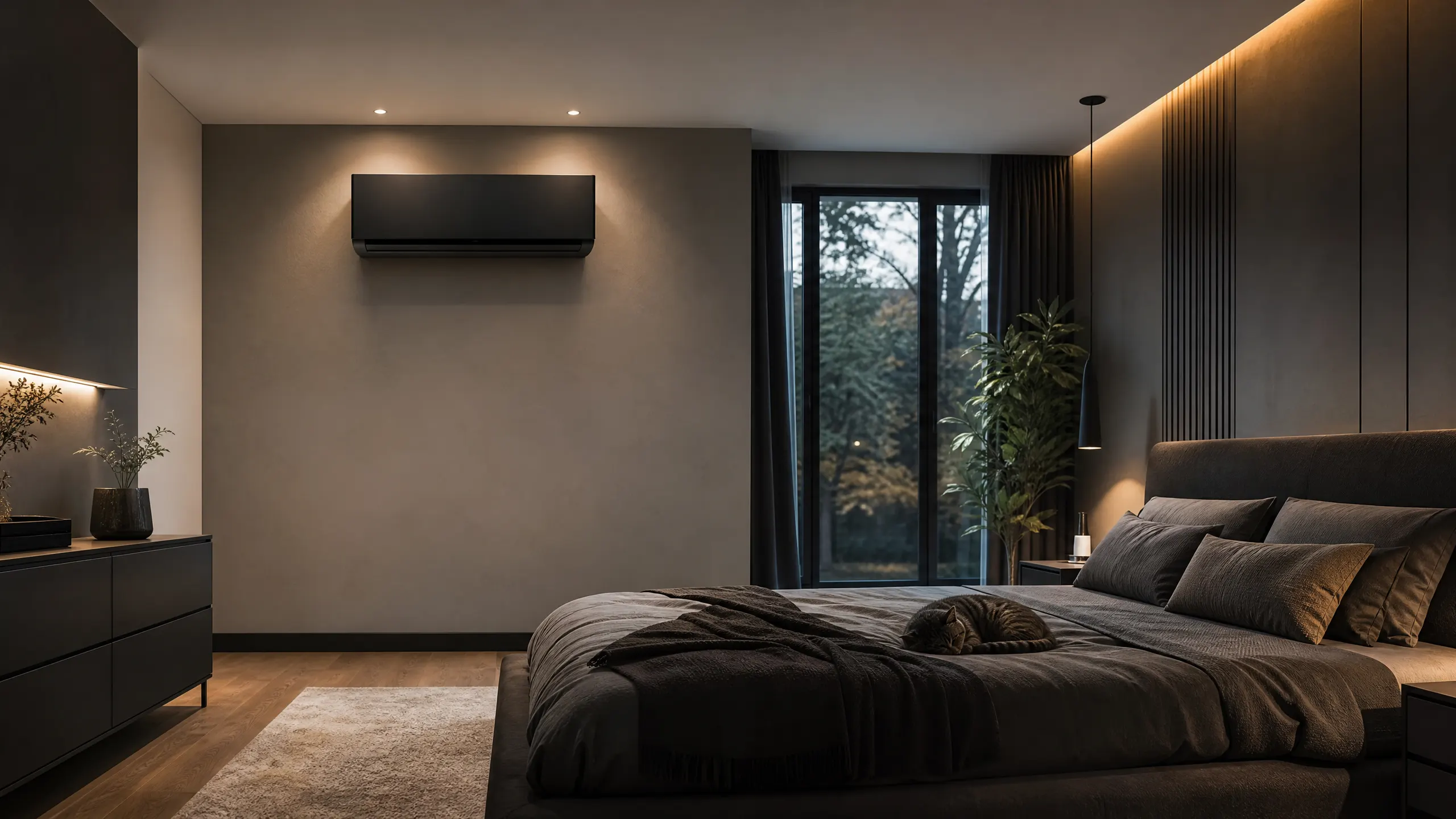





A dark, minimalist bedroom with a king-size bed, wall-mounted air conditioning unit, and large windows, with a cat sleeping on the duvet.

Mini Split Installation in Thomasville, NC

Tell us about the job

Takes about a minute. No obligation.

New system or replacementMini-splitDavidson County, NC
Step 1 of 2

What ZIP code is the job in?

Davidson County saw 169 severe weather events between 2015 and 2024. Most of that was damaging wind, 129 times in that same span, with 26 hail events and a couple of tornadoes mixed in. An outdoor condenser sits outside in all of it, exposed to wind-driven debris and hail. Across North Carolina, a quarter of households went at least a full day without power in 2024. A mini split won't run without power, so an outage means no heat and no cooling until it's back on.

7 months
October through April, your system heats
5 months
May through September, it cools
31°F
the average winter night it heats against
87°F
the average summer afternoon it cools against
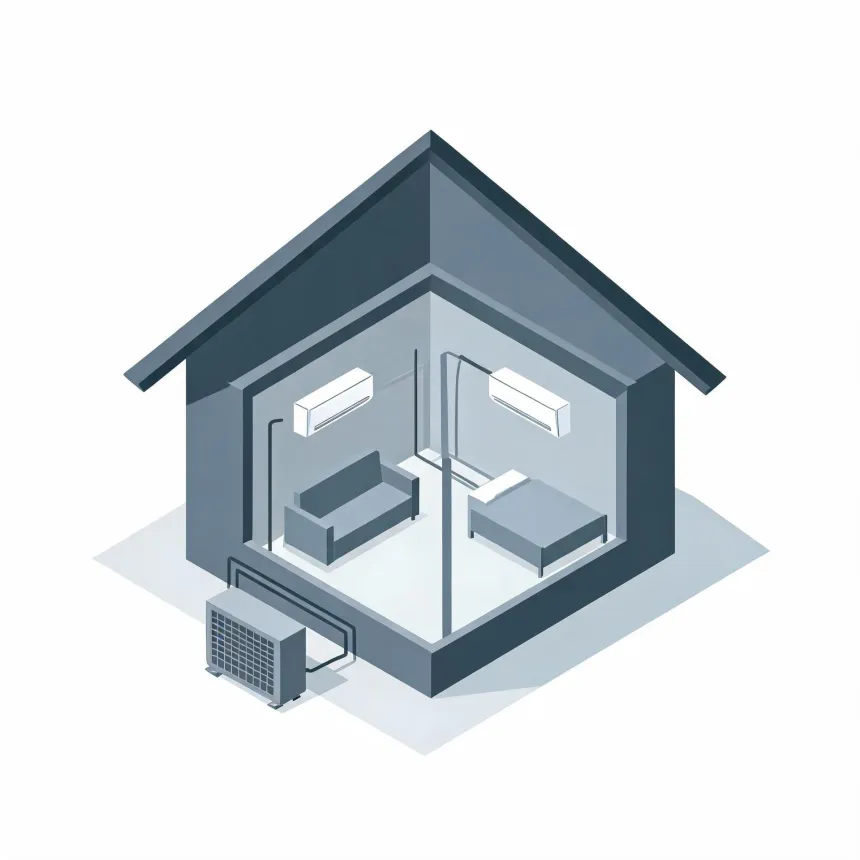
Isometric cutaway illustration of a small gray house showing two rooms, one with a sofa and one with a bed, each with a wall-mounted indoor air conditioning unit connected by line sets to an outdoor condenser unit on the ground outside.
Your system heats October through April and cools May through September.

NOAA nClimDiv, 1991–2020 normals

Electricity heats 71% of homes in Davidson County.

A mini split runs on electricity too, so it fits right into a home already wired for it.

April puts a new system in before the heat and the storms that come with it arrive

Cooling runs May through September
Summer afternoons average 87°F
129 damaging wind events from 2015 to 2024

Davidson County falls in climate zone 3A, warm and humid with a long cooling season. Any new mini-split sold here has to meet the federal minimum for that kind of system: at least 14.3 Btu of cooling for every watt-hour it uses, and at least 7.5 Btu of heating for every watt-hour in winter. That standard applies to split-system heat pumps generally, and a ductless mini-split falls under it the same as any other. A unit built to just clear that line will cost less to run than one built years before it. Ask what SEER2 and HSPF2 numbers the equipment carries before it goes in, since those are the ratings that show whether it meets the current minimum or beats it.

Plan for the outage before the unit goes in

The outdoor unit has to go somewhere it won't take a direct hit from wind-driven debris, and the installer can site it with that in mind before it's bolted down. Worth asking too what happens to heat and hot water if the power drops. Backup power or not, that's a decision to make at install, not after the lines are already down.

Find a contractor
A man in a dark shirt and tan pants carries a waxed canvas tool bag up porch steps toward an orange front door, with a potted olive tree beside the entry.
A white outdoor air conditioner condenser unit mounted on metal wall brackets against gray horizontal siding, with a blue sky and white clouds behind it.

The number on the label is a starting point, not a promise

The rating on the label is measured in a lab, at one set indoor and outdoor temperature, with a clean filter and brand new equipment. It tells you how the unit is built, not how it will perform on a long run in real weather. Output drops as the outdoor temperature moves away from that test point, and it drops more on the heating side than the cooling side, since a heat pump has to work harder to pull warmth out of cold air than to move heat out of a room. A unit built to just clear the minimum has less room to spare when conditions get hard. The part doing the most work through all of this is the compressor, cycling on and off every day for years. A system rated well above the minimum asks less of that compressor on an ordinary day, not just a hard one, and that matters more over the life of the equipment than the number on the label ever will by itself.

The old equipment comes out first

If there's a window unit or an older ductless system in place, the installer disconnects the lines, recovers the refrigerant, and pulls both the indoor head and outdoor unit off the wall. Refrigerant doesn't get vented into the air. It gets captured and dealt with properly, which is part of why removal is a job for a licensed installer rather than a do-it-yourself project.
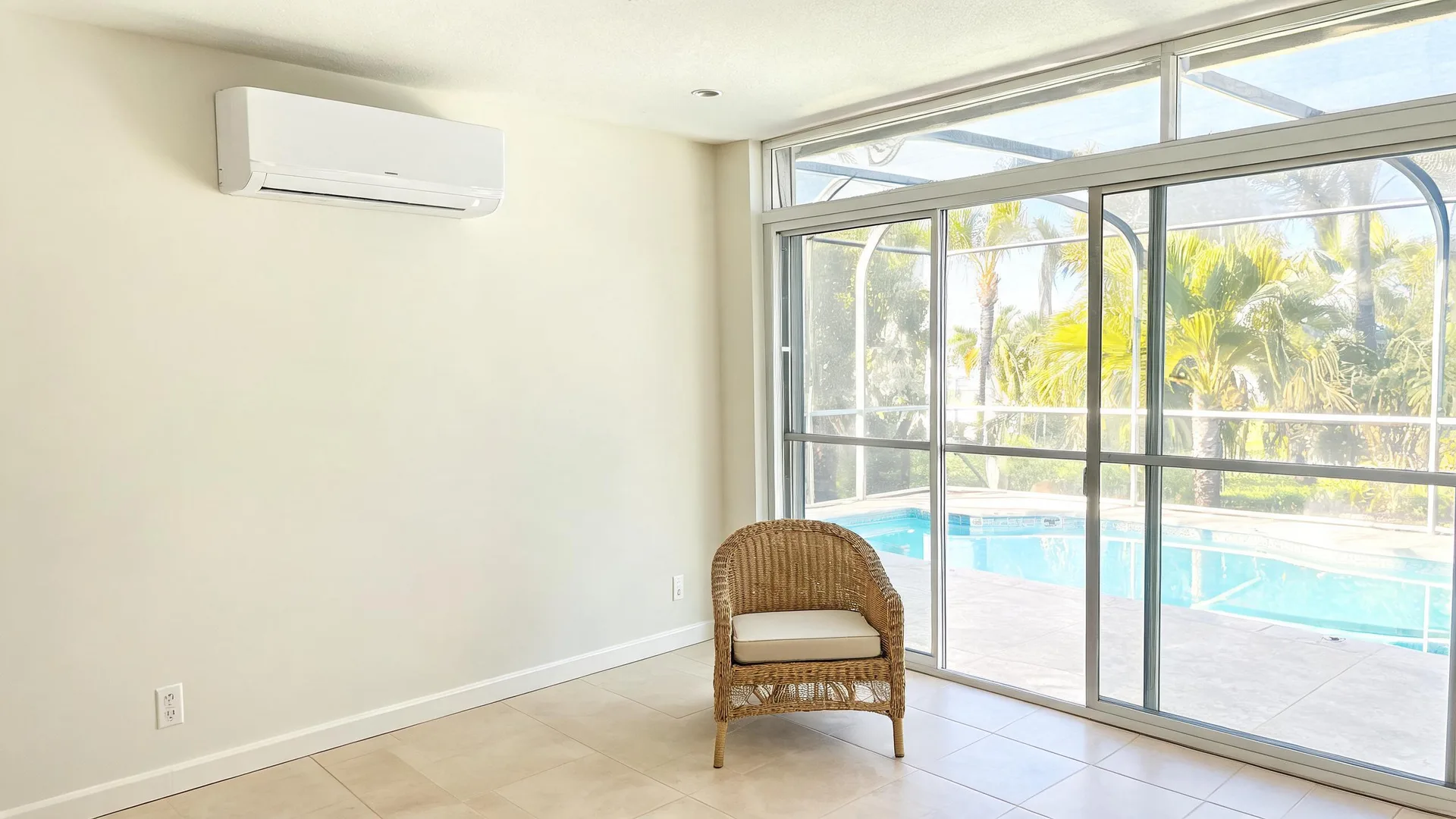
The wall and the wiring need a look

Wherever the old line set ran through the wall leaves a hole that needs sealing once the new lines go in, and old electrical whips or disconnects get checked rather than assumed good. Reusing a line set or a mounting bracket from the old system is sometimes possible, but only after the installer confirms it matches what the new equipment calls for.

Comparing two systems on paper only goes so far. Ask how many indoor heads the outdoor unit can run and whether this install uses all of that capacity or leaves room to add a head later. Ask what the line set length is rated for, since every system has a maximum distance between indoor and outdoor units before performance drops. Ask whether the install is single-zone or multi-zone, because a multi-zone system lets each room run at a different temperature while a single-zone only controls the one space it's in. Ask what the warranty covers on the compressor versus the rest of the parts, since compressor coverage often runs longer than coverage on everything else. Ask who services the brand locally, because a system nobody nearby is trained on means a longer wait when something needs a look.

Installation starts with where the lines run. The installer sets the indoor head on an interior wall, usually high up, with a clear path back to where the outdoor unit will sit. A small hole gets drilled through that wall for the line set, the refrigerant lines, drain line and power wiring bundled together and run outside. The outdoor unit gets mounted on a pad or bracket, then the lines get connected at both ends. After that the system gets evacuated with a vacuum pump to pull out air and moisture before refrigerant goes in, since either one left in the lines will cause problems later. Once it's charged, the installer runs the system through both heating and cooling to check the temperature split and make sure the head is actually doing what the thermostat tells it to do.