Electricity here runs 14.86 cents a kilowatt-hour
Most homes in Chatham County heat and cool with electricity, so that rate hits every bill all year. A mini-split that wastes power costs you something every time it cycles on.
Takes about a minute. No obligation.
Most homes in Chatham County heat and cool with electricity, so that rate hits every bill all year. A mini-split that wastes power costs you something every time it cycles on.
A mini-split installed for this house and sized right will pull less power to do the same job as one that's oversized or poorly matched. In a county paying this rate, that difference shows up month after month.
NOAA nClimDiv, 1991–2020 normals
Five months of cooling, with afternoons averaging 88°F and air that sits heavy at a 66°F dew point.
A mini-split sized for this heat has to pull that moisture out of the air all summer, so sizing it wrong costs you from the first day it runs.



Chatham County falls under climate zone 3A, and any mini-split installed here has to meet the federal efficiency minimums for that kind of system. For cooling, that means at least 14.3 Btu of heat removed for every watt-hour of power it draws. For heating, at least 7.5 Btu for every watt-hour. Those numbers set the floor, not a target, so a unit that barely clears them is still a legal install. The federal tax credit is there for systems that beat the floor, not just meet it.
Get the sizing and the install right and that rate works for you instead of against you, bill after bill. Get a quote for this house.
Find a contractor
Cooling starts in May here and runs through September, five months of pulling moisture out of the air every day. Get the install done in April and it's already running before the first hot stretch hits. Wait and you're booking around whatever crew has an opening, probably with the heat already on you. Winter asks just as much of this machine. Overnight lows average 32°F across December, January and February, and the mini-split is what keeps the house warm those nights. An install timed for April, before either season needs it, means nobody is sizing it in a hurry.
A contractor should measure the house room by room before naming a size, looking at window area, insulation and layout. If someone quotes a size before seeing the house, or over the phone, that number is a guess. The right size comes from that room by room math, not from the size of the old system or a rule of thumb.
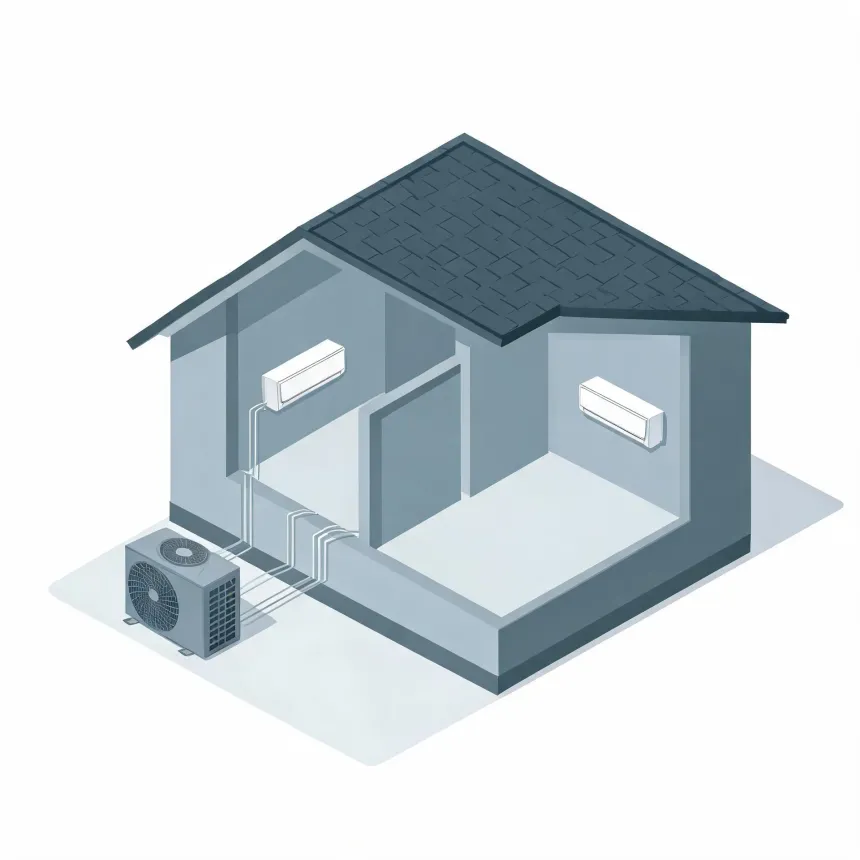
A mini-split system is only as good as the pairing between the compressor outside and the head or heads inside. Mismatched equipment can run constantly without reaching the temperature you set, or short cycle and wear out early. Ask for the model numbers of both halves and whether they're rated to work together, not just bolted together.
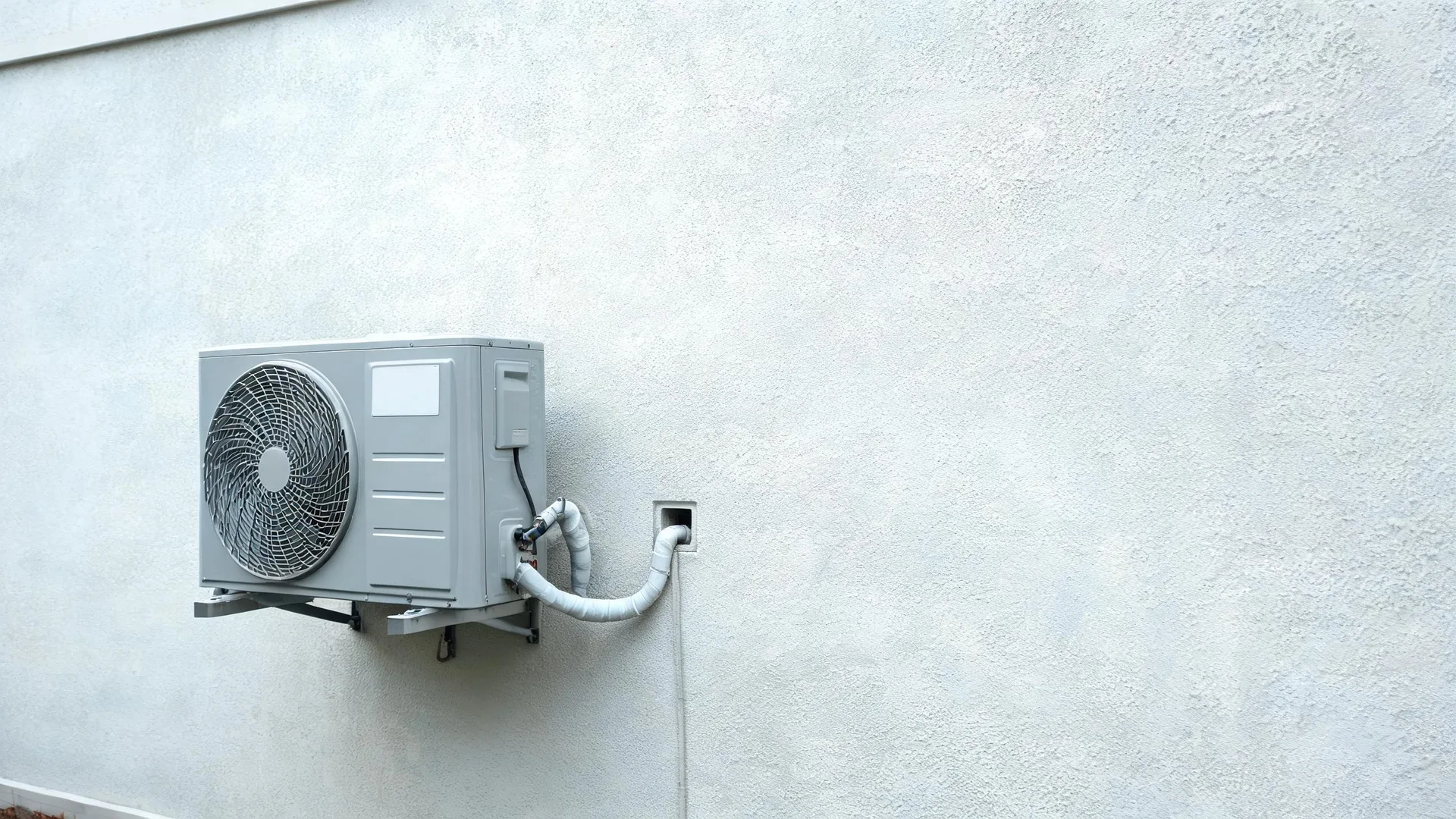
If the old system is a central system being replaced by a mini-split, the ductwork usually stays in the walls or attic and just stops being used, unless it's being pulled out as part of the job. If it's an older mini-split coming out, the outdoor compressor and the indoor head both have to come down, and the refrigerant inside that line set has to be recovered into a tank rather than vented, because venting refrigerant is against the law. Whoever pulls the old unit should cap or remove the line set and patch the wall sleeve where it passed through, not leave it open to the weather. Ask what happens to the old unit once it's out. Some of it can be recycled for the metal and copper, and a contractor who handles removal regularly will already have a way to deal with it instead of leaving it for the homeowner to haul off.
Chatham County logged 149 severe weather events between 2015 and 2024, and 125 of those were damaging wind. That matters for a mini-split because the compressor sits outside, exposed to whatever comes through. Hail has hit the county 12 times in that same stretch, and a tornado touched down once. Ask the installer about a cover or cage for the outdoor unit and where it gets placed, away from falling limbs if there's a choice. Across North Carolina, a quarter of households lost power for a day or more in 2024, and a mini-split with no backup plan means no heat or cooling until the lines come back up.