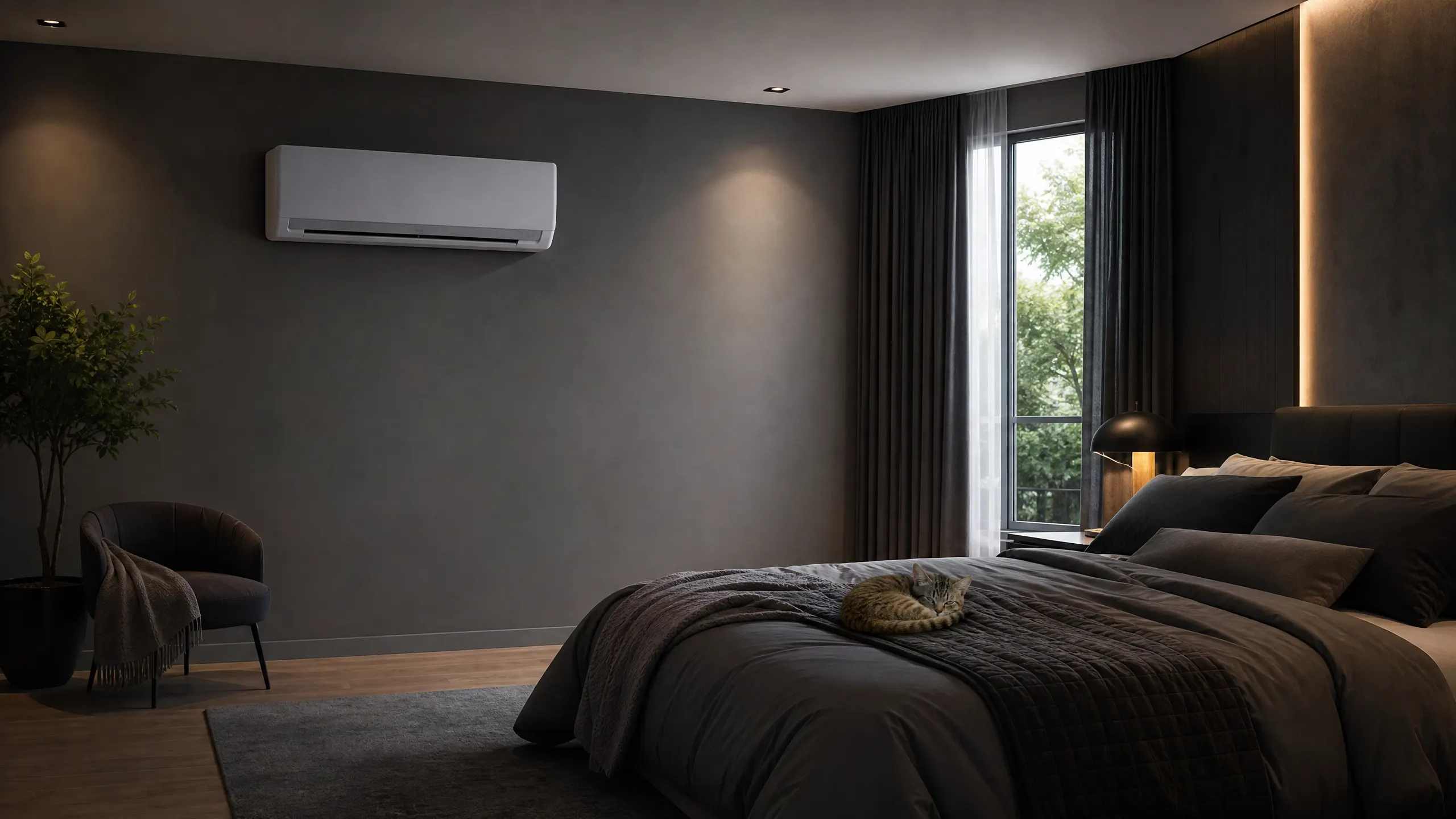





A tabby cat sleeps on a large bed in a dark, modern bedroom equipped with a wall-mounted air-conditioning unit.

Mini Split Installation in North Wilkesboro, NC

Tell us about the job

Takes about a minute. No obligation.

New system or replacementMini-splitWilkes County, NC
Step 1 of 2

What ZIP code is the job in?

Wilkes County saw 194 severe weather events between 2015 and 2024. Most of that was damaging wind, 147 times in that span, with 22 hail events and 6 tornadoes mixed in. A mini split's outdoor unit sits outside year round, taking whatever comes through. Statewide, a quarter of households went at least a day without power in 2024, and a day without power here means no heat and no hot water for as long as it lasts. Any system going in should account for both: something to shield the outdoor unit, and a plan for what happens when the power drops.

7 months
October through April, your system heats
4 months
June through September, it cools
29°F
the average winter night it heats against
85°F
the average summer afternoon it cools against
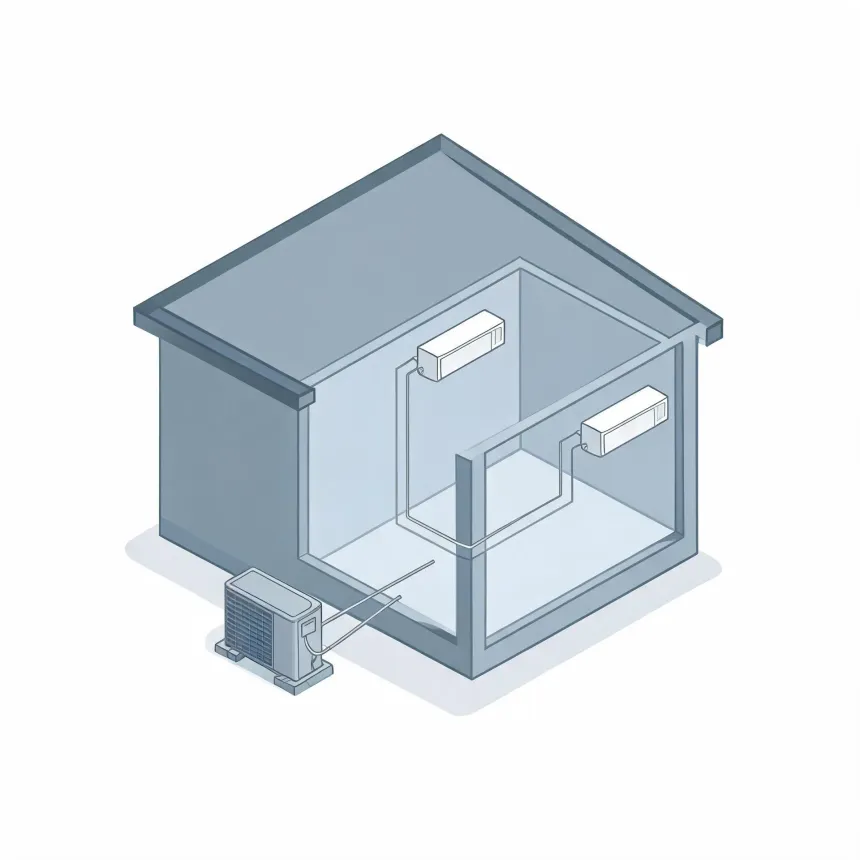
Isometric line illustration of a cutaway building interior with two wall-mounted indoor air conditioning units connected by piping to an outdoor condenser unit on the ground outside.
Your system heats October through April and cools June through September.

NOAA nClimDiv, 1991–2020 normals

Every outdoor unit has a low ambient kit option or doesn't, and that decides whether it still runs in a hard freeze.

Ask each contractor whether the system they're quoting can take a backup power connection, because not every model is built for one.

Most homes here already run on electricity, so a mini split fits right in

73.5% of homes heat with electricity
Climate zone 3A
Power here costs 14.01 cents per kilowatt-hour
Get it in before JuneCooling runs four months here, June through September, starting the month after May.

Wilkes County falls in climate zone 3A, warm with a long cooling season and winters that stay mild. Any split-system heat pump sold new here, mini splits included, has to meet the federal minimum starting at manufacture date January 1, 2023: at least 14.3 Btu of cooling for every watt-hour it draws over the summer, and at least 7.5 Btu of heat for every watt-hour over the winter. That floor applies everywhere, not just here, and it narrows the field to units built to clear it. A contractor quoting a system below those numbers is quoting something that cannot legally be sold new. Ask to see the rating on paper before anything goes on the wall outside.

Plan the install around the weather it has to survive

Where the outdoor unit goes and how it's mounted is part of this installation, not an afterthought. A contractor can set it where wind-blown debris and hail are less likely to reach it, and raise it clear of ice and snow. If a backup power connection matters to you, that has to be planned into the install now, not added later.

Find a contractor
A white outdoor air conditioner condenser unit mounted on metal wall brackets against gray horizontal siding, with a blue sky and white clouds behind it.

What comes down before the new one goes up

Whatever is on the wall now and outside on the pad gets disconnected and hauled away once the new system is in. If it's a ducted system coming out, a straight swap to ductless means those old supply and return grilles get sealed up for good. The refrigerant line set gets replaced rather than reused, since old lines carry the wrong residue and the wrong diameter for a new system. An old outdoor unit often sits on a pad or bracket that the new one can reuse, but a contractor checks it for cracking or rust before trusting it with new equipment. Any electrical whip or disconnect box feeding the old system gets inspected too. Some of it carries over, some doesn't, depending on what the new unit draws.

The number of zones sets the equipment cost

A single outdoor unit can run one indoor head or several. Add a zone and you add an indoor head, a line set run, and a spot on the outdoor unit's board to connect it. More zones means more labor to run lines and mount heads, and it means an outdoor unit built to handle that many connections at once.
Where the lines have to travel changes the labor

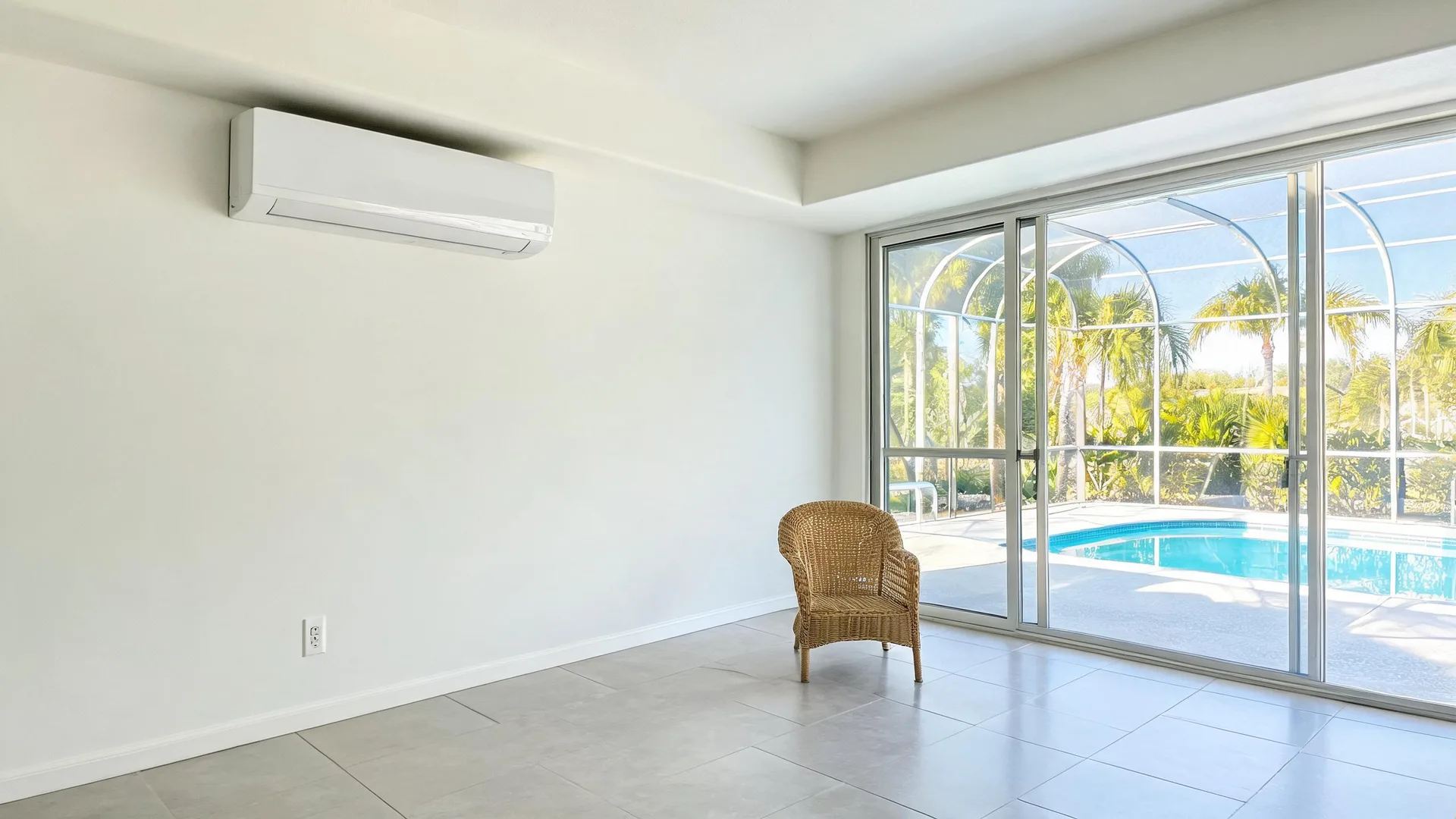
Every indoor head needs a line set, a drain, and a path to the outdoor unit, usually through an exterior wall. A short, straight run through one wall takes less time than a run that has to cross the attic, drop through a chase, or snake around framing to reach the outdoor unit's location. The harder the path, the more hours it takes to get the lines in clean.

A mini split has to be sized to the room it's heating and cooling, not the square footage alone. Too big and it cools the air fast, then shuts off before it pulls the damp out, so the room feels cold and sticky at the same time. Too small and it runs flat out on the hardest days of summer and the coldest nights of winter, never quite catching up. A contractor works this out with a load calculation, which weighs window area and orientation, insulation, ceiling height, and what's on the other side of each wall. Two rooms the same size can need different sized heads if one has west-facing glass and the other doesn't. Getting this number right matters more with a mini split than with a central system, since there's no ductwork to even out a sizing mistake between rooms.

Install day starts outside, with the contractor mounting the outdoor unit on its pad or bracket and running the line set and drain line through the wall to each indoor head. Every line set gets pressure tested before it's charged, because a joint that leaks slowly can take months to show up as a system that just doesn't cool like it used to. Once the lines hold pressure, the system gets evacuated with a vacuum pump to pull out moisture and air, since either one left behind turns to acid or ice inside the line over time. Only after that does refrigerant go in, charged to the weight the manufacturer specifies for that line length, not just until the gauges look right. Indoor heads get mounted level, with a clear path for the drain line to run downhill the whole way, because a drain line that dips anywhere along its run will back up and leak eventually. The last step is running the system in both heating and cooling mode and checking the temperature split at each head before anyone calls it done.