





Two illuminated white colonial-style houses with wrap-around porches, flanked by oak trees draped in Spanish moss, photographed at night.

Mini Split Installation in Mount Airy, NC

Tell us about the job

Takes about a minute. No obligation.

New system or replacementMini-splitSurry County, NC
Step 1 of 2

What ZIP code is the job in?

Surry County saw 202 severe weather events between 2015 and 2024. Most of that was damaging wind, 158 times in that stretch, with 27 hail events and 11 winter storms mixed in. A mini split's outdoor unit sits outside through all of it, exposed to whatever the wind throws at it. Statewide, a quarter of North Carolina households lost power for a day or more in 2024. An outdoor unit that's placed and protected well will hold up better through hail and wind, and when the power drops, how you planned for that will matter more than the system itself.

7 months
October through April, your system heats
4 months
June through September, it cools
29°F
the average winter night it heats against
85°F
the average summer afternoon it cools against
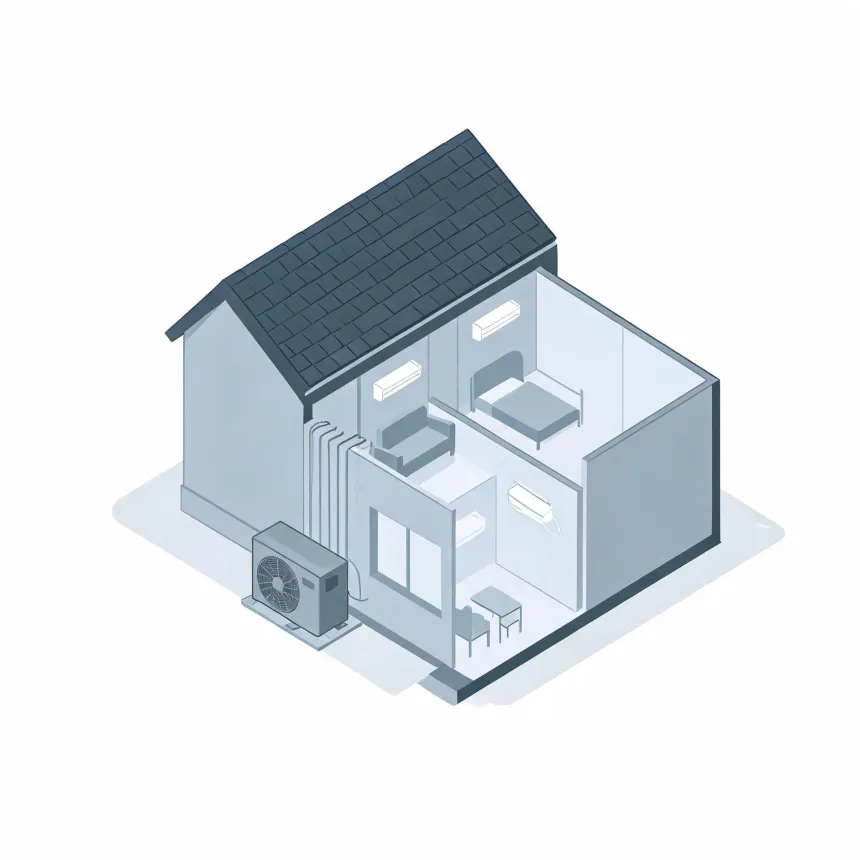
Isometric illustration of a cutaway house with a dark shingled gable roof, showing interior rooms with a bed, chairs and table, three wall-mounted mini-split indoor units connected by line sets to an outdoor condenser unit on a pad outside.
Your system heats October through April and cools June through September.

NOAA nClimDiv, 1991–2020 normals

Cooling starts in June here.

Get the mini split installed by May, so the job happens before the heat does, not during it.

Three out of four homes here run on electric heat, and that shapes the job

73.9% of homes heat with electricity
Cooling runs June through September
Summer afternoons average 85°F

Surry County falls under zone 4A in the energy code, a mixed climate that asks a system to handle both a humid summer and a real winter without slacking on either. Any mini-split sold here as a heat pump has to clear the federal minimum for that kind of equipment: at least 14.3 Btu of cooling for every watt-hour it draws over the summer, and at least 7.5 Btu of heating for every watt-hour over the winter. That standard applies to the unit itself, not to how it's installed or where it sits. A system built to those numbers is a baseline, not a guarantee of how it performs once it's mounted outside and wired into your home. Installing one well, with the outdoor unit placed where it can take the weather, is what decides whether it actually holds up to what this region throws at it. Buying one that just meets the minimum and calling the job done leaves the harder part, the install, still ahead of you.

Plan the install around the weather it has to survive

Placement is the part of this job that decides how the outdoor unit holds up. A spot with cover from falling limbs, clear of where wind and hail hit hardest, matters as much as the unit itself. Ask what happens to your heat and hot water when the power goes, and plan that into the install now, while the mounting and wiring are still decisions and not done.

Find a contractor
A man in a dark long-sleeved shirt and brown work pants carries a worn canvas tool bag up wooden porch steps toward a red-orange front door, with a potted shrub beside the entry.
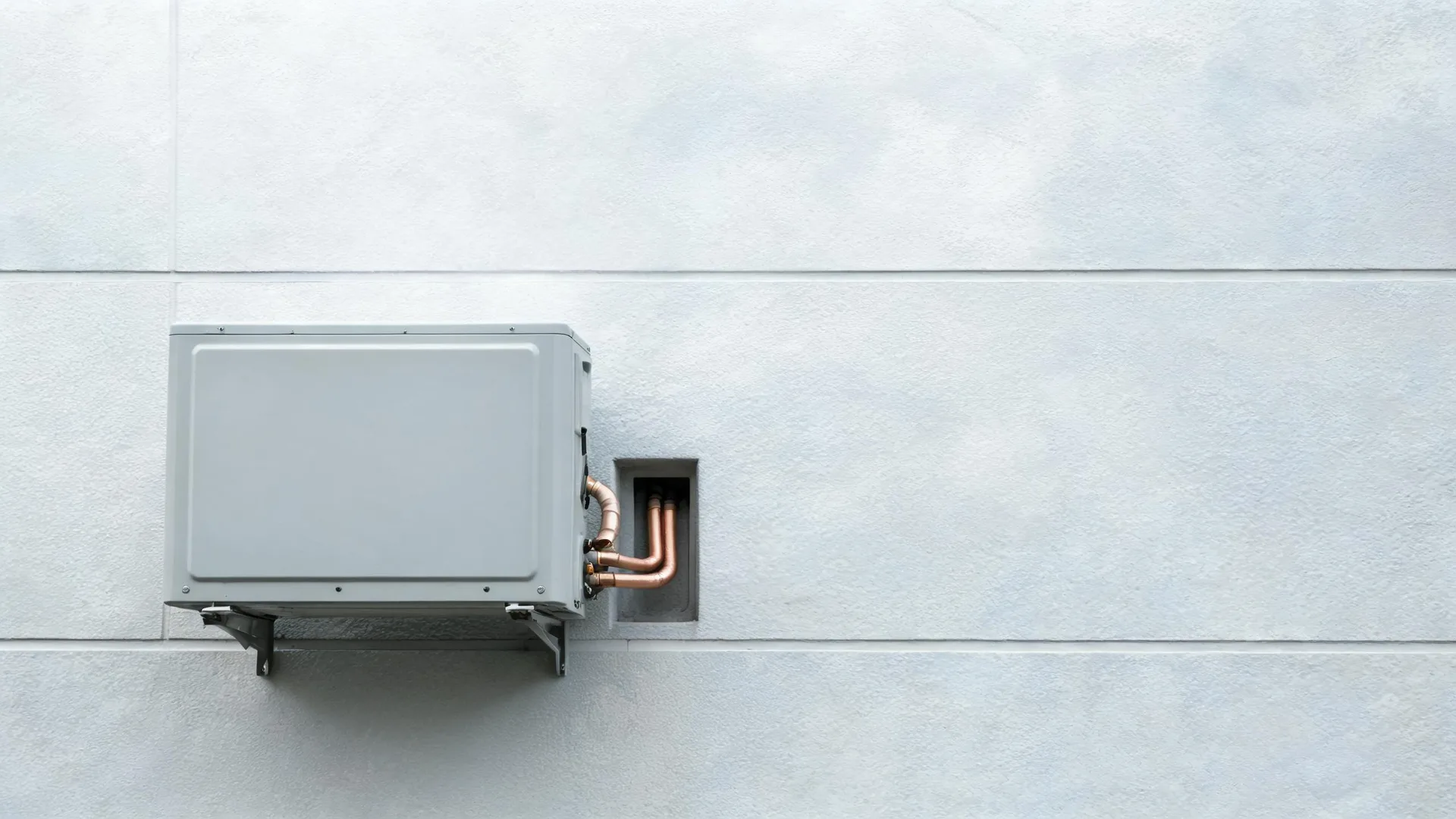
A white outdoor air conditioner condenser unit mounted on metal wall brackets against gray horizontal siding, with a blue sky and white clouds behind it.

What happens to the old system

Whatever is heating and cooling the place now, it doesn't come out the day the mini split goes in. A straight swap gets disconnected and hauled off the same day, but a lot of jobs aren't a straight swap. If the old system was ducted and the mini split isn't replacing it outright, that equipment can stay in place as backup or get pulled out on its own schedule. If there's an outdoor condenser or a furnace tied into it, that gets disconnected, the refrigerant recovered properly rather than vented, and the lines capped. Old line sets and abandoned wiring left behind in a wall or attic aren't doing anything for you, so it's worth asking what gets pulled and what gets left. A unit that's done running still holds refrigerant, oil and sometimes a mount or pad that has to come out too, not just the box on the wall or the compressor outside.

Ask how many zones it can run at once

A mini-split system can run one indoor head or several off the same outdoor unit. Each indoor head has its own thermostat, so rooms can sit at different temperatures at the same time. Ask how many heads the outdoor unit is rated to support and whether adding one later is possible, because the outdoor unit has a fixed capacity and can't just take on more heads down the road.
Ask what the warranty actually covers

Manufacturer warranties on these systems usually split the compressor from the rest of the parts, and some only hold if the installing contractor is certified by that manufacturer. Ask for that in writing, not just a verbal assurance. Also ask what's covered on the labor side if a part fails, since a part under warranty still means nothing if someone has to be paid to pull the old one and put the new one in.

Sizing a mini split isn't about matching the square footage on a chart. A contractor works out the heat loss and heat gain for the actual space, the windows, the insulation, how many walls face outside, and sizes the equipment to that load. Too big and the unit short cycles, blasting cold or hot air and shutting off before it ever pulls the moisture out of the room, which leaves the air cold and clammy instead of comfortable. Too small and it runs flat out all day without ever catching up, so it wears faster and still leaves the room short of where you set the thermostat. The right size is the one that runs long, steady cycles most of the time, not the biggest unit that fits on the wall. This is worth getting right before anything gets mounted, because once the lines are run and the outdoor unit is set, resizing means doing the job twice.

Installation day starts with the spot already decided, so most of the morning goes to the two ends of the line. The indoor head gets mounted on a bracket, usually high on a wall, after a small hole gets drilled through to the outside for the line set, the wiring and the condensate drain. The outdoor unit goes on a pad or wall brackets, leveled so condensate drains the way it should instead of pooling. Once both are in place, the refrigerant lines get run between them, connected, and the whole system gets pulled down to a vacuum to clear out any air and moisture before refrigerant is ever released into the lines. A tech checks the charge, runs the system in both cooling and heating, and confirms each indoor head talks to the outdoor unit the way it should. The line set and wiring get sealed and covered where they pass through the wall, so nothing is left open to the weather outside.