




A white Southern-style house with a wraparound porch photographed at night, surrounded by Spanish moss-draped oak trees lit by landscape lights.

Mini Split Installation in Morganton, NC

Tell us about the job

Takes about a minute. No obligation.

New system or replacementMini-splitBurke County, NC
Step 1 of 2

What ZIP code is the job in?

The number of indoor heads drives most of the cost. A single-zone setup is a simpler job than a system feeding several rooms off one outdoor unit. Line length matters too. The refrigerant lines running between the outdoor unit and each indoor head have to be cut, brazed, and tested for leaks, and longer runs or runs that pass through framing take more time than a short straight shot through an exterior wall. Where the outdoor unit sits counts as well. A pad on level ground near the wall is easy; a mount on a bracket or a spot that needs extra clearance adds work. The electrical side matters too, since some systems need a dedicated circuit and breaker that may not already be in the panel. Whoever does the work also has to size the system to the space correctly, because a unit that's too big or too small for the rooms it serves never runs efficiently.

7 months
October through April, your system heats
4 months
June through September, it cools
30°F
the average winter night it heats against
86°F
the average summer afternoon it cools against
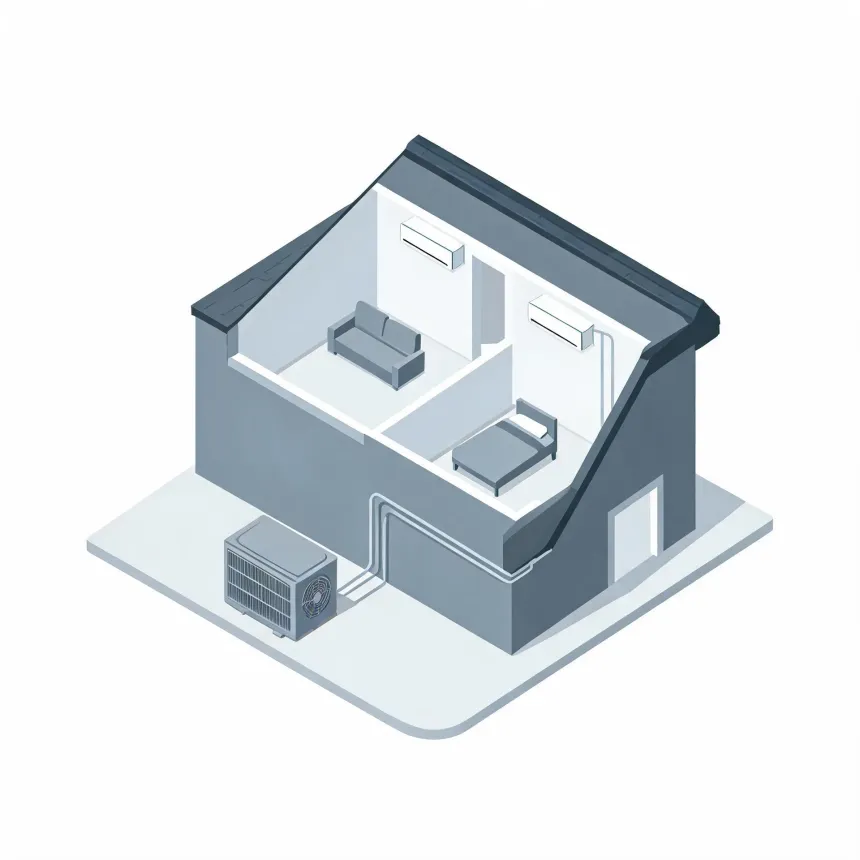
Isometric cutaway illustration of a two-room house showing two wall-mounted indoor air conditioning units connected by line sets to an outdoor condenser unit on the ground outside.
Your system heats October through April and cools June through September.

NOAA nClimDiv, 1991–2020 normals

Electricity heats 70.6% of homes in Burke County.

A mini-split runs on electricity, so it fits what's already wired into most homes here.

June is four months out, and that's not much lead time

Cooling runs June through September
Climate zone 4A
Power here costs 13.31 cents per kilowatt-hour

Burke County falls in climate zone 4A, which asks real work of both heating and cooling systems here. Any mini-split installed new has to meet the federal minimum for split-system heat pumps: at least 14.3 Btu of cooling delivered for every watt-hour of electricity it uses, and at least 7.5 Btu of heat for every watt-hour in winter. That standard applies to units built from January 2023 on, and it covers mini-splits the same way it covers any other split system. There's no separate, looser rule for ductless equipment. Whatever gets installed has to clear that bar.

Replace it before the season

Replace it before the season starts, so it happens on your schedule, not in a hurry.

Find a contractor
A white outdoor air conditioner condenser unit mounted on metal wall brackets against gray horizontal siding, with a blue sky and white clouds behind it.

What happens to the old system

What gets removed depends on what's there now. If the old system is ducted, the indoor coil, the furnace or air handler, and the outdoor condenser all come out, and the ductwork usually stays, since a mini-split doesn't use it. If the old system is a window unit or electric baseboard, that gets disconnected and hauled off, and the wiring for baseboard heat may need to be capped or repurposed for the new circuit. Refrigerant in the old outdoor unit has to be recovered into a tank, not vented, before any line gets cut. Old line sets are rarely reused. They're sized for the old equipment's charge and often run the wrong path for the new indoor heads, so new copper gets run and brazed fresh. Whatever comes out has to be disposed of the right way, since the old refrigerant and the compressor oil with it count as regulated waste.

What happens when the power goes out

A mini-split with no battery backup or generator hookup stops cold the moment power drops, same as any other heat pump. Some systems can be paired with a battery backup or wired to a transfer switch for a generator, but that has to be planned at install, not added later as an afterthought. Ask what it would take to keep at least one head running if the grid goes down.
How it handles the coldest nights

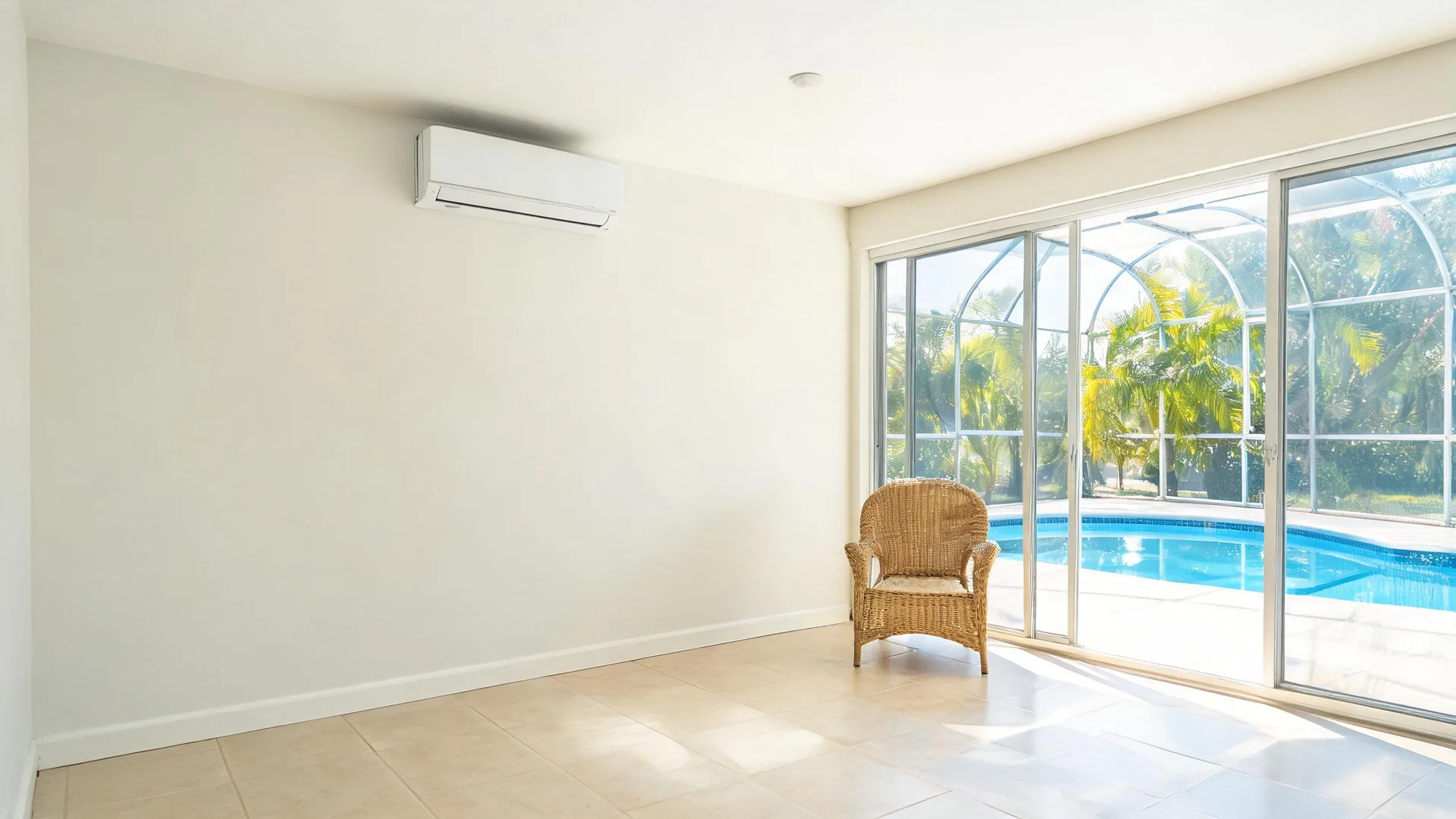
Every heat pump loses capacity as the outdoor temperature drops, and older or cheaper models lean hard on electric strip heat to make up the difference once it gets cold enough. A cold-climate heat pump holds its output much further down the temperature scale before it needs that backup. Ask for the manufacturer's capacity rating at low outdoor temperatures, not just the rating at standard conditions, since that number tells you how the system actually performs on the night it matters most.

Electricity here runs 13.31 cents a kilowatt-hour, cheaper than most of the country. That changes the math on which mini-split makes sense. A high-efficiency model costs more up front, and the extra efficiency saves less here than it would somewhere paying twice as much for power. So the payback on that upgrade stretches out longer than the sales pitch usually says. That doesn't make efficiency worthless. It just means it shouldn't be the only thing deciding what goes in. How the system handles a summer afternoon with the dew point sitting at 64°F, and what it does when the power cuts out, matter more to how this place actually lives with it.

With power this cheap, chasing the highest efficiency number on the spec sheet isn't where the money should go. Put the difference toward what actually protects you here: a cold-climate compressor that keeps heating when the temperature drops, or a battery and transfer switch setup that keeps a head running when the grid doesn't. Ask the contractor to price both ways, the top-efficiency unit versus a mid-tier model with backup power built in. For most homes in Morganton, the second one is money better spent.