





A lit antebellum-style two-story house with white columns and a wraparound porch at night, framed by live oak trees draped in Spanish moss.

Mini Split Installation in Morehead City, NC

Tell us about the job

Takes about a minute. No obligation.

New system or replacementMini-splitCarteret County, NC
Step 1 of 2

What ZIP code is the job in?

Electricity in North Carolina ran 14.13 cents per kilowatt-hour in 2024. A mini split works in your favor here because it only moves the heat it needs to, not a fixed amount like a furnace or baseboard heat does. That matters most in the shoulder months, when a small temperature adjustment doesn't call for running a full system. The efficiency rating on the unit you choose is worth comparing closely, since it tells you how much power goes in for the heating or cooling you get out. A unit sized right for the room it serves will cost less to run than one that's oversized or undersized for the space.

5 months
November through March, your system heats
5 months
May through September, it cools
38°F
the average winter night it heats against
87°F
the average summer afternoon it cools against
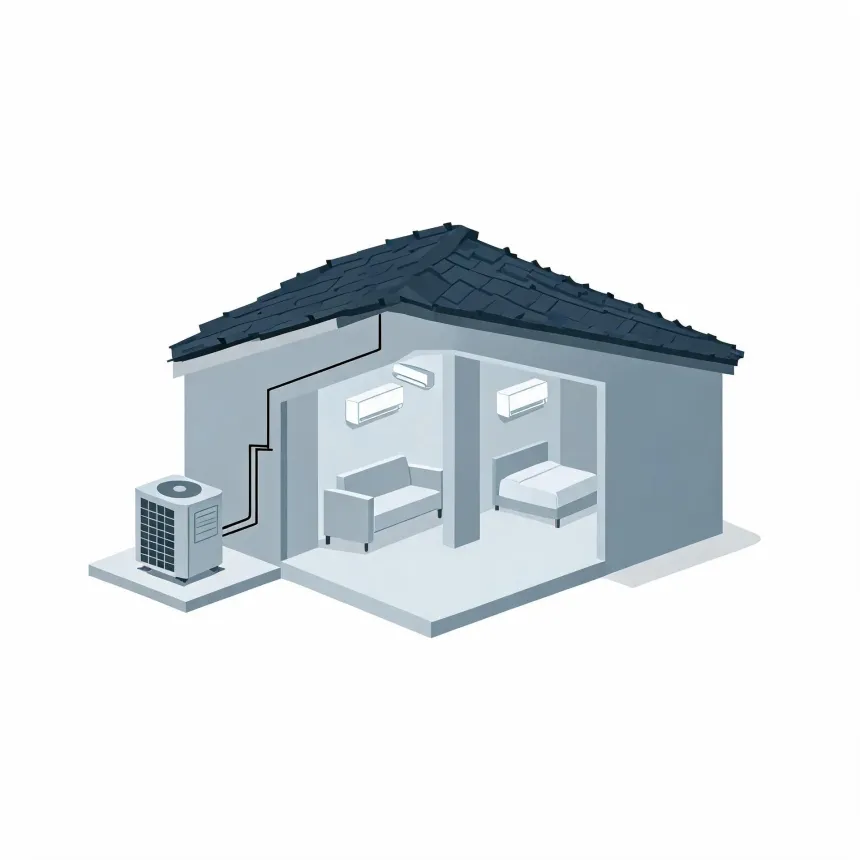
Isometric illustration of a cutaway single-story house with a dark shingled roof, showing three wall-mounted indoor air conditioning units in two rooms connected by lines to an outdoor condenser unit on a pad outside.
Your system heats November through March and cools May through September.

NOAA nClimDiv, 1991–2020 normals

Morehead City runs the AC May through September, with afternoon highs averaging 87°F all summer.

A mini split here runs hard most of the year, so size it to the room it serves and compare units on more than the sticker.

Carteret County sees 129 severe weather events a decade, so plan for where the outdoor unit sits and what happens if the power goes out

129 severe weather events from 2015 to 2024
25% of homes statewide lost power a day or more in 2024
85 damaging wind events from 2015 to 2024
Carteret County runs on electric heat86.5% of homes in Carteret County heat with electricity

Cooling starts in May here, which makes April the month to get a mini split installed. Homes in Carteret County run the AC for five months straight, May through September, and once that stretch starts, finding a slot for installation gets harder. Going in before May means the crew isn't working around a system you're already depending on to keep the house cool. It also means the unit gets set up right, not rushed, which matters when it's going to run hard for the next five months.

A mini split here has to clear a set efficiency bar, and a tax credit can offset it

Carteret County falls in climate zone 3A. Any mini split installed here has to meet the federal minimum for a split-system heat pump, 14.3 SEER2 for cooling and 7.5 HSPF2 for heating. That floor applies no matter which unit you pick. A federal tax credit is available on top of it for units that qualify, worth asking a contractor about when you compare systems.

Find a contractor
A white mini-split air conditioner outdoor condenser unit mounted on metal brackets against a beige stucco exterior wall, with a blue sky and scattered clouds in the background.

Five months a year, every year

Five months of cooling here means five months of the compressor cycling on and off most days, not just on the hot stretch of August. At 87°F, it's running close to its limit for the whole run, not just the peak. That's the case for checking more than SEER2 on the spec sheet. Ask how the unit holds up under a long duty cycle, not just how it scores on paper.

The old system comes out

If a furnace, boiler or central system is being replaced, the contractor disconnects it from its ductwork, gas line or electrical circuit and hauls it away. A window unit or wall unit just gets pulled out of the opening. Either way, the old equipment isn't left behind for the homeowner to deal with.
Refrigerant has to be recovered first

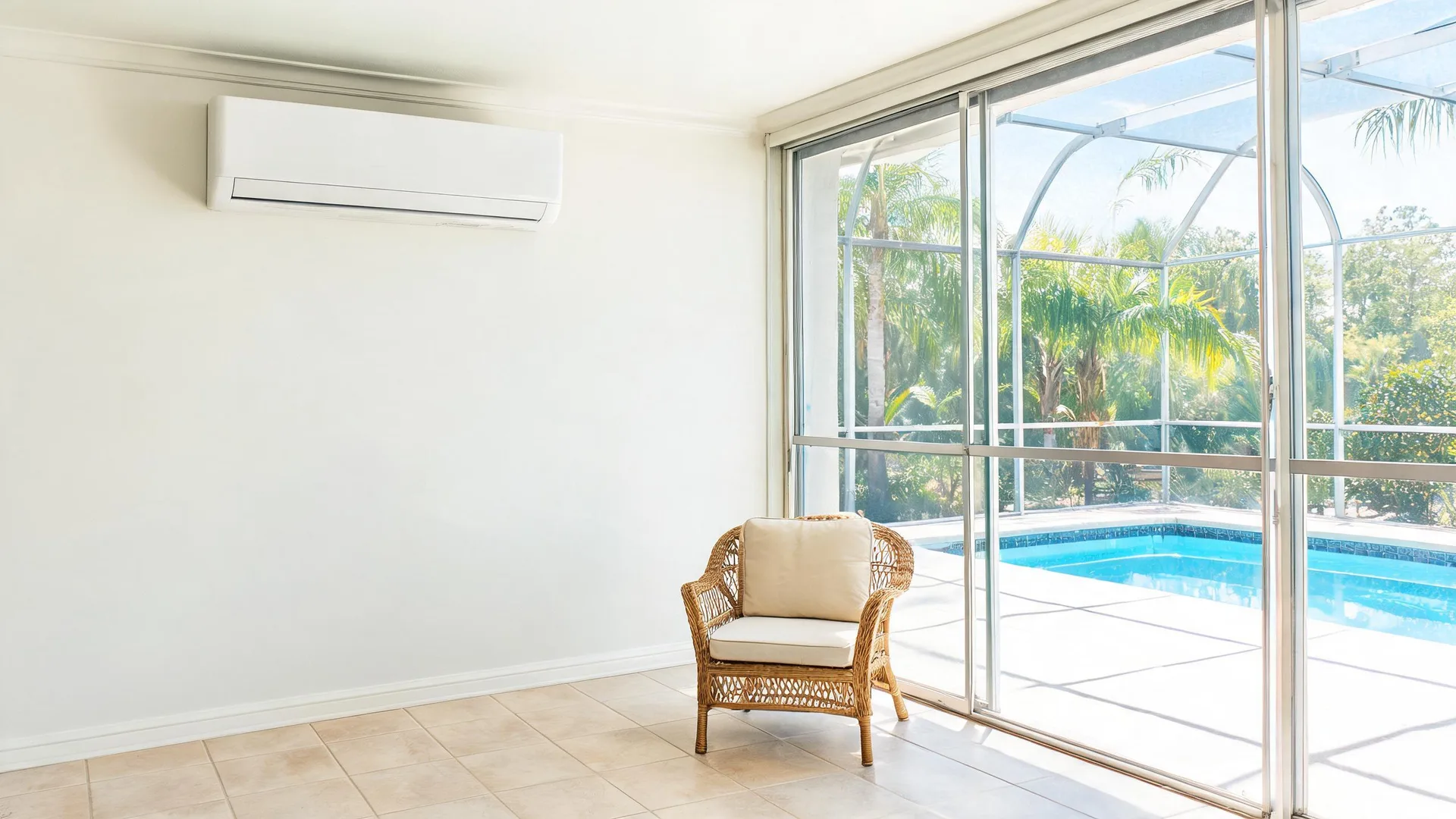
Any system that cools, whether it's a central air conditioner or an old mini split, has refrigerant sealed inside it. A licensed contractor has to recover that refrigerant into a tank before the unit can be disconnected and removed. It isn't legal to just cut the lines and pull the unit.

A mini split is really several choices bundled together, and the spec sheet only covers one of them. Ask how many zones the system supports and whether each room gets its own thermostat or they're grouped on one control. Ask about the indoor unit style too, since a wall-mounted head, a ceiling cassette and a floor-mounted unit heat and cool the same room differently depending on where the air actually blows. Ask what happens if one zone needs service, since some multi-zone systems share a single outdoor unit, so a problem with the compressor can take down every room at once. And ask about sound, both the indoor head and the outdoor unit, since the number on the spec sheet is measured under conditions your install may not match.

Install day starts outside. The outdoor unit needs a spot on a pad or mounted bracket with clear airflow on all sides, so the crew picks that location before anything else happens. Then comes the line set, the refrigerant lines and wiring that run from the outdoor unit to each indoor head, through a small hole drilled in the wall. That hole gets sealed once the lines are through it. Each indoor head gets mounted, leveled, and connected, then the whole system gets evacuated to pull moisture and air out of the lines before refrigerant is released into them. Once it's charged, the crew runs the system through both heating and cooling to check that every zone responds the way it should.