




Single-story houses with covered porches, one brick and one light-colored siding, behind a trimmed hedge and lawn, beneath large oak trees draped with Spanish moss.

Mini Split Installation in Mooresville, NC

Tell us about the job

Takes about a minute. No obligation.

New system or replacementMini-splitIredell County, NC
Step 1 of 2

What ZIP code is the job in?

Iredell County saw 146 severe weather events between 2015 and 2024. Most of that was wind, 105 events strong enough to count, with 22 hail events and 7 tornadoes mixed in. A mini split's outdoor unit sits outside through all of it, exposed to whatever comes through the yard. Storms also knock out the grid, and a quarter of North Carolina households went at least a full day without power in 2024. That matters for a heat pump the same way it matters for any system that heats or cools your home. Where the outdoor unit goes and how it's protected is worth getting right at installation, not after the first bad storm.

7 months
October through April, your system heats
5 months
May through September, it cools
30°F
the average winter night it heats against
86°F
the average summer afternoon it cools against
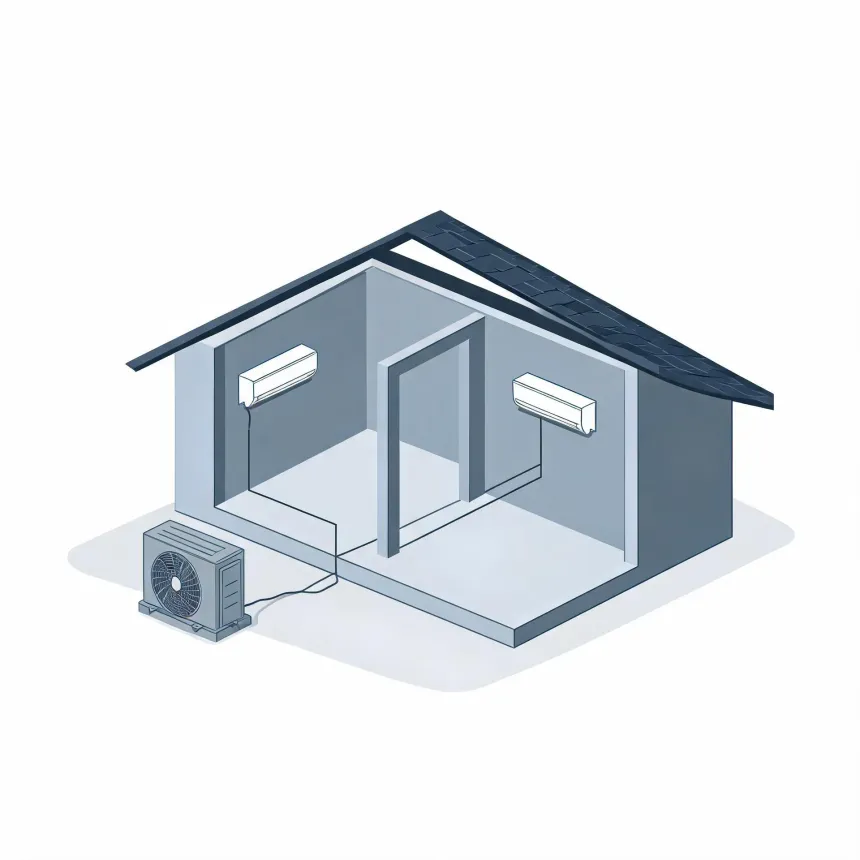
Isometric illustration of a cutaway house showing two wall-mounted indoor air conditioning units connected by lines to a single outdoor condenser unit on the ground outside.
Your system heats October through April and cools May through September.

NOAA nClimDiv, 1991–2020 normals

May starts cooling season here, so April is the month to get a mini split installed.

Wait for the first hot week and you're scheduling around a breakdown instead of planning the job.

Electric heat already runs most homes here, and a mini split fits right into that

62.6% of homes heat with electricity
Cooling runs May through September
Summer afternoons average 86°F

Iredell County falls in climate zone 3A, warm with a long humid summer and a short mild winter. Any mini split installed here has to meet the federal minimum for that kind of system: at least 14.3 Btu of cooling for every watt-hour it uses over the summer, and at least 7.5 Btu of heat for every watt-hour over the winter. That standard applies to split-system heat pumps built from 2023 on, and a ductless mini split counts as one. It sets a floor, not a ceiling. Some units clear it by a wide margin, and that difference shows up on the power bill every month the system runs.

Plan for the storm before the unit goes in, not after

Decide now where the outdoor unit will sit and what will shield it, so that choice gets made on paper instead of after a storm. If a bad outage knocks out power to the house, ask what happens to heat and hot water in that gap, and plan for it before the system goes in.

Find a contractor
A white mini-split air conditioner outdoor condenser unit mounted on metal brackets against a beige stucco exterior wall, with a blue sky and scattered clouds in the background.

Sizing Decides How It Runs for Years

A mini split has to be sized to the room or the house it's conditioning, not picked off a shelf by habit. Too big and it cools the air fast, shuts off, then starts again a few minutes later, cycling on and off all day instead of running a long steady stretch. That short cycling leaves the place feeling clammy, because the system never runs long enough to pull the moisture out of the air along with the heat. Too small and it runs constantly, straining to keep up on the hottest or coldest days, and that strain wears on the compressor over years of service. Getting the size right takes more than measuring square footage. A proper load calculation accounts for the home's insulation, how many windows face the sun, the ceiling height, and how many rooms the system has to reach through doors and hallways. Every one of those changes how much heat moves into or out of the space, and the equipment has to match that number, not just the floor plan.

How many zones it covers

A single outdoor unit can run one indoor head or several, and that changes the whole job. Each indoor head needs its own line set and its own spot on the wall or ceiling, and the outdoor unit has to be sized for all of them running together, not just one at a time. Ask whether the system is one-to-one or multi-zone, and whether every room that needs heat or cooling actually gets a head.
What happens when the compressor fails

The compressor is the part that does the work, and it is also the part most likely to need service years down the road. Ask what the warranty covers on the compressor versus the rest of the unit, and whether labor is included or just the part. A compressor swap means recovering refrigerant, opening the line set, and recharging the system, so that labor is not a small add-on to the cost of the part itself.

Pulling the old system out is its own job, separate from hanging the new one. A mini split or any refrigerant-based system has to be recovered before the lines get opened, meaning the refrigerant gets drawn out and captured rather than vented into the air. That's not optional and it's not a shortcut anyone should skip. The old line set usually comes out too rather than getting reused, since it was sized and routed for the old equipment and may have joints or bends that don't suit the new one. If the old system used a different refrigerant than the new one calls for, the lines have to be flushed or replaced, because even a small amount of the wrong refrigerant mixed in can damage the new compressor. The old outdoor unit and indoor head get disconnected from the electrical circuit, and that wiring gets checked against what the new system needs before anything gets hooked back up.

Installation starts with the outdoor unit and where the line set will run between it and each indoor head. That path gets planned before anything is mounted, since the line set carries refrigerant lines, a condensate drain, and the electrical wiring all together, usually inside one wrapped bundle. The indoor head goes up first, set level so the condensate drains the way it's supposed to instead of pooling. Then the line set runs through a sleeved hole in the wall to the outdoor unit, and the whole run gets pressure tested before any refrigerant goes in, because a joint that leaks slowly can take months to show up as weak cooling. Once the system holds pressure, the lines get evacuated to pull out moisture and air, then charged to the amount the manufacturer specifies for that line length. Only after it's charged and running does anyone check airflow at the head and confirm the thermostat or remote is actually talking to the unit.