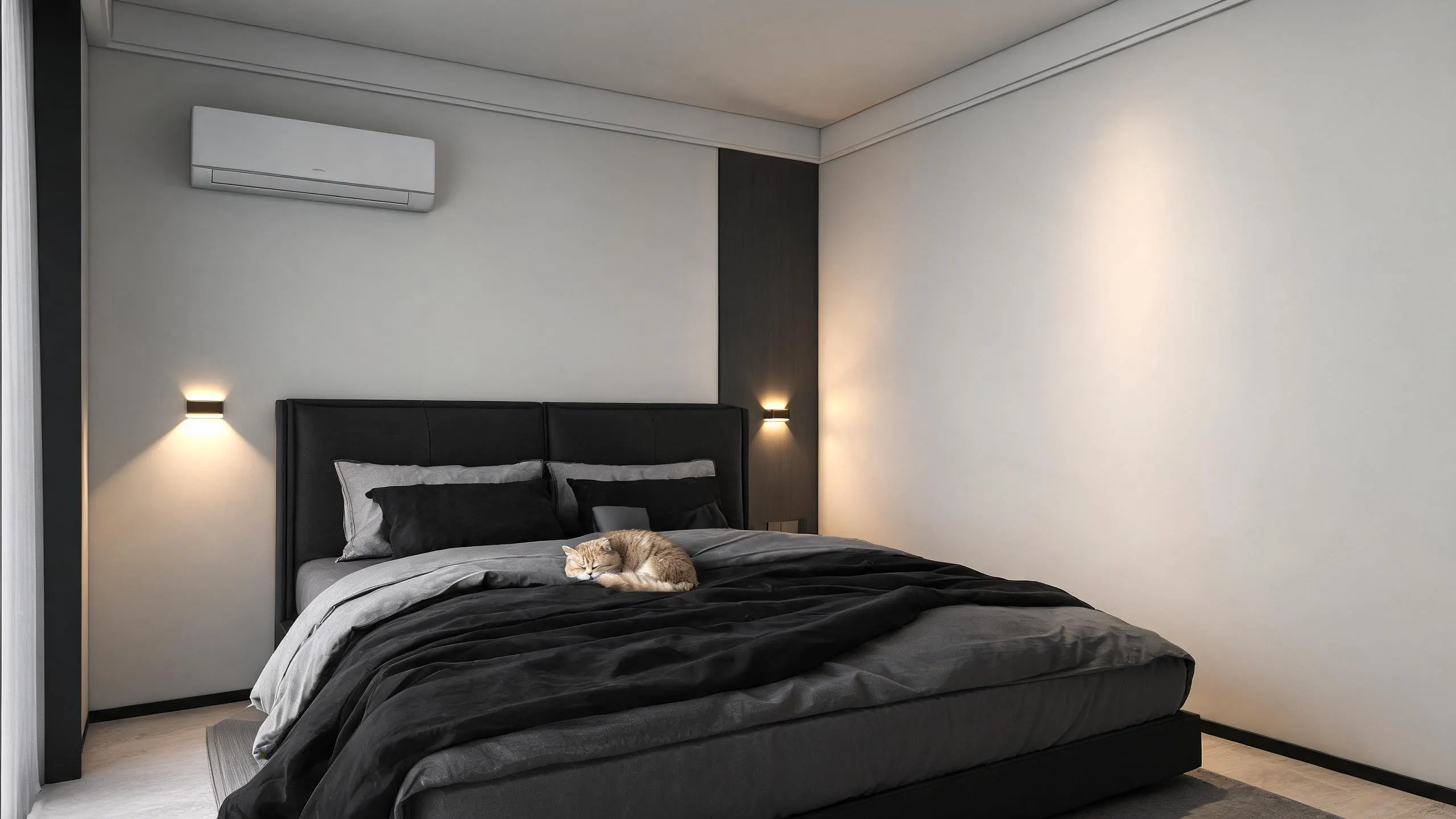




An orange cat sleeps on a neatly made bed with dark grey bedding in a minimalist bedroom with wall sconces and a mounted air conditioner.

Mini Split Installation in Lincolnton, NC

Tell us about the job

Takes about a minute. No obligation.

New system or replacementMini-splitLincoln County, NC
Step 1 of 2

What ZIP code is the job in?

Most homes in Lincoln County run on electric heat, 74.3% of them. A mini split fits right into that setup since it runs on electricity too, no gas line to add or plan around. That's different from a home on fuel oil or propane, where going electric means rethinking how the whole house is heated. Here it's just a question of which electric system makes sense, and a mini split gives you heating and cooling from the same unit.

7 months
October through April, your system heats
5 months
May through September, it cools
31°F
the average winter night it heats against
87°F
the average summer afternoon it cools against
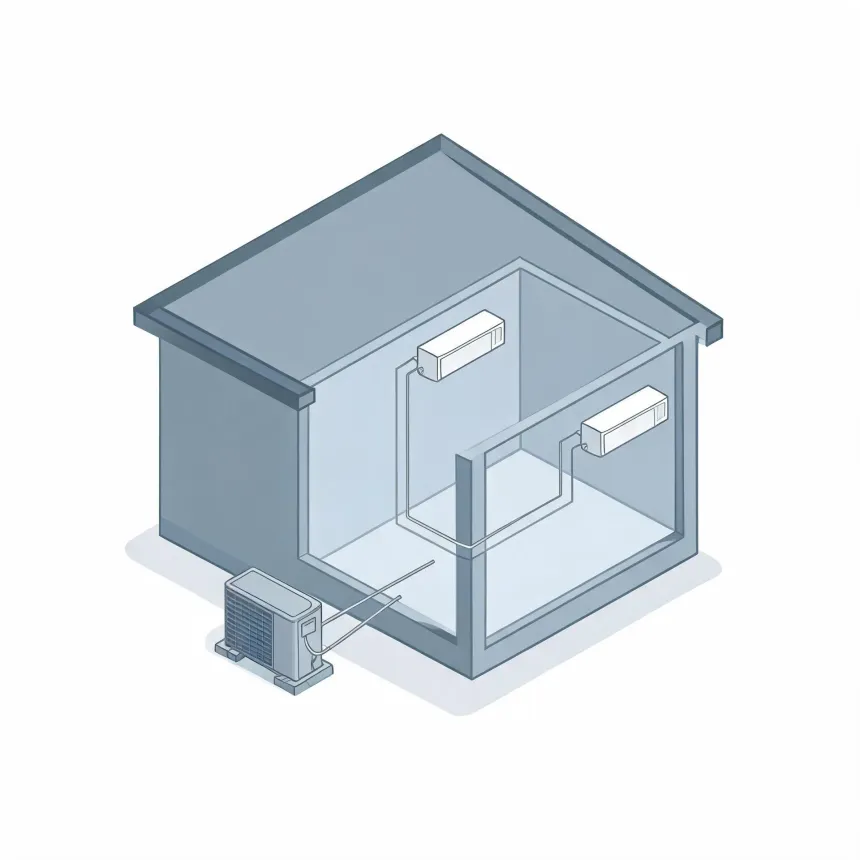
Isometric line illustration of a cutaway building interior with two wall-mounted indoor air conditioning units connected by piping to an outdoor condenser unit on the ground outside.
Your system heats October through April and cools May through September.

NOAA nClimDiv, 1991–2020 normals

Every mini split quote should say how many BTUs each room needs, not just a total for the house.

A unit sized off square footage alone can leave one room cold and another too warm, no matter how good the installer is.

April puts a new system in place before May's heat and storm season arrive

Cooling runs May through September
Summer afternoons average 87°F
4 tropical storms and hurricanes from 2015 to 2024

A mini split's efficiency rating matters more in a place where you're paying real money per kilowatt hour, and North Carolina homes paid 14.13 cents for one in 2024. Nothing about Lincolnton pushes you toward a bigger unit or a pricier one. A correctly sized system here, matched room by room like the quote should show, runs at the efficiency it's rated for. Oversizing is what drives the electric bill up, not the county you live in.

The right size for this house is the one it needs, not a bigger one

A standard mini split, sized to the room and installed correctly, is what this county calls for. Nothing in Lincoln County's weather or housing stock changes that math, and paying for more capacity than the room needs just means paying more to run it.

Find a contractor
A white mini-split air conditioner outdoor condenser unit mounted on metal brackets against a beige stucco exterior wall, with a blue sky and scattered clouds in the background.

What comes out when the new one goes in

Whatever system is in place now, something has to happen to it once the mini split is in. If it's a central system, the old equipment usually gets disconnected and hauled off, including the outdoor condenser and the indoor coil. Window units or old wall units come out of the window or the wall they were mounted in. None of that old equipment gets reused. If the old system ran on ducts and the mini split doesn't need them, the ducts themselves are usually left alone rather than torn out, since removing them is a separate job. Any refrigerant left in the old system has to be recovered properly, not vented, so ask what happens to it before the old unit leaves the property.

The load calculation looks at more than floor space

A proper sizing calculation accounts for window area and direction, ceiling height, how much insulation is behind the walls, and how many people use the room. A room with west facing glass can need more capacity than one the same size without it. Skip that work and the number on the quote is just a guess dressed up as a total.

An oversized unit cycles instead of running steady

A mini split that's too big for the room cools or heats it fast, shuts off, then starts again soon after. That on off cycling is where comfort problems come from. The room temperature swings, and the unit never runs long enough to pull moisture out of the air. A correctly sized unit runs longer at a lower output, which is what keeps the room steady and the air from feeling damp.

The number of indoor heads is a bigger cost driver than the size of the house. A single room needing one indoor unit and one outdoor unit costs less to install than a whole house setup with a head in every bedroom and living space, each one needing its own line set and its own power run. Where the outdoor unit can sit matters too. A spot close to the indoor heads keeps the refrigerant lines short and the install straightforward. If the only option is far from the heads, or the line has to run through finished walls or up multiple floors, that's more labor and more material before anyone talks about the equipment itself. Electrical work is its own variable. Some homes have a circuit ready to use, others need a new one run from the panel, and that's a different job entirely.

Installation starts with the line set, the copper tubing that carries refrigerant between the outdoor unit and each indoor head. That gets run first, through a wall penetration, then connected on both ends and checked for leaks before anything is charged with refrigerant. The indoor head mounts on a bracket set into studs, not just drywall, since it has to hold weight and stay level for the condensate to drain right. Outside, the condenser sits on a pad or wall bracket, away from anything that blocks airflow around it. Once everything's connected, the system gets vacuumed down to pull moisture and air out of the lines before the refrigerant charge goes in. Only after that does the installer run the system through both heating and cooling to confirm each head is doing what it's supposed to.