






A gray tabby cat sleeps curled up on a dark gray bed in a dimly lit modern bedroom with warm ceiling cove lighting and a wall-mounted air conditioning unit.

Mini Split Installation in Lenoir, NC

Tell us about the job

Takes about a minute. No obligation.

New system or replacementMini-splitCaldwell County, NC
Step 1 of 2

What ZIP code is the job in?

Caldwell County sees real weather. Between 2015 and 2024 the county recorded 104 severe weather events, including 43 damaging wind events and 31 hail events. Three tornadoes touched down in that span, and two tropical systems reached the county. A mini split's outdoor unit sits outside through all of it, taking wind and hail directly. Statewide, 25% of North Carolina households lost power for a day or more in 2024, and a long outage means no heat and no hot water until the lines are back up.

7 months
October through April, your system heats
4 months
June through September, it cools
29°F
the average winter night it heats against
86°F
the average summer afternoon it cools against
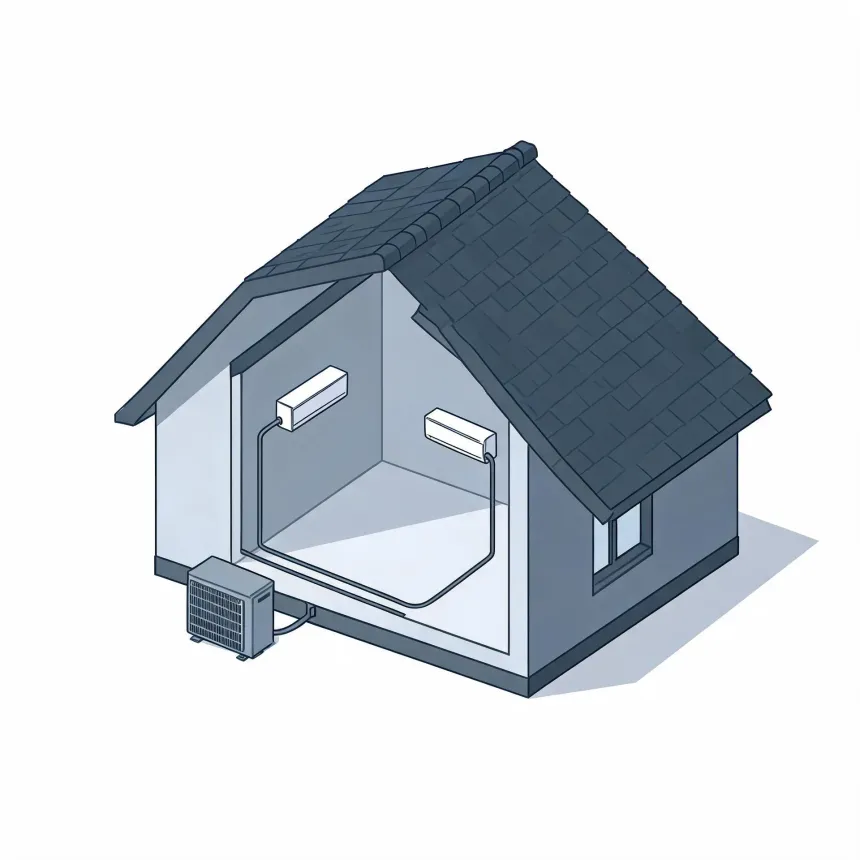
Isometric cutaway illustration of a small house with a shingled gable roof, showing two wall-mounted indoor air conditioning units connected by refrigerant lines to an outdoor condenser unit on the ground outside.
Your system heats October through April and cools June through September.

NOAA nClimDiv, 1991–2020 normals

Electricity heats 70.1% of homes in Caldwell County, more than any other fuel.

A mini split runs on electricity too, so the work is sizing and installing it right, not switching fuels.

May is the month to get this installed

Cooling runs June through September
Climate zone 4A
Power here costs 13.53 cents per kilowatt-hour
Power here runs cheapCaldwell County homes paid 13.53 cents per kilowatt-hour in 2025, below most of the country.

Caldwell County falls under zone 4A in the 2021 energy code, a mixed climate that works both the heating and cooling side of a mini split hard over the year. Any mini split installed here is a split-system heat pump under federal rules, and units built from January 1, 2023 on have to clear 14.3 Btu of cooling for every watt-hour they draw, and 7.5 Btu of heating for every watt-hour in return. That floor narrows the field before efficiency even enters the conversation about running cost. A system that clears it by a wide margin may also qualify for a federal tax credit, worth checking against the specific equipment going in.

Plan the install around the weather, not just the room

Where the outdoor unit goes and how it's mounted is worth deciding before install day, not after a storm. A unit set where falling branches or wind-blown debris can reach it is a problem; one set where it's protected is not. Worth asking too how the system handles a power cut, since a mini split that doesn't heat or cool your home is no better than one that doesn't exist for as long as the outage lasts.

Find a contractor
A man in a dark cap, dark shirt and brown pants, seen from behind, walks up porch steps toward an orange front door while carrying a brown canvas tool bag.
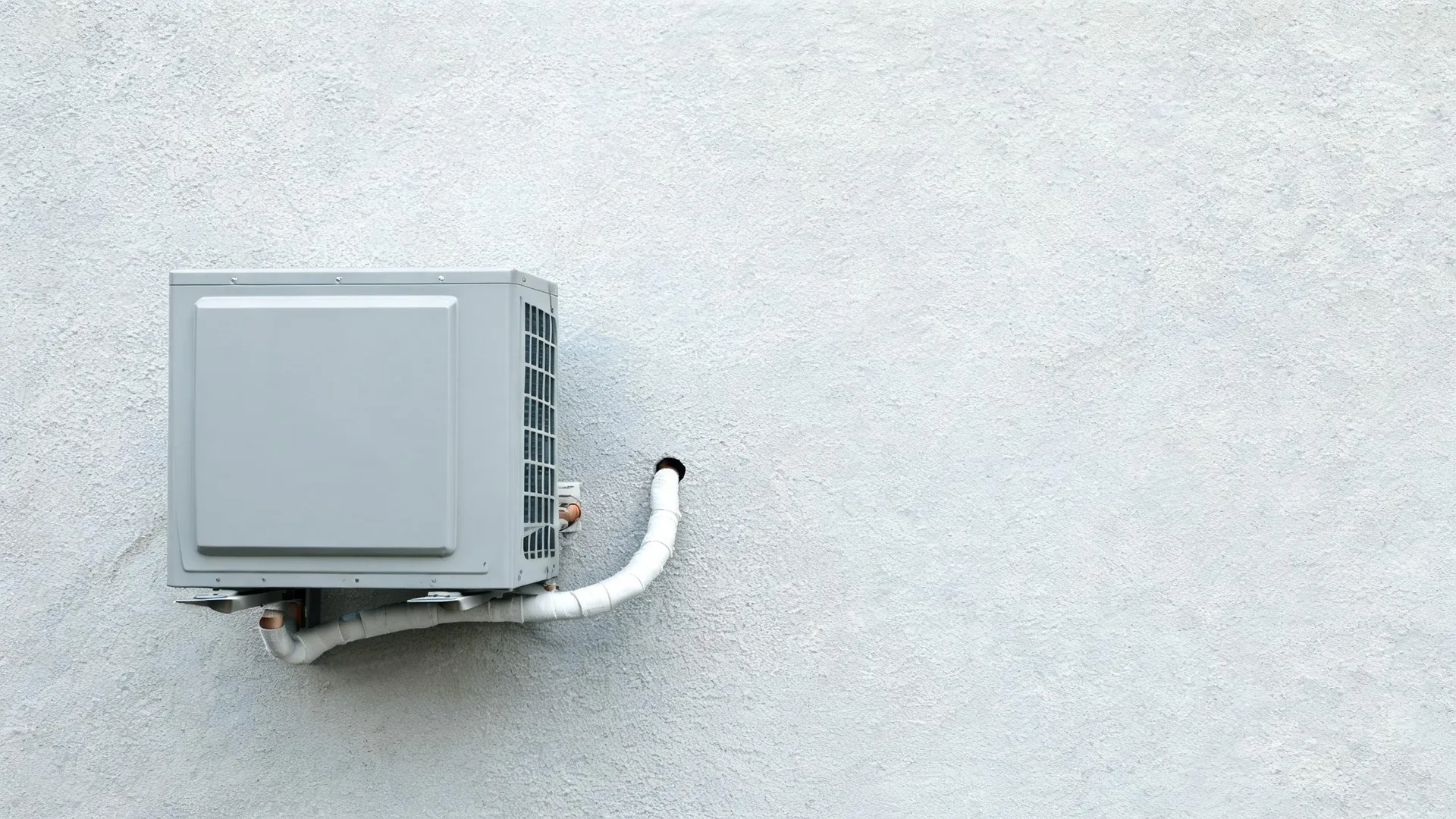
A white mini-split air conditioner outdoor condenser unit mounted on metal brackets against a beige stucco exterior wall, with a blue sky and scattered clouds in the background.

The old unit has to come out before the new one goes in

Whoever installs the new system still has to deal with the old one. A mini split that's being replaced, not just added to, means an outdoor unit disconnected and hauled off, an indoor head or heads taken down off the wall, and the line set and wiring pulled out behind them. The refrigerant in that old system has to come out properly before any of it moves, not vented into the air. If the old unit was a window shaker or a through-wall system instead, that comes out too, and the hole it leaves behind needs to be sealed up so the wall does its job again. None of this is hard, but it's work, and it's worth asking upfront whether removal and disposal of the old equipment is part of the install or a separate line.

The line set and where it runs

Refrigerant lines have to travel from the outdoor unit to each indoor head, and the path they take matters. A short, straight run through one wall is a different job than a run up through an attic, across a floor, and down into another room. Every extra foot of line, every bend, every wall it has to pass through adds work. More than one indoor head means more line sets, more holes, and more time spent making each connection tight and properly insulated.
How many rooms it has to reach

A single outdoor unit can run more than one indoor head, but each added head is its own install, not an extra wire off the first one. Each needs its own mounting, its own line set, its own electrical hookup, and its own spot picked for even airflow in that room. A system built to cover one room and a system built to cover four aren't the same job with a different price tag. They're different amounts of equipment and different amounts of labor.

Cheap power changes what's worth paying for upfront. When electricity costs this little, chasing the highest efficiency number on the spec sheet takes years longer to earn back in lower bills. Put that money into the install instead: the right size for the rooms it covers, a line set run that doesn't cut corners, an outdoor unit mounted somewhere it can survive a storm. A mini split that's sized right and holds up through bad weather is worth more here than one that's a few points more efficient on paper.

Install day starts outside. The outdoor unit needs a pad or mounting bracket set level and anchored, since it runs for years in that one spot. Inside, each indoor head gets mounted to a wall bracket, usually high up, over a hole drilled through to the outside. The line set runs through that hole, carrying refrigerant lines, a drain line, and electrical wiring together, usually wrapped and sealed once they're run. After the lines connect at both ends, the system gets evacuated with a vacuum pump to pull out air and moisture before refrigerant ever flows through it. Skip that step and moisture sits in the lines, and it causes problems with the compressor down the road. Once the vacuum holds, the system gets charged, powered up, and run through its paces, heating and cooling, to check every head is doing its job.