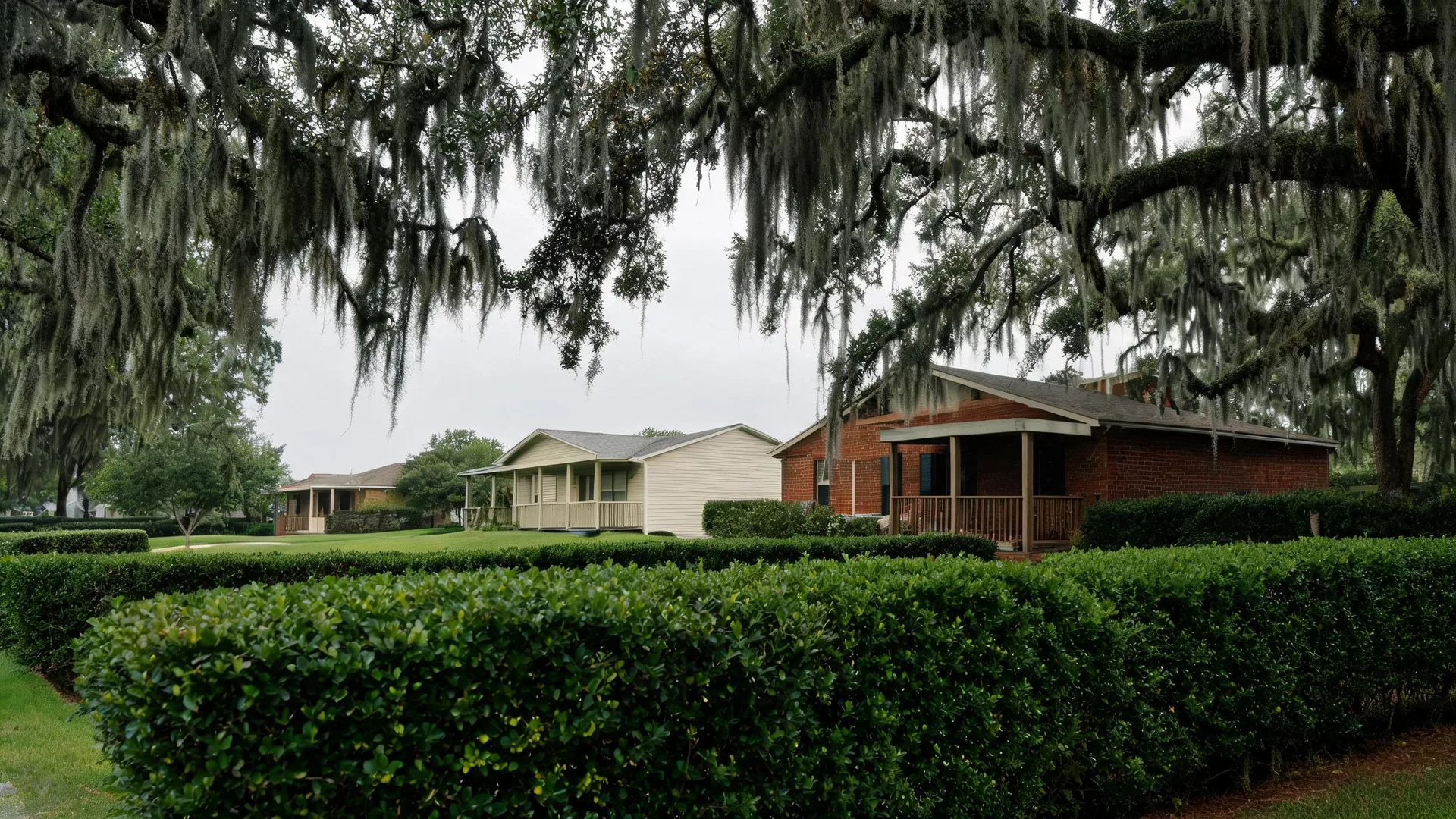
Single-story brick and white-sided houses behind a trimmed hedge and lawn, framed by overhanging oak branches draped with Spanish moss under an overcast sky.

Mini Split Installation in Jacksonville, NC

Tell us about the job

Takes about a minute. No obligation.

New system or replacementMini-splitOnslow County, NC
Step 1 of 2

What ZIP code is the job in?

Electricity here runs 14.07 cents a kilowatt-hour

That's what homes in Onslow County paid on average in 2025. A mini-split runs on electricity, and most homes in this area already heat that way, so this is the rate the system answers to every time it cycles on.

The efficiency rating earns its keep here

A mini-split that moves heat with less electricity matters more in a place where every kilowatt-hour already costs something. The unit installed is the one the power bill will reflect for as long as it runs.

5 months
November through March, your system heats
5 months
May through September, it cools
35°F
the average winter night it heats against
88°F
the average summer afternoon it cools against
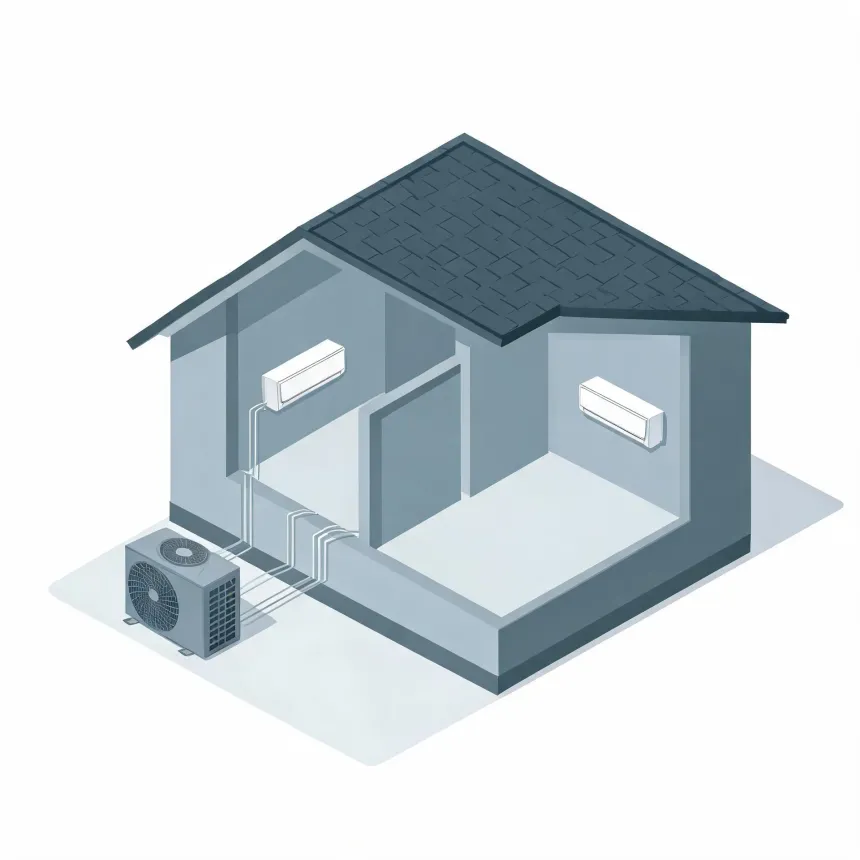
Isometric cutaway illustration of a small house showing two wall-mounted indoor air conditioning units connected by refrigerant lines to an outdoor condenser unit on the ground outside.
Your system heats November through March and cools May through September.

NOAA nClimDiv, 1991–2020 normals

Cooling starts in May here and runs through September.

Get a mini-split installed in April and it's ready for the first warm week instead of the first heat wave.

Five months of cooling, on afternoons this hot, is what this system signs up for

Cooling runs May through September
Summer afternoons average 88°F
Power here costs 14.07 cents per kilowatt-hour
Storms here are frequent, and outages follow98 severe weather events in Onslow County between 2015 and 2024, and a quarter of North Carolina homes lost power for a day or more in 2024

Onslow County falls under climate zone 3A, and a mini-split installed here has to meet the federal minimum for that kind of system. For a split-system heat pump, that means pulling at least 14.3 Btu of cooling from every watt-hour of electricity over the summer, and delivering at least 7.5 Btu of heat per watt-hour over the winter. That standard applies to units manufactured from 2023 on, and it sets the floor, not the ceiling. A contractor sizing a system for this area is already working within that limit before anything else about the house gets factored in.

Efficiency pays here

Power costs more here, so an efficient system pays you back on every bill.

Find a contractor
A beige split-system air conditioner outdoor condenser unit mounted on metal wall brackets atop a stucco wall.

Right size matters more when the machine runs this hard

Five months of work a year adds up fast at 88 degrees. Get the size right before anything else. A unit too big for the space will short cycle, kicking on and off instead of running steady, and that's its own kind of wear. A contractor who measures the space instead of guessing at it is doing the part that protects the machine for every one of those months ahead.

The number on the label is a ratio, not a grade

That rating compares the heat moved against the electricity it took to move it. A higher number means the compressor is pulling more warmth or coolness out of the air for the same draw of power. It's not a measure of how strong the unit is, just how little it wastes doing its job.

The rating only holds if the install matches it

A mini-split earns that number in a lab, with the right refrigerant charge and a clean match between the indoor and outdoor unit. An undersized line set, a bad charge, or a head mounted wrong for the room it serves will pull the real output below what the label promises. The equipment can only run as efficiently as the installation lets it.

Sizing a mini-split starts with a load calculation, not a tape measure on the room's square footage alone. A contractor working this out accounts for the windows and which way they face, how much insulation is behind the walls, the ceiling height, and what else in the house gives off heat. Two rooms the same size can need different size units because of what surrounds them. Guess too big and the unit cools the air fast but shuts off before it pulls the moisture out, so the room feels cold and still damp. Guess too small and it runs flat out on the hottest and coldest days without ever catching up. Either mistake shows up as a comfort problem first, long before it shows up as a repair.

Electricity heats 91.9% of homes in Onslow County. Gas, propane and oil together don't add up to a tenth of that. A mini-split fits into that picture without asking the house to change anything, since it runs on the same power the furnace or heat strips already use. That makes replacing an old system or adding a new zone a straightforward swap here, not a conversion. It's also most of why the rate on that power bill matters so much to how this job turns out.